100 francs 1944
Market Prices
42 salesAbout This Note
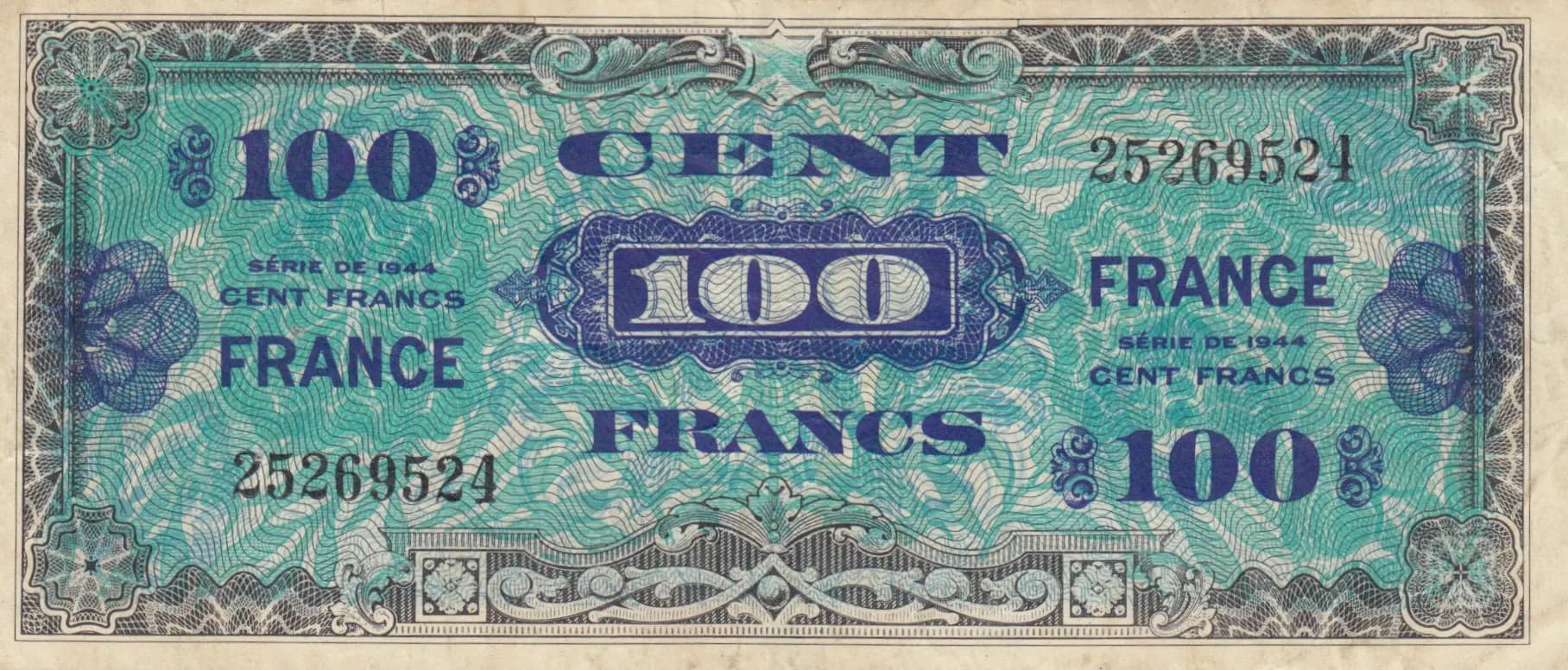
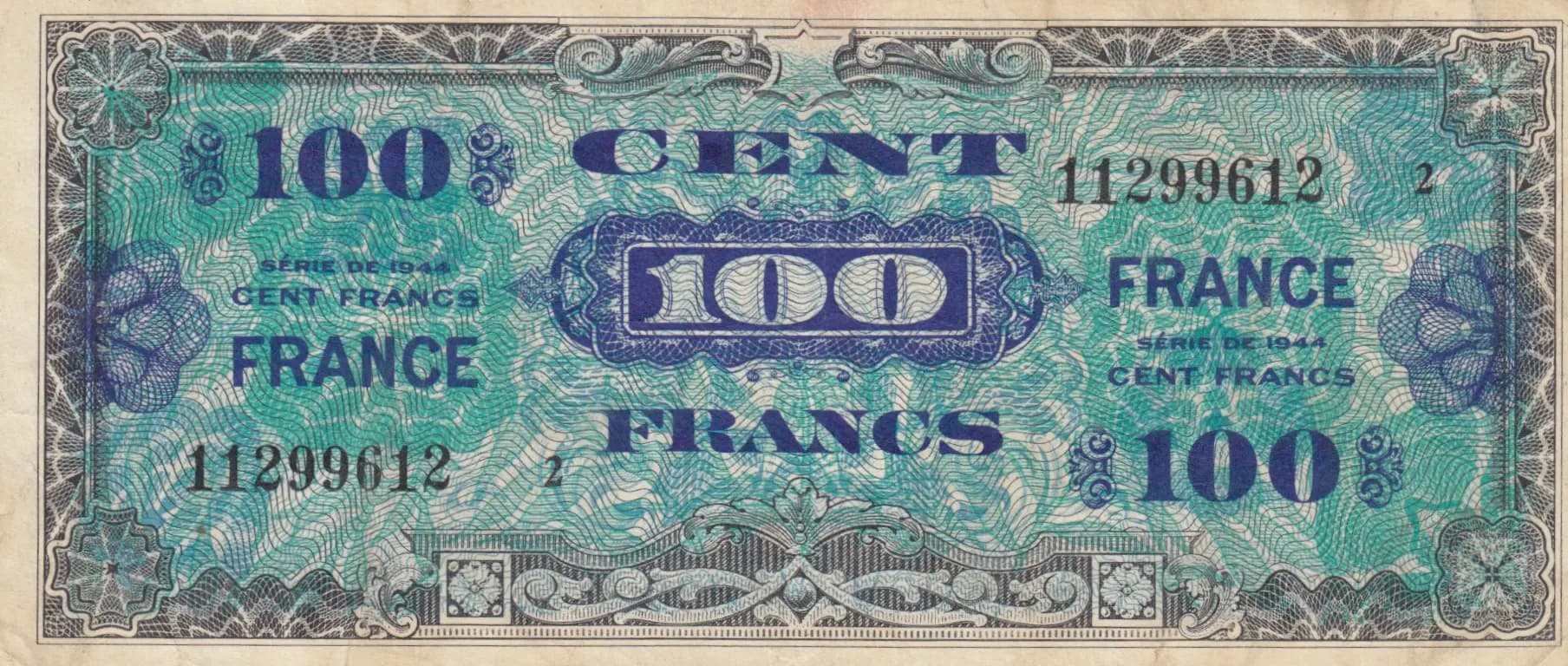
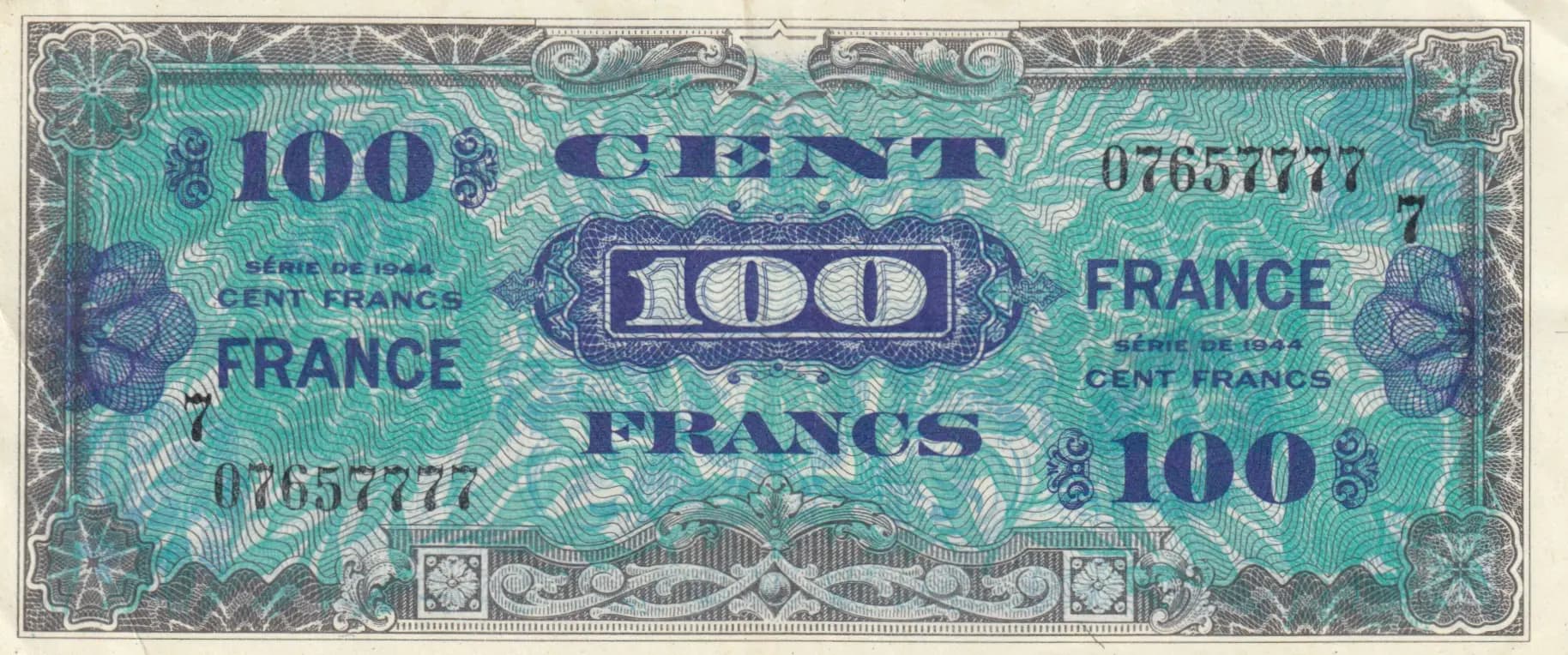
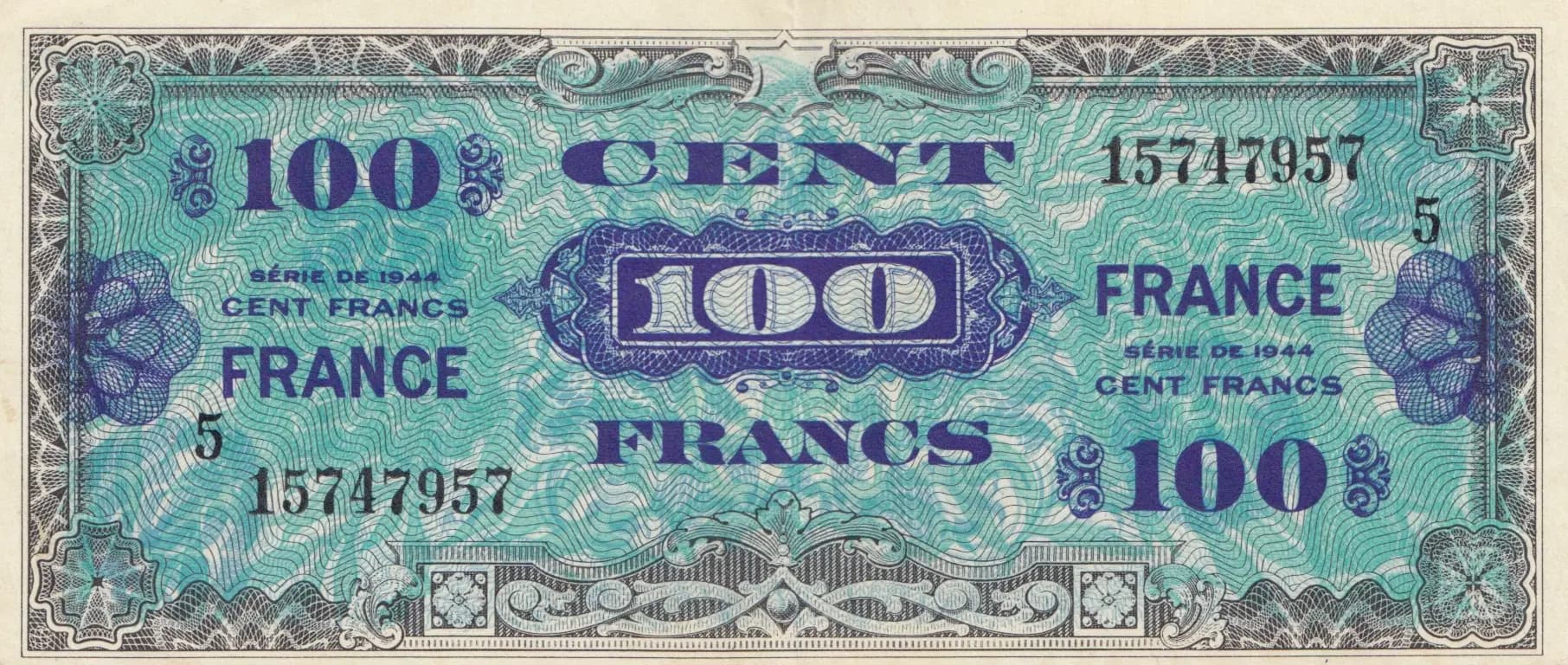
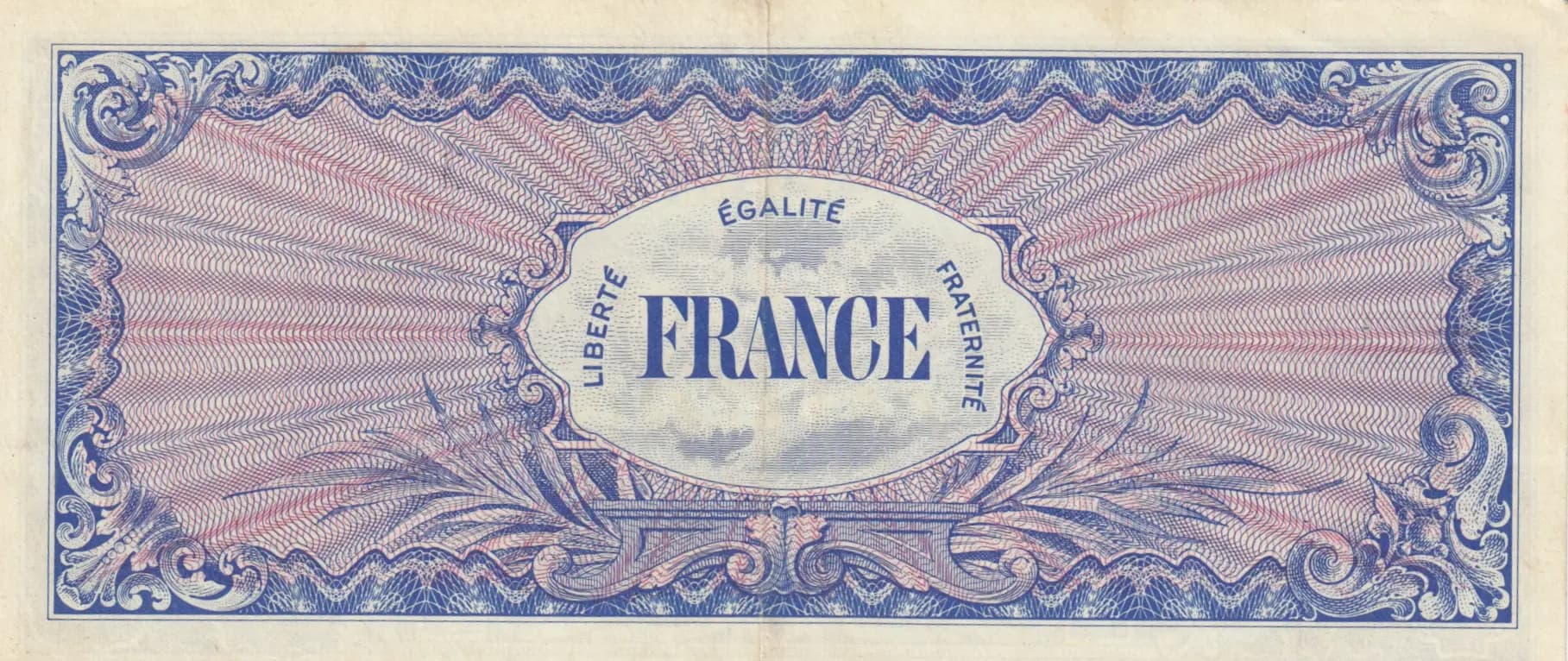
This 1944 Allied Military Currency 100 Francs note (Pick P-123c) presents in Extremely Fine condition with vibrant, well-preserved colors and sharp printing throughout. The note features elegant ornamental design elements in turquoise, blue, and purple tones on the obverse with the French national motto prominently displayed on the reverse. This second-issue provisional French franc currency represents an important transitional monetary piece from the Liberation period, with no visible wear, creases, or damage despite its nearly 80-year age.
Common. Despite its historical significance as wartime Allied currency, this denomination and issue remain common in the collector market. eBay sales data spanning 2010-2025 shows consistent, frequent transactions with numerous examples in circulation. Notes in Fine condition regularly sell for $3-$8, Very Fine examples for $5-$12, and Extremely Fine specimens for $10-$25. The 2016 catalogue value of $34 in Uncirculated condition and the regular availability of examples across all grades indicate substantial print runs typical of Allied Military Currency. The note's accessibility and predictable market pricing confirm common status despite its wartime context.
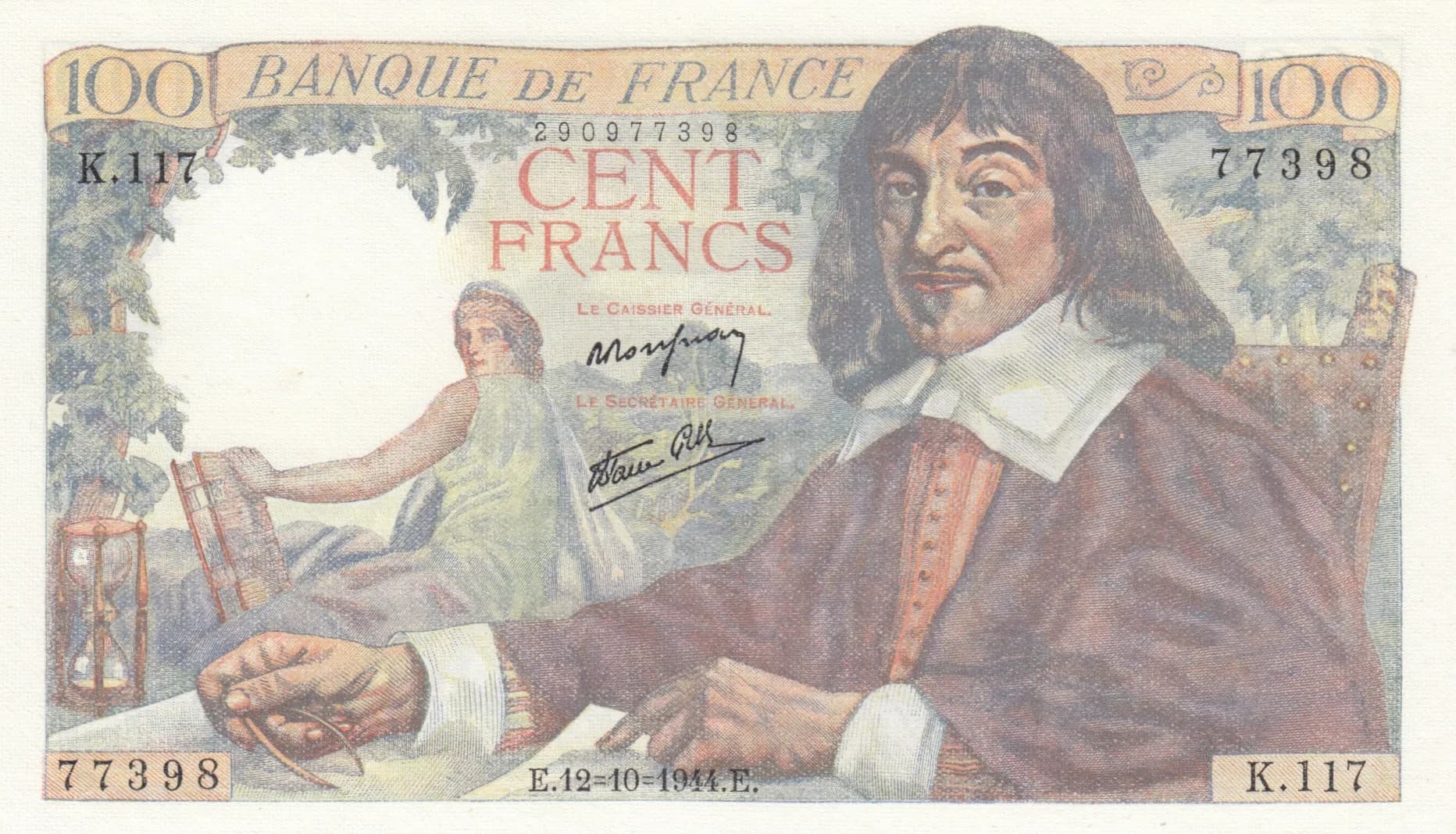
Issued in 1944 by the Allied Forces as provisional French currency following the Liberation of France, this note represents the interim monetary system established before the restoration of the official French franc. The reverse prominently features 'LIBERTÉ, ÉGALITÉ, FRATERNITÉ'—the French national motto—reflecting the symbolic importance of restored French sovereignty and democratic values after Nazi occupation. The 'SÉRIE DE 1944' inscription and Allied Military Currency designation mark this as part of the critical postwar currency transition that facilitated the reestablishment of French civil administration.
This Allied Military Currency note employs a purely decorative, non-representational design characteristic of provisional wartime and immediate postwar currency issues. Rather than portraits or specific landmarks, the design utilizes elaborate classical ornamental elements: ornate corner scrollwork with floral and geometric patterns, a prominent oval cartouche on the reverse containing the word 'FRANCE,' decorative star-like symbols, and fine wavy line patterns throughout serving both aesthetic and security purposes. The front features the denomination '100' rendered in large white numerals within a purple decorative frame, surrounded by turquoise and dark blue borders with intricate geometric patterning. The reverse, dominated by blue and red/pink tones, showcases the national motto within elaborate classical flourishes. The entire composition reflects the neoclassical aesthetic typical of French currency design from this era.
Front: '100' (denomination marker), 'CENT FRANCS' (One Hundred Francs), 'FRANCE' (France), 'SÉRIE DE 1944' (Series of 1944), serial numbers '1574195' and '1574957', and printer mark '5'. Back: 'FRANCE' (France), 'LIBERTÉ' (Liberty), 'ÉGALITÉ' (Equality), 'FRATERNITÉ' (Fraternity). The reverse inscriptions form the historic French republican motto reflecting post-Liberation political values.
Intaglio (engraved) printing, the traditional method for banknote production. The fine wavy line backgrounds, intricate geometric patterns, sharp line work in borders, and the precise rendering of decorative elements all indicate classical intaglio engraving. The note was printed by Forbes, as noted in the PMG population report for Pick P-123c. The complex anti-counterfeiting measures—particularly the fine-line wave patterns and geometric backgrounds—are characteristic of high-security intaglio work typical of Allied Military Currency production.
Pick P-123c represents the 'without Émis en France' variant of the second issue, as noted in the external catalog reference—distinguishing it from other printings that included this additional text on the front. The PMG population report identifies three catalogued variants (P-123c, P-123d, P-123e) for this base Pick number, suggesting deliberate variation in printing or overprinting during the 1944 issuance period. The serial numbers visible (1574195, 1574957) and printer mark '5' suggest standard numbering sequences characteristic of Forbes production. Without visible additional overprints, signatures, or date variations in the images, this appears to be a standard P-123c printing without exceptional variety characteristics beyond the established 'without Émis en France' designation.