1 dollar 1872
About This Note
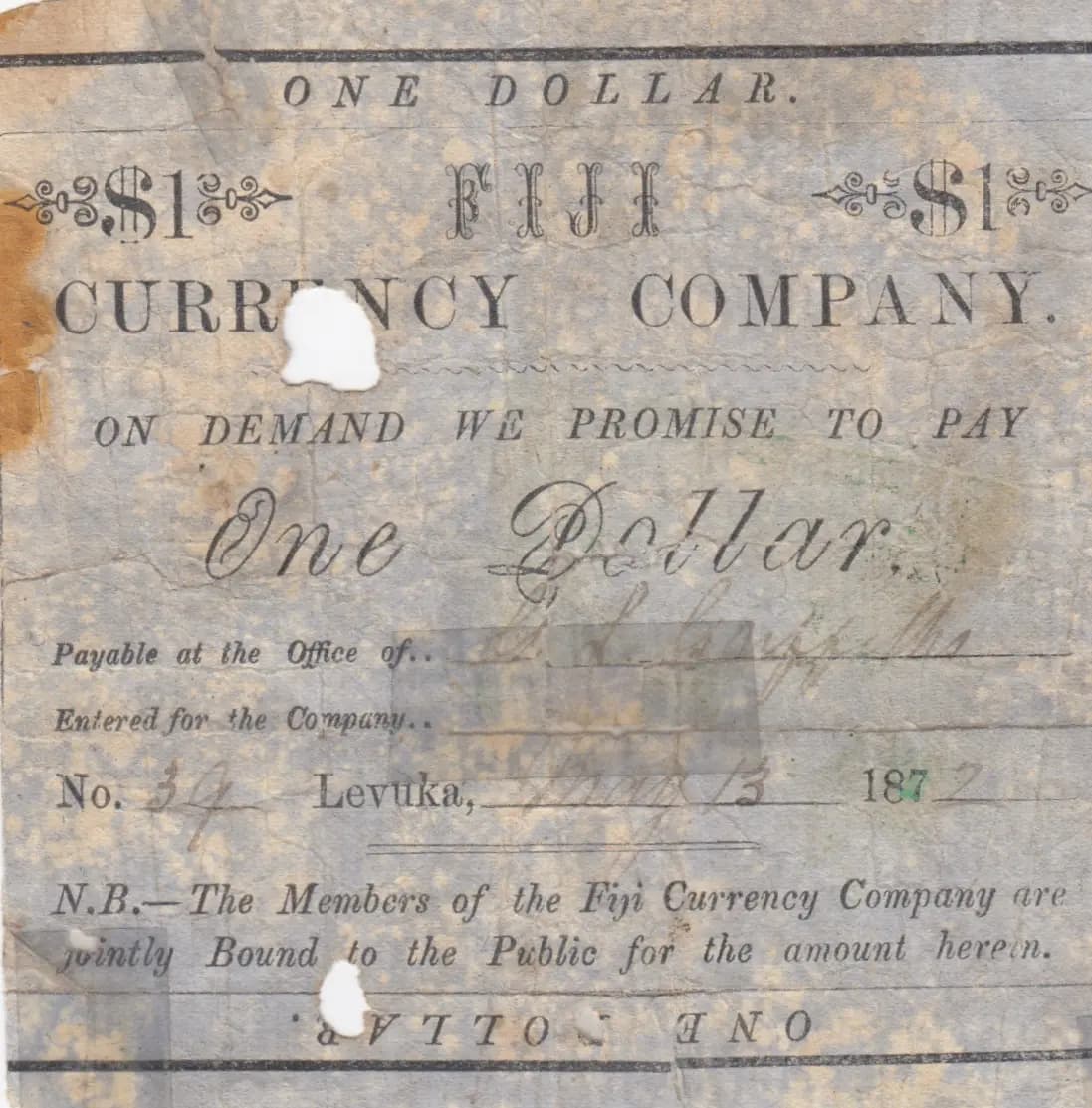
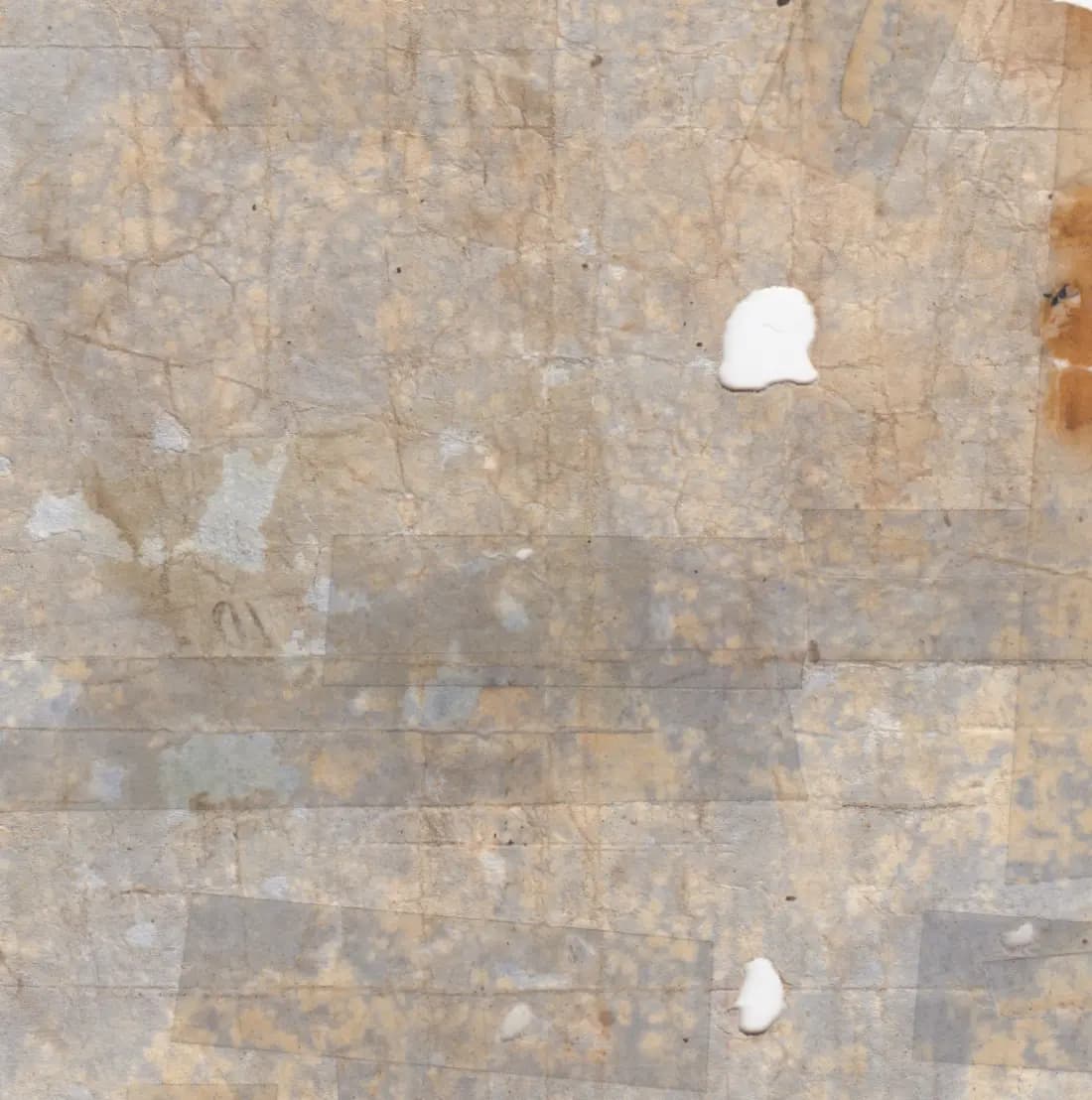
This is a historically significant 1 Fiji Dollar note issued by the Fiji Currency Company in 1872, representing one of the earliest currency issues from the colonial period in Fiji. The note displays ornamental dollar signs in the corners and a classical promise-to-pay format typical of mid-19th century private currency issuers. In Fair condition, this specimen exhibits extensive foxing, water staining, and structural deterioration including a prominent tear, reflecting its 150+ year history; the reverse side is heavily damaged with severe cracking patterns suggesting exposure to moisture and environmental stress.
Rare. This note carries the designation 'P-unlisted,' meaning it does not appear in the standard Pick catalogue of world banknotes, suggesting either very limited documentation, a small print run, or uncertain attribution regarding the Fiji Currency Company as an official or recognized issuer. The 1872 date places it among the earliest currency attempts in Fiji's colonial history, and no production figures are known. The heavily deteriorated condition of this specimen and its apparent scarcity in numismatic records suggest this is a scarce to rare note from an obscure private issuer in the early colonial Pacific.
The Fiji Currency Company note represents a transitional period in Fiji's monetary history, issued just after the colony came under British protectorate status (1874). This 1872 date is particularly notable as it predates formal British administration, indicating private enterprise attempts to establish currency systems in the colonial setting. The handwritten annotation showing Levuka (the early capital of Fiji) and the promise-to-pay format reflect the informal, document-based nature of currency exchange in the early colonial Pacific, where established banking and minting infrastructure did not yet exist.
The obverse features a classical 19th-century promise-to-pay note design, with ornamental dollar signs ($) placed symmetrically in the top left and right corners with decorative flourishes typical of engraved currency of the period. The central area emphasizes 'FIJI' in large serif letters above 'CURRENCY COMPANY,' establishing the issuer's authority and territorial scope. Below the title, legal text confirms the promise to pay on demand, with space for handwritten entries indicating the payee location (Levuka) and date (1872), as well as a numbered entry field for individual note identification. The design lacks portraits and landmark vignettes, relying instead on classical typography and geometric ornament for its authority and aesthetic appeal. The reverse side, now largely illegible due to deterioration, originally may have contained additional security text or design elements typical of the period.
FRONT SIDE: The note displays 'FIJI' and 'CURRENCY COMPANY' prominently in the center. The denomination appears as 'ONE DOLLAR' and '$1' in ornamental corners. The promise clause reads 'ON DEMAND WE PROMISE TO PAY One Dollar.' Additional text states 'Payable at the Office of...' with handwritten location 'Levuka,' and date '1872'. A numbered entry field begins with 'No.' for serial identification. The legal notice reads: 'N.B.— The Members of the Fiji Currency Company are jointly Bound to the Public for the amount herein.' A partial Latin or archaic inscription 'AVTO ANO' appears on the note. REVERSE SIDE: No legible inscriptions remain visible; the side is heavily deteriorated and blank or illegible.
The note was produced using engraved intaglio printing, evidenced by the crisp serif typography, ornamental flourishes around the dollar signs, and the fine line work characteristic of 19th-century currency engraving. The regular and geometric quality of the letterforms and borders suggests professional engraving, typical of established currency printers of the era. The presence of handwritten entries (location, date, and serial number) indicates this was a partially pre-printed note design with manuscript completion by the issuing company. No specific printer attribution is provided in available catalog data for this unlisted Pick number.
This specimen is characterized by the handwritten entry 'Levuka' as the payable location and the date '1872' written in manuscript form. The serial number field marked 'No.' is present but the specific number is not clearly legible in the image. As an unlisted Pick number with no known varieties documented in standard references, any differences in location names, dates, or serial number formats could represent distinct varieties. The presence of the notation 'AVTO ANO' (possibly a printer's mark or Latin numismatic reference) may be consistent across all notes from this issuer, or it could represent a specific variety identifier. Further research into original company records or additional specimens would be required to establish recognized varieties for this unlisted issue.