1 pound 1977
“radar #”
Market Prices
7 salesAbout This Note
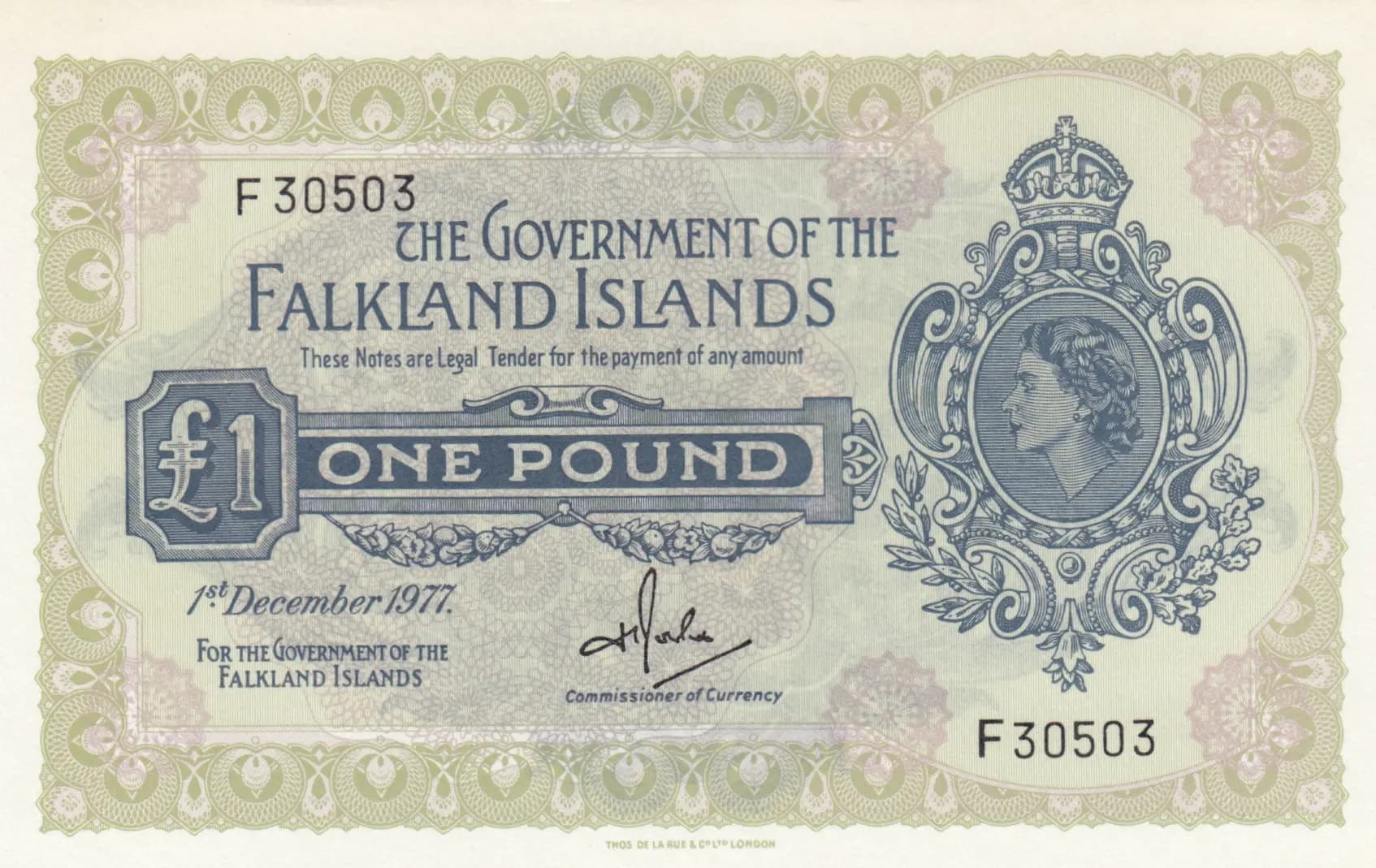
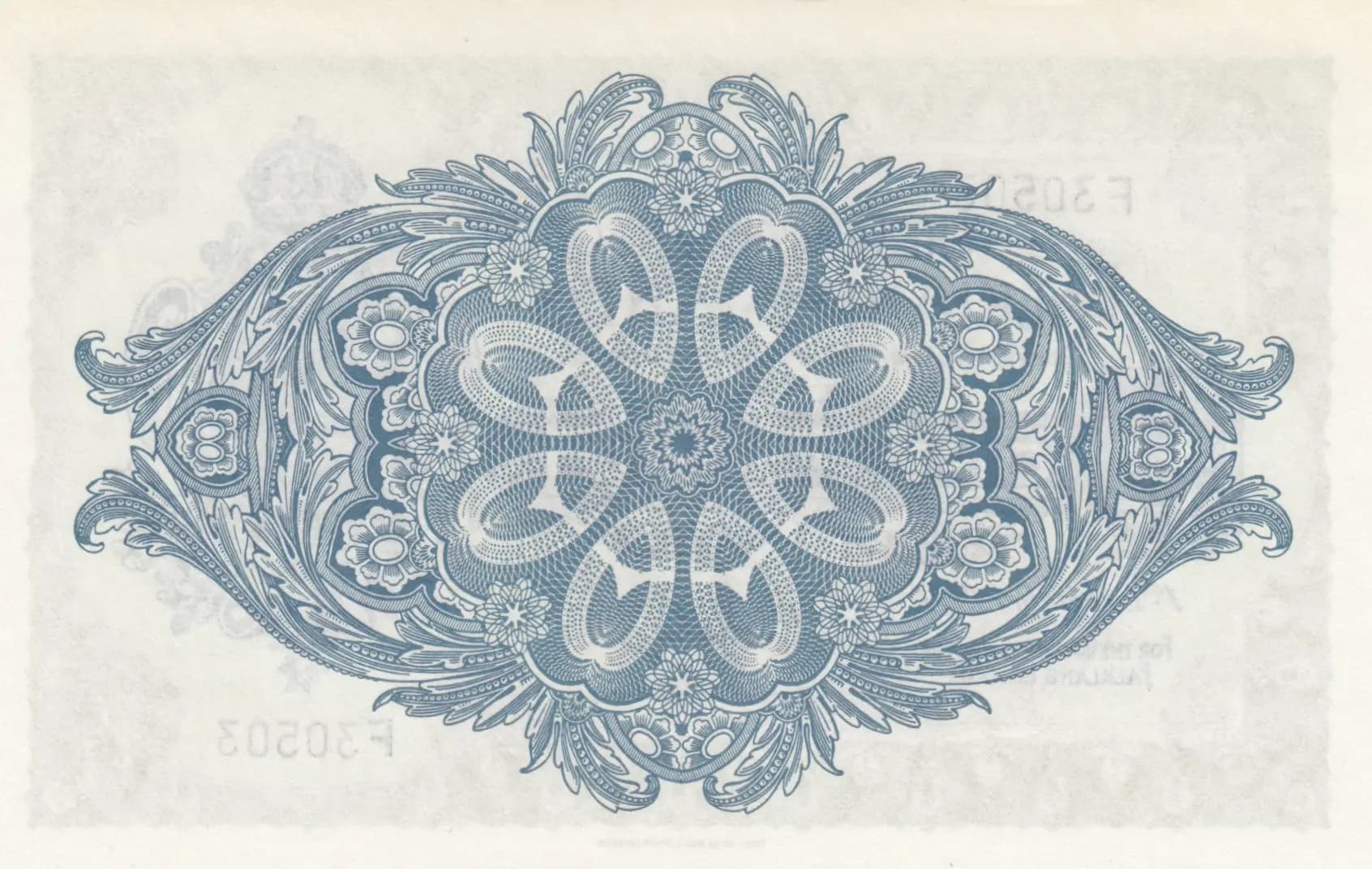
This is an exceptionally well-preserved Falkland Islands £1 note from the 1977 issue, graded UNC and notable for its radar serial number (F 30503). The note displays the characteristic blue-on-gray-green and lilac color scheme with an intricate ornate portrait medallion of Queen Elizabeth II on the obverse and elaborate security patterning on the reverse, all rendered with the crisp clarity expected of Thomas de la Rue's security printing. As a radar note—where the serial number reads the same forwards and backwards—this example represents a desirable variety that commands collector premium pricing.
Common. While radar serials are popular with collectors and can command modest premiums over standard serials of the same note, this Pick-8c in UNC condition is not rare. The 1977 Falkland Islands pound series had substantial print runs, and secondary market eBay data shows UNC examples selling in the $138–$150 range historically (2010–2022), with 2019 catalog valuations at $310 for UNC representing retail asking prices rather than realized market values. The note remains readily available to collectors, and the radar variety, though desirable, is not exceptionally scarce within the P-8c variant population.
This 1977-dated note was issued by the Government of the Falkland Islands during a period of renewed attention to the territory's sovereignty and administrative modernization, occurring just five years before the 1982 Falkland Islands War. The ornate heraldic framing and crowned portrait medallion of Elizabeth II emphasize the Islands' Commonwealth status and British sovereignty, while the formal commissioning by the Commissioner of Currency reflects the establishing of more structured monetary institutions in the remote South Atlantic territory.
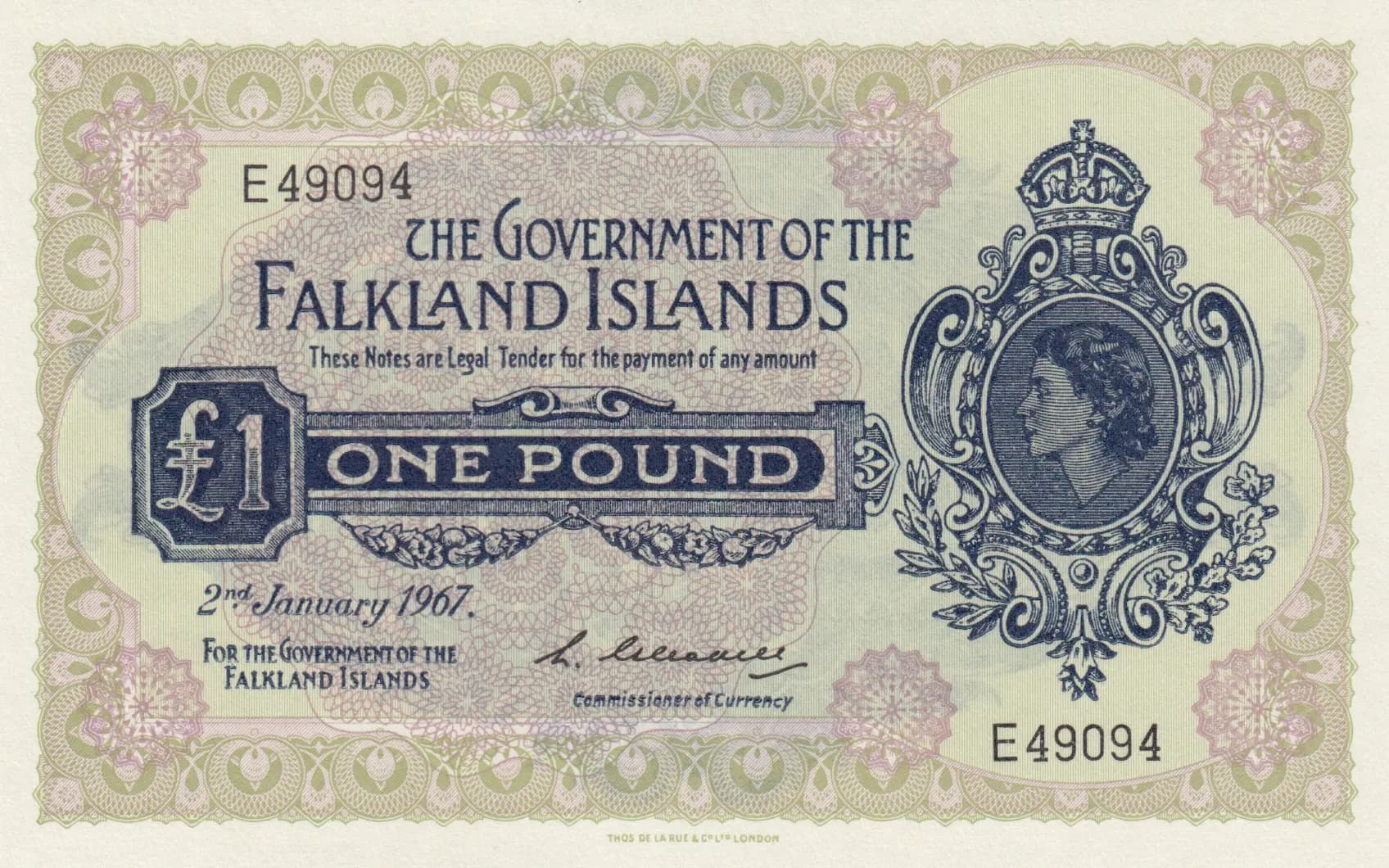
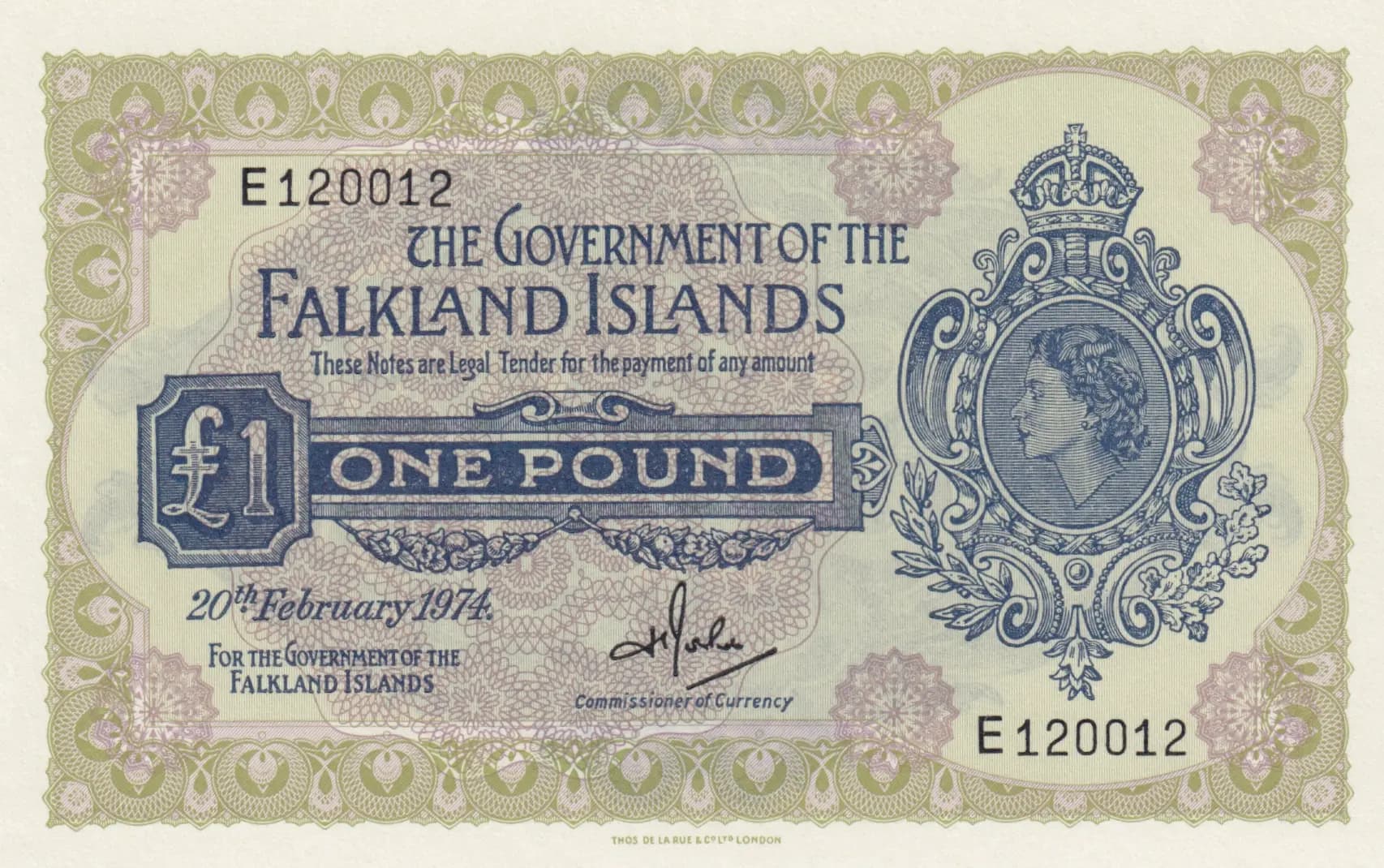
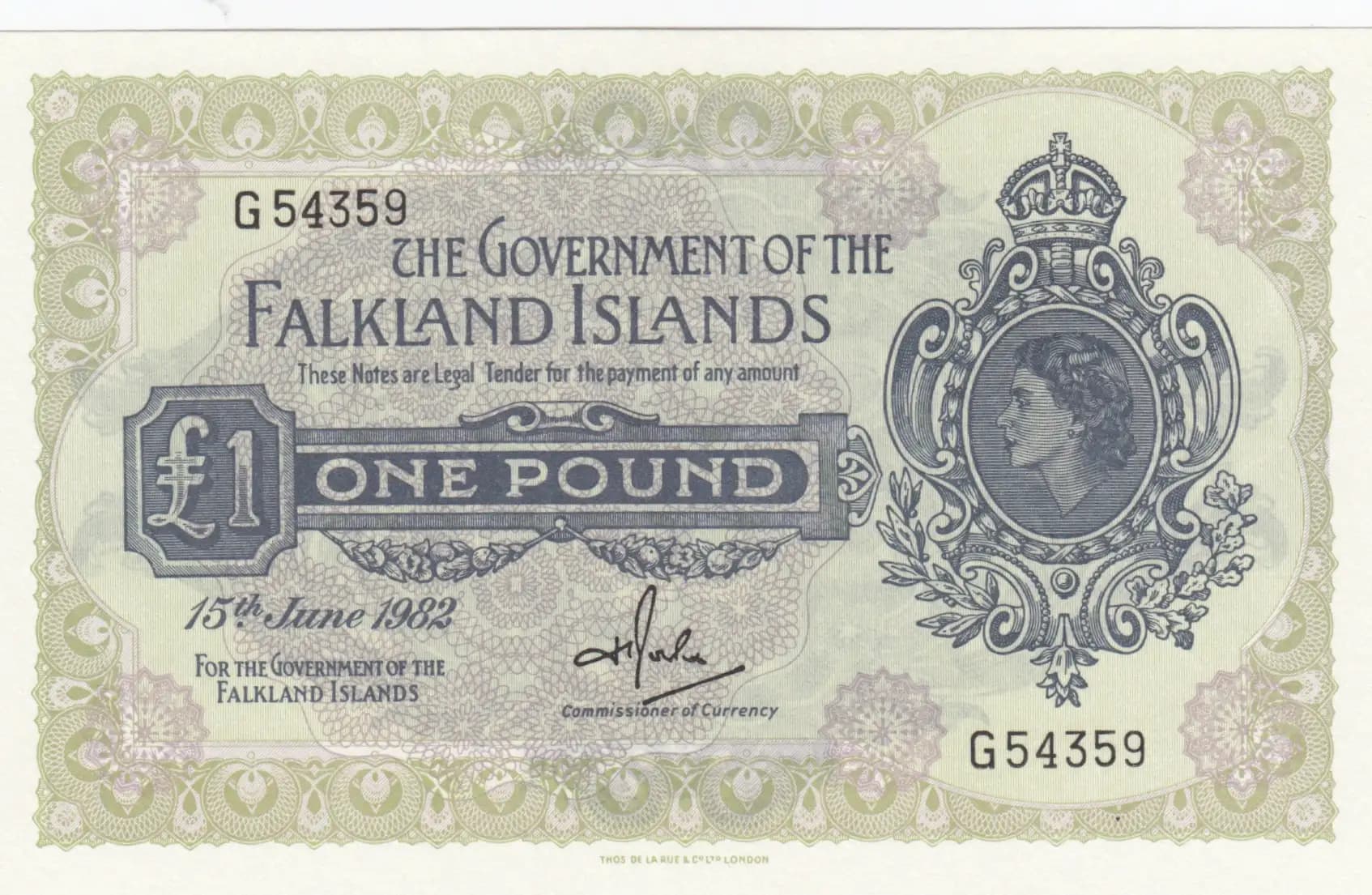
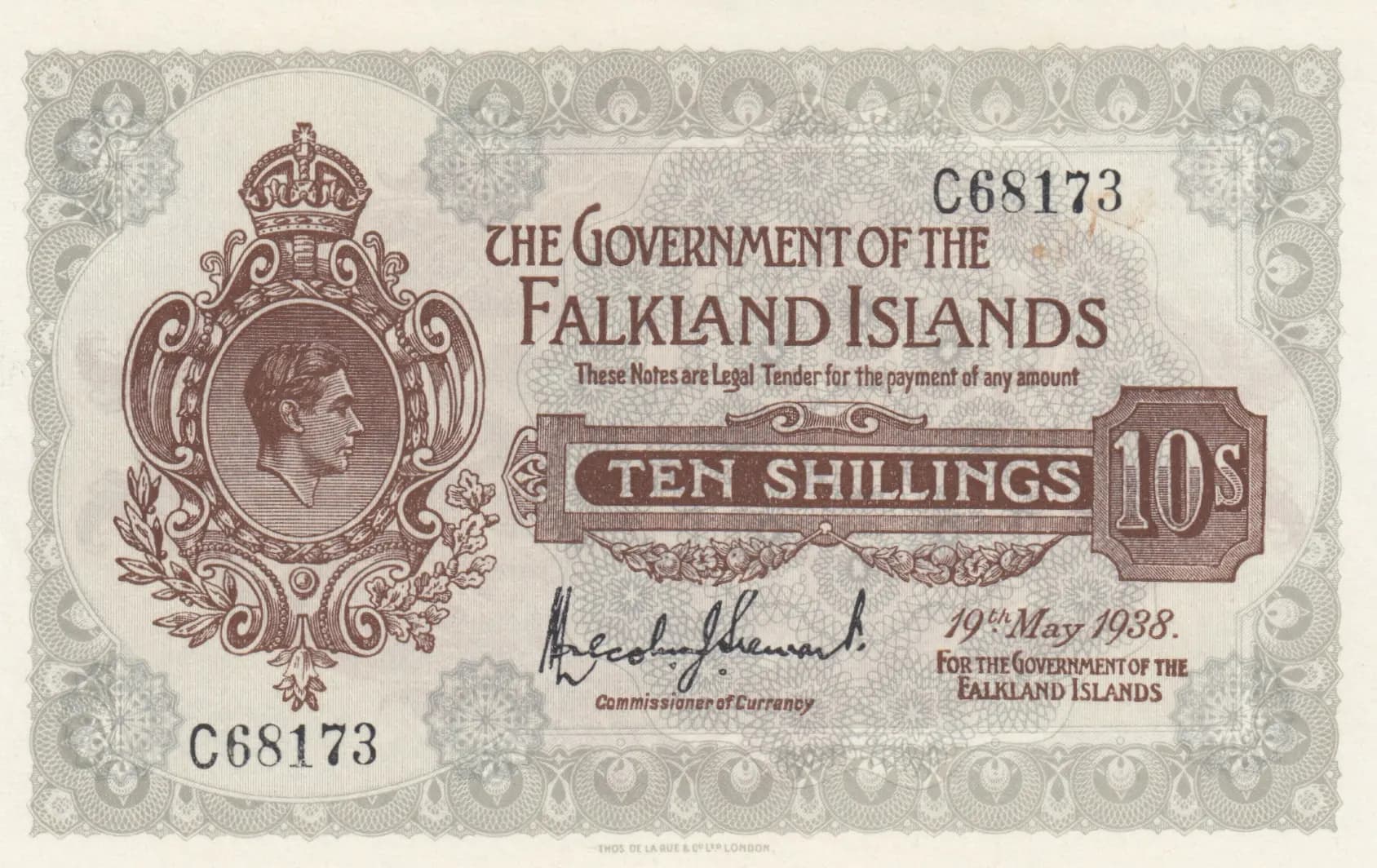
The obverse features a formal portrait medallion of Queen Elizabeth II in left-facing profile, enclosed within an elaborate oval heraldic frame adorned with a crown, laurel wreaths, scrollwork, and floral ornamental elements. This portrait is characteristic of Commonwealth currency designs of the 1970s and 1980s. The reverse displays the security printer's signature design element—a symmetrical, densely detailed ornamental pattern comprising fine geometric work, scrollwork, floral motifs, and repeating decorative borders arranged around a large central oval medallion. The dominant color scheme throughout is olive-green and dark blue on cream backgrounds, with the ornate border patterning in green and the reverse security design in navy blue. All elements exhibit the fine line work and precision engraving expected of the De la Rue security printing establishment.
Front side: '£1' and 'ONE POUND' (denomination); 'THE GOVERNMENT OF THE FALKLAND ISLANDS' (issuing authority); 'These Notes are Legal Tender for the payment of any amount' (legal tender declaration); '1st December 1977' (date of issue); 'FOR THE GOVERNMENT OF THE FALKLAND ISLANDS' and 'Commissioner of Currency' (authorization); 'F 30503' (serial number, appearing top left and bottom right); 'THOS DE LA RUE & CO LTD LONDON' (printer attribution). Back side: 'SD2DC4' (reference or technical marking, partially visible). All text in English.
Intaglio (recess) printing, the standard security printing method employed by Thomas de la Rue & Co Ltd, London. The crisp, deeply impressed impression visible on both obverse and reverse, the fine detail work in the ornamental borders and heraldic framing, and the complex geometric security patterns on the reverse are all characteristic signatures of intaglio engraving. The precision and absence of any printing defects indicate professional-grade security production.
Pick number P-8c, which per the PMG Population Report represents one of 11 documented variants for this base Pick number (P-8a through P-8e, with starred [specimen] variants). This example bears serial number F 30503, which exhibits radar properties (reads identically forwards and backwards: F-3-0-5-0-3). The note is dated 1st December 1977 and signed by the Commissioner of Currency as required. No overprints or printer variants are apparent from the visual analysis; this appears to be a standard issue note from the regular circulation printing.