10 kronur 1970
Market Prices
18 salesAbout This Note
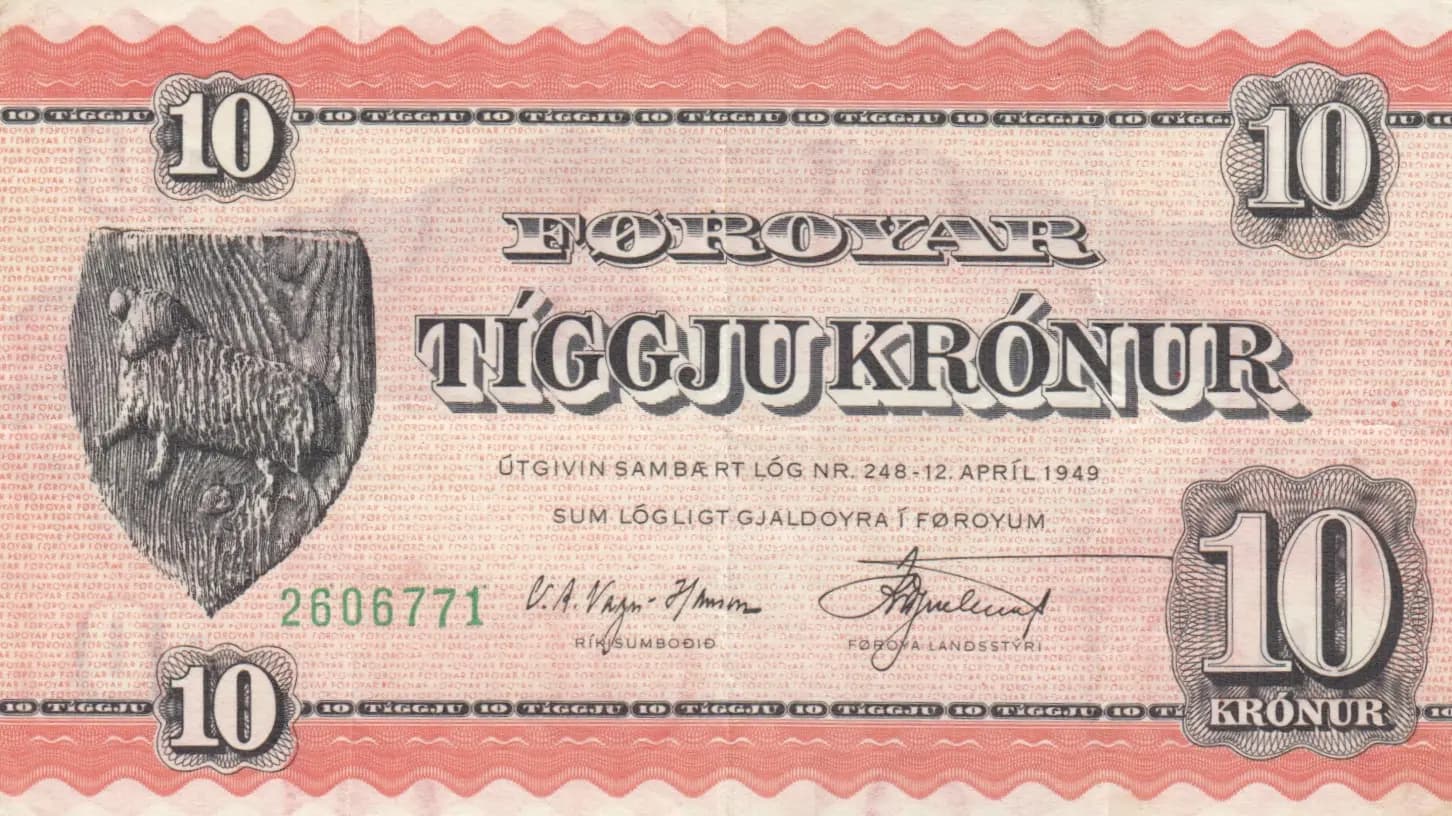
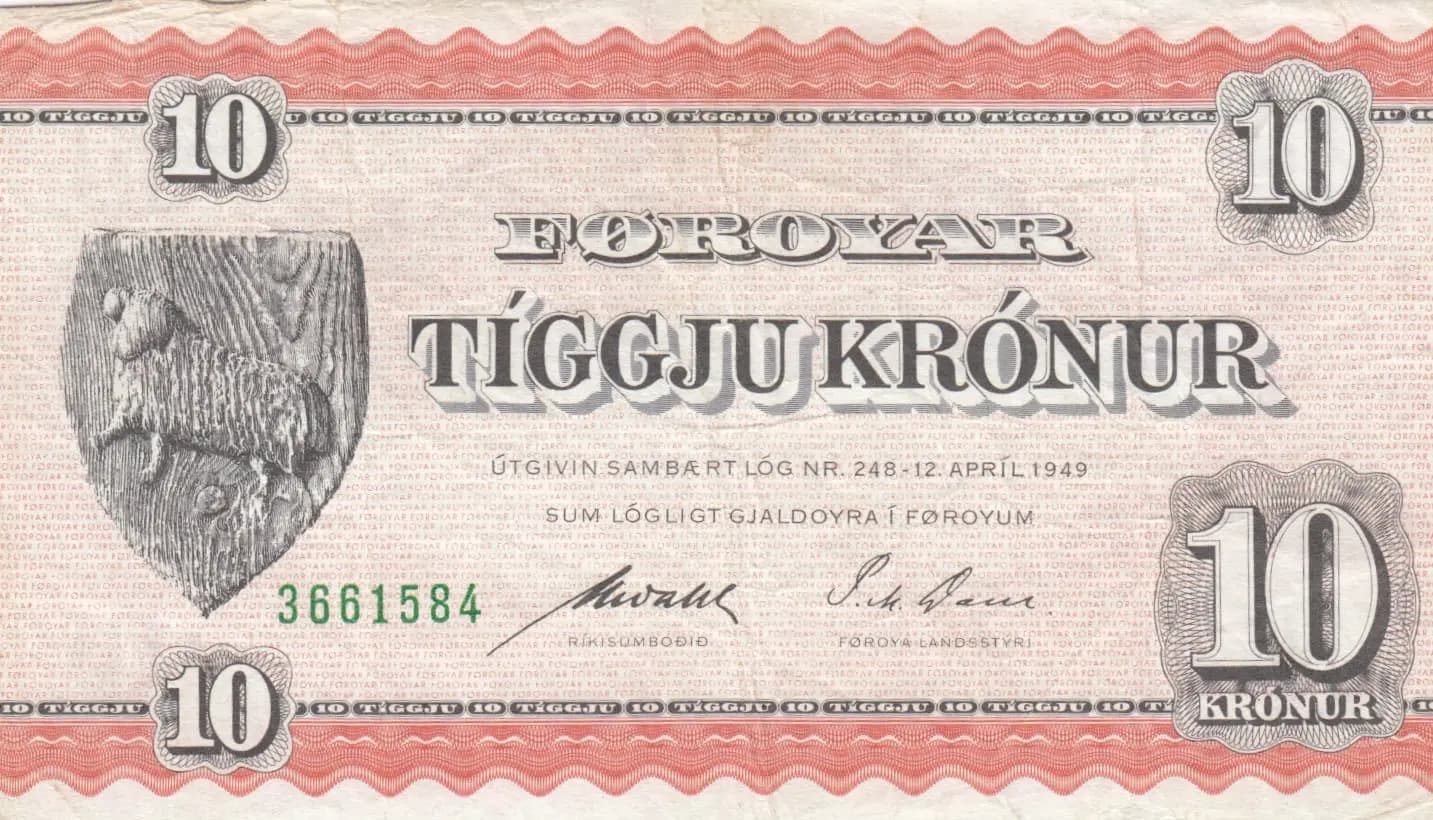
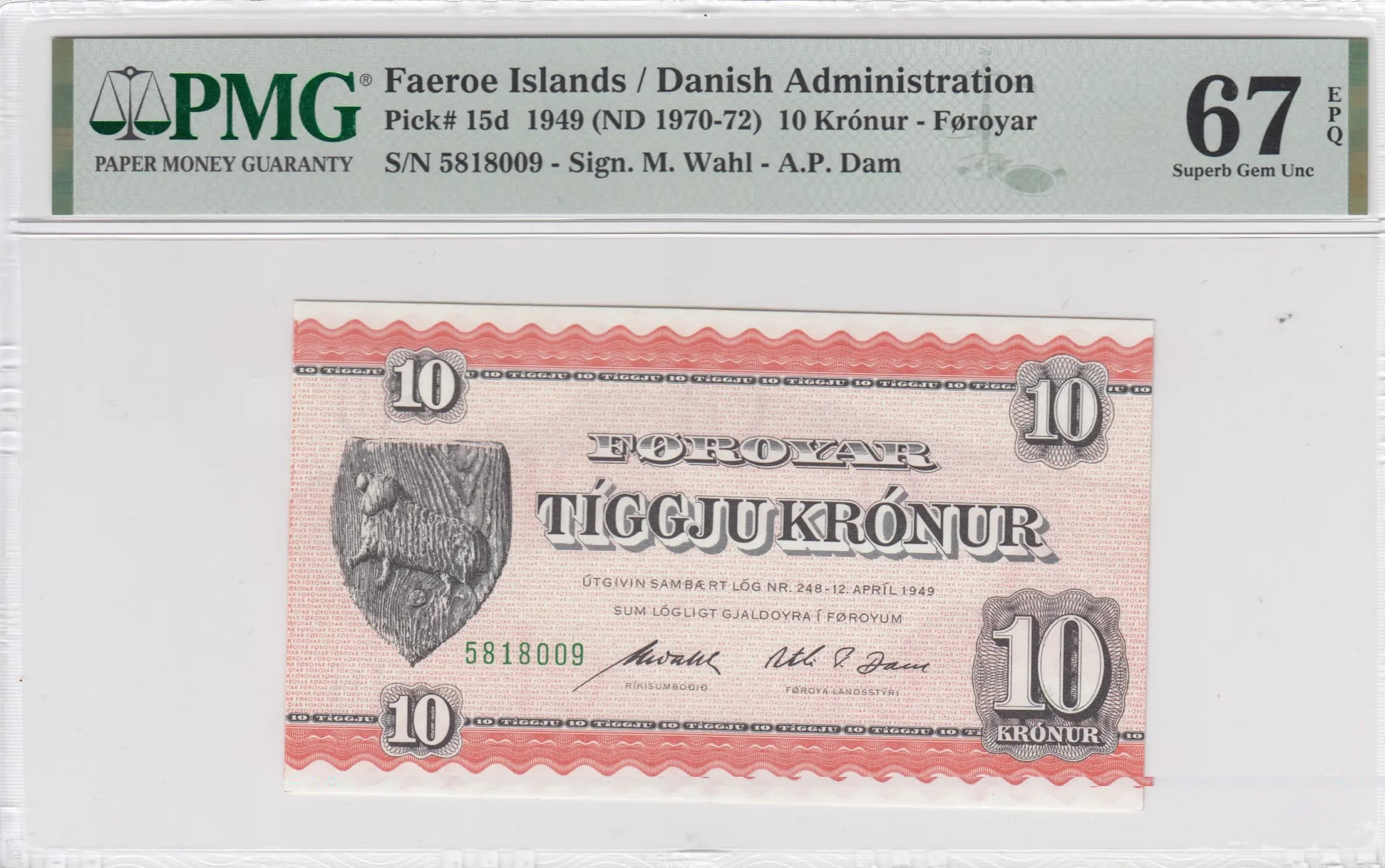
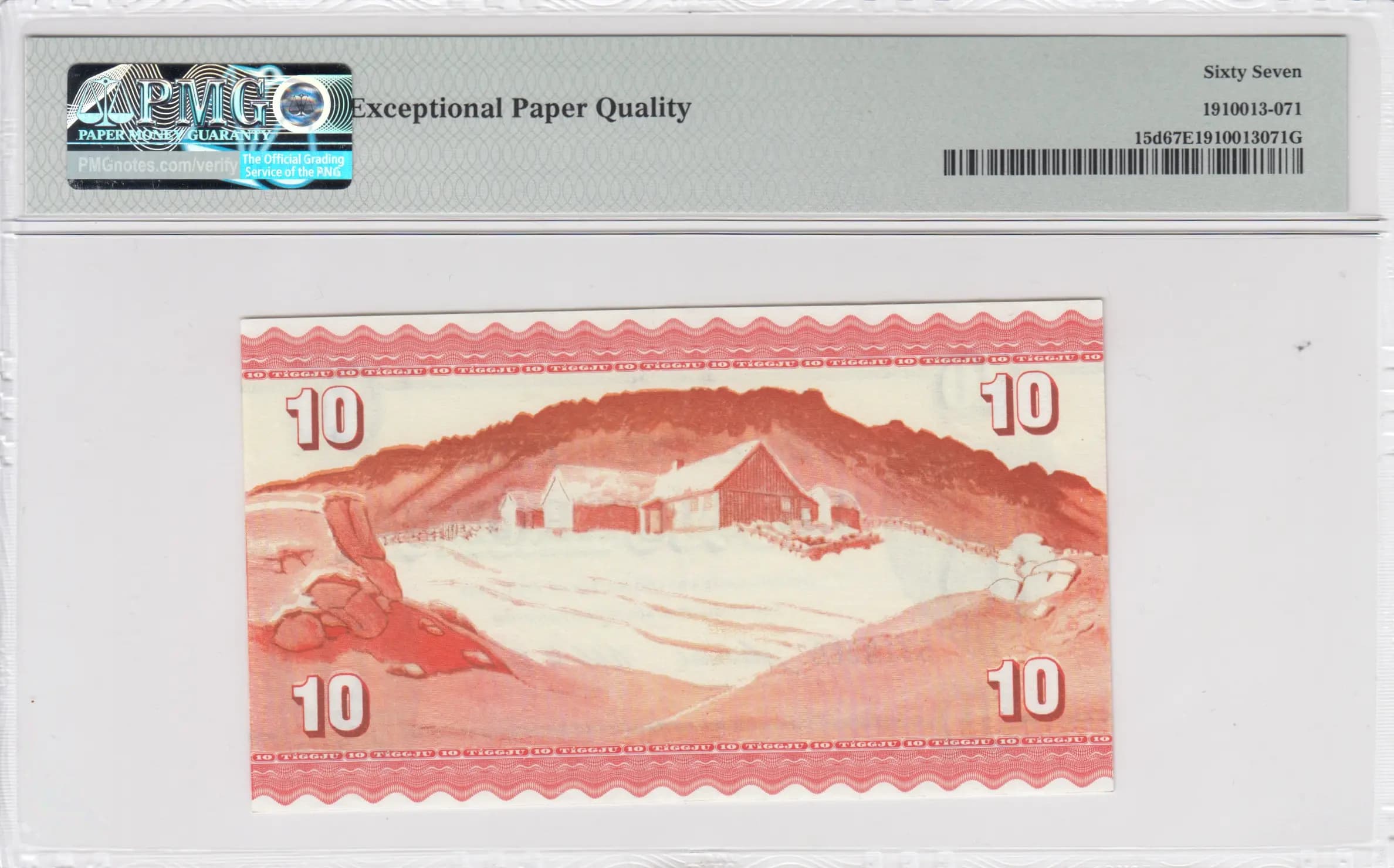
This is a pristine example of the Faeroe Islands 10 Króunur from the 1949 Law issue, graded PMG 67 EPQ (Superb Gem Uncirculated). The note features an exceptional reddish-pink color scheme with a distinctive Faroese coat of arms depicting a ram on the obverse and a charming rural Faroese landscape with traditional farmhouses on the reverse. The exceptional condition and PMG certification make this a desirable example for collectors of Scandinavian and regional European banknotes.
Common. The eBay sales data provided shows consistent, frequent transactions across multiple condition grades spanning over a decade (2013-2022), with typical sold prices ranging from $8.50 to $56, clustering around $15-30 for mid-to-high grades. The 2019 catalogue value for UNC is listed at $18, reinforcing that this is a readily available note in the collector market. No historical evidence suggests a limited print run or recall. This Pick number represents a standard regular issue from the post-war Faeroe Islands monetary series with healthy circulation and collector availability.
Issued under Law No. 248 of April 12, 1949, this banknote represents the Faeroe Islands' assertion of monetary identity during the post-World War II period under Danish administration. The ram depicted in the shield is a national symbol of the Faeroe Islands, while the rural farmhouse scene on the reverse celebrates the pastoral, agricultural heritage of the islands' traditional economy. The Faroese language inscriptions ('Føroyar,' 'Tíggju Krónur,' 'Sumi Lögligt Gjaldoyra') assert local sovereignty in currency matters despite the islands' continued political union with Denmark.
The obverse features the coat of arms of the Faeroe Islands centrally positioned at left, prominently displaying a Faroese ram (representing the nation's wool and pastoral traditions) within a shield crest. Decorative circular denomination markers reading '10' occupy all four corners in an ornate style. The reverse depicts an authentic Faroese rural landscape scene characteristic of the islands' terrain: a valley settlement with traditional white-walled farm buildings featuring reddish-brown or red-tiled roofs, mountains rising in the background rendered in muted reddish-pink tones, and rocky foreground elements. The entire note is framed with decorative wavy borders at top and bottom, a signature design element of this series. The color palette—reddish-pink with cream and black printing—creates a warm, distinctive aesthetic unique to this Faeroe Islands issue.
FRONT: '10' (denomination numeral); 'FØROYAR' (Faroe Islands); 'TÍGGJU KRÓNUR' (Ten Krónur); 'ÚTGIFIN SAMBÆRT LÓG NR. 248-12. APRIL 1949' (Issued according to Law No. 248-12 April 1949); 'SUM LÖGLIGT GJALDOYRA Í FØROYUM' (Legal tender in the Faroe Islands); '5818009' (serial number); 'Wahl' and 'A.P. Dam' (authorized signatures); 'RIGSISUMBÚÐIC' (Royal printing/State printing office); 'FØROYA LANDSSTÝRI' (Faroe Islands Government). BACK: '10' (denomination numerals in all four corners); no other text inscriptions visible on the reverse landscape design.
Intaglio (engraving) printing, evidenced by the fine line work, intricate detail in both the heraldic shield design and landscape scene, and the characteristic sharp definition of all design elements. The visual analysis notes 'fine line work' and 'intricate engraved design,' consistent with the high-security engraved banknote production standard of the era. The Royal Printing Office (Rigsisumbúðic) is credited as printer. This is consistent with Danish central banknote production practices of the 1949-1954 period.
This specimen carries the signatures of 'Wahl' and 'A.P. Dam' on the obverse, representing one signature variety of the P-15d issue. The serial number '5818009' with green printing is visible. The Pick 15d designation indicates this is from the later printing batch of the 1949 Law issue (series variants are typically designated a, b, c, d based on signature combinations and printing dates within the 1949-1954 authorization period). No overprints or secondary varieties are noted in the visual analysis. The date range 'L. 12.04.1949 (1954)' in external references suggests printing continued through 1954, with this note representing the standard production from that extended authorization window.