10 kronur 1954
Market Prices
13 salesAbout This Note
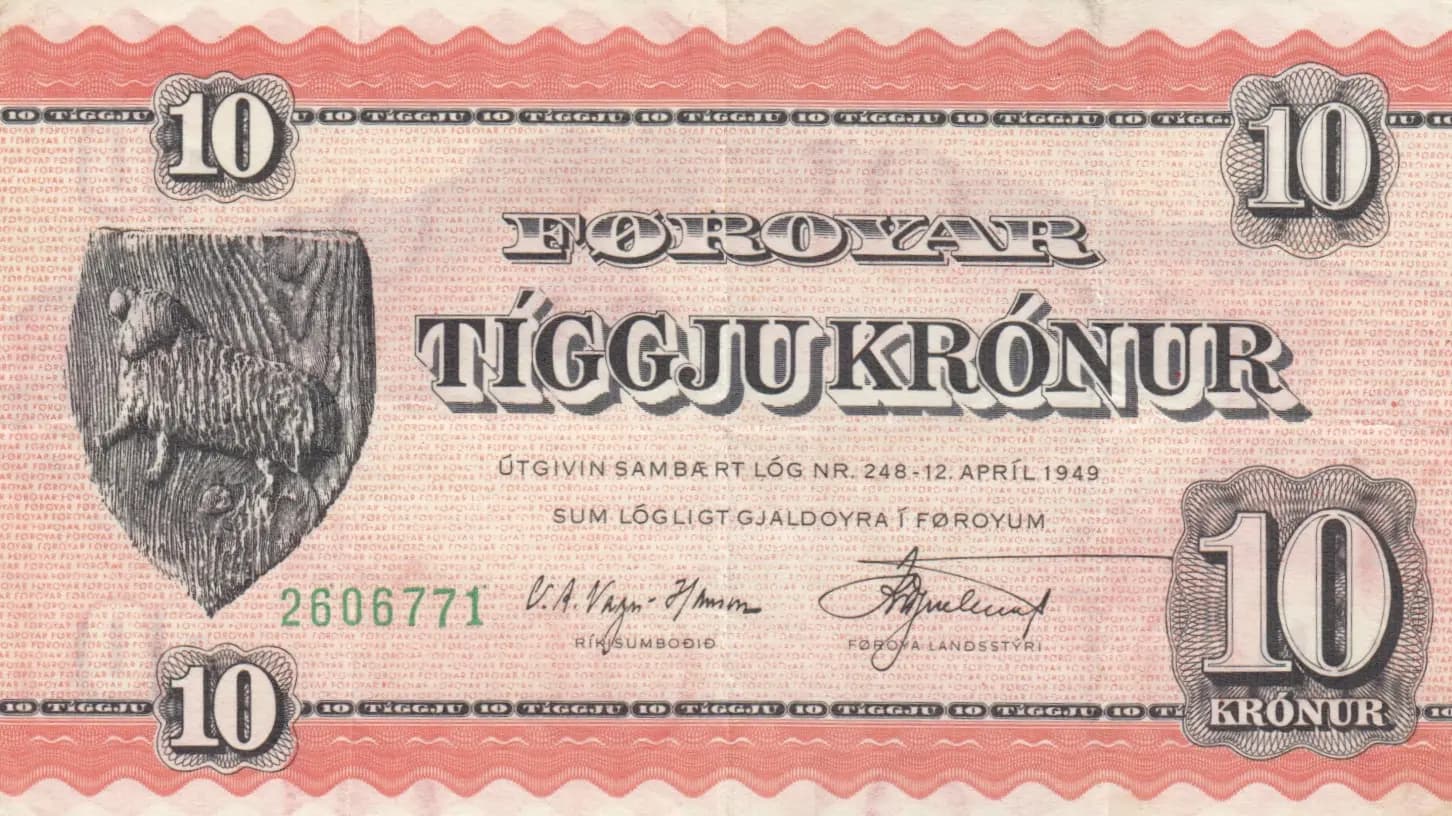
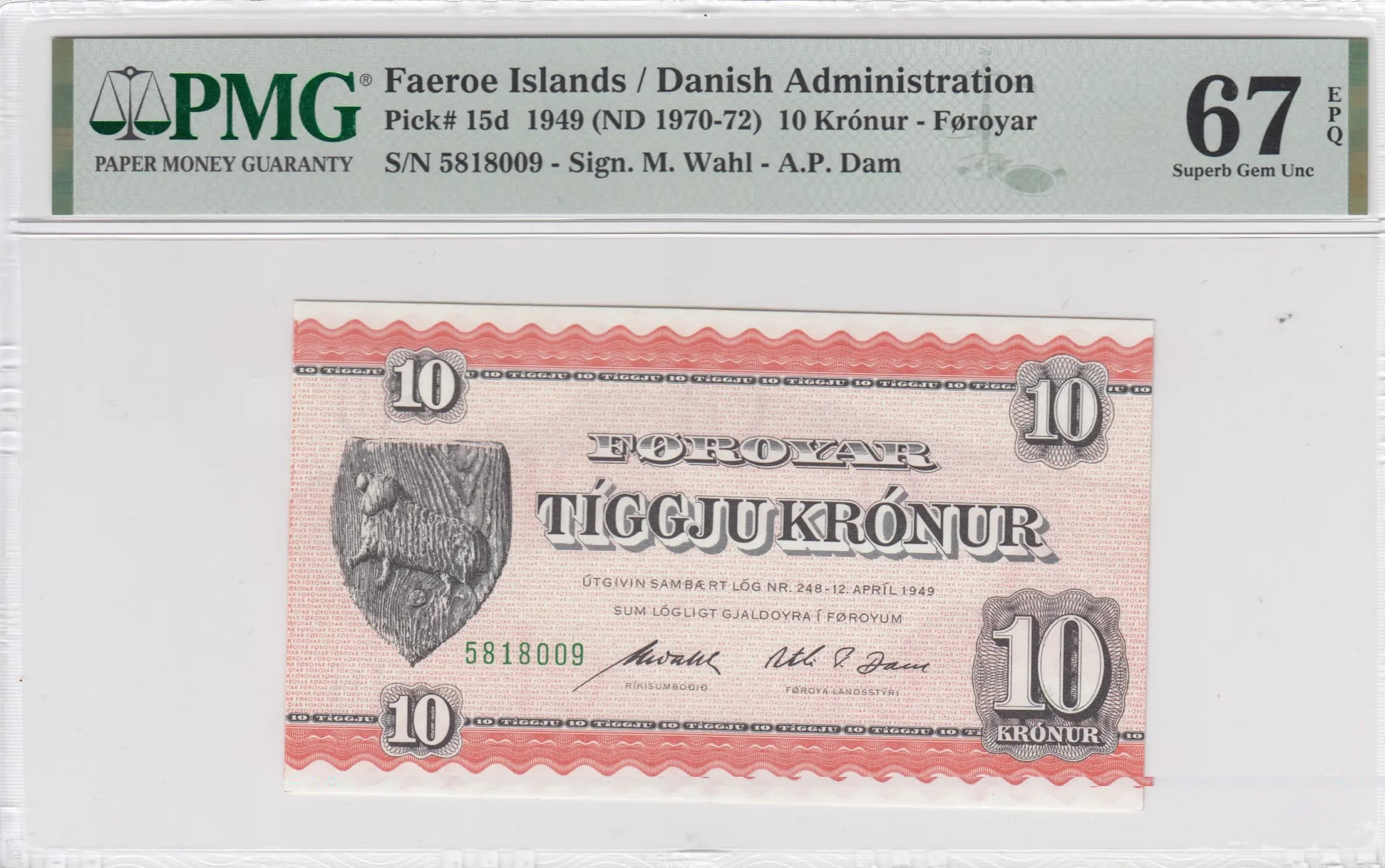
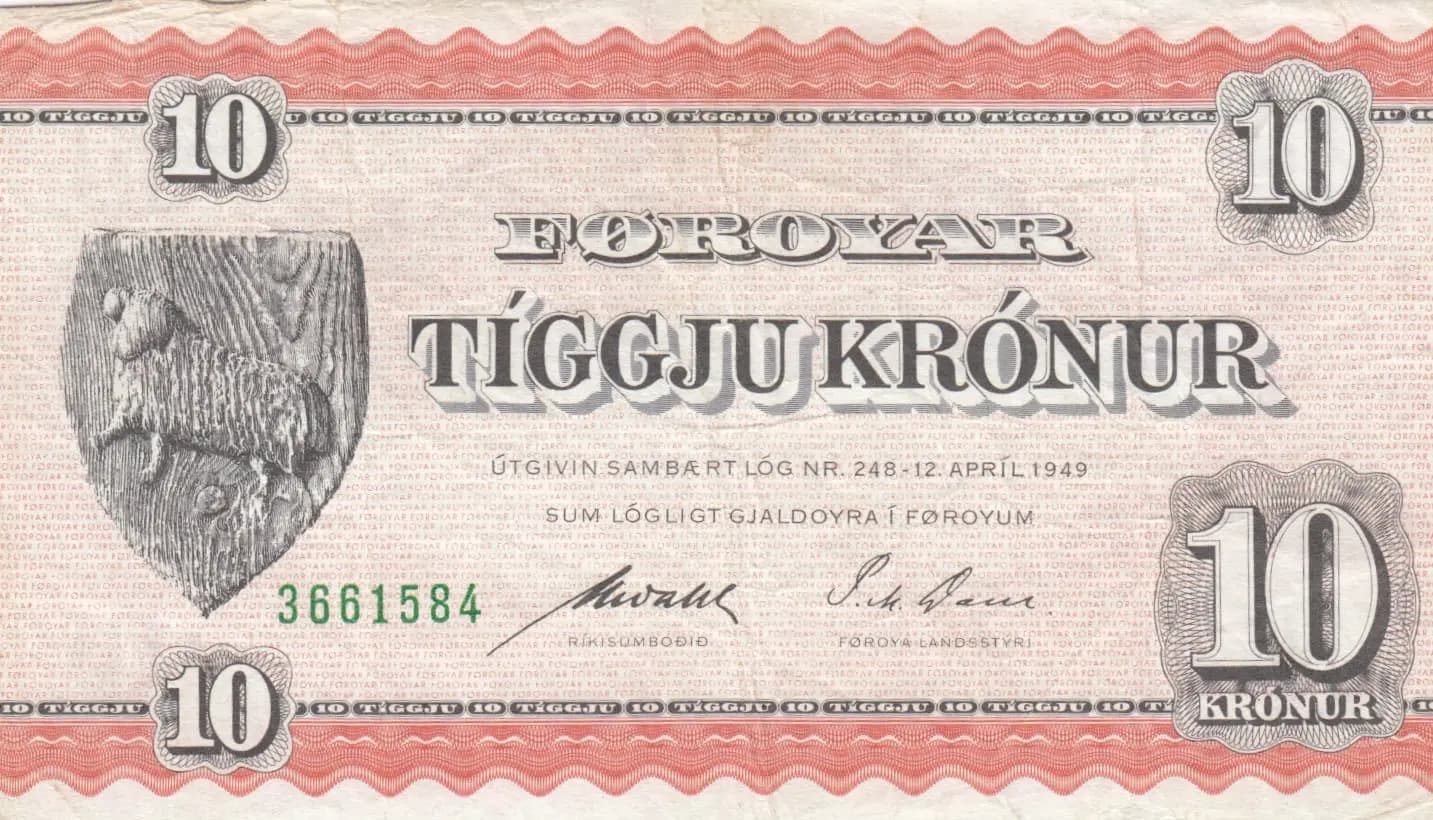
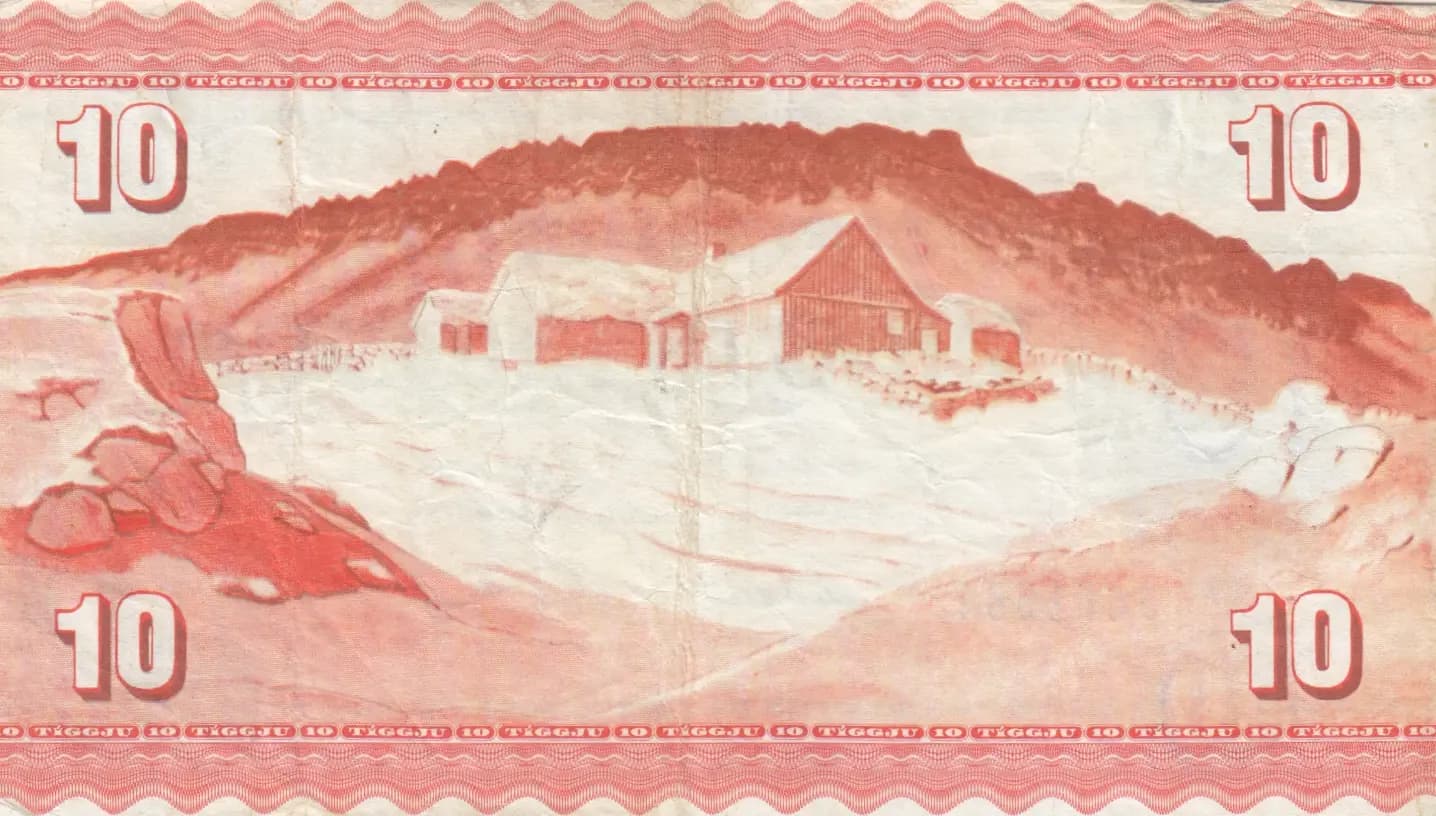
This Faroe Islands 10 Króna note from 1954 (issued under Law No. 248 of April 12, 1949) presents an attractive example of mid-20th century Nordic banknote design. The obverse features a prominent coat of arms with a ram's head in a shield on the left, set against a pink/salmon colored background with decorative wave-pattern borders and fine line engraving details. The reverse depicts a charming rural landscape scene with a red-roofed farmhouse nestled in rolling hills and mountains, capturing the pastoral character of Faroese life. The note exhibits VF condition with some age-related discoloration and minor handling wear but remains well-preserved with no significant tears or damage.
Common. The eBay sales history demonstrates consistent market activity with numerous sales across multiple condition grades (F through UNC) between 2009 and 2022, with VF examples regularly selling in the $12.50–$19 range. The 2019 catalog valuation of $9 for VF condition, combined with the high frequency of sales and relatively modest prices realized, indicates this note remains readily available in the collector market. The 1949 law authorized a standard circulation issue with no evidence of limited print runs or early recall.
The 10 Króna note was issued under the Faroese Government's monetary authority following the 1949 legislative framework that established the Faroe Islands' own currency system. The selection of the ram's head as the central heraldic symbol reflects the historical importance of sheep farming and the wool trade to Faroese economy and culture. The reverse's depiction of a traditional farmhouse with characteristic red roof and mountainous terrain serves as a visual testament to the Faroe Islands' distinct cultural identity during a period of increasing self-governance in the mid-20th century.
The obverse displays a shield bearing a ram's head (Ovis aries), a symbol of the Faroese pastoral heritage and economic foundation, positioned on the left side of the note. The denomination '10' and text 'TÍGGJU KRÓNUR' are prominently featured in the center and all four corners within decorative scalloped frames. The reverse features an engraved landscape vignette depicting a traditional Faroese rural scene with a red-roofed farmhouse as the focal point, surrounded by rolling hills and a distant mountain range, rendered in fine detail typical of classical banknote engraving. The entire note is framed by a distinctive decorative wave-pattern border in pink/salmon tones, with the cream/beige background providing contrast to the black text and green serial number.
Front side: '10' (denomination in numerals); 'FØROYAR' (Faroe Islands); 'TÍGGJU KRÓNUR' (Ten Krónur); 'ÚTGIFIN SAMBART LÓG NR. 248-12. APRÍL 1949' (Issued according to Law No. 248-12, April 1949); 'SUM LÖGLIGT GJALDOYRA Í FØROYUM' (Legal tender in the Faroe Islands); 'RÍKISÚMBÓDIÐ' (The Government); 'FØROYA LANDSSTÝRÍ' (Faroe Islands Government); 'KRONUR' (Krónur); Serial number '3661584' in green ink. Back side: '10' (denomination repeated in corners).
Intaglio engraving (copperplate printing), evidenced by the fine line patterns, detailed landscape vignette, decorative borders, and precise denomination numerals characteristic of high-security banknote production. The multi-color printing (pink, salmon, cream, black, and green inks) was applied in separate passes, typical of mid-20th century Nordic banknote production standards.
This specimen is identified as Pick 15c (the 1954 issue date variant under the 1949 law). The serial number '3661584' is printed in green ink, consistent with the standard issue type. No overprints or unusual varieties are visible. The note conforms to the regular issue characteristics documented in the Pick catalog without evidence of signature variants or emergency overprints that might distinguish it as a scarce variety.