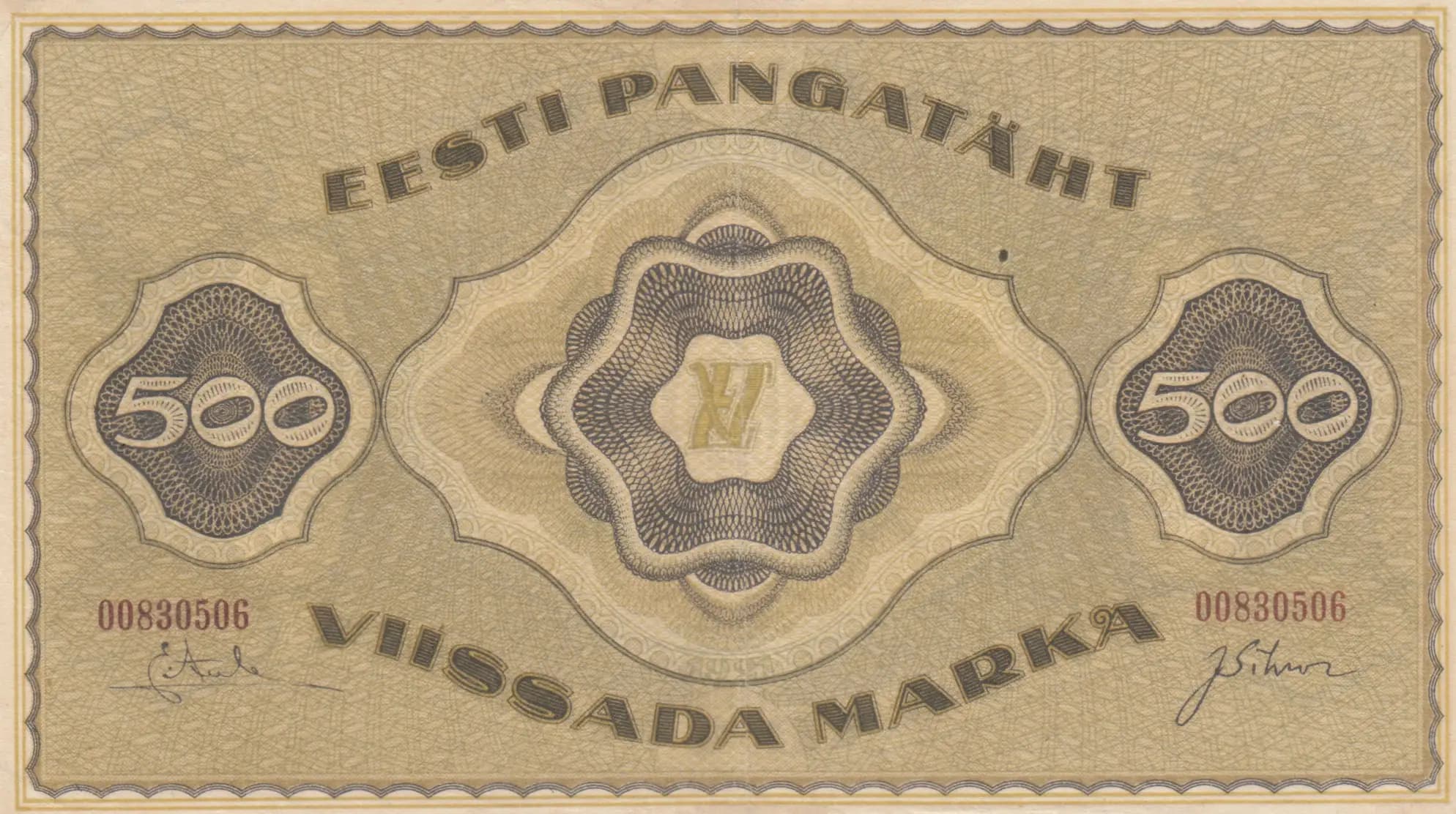
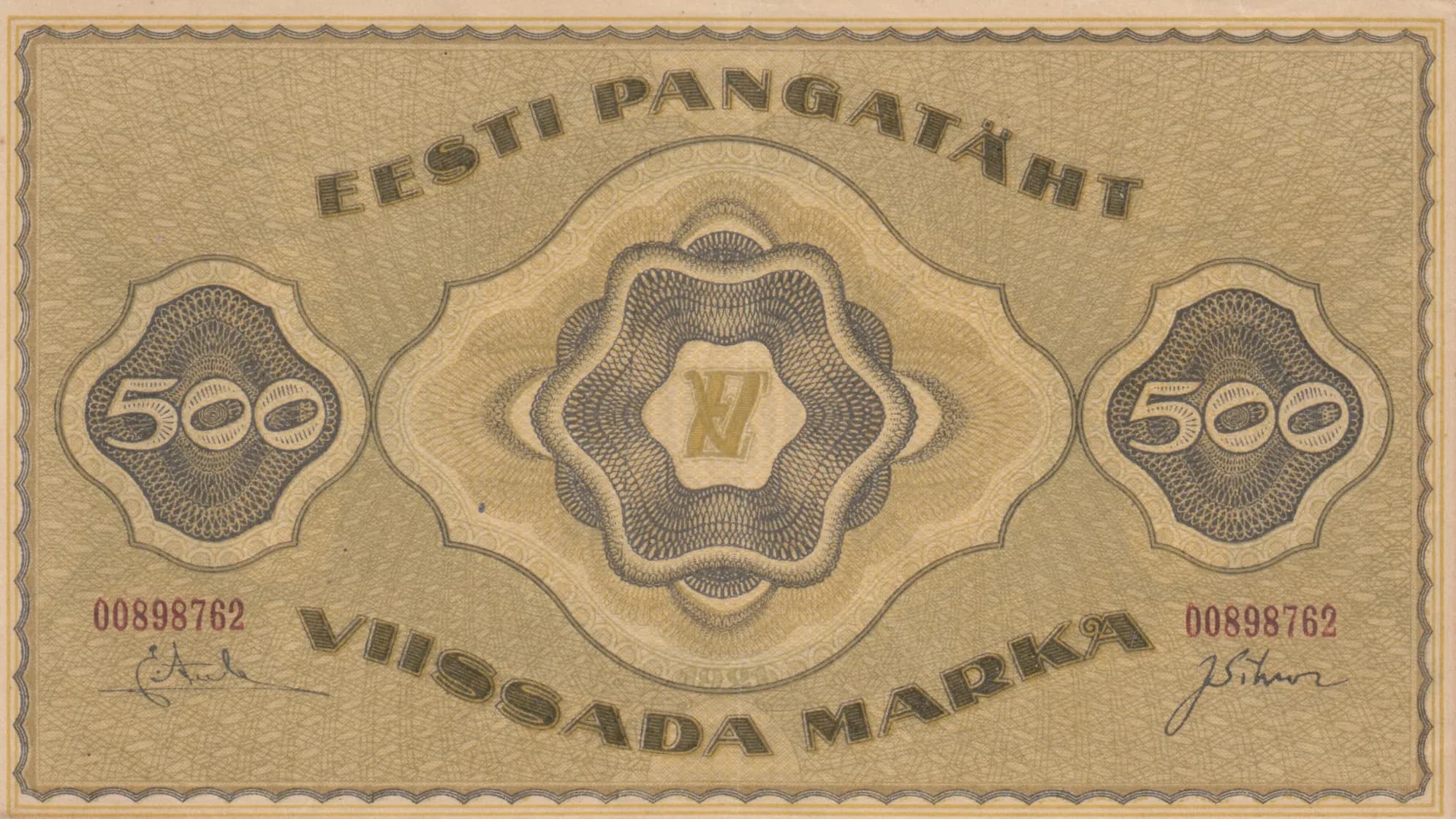
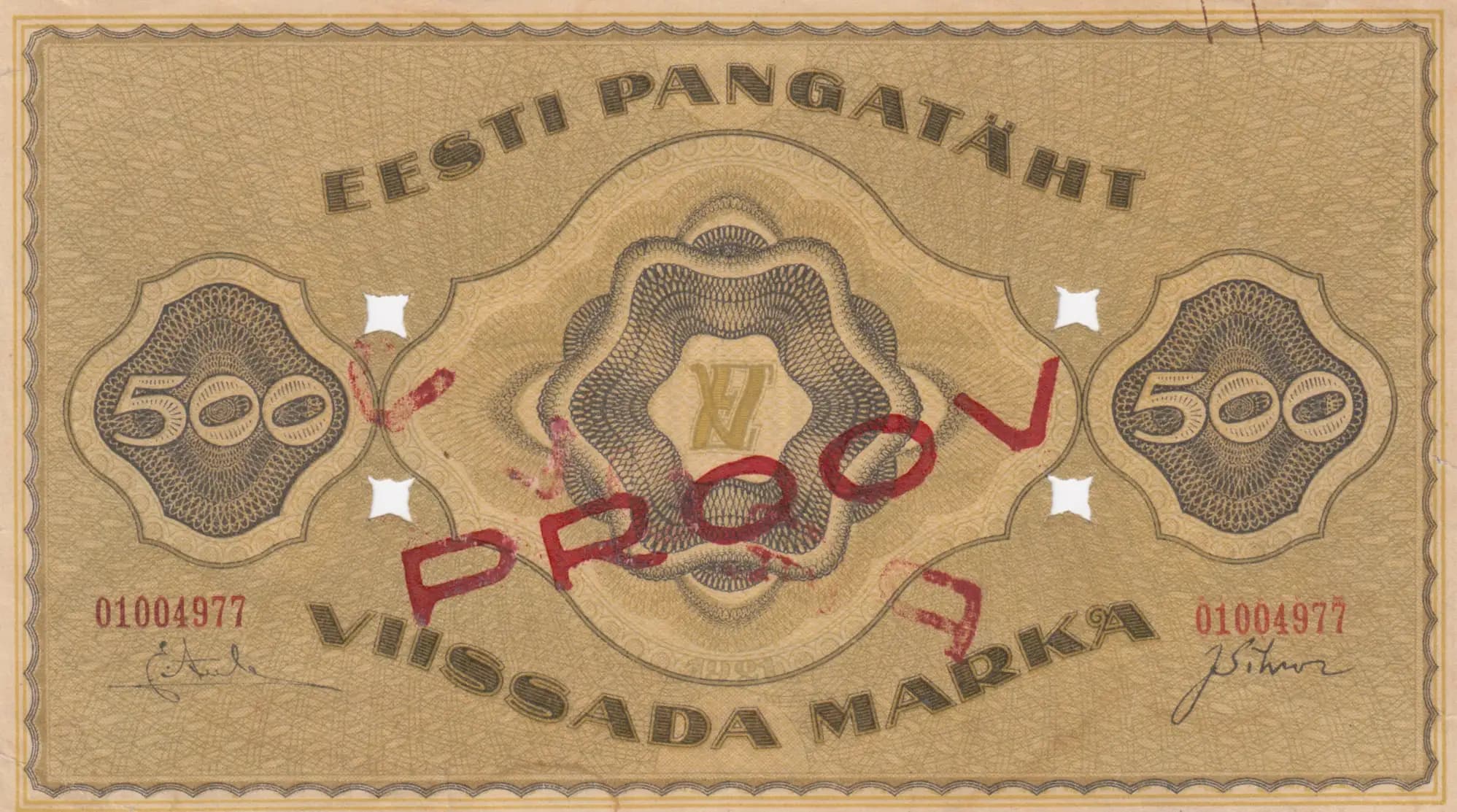
500 marka 1921
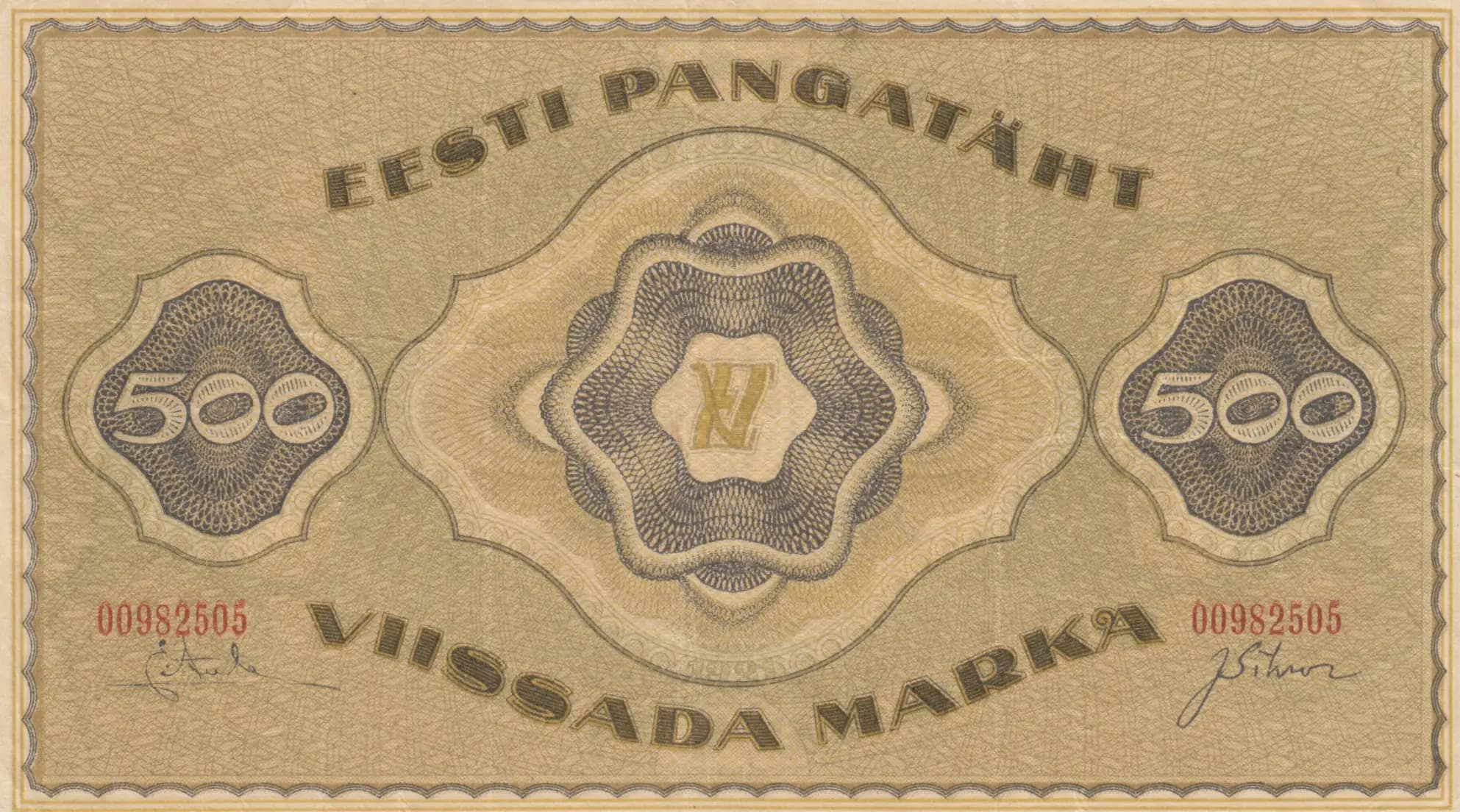
“red serial #”
Market Prices
1 saleAbout This Note
This 500 Marka note from Estonia's 1921 Treasury issue presents a masterclass in early 20th-century security printing, featuring three ornate rosette medallions with intricate guilloché patterns and scalloped borders. The visual analysis confirms VF condition with no observable wear, creases, or damage, making this an exceptionally well-preserved example of Estonia's first independent currency. The red serial number (00982505) noted in collector records adds to its appeal as a distinctly marked variant of this historically significant denomination.
Common. Despite the historical significance of early Estonian currency, the 500 Marka 1921 (P-57) remains relatively common in collector markets. The eBay price data provided (F grade at $561 in 2016; VF catalogue value $1,500) indicates steady but not exceptional demand. The note was part of a regular issue by the Treasury of Estonia with reasonable print quantities to support commerce during the early independence period. While VF examples command moderate premiums ($1,500 catalog value), the consistent availability in the secondary market and lack of documented scarcity factors (small print run, recall, or short issue period) classify this as a common issue. The red serial number variant noted in the collector record may represent a minor printing variety, but does not significantly alter the overall commonality assessment.
Issued in 1921 by the Treasury of Estonia (Eesti Vabariigi), this 500 Marka note represents the young nation's assertion of monetary sovereignty following independence from the Russian Empire in 1918. The elaborate baroque-influenced ornamental design—featuring symbolic rosettes and civic inscriptions emphasizing the Bank's sole right to issue currency—reflects Estonia's desire to establish financial legitimacy and institutional credibility during the turbulent early interwar period. The note's ornate security features and careful typographic presentation demonstrate the technical sophistication Estonia brought to establishing a modern national currency.
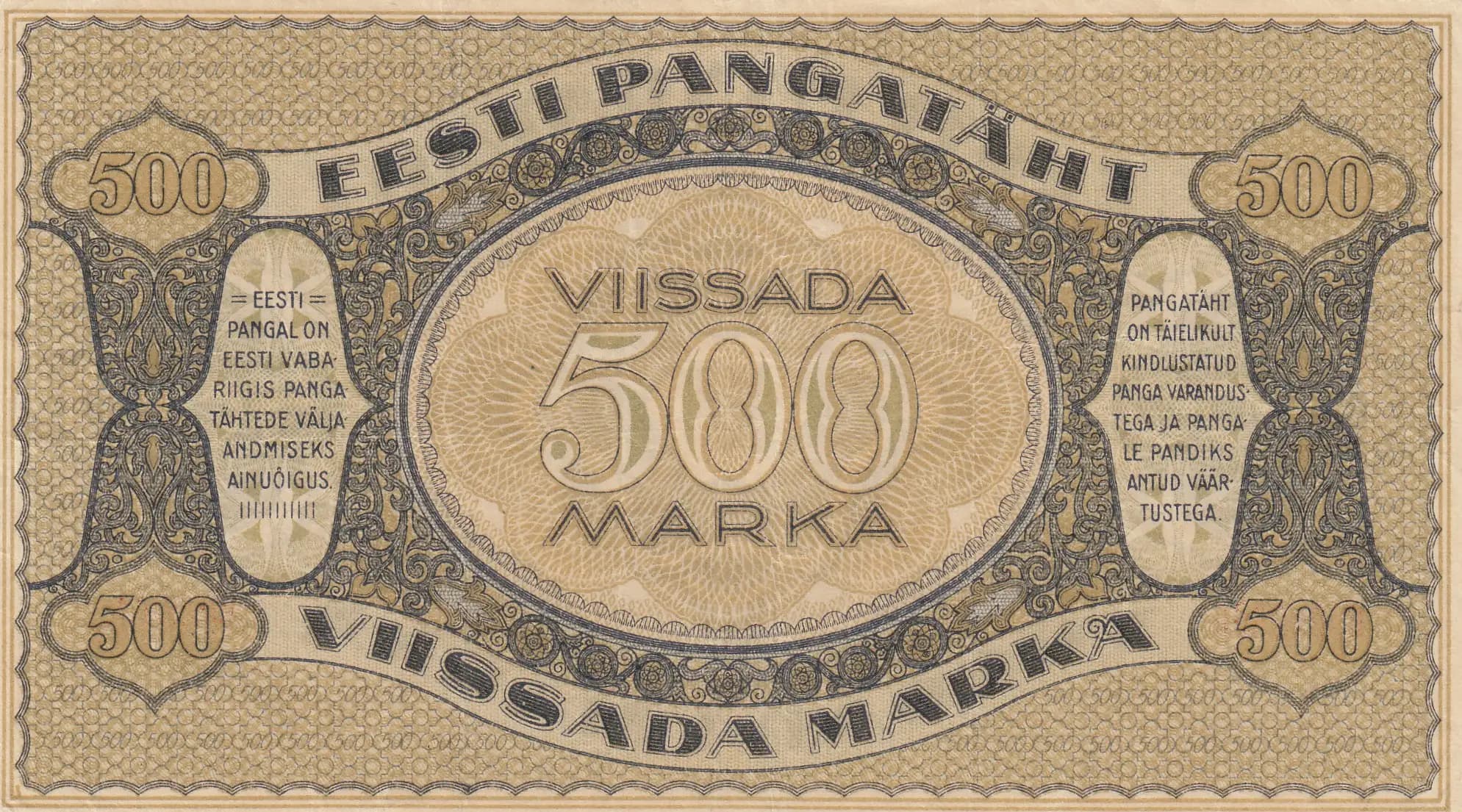
The 500 Marka features a restrained yet ornate design typical of early Estonian currency. The obverse displays three elaborate rosette medallions arranged horizontally—a large central medallion containing a stylized 'M' (representing Marka) flanked by two smaller matching medallions, all rendered in concentric circular and radial guilloché patterns. A scalloped decorative border frame surrounds all edges on a light tan/beige background. The reverse presents a more complex composition: a central oval medallion containing the denomination '500' and 'MARKA' in prominent numerals, with the denomination repeated in all four corners. Victorian-style baroque ornamental borders featuring elaborate floral and scrollwork patterns dominate the design, with rectangular cartouches on either side containing the legal declarations regarding the Bank's monetary authority. The consistent use of fine line engraving, guilloché work, and complex ornamental cartouches throughout both sides demonstrates the security-conscious design approach of the early Estonian state.
Front side: 'EESTI PANGATÄHT' (Estonian Banknote); 'VIISSADA MARKA' (Five Hundred Marka); Serial number 00982505 (repeated). Back side: 'EESTI PANGATÄHT' (Estonian Banknote); 'VIISSADA MARKA' (Five Hundred Marka); '500' (denomination, repeated in four corners); 'EESTI PANGALON EESTI VABA RIIGIS PANGA TÄHTEDE VÄLJA ANDMISEKS AINUÕIGUS' (The Estonian Bank has the sole right to issue banknotes in the free Estonian state); 'PANGATAHT ON TÄIELIKULT KINDLUSTATUD PANGA VARANDUS-TEGA JA PANGA LE PANDIKS ANTUD MÄÄR TUSTEGA' (The banknote is fully secured by the bank's assets and the security provided to the bank).
Intaglio (recess) printing on banknote paper, employing steel engraving techniques. The intricate guilloché patterns, fine line work, and detailed ornamental borders evident throughout both sides are characteristic of high-security banknote production from this era. The precision of the concentric rosette medallions and the elaborate baroque-style border designs indicate professional security-printer work, consistent with standards established by major European central banks of the 1920s. The specific printer for Pick-57 is not definitively documented in standard catalogs, though Estonian banknote production of this period involved collaboration with established European security printers.
Pick catalog number P-57a is documented as the primary variant for this denomination. The collector notation regarding a red serial number (as opposed to standard black or other colors) may indicate a printing variety related to serial number ink color, though this is not explicitly confirmed in standard catalogs. The serial number 00982505 observed in this specimen should be cross-referenced against PMG population reports to determine if specific serial number ranges correspond to documented varieties. Additional research into Estonian Treasury archives would be required to confirm whether red serial number issues represent a distinct printing variety or a cataloging notation specific to this specimen.