1 peso 1913
Market Prices
About This Note
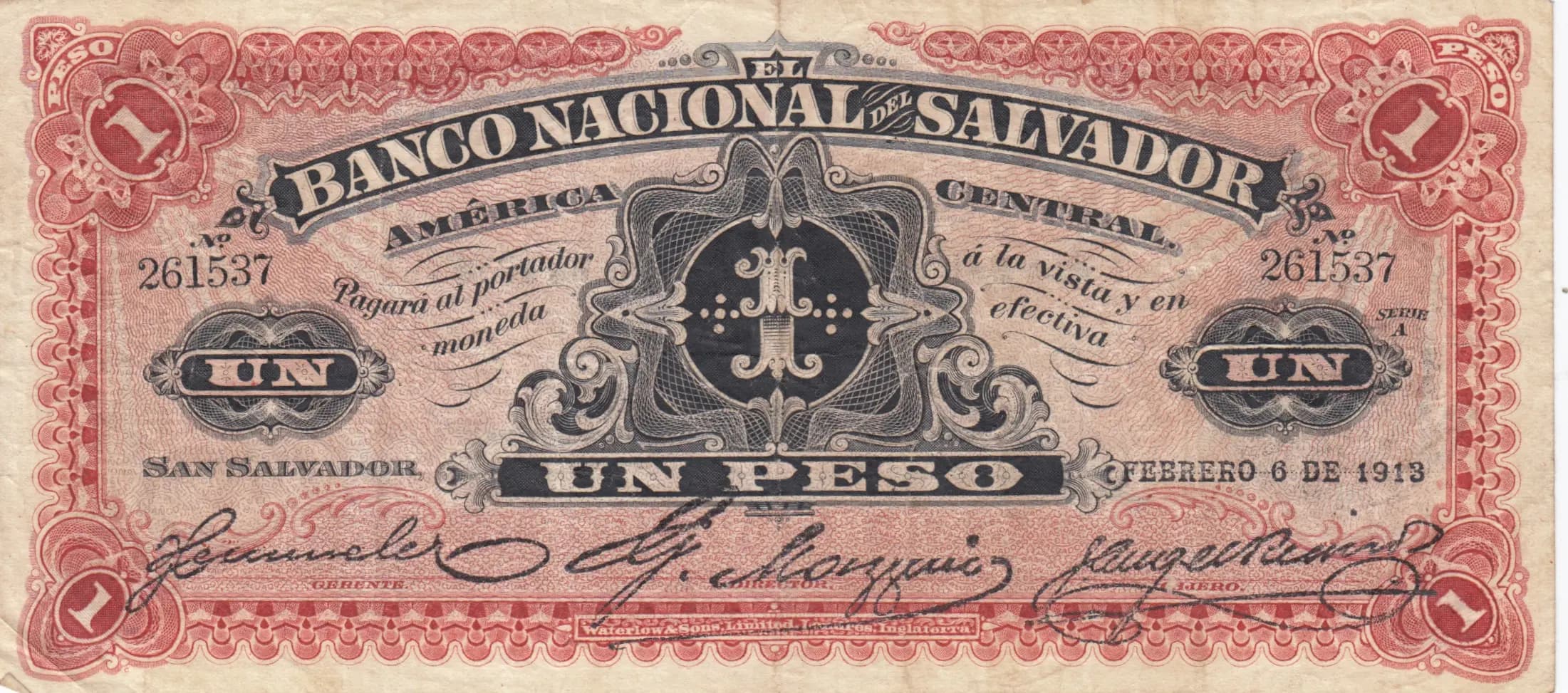
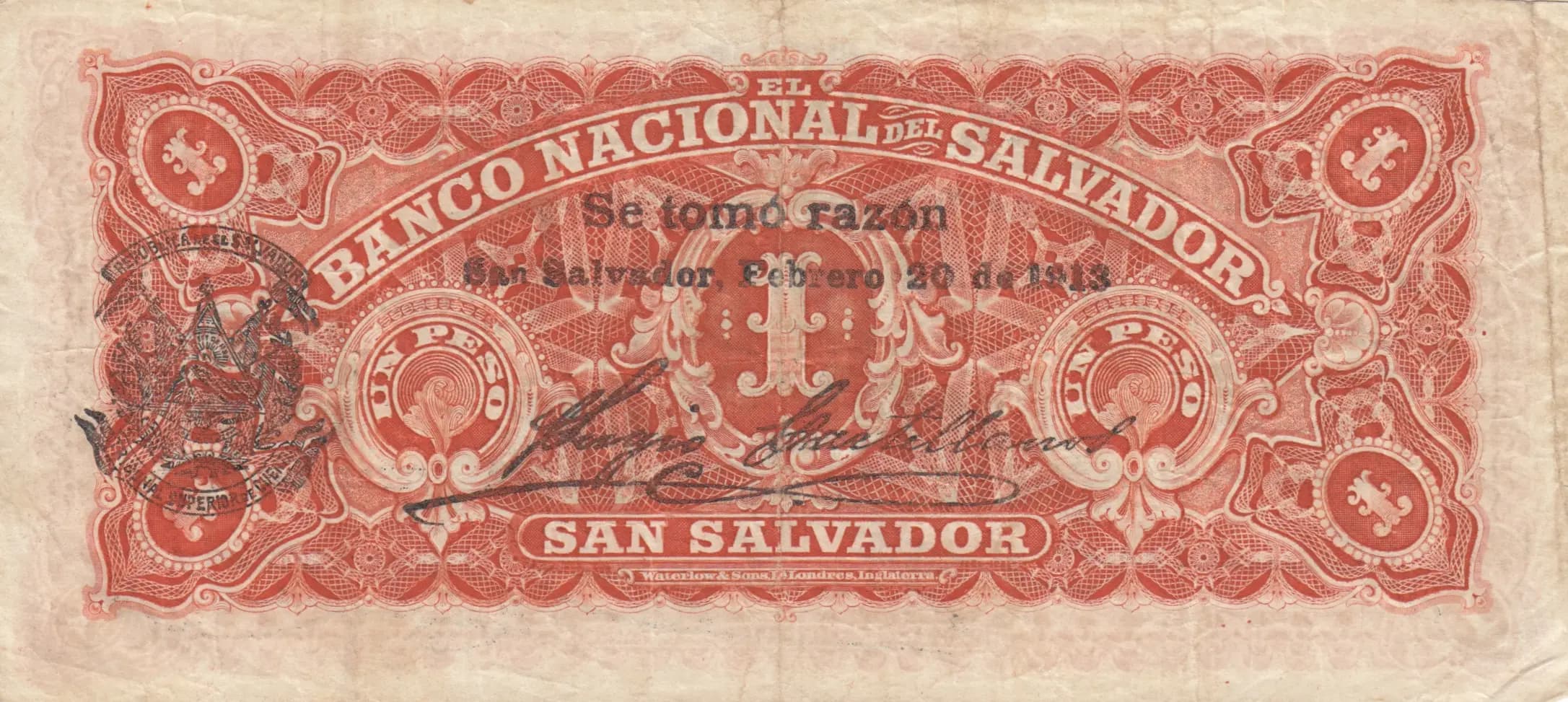
This 1 peso note from Banco Nacional del Salvador, dated February 6, 1913, exemplifies early 20th-century Central American currency design with its ornate pink and rose colored borders framing an intricate central guilloche medallion. The note shows authentic period wear including creasing, foxing, and aged patina consistent with its Fair condition grade, with serial number 261537 visible on both sides. This Pick S161b represents a significant example of El Salvador's pre-modern banking era, printed by the prestigious London firm Waterlow & Sons.
Common. While this is a genuine historical note from 1913, the eBay price tracking data shows a wide range of listings from $99.99 to $5,999.95 USD, with most concentrated in the $200-$800 range for standard examples in mixed conditions. The presence of multiple sales at relatively modest prices ($99.99-$399.95) for notes in unknown condition indicates steady collector availability. The Banco Nacional del Salvador's 1 peso denomination from this series appears to have had a reasonable print run, and examples continue to circulate among collectors and dealers regularly. Fair condition examples such as this one would typically command prices in the lower to mid-range of the observed market data.
This note was issued during a period of relative financial stability in El Salvador under the Banco Nacional del Salvador's mandate established in the early 1900s. The February 1913 date places it within the broader Latin American modernization period when nations sought to establish credible central banking institutions and adopt sophisticated currency designs to reflect international financial standards. The prominent attribution to Waterlow & Sons Limited of London reflects El Salvador's reliance on European security printers to produce legitimized currency that could compete internationally.
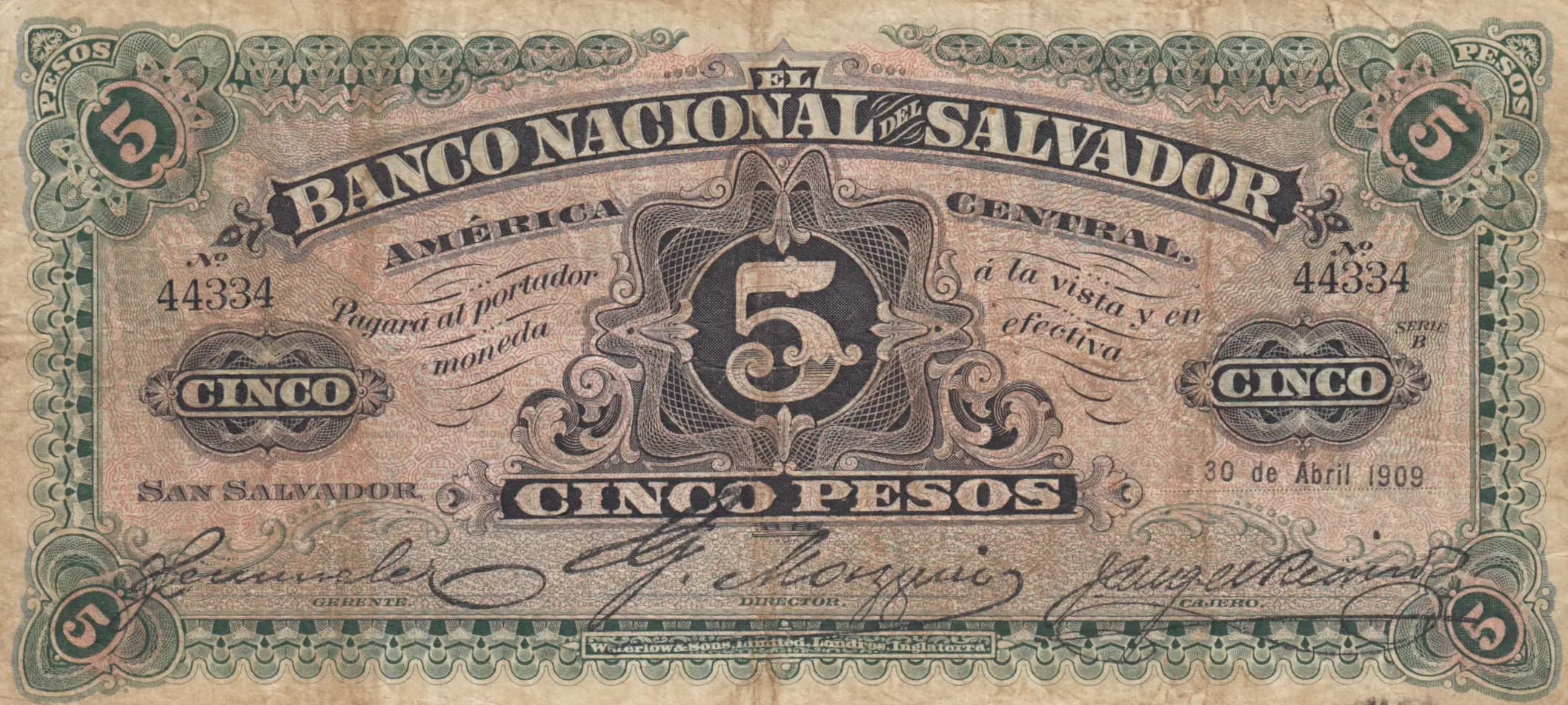
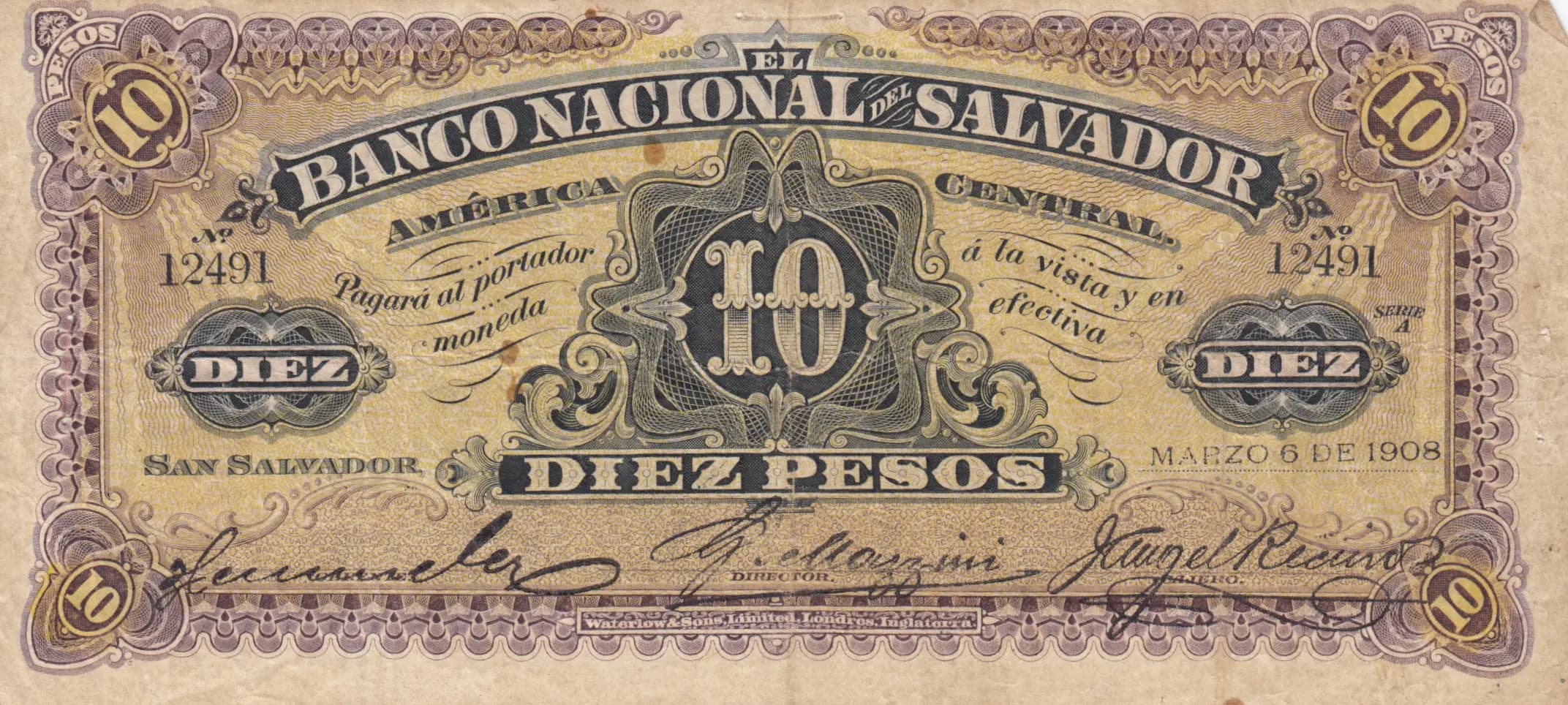
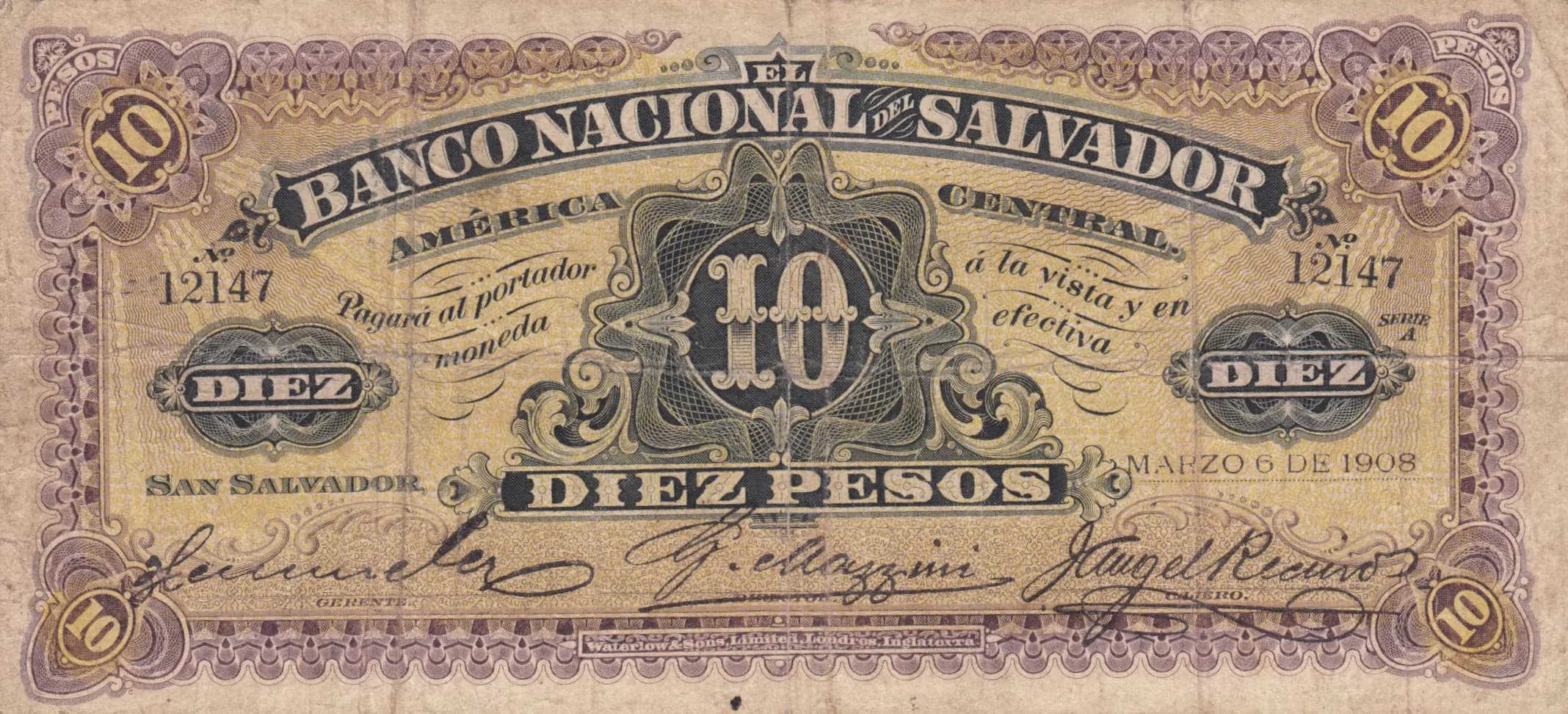
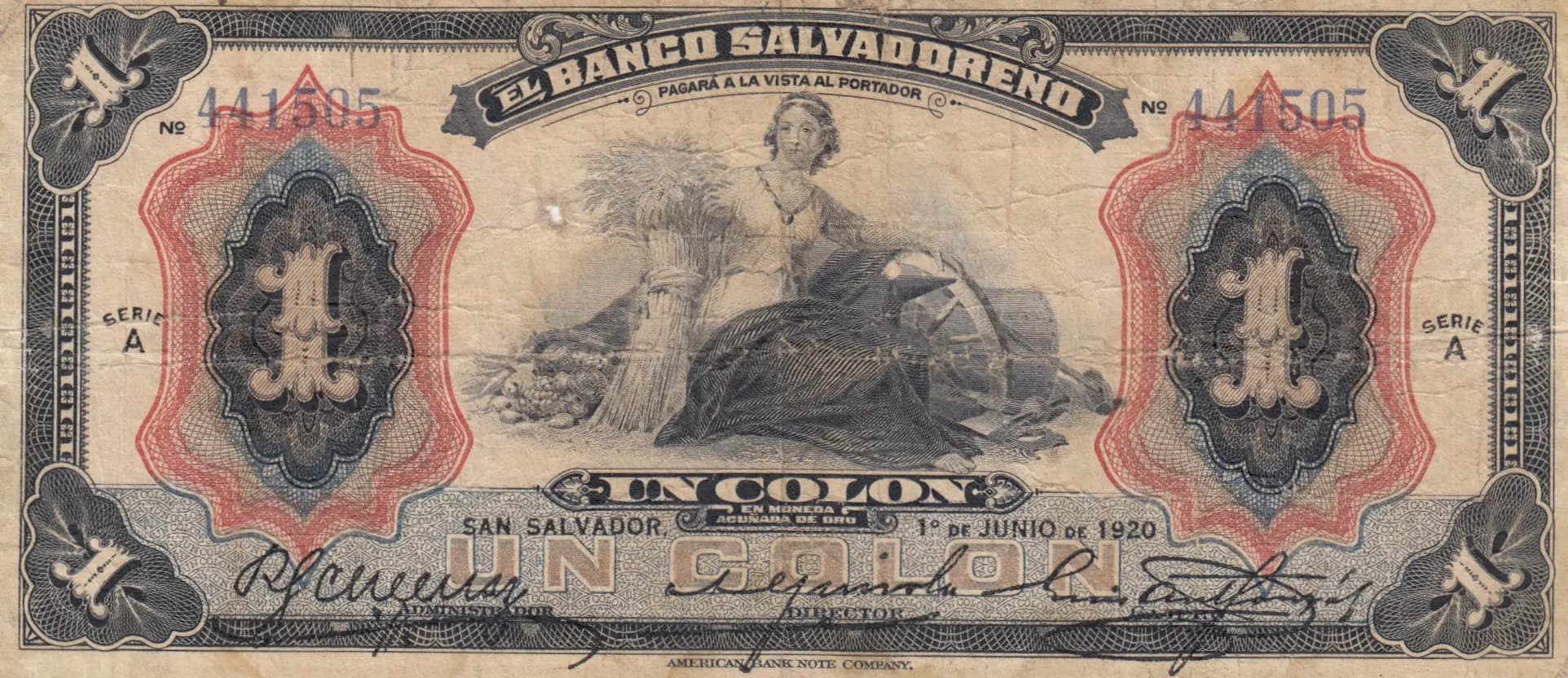
The obverse features a symmetrical baroque-influenced design centered on an elaborate guilloche medallion rendered in black and white engraving, flanked by circular emblems containing 'UN' (the word 'One' in Spanish) on left and right sides. The entire design is contained within an ornamental pink and rose colored border with flowing decorative flourishes typical of haute époque banknote aesthetics. The reverse maintains the symmetrical design philosophy with ornamental circular elements and heraldic crests or shields positioned on the left side, with red/pink overprinting in the center area. The denomination 'UN PESO' appears prominently centered on the obverse within the guilloche work. The overall composition reflects the neo-classical and baroque revival styles favored by European security printers of the Edwardian era. No portraits or specific named landmarks are depicted; instead, the design relies on abstract ornamental elements and institutional heraldry to convey authority and legitimacy.
FRONT SIDE: 'BANCO NACIONAL DEL SALVADOR' (National Bank of El Salvador), 'AMÉRICA CENTRAL' (Central America), 'Pagará al portador' (Will pay to the bearer), 'a la vista y en efectiva' (at sight and in cash), 'moneda' (currency), 'UN PESO' (One Peso), 'UN' (One), 'SAN SALVADOR' (San Salvador), 'FEBRERO 6 DE 1913' (February 6, 1913), 'SERIE' (Series). BACK SIDE: 'BANCO NACIONAL DEL SALVADOR' (National Bank of El Salvador), 'SAN SALVADOR' (San Salvador), 'Se tomá razon' (Record is taken), 'en el Despacho Febero' (in the February Office), 'la 1 de 1913' (the 1st of 1913), 'Waterlow & Sons Limited, Londres, Inglaterra' (Waterlow & Sons Limited, London, England).
This note was produced using fine-line intaglio engraving, the dominant security printing technique of the early 20th century. The visible cross-hatching, detailed scrollwork, and intricate guilloche patterns characteristic of intaglio printing are evident throughout both sides. The primary design elements appear in black on the obverse with a rose/pink underprint, while the reverse features red-orange or brownish-red printing. Waterlow & Sons Limited of London, one of the world's premier banknote security printers, executed the engraving and printing. The multiple color layers and precision of the fine-line work demonstrate the high technical standards maintained by this printer during this period.
This note is cataloged as Pick S161b, indicating it is the 'b' variety of the 1 peso type. The series designation (visible as 'SERIE' on the front) appears to be Series A based on catalog references. The specific date of February 6, 1913, and the serial number 261537 are consistent with the known issue period. Varieties of this type typically relate to different series designations (A, B, etc.) and potentially different signature combinations, though the signatures on this example are not clearly legible in the provided imagery. The 'b' designation suggests existence of variant 'a' and potentially other lettered varieties within this denominational type.