5 shillings 1957
Market Prices
15 salesAbout This Note
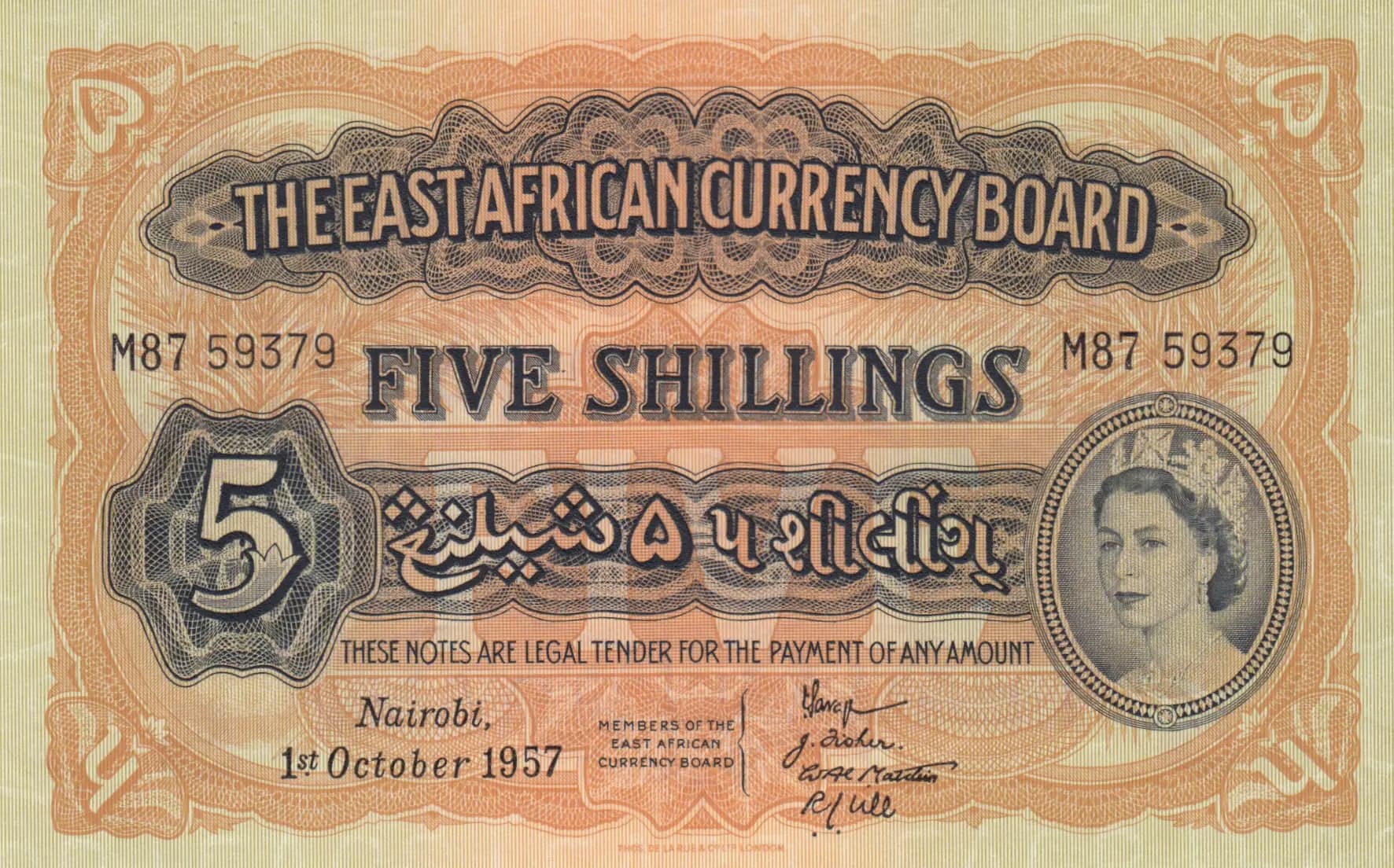
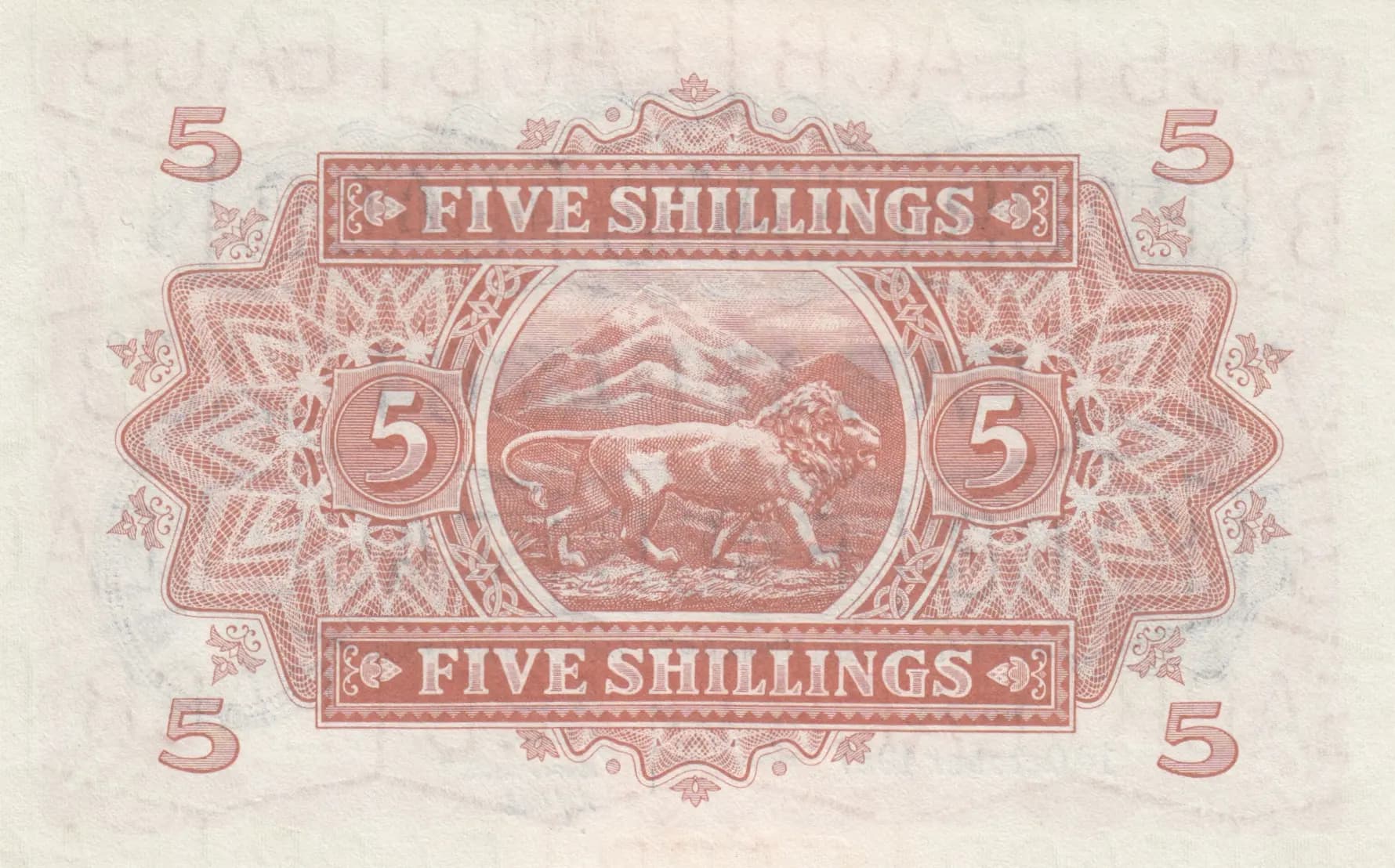
This is an East African Currency Board 5 Shillings note dated 1st October 1957, issued from Nairobi in Uncirculated condition. The note features a striking coral and cream color scheme with Queen Elizabeth II portrayed in profile on the obverse and a detailed lion vignette on the reverse, showcasing the exceptional engraving quality characteristic of Thomas de la Rue's production. The UNC grade is particularly noteworthy given the note's age, as most examples encountered show circulation wear; this pristine condition example represents significant collector value given recent eBay auction data supporting $400 catalogue values for UNC specimens.
Common. Despite the note's age and historical significance, the East African Currency Board's 5 Shillings denomination from 1953-1957 was issued in substantial quantities across East African territories. Market data from realbanknotes.com shows consistent trading activity with numerous sales ranging from $24-$401 over the past 14 years, indicating healthy supply at all grade levels. The $400 catalogue value for UNC examples reflects collector demand for this specific condition rather than scarcity; in circulated grades (VF, F), examples regularly sell for $25-$75, confirming common availability.
The East African Currency Board issued this note during the final years before East African independence movements gained momentum, representing a transitional period in colonial monetary policy. The prominent portrait of Queen Elizabeth II and the inclusion of Arabic script (reflecting the diverse populations of East Africa) demonstrate the multicultural nature of the East African territories under British administration. The lion depicted on the reverse symbolizes East African wildlife and regional identity, imagery that would continue to feature prominently in the currencies of newly independent East African nations.
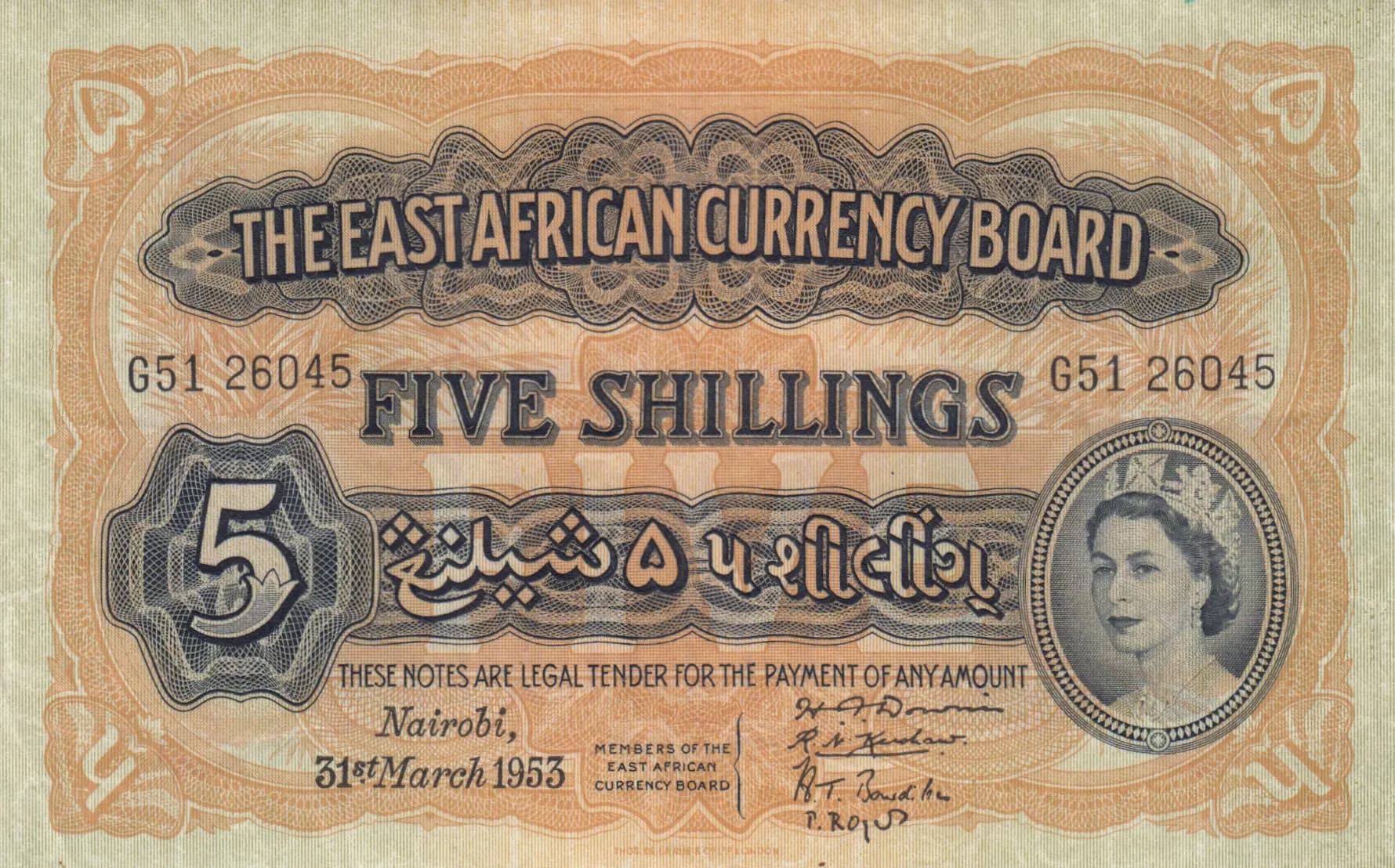
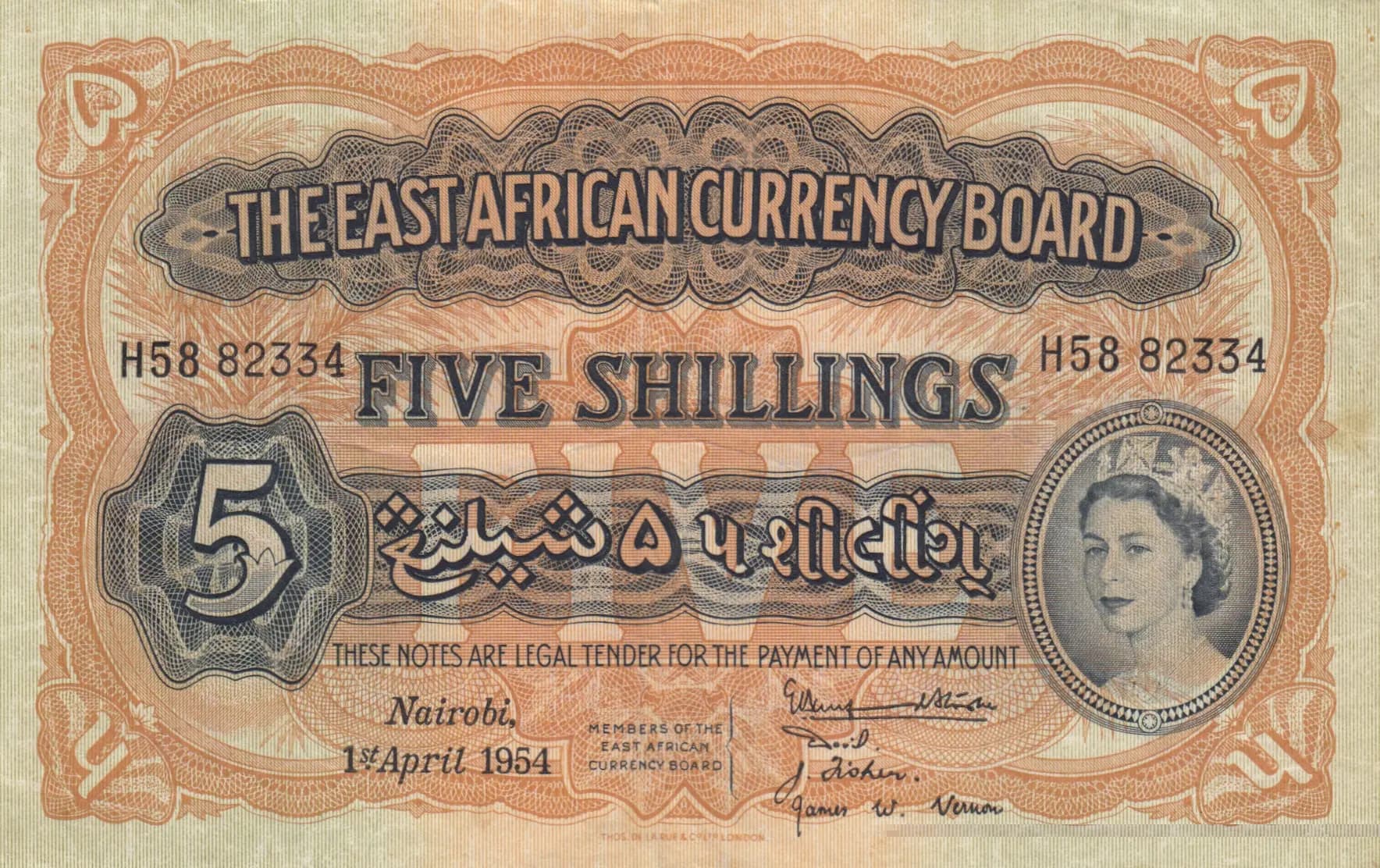
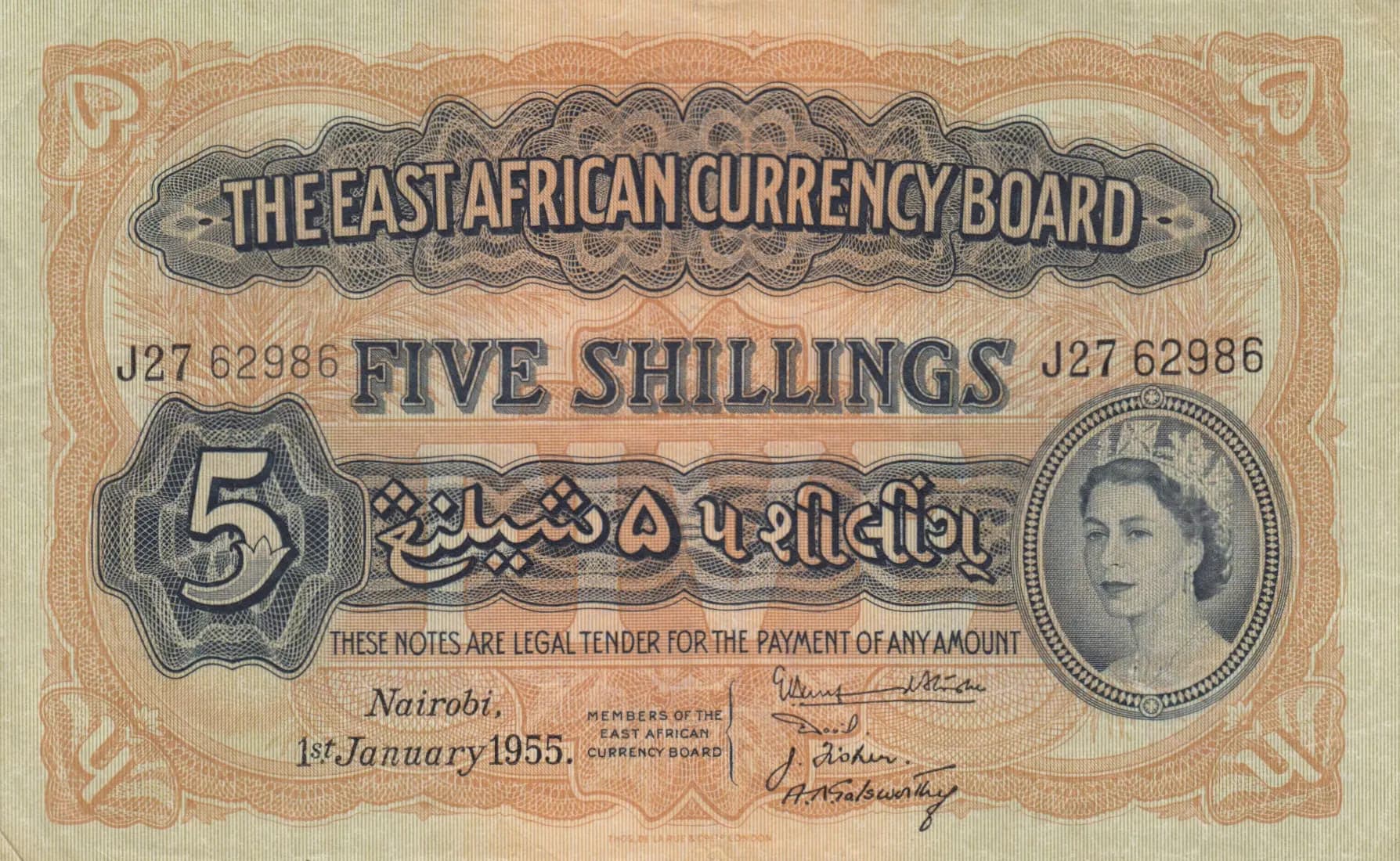
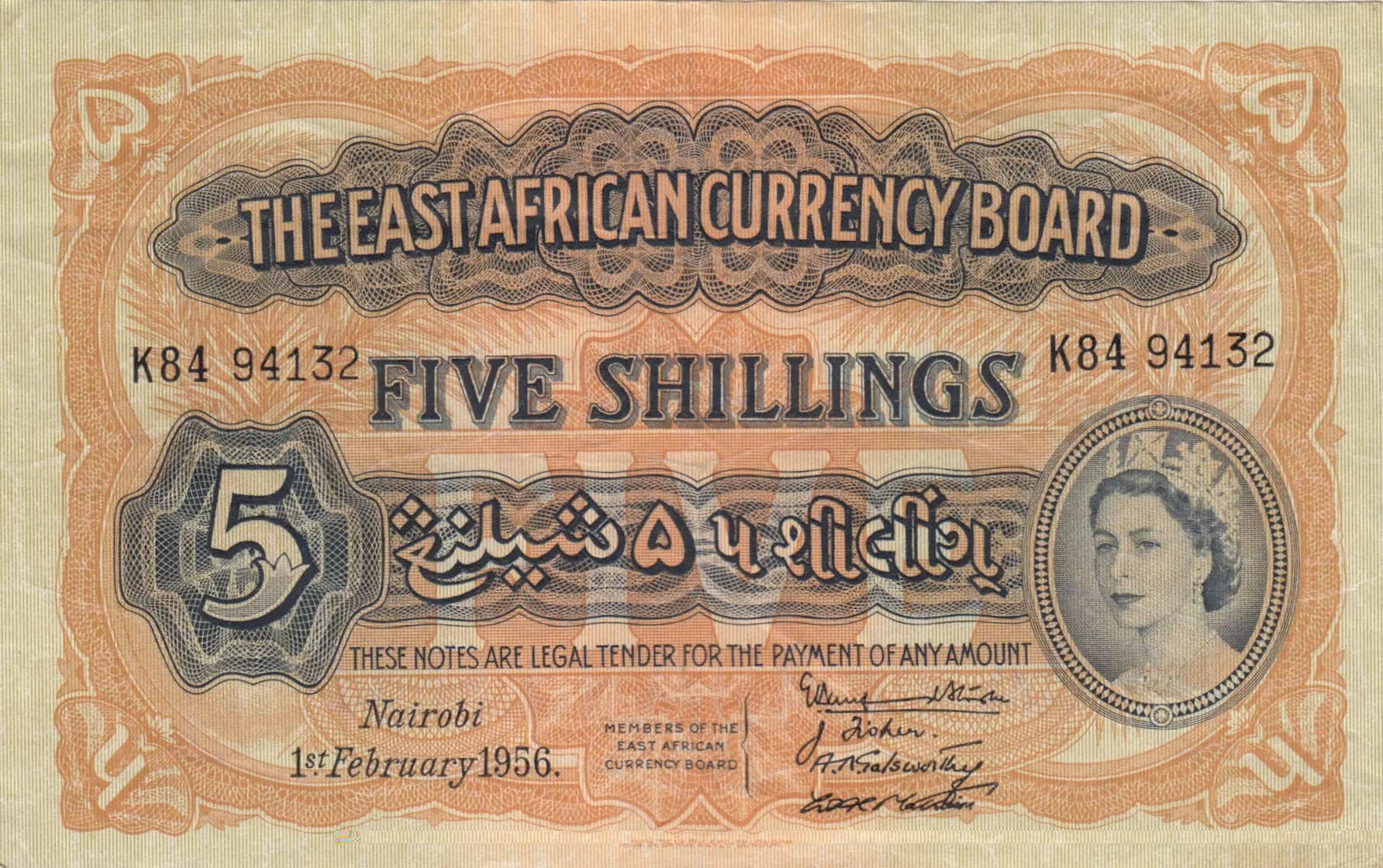
The obverse features a formal portrait of Queen Elizabeth II in profile facing right, presented within a circular medallion frame on the right side of the note. The reverse displays a detailed engraved vignette of an African lion in profile facing left, positioned against a background of mountainous or hilly landscape, symbolizing East African fauna and geography. Both sides employ ornate decorative borders with floral and scrollwork corner elements, and corner numeral '5's in circular frames enhance the denominational clarity. The color scheme of coral/peach with cream underprint and black fine-line work creates strong visual contrast while maintaining the formal aesthetic appropriate for colonial-era currency.
Front side: 'THE EAST AFRICAN CURRENCY BOARD' (English), 'FIVE SHILLINGS' (English), 'شلنج ٥' (Arabic: 'Five Shillings'), 'THESE NOTES ARE LEGAL TENDER FOR THE PAYMENT OF ANY AMOUNT' (English), 'Nairobi, 1st October 1957' (English), 'MEMBERS OF THE EAST AFRICAN CURRENCY BOARD' (English), plus four signatures of board members. Serial number: M87 59379 (printed left and right). Back side: 'FIVE SHILLINGS' (English, printed at top and bottom).
This note was produced using intaglio (engraved) printing by Thomas de la Rue, London, as evidenced by the fine line work, detailed security patterns, and the crisp definition visible in both the portrait medallion and the lion vignette. The multi-color printing demonstrates precise registration of the coral/peach, cream, and black inks. The intricate geometric and floral engraved patterns throughout the note, combined with the high-quality reproduction of fine details, are characteristic of De la Rue's premium security printing standards of the mid-20th century.
Pick catalog P-33 lists one known variant for this base number. The observed example dated 1st October 1957 with signature varieties and serial number M87 59379 represents the standard regular issue from the 1953-1957 production run. Signature varieties are documented to exist on this series, and collectors should note that the four board member signatures present on this note may differ from other examples, representing a potential variety designation depending on specific signature combinations recorded in advanced catalogs.