5 shillings 1953
Market Prices
15 salesAbout This Note
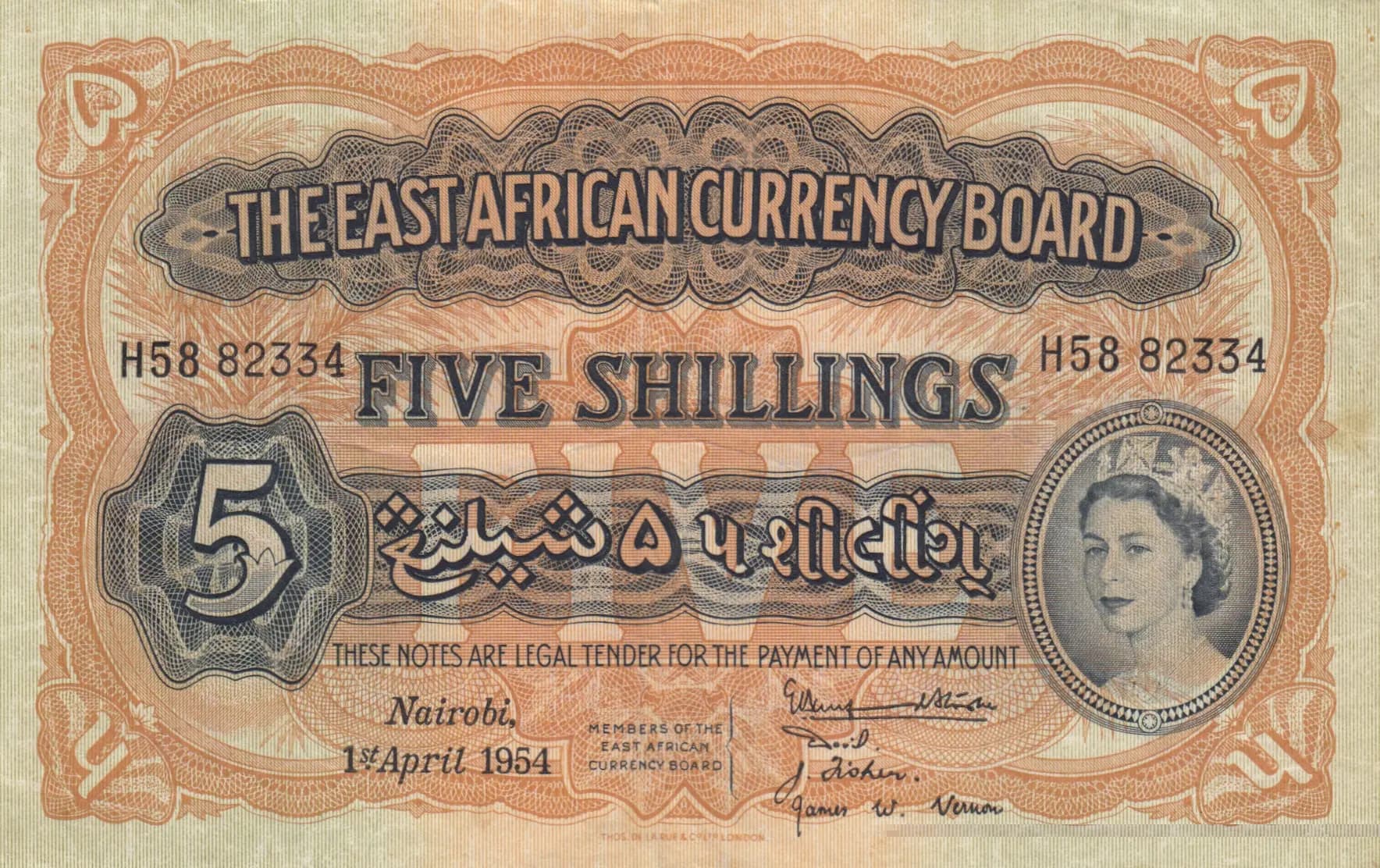
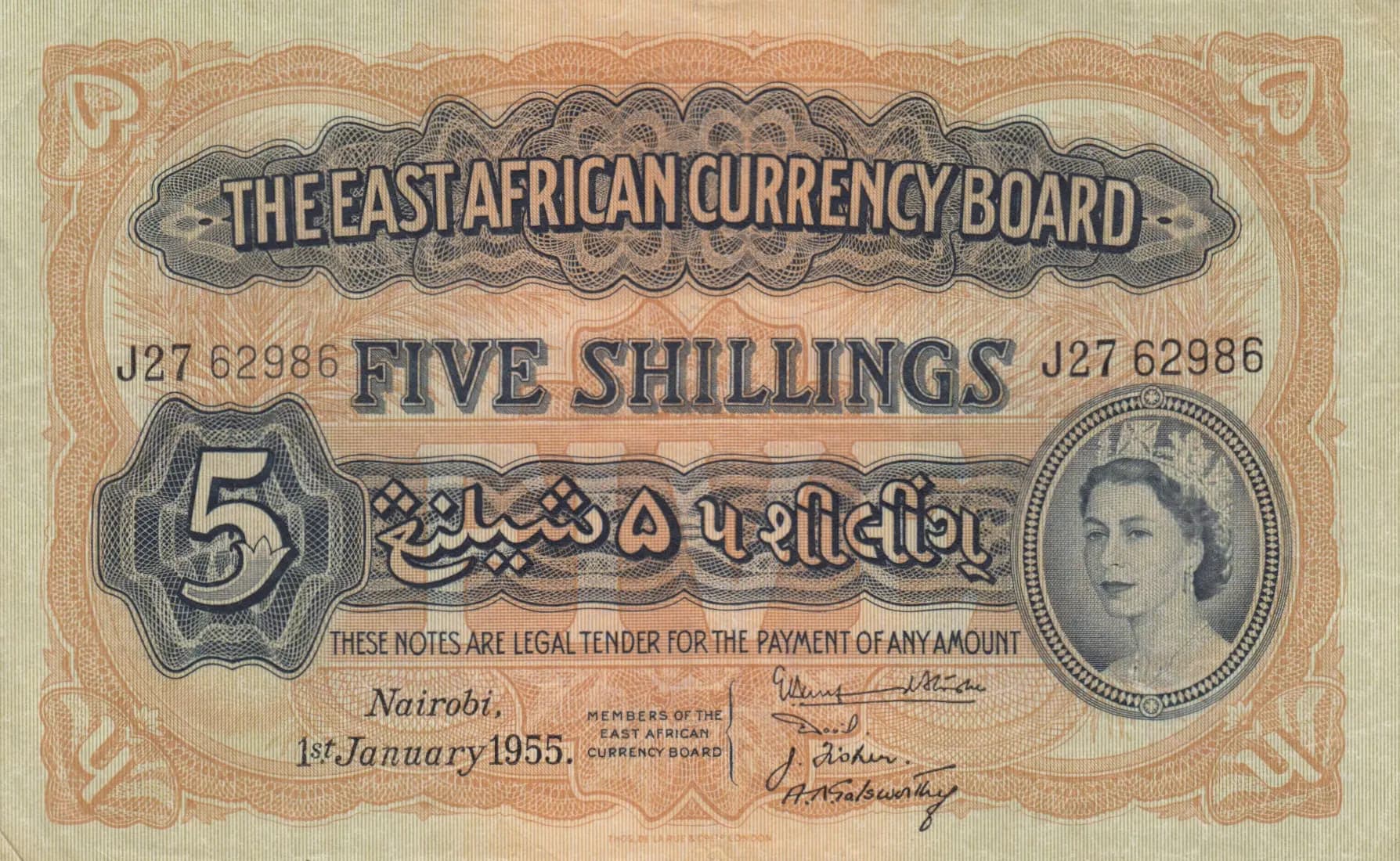
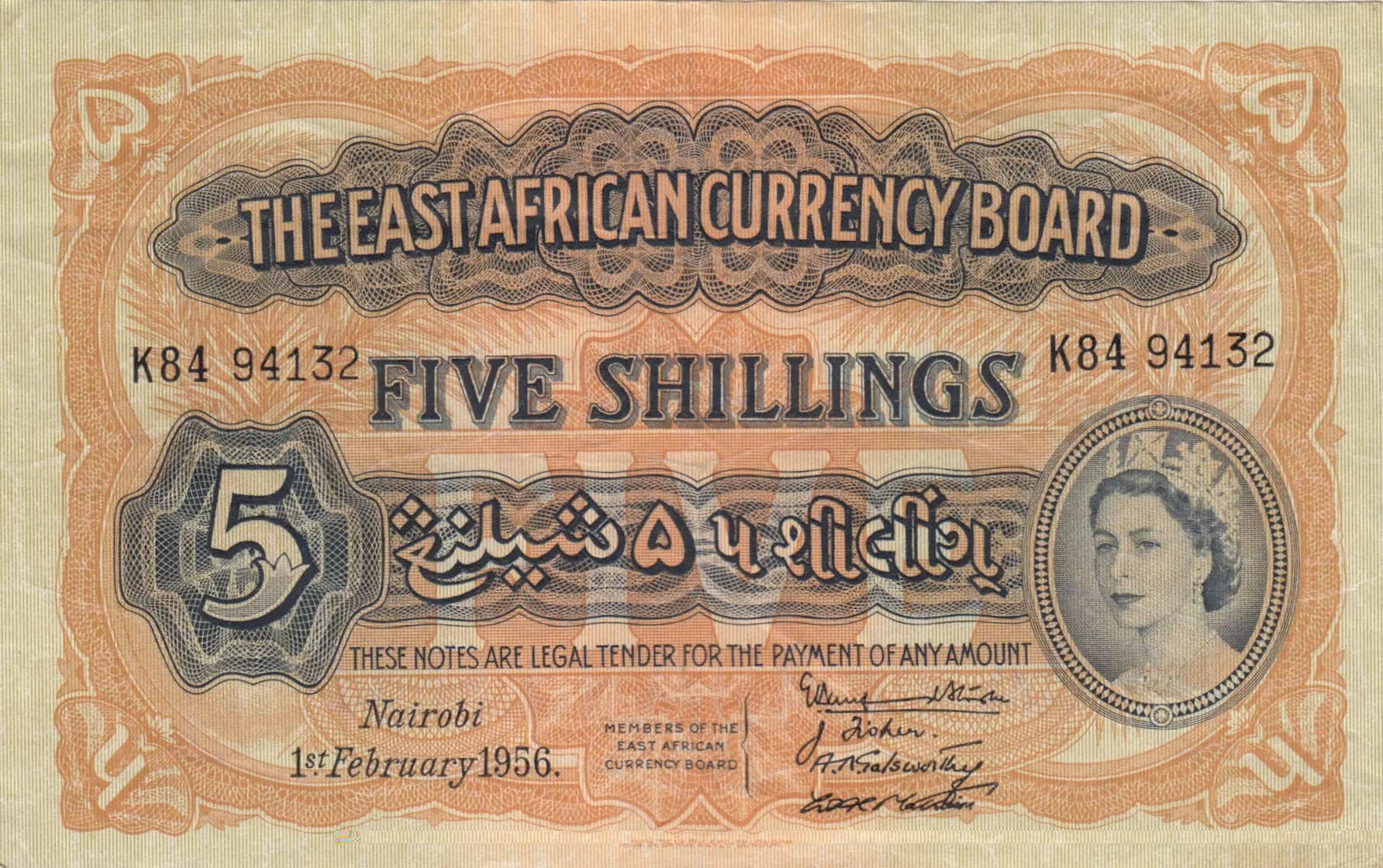
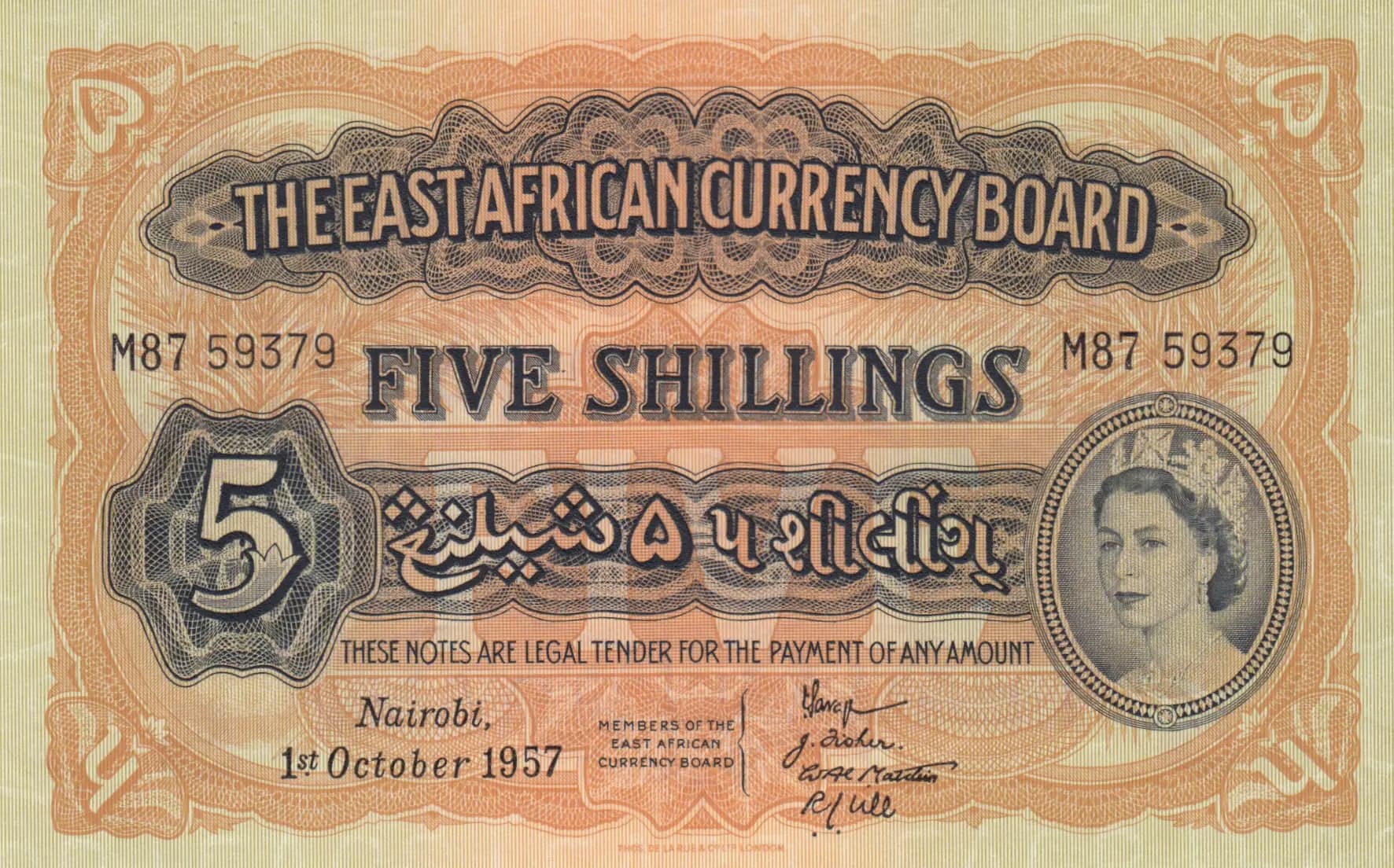
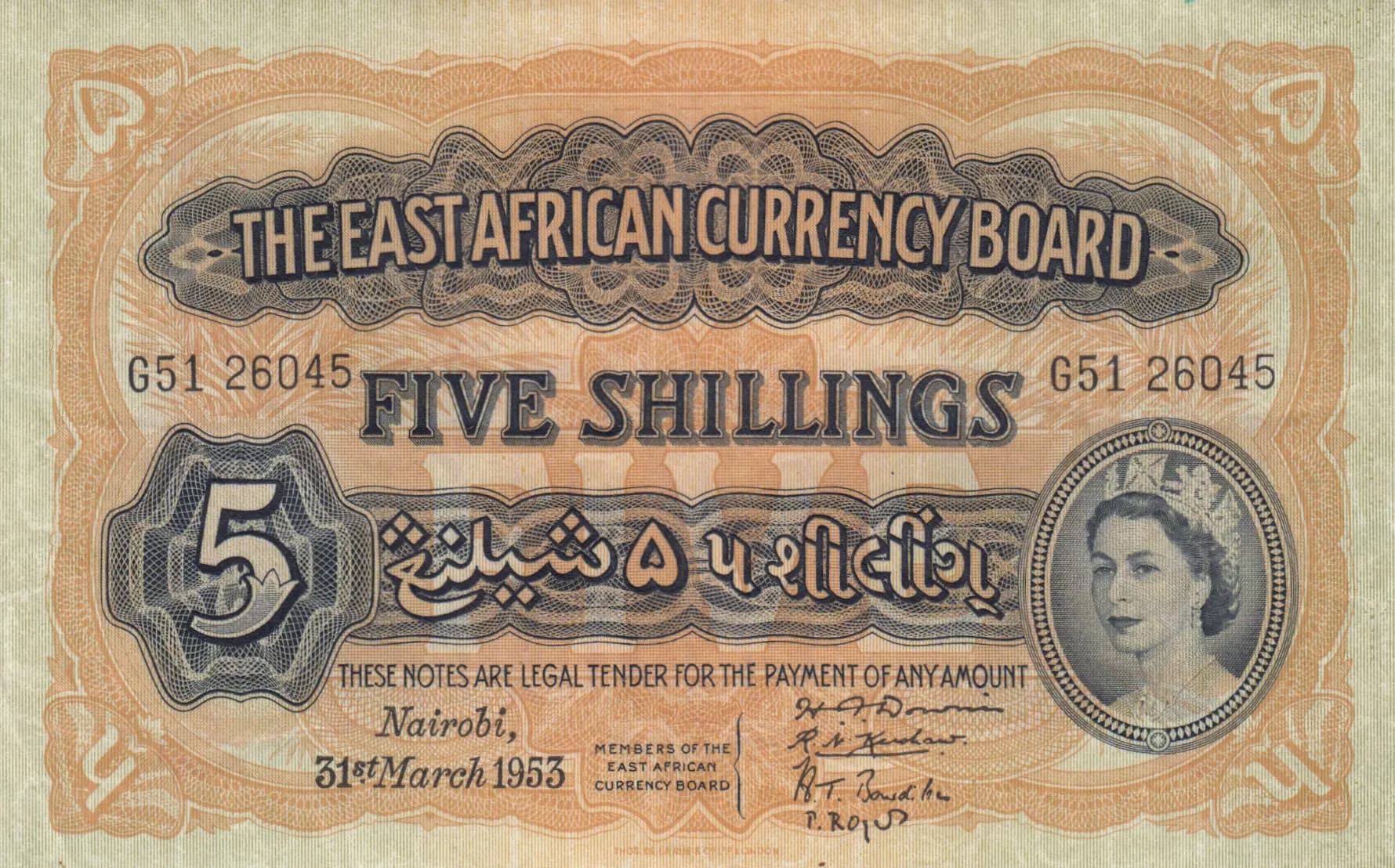
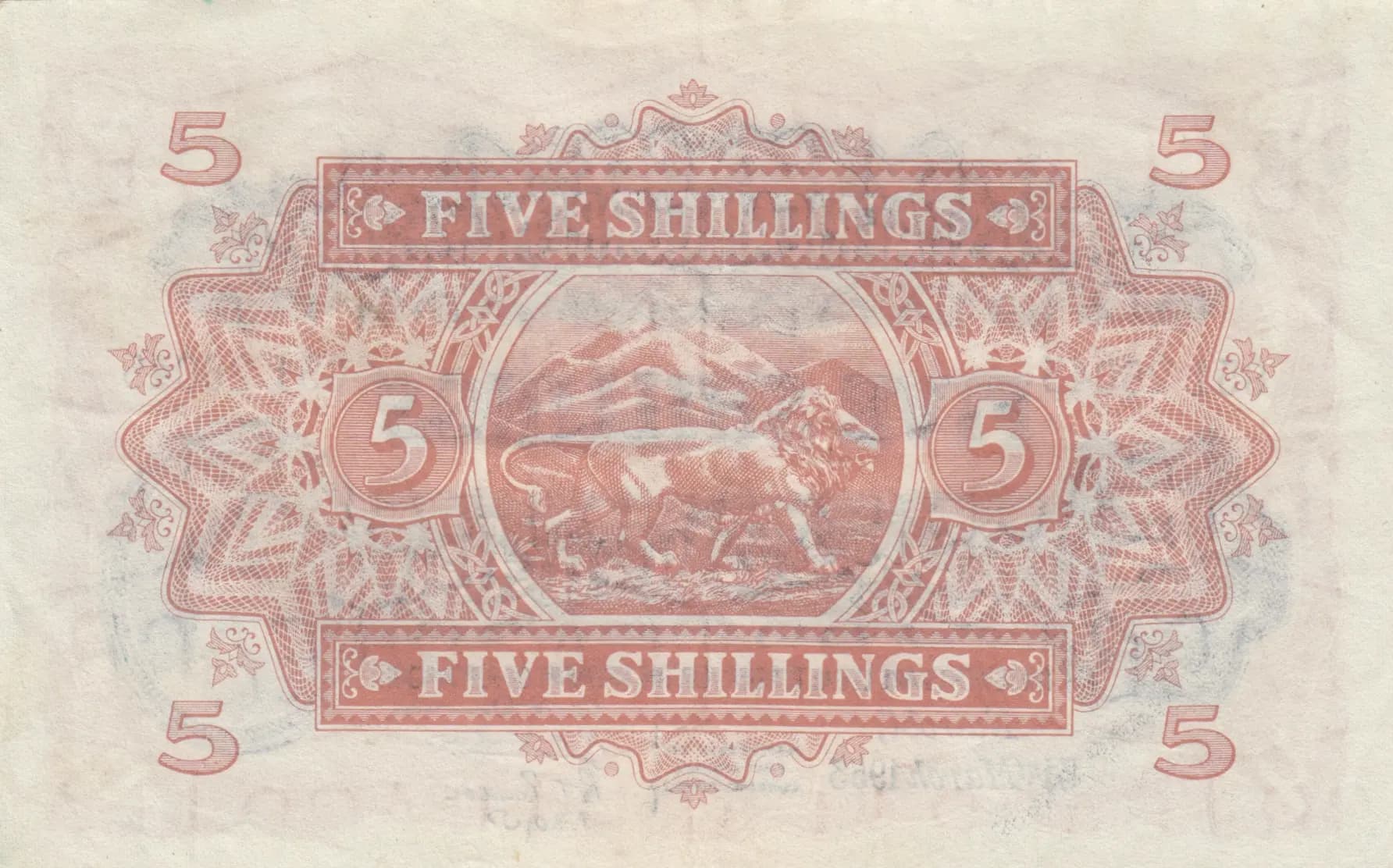
This is a VF-graded East African Currency Board 5 Shillings note from 31st March 1953, printed by Thomas de la Rue. The obverse features Queen Elizabeth II in an oval portrait frame set against an ornate orange/tan decorative border with scalloped design elements, while the reverse displays a finely engraved African lion in a natural landscape setting framed in pink/rose ornamental borders. The note shows moderate circulation wear with visible creasing, light foxing, and ink fading consistent with its age, yet retains good visual clarity of the detailed engraving work.
Common. This note appears frequently in the collector market with consistent sales activity on eBay spanning multiple decades (2010-2024). VF-graded examples have sold for $26.65-$49.99 in recent years, well within the range expected for commonly circulated historical notes. The catalog reference indicates a standard issue date range (1953-1957) with no indication of short print runs or recall. The PMG population report shows minimal professional grading activity, suggesting most collectors handle these notes in raw form due to their common availability and modest individual value.
This note represents the early period of the East African Currency Board's operations following its establishment to provide unified currency across the British East African territories. The prominent placement of Queen Elizabeth II's portrait reflects the note's issue during the beginning of her reign (crowned in 1953), while the majestic lion imagery on the reverse symbolizes the African fauna and natural heritage of the East African region. The multilingual inscriptions, including Arabic alongside English, demonstrate the cosmopolitan nature of East African commerce during the colonial and early post-colonial period.
The obverse features a formal portrait of Queen Elizabeth II positioned within an ornate oval frame on the right side, rendered in blue-black ink on a light brown/cream underprint. The portrait is characteristic of early-1950s Commonwealth currency design, emphasizing the monarch's role as head of state across the British territories. The elaborate border work in orange and tan features intricately engraved scalloped frames, cloud-like ornamental patterns, and fine decorative linework typical of De La Rue's security printing standards. The reverse displays a detailed landscape vignette of an African lion in its natural savanna habitat with distant mountains or hills, enclosed within an ornate frame of pink/rose tones featuring scrollwork, floral motifs, and geometric elements. This reverse design celebrates the East African region's distinctive wildlife and natural heritage.
FRONT SIDE: 'THE EAST AFRICAN CURRENCY BOARD' (issuing authority); 'FIVE SHILLINGS' (denomination in English); 'شيلنج ٥' (Five Shillings in Arabic); 'THESE NOTES ARE LEGAL TENDER FOR THE PAYMENT OF ANY AMOUNT' (legal declaration); 'Nairobi, 31st March, 1953' (place and date of issue); 'MEMBERS OF THE EAST AFRICAN CURRENCY BOARD' (governance reference); 'G51 26045' (serial number); 'P.R.O.D' (signature/initials); Various denomination numerals '5'. BACK SIDE: 'FIVE SHILLINGS' (denomination text in cartouches at top and bottom); Multiple '5' numerals in corners.
Steel engraving (intaglio process) executed by Thomas de la Rue, London, as indicated in the catalog reference. The security features observed—intricate border patterns, fine line work in decorative elements, detailed portrait engraving, and the carefully rendered landscape vignette—are characteristic of high-security intaglio printing. The multiple color layers (blue-black, orange/tan on obverse; pink/rose on reverse) and the fine shading and detail work visible in the lion engraving confirm the sophisticated intaglio/engraved technique that was De La Rue's hallmark.
Serial number observed: G51 26045. The visual analysis identifies the note as the Nairobi issue (consistent with PMG cataloging which notes 'P-33: 5/- Shillings - Nairobi'). The signature variety appears to be 'P.R.O.D,' though the visual analysis indicates 'signature varieties' exist for this issue according to the realbanknotes.com reference. Without additional comparison examples visible, the precise signature identification cannot be definitively stated beyond what is directly observed. The date of issue is confirmed as 31st March 1953.