3 pesos 1853
Market Prices
About This Note
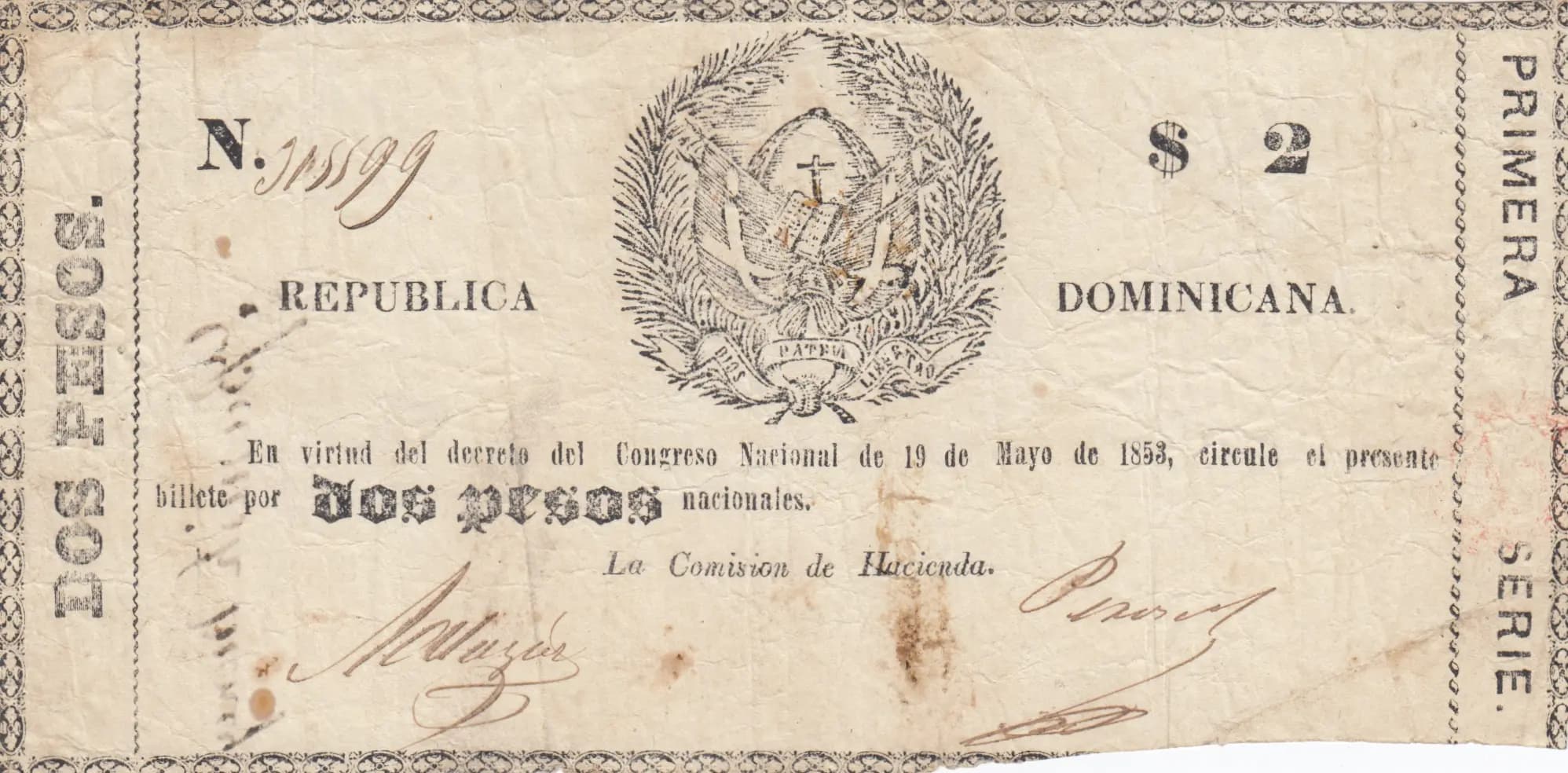
This is a Dominican Republic 2 Pesos banknote from 1853, representing one of the earliest issues of the Dominican Republic's national currency following independence. The note features a striking central oval coat of arms flanked by palm fronds, printed in black on aged cream-colored paper with decorative borders. Despite its F (Fine) condition grade with significant foxing, brown staining, creasing, and wear consistent with 170+ years of circulation, this early 19th-century issue remains a historically important numismatic artifact.
Common. While this is an early Dominican banknote from 1853, the catalogue value at F grade ($400 USD per 2016 data) and eBay price tracking showing examples at relatively modest levels ($100-$145 for VG grades) indicate this is not a scarce issue. Early Dominican Republic banknotes from this period were produced in quantities sufficient for national circulation. The widespread presence of examples in various collections and the lack of reported print run restrictions suggest this is a regularly encountered issue among Dominican numismatists and early Latin American currency collectors.
Issued by decree of the Dominican National Congress on May 19, 1853, this banknote emerged during the nation's early period as an independent republic (1844-present). The central coat of arms with cross and 'PATRI' inscription reflects Dominican national symbolism, while the use of palm fronds represents the Caribbean tropical setting. The Finance Commission's authorization and 'Primera Serie' (First Series) designation indicate this was part of the republic's foundational monetary system during a formative period of national consolidation.
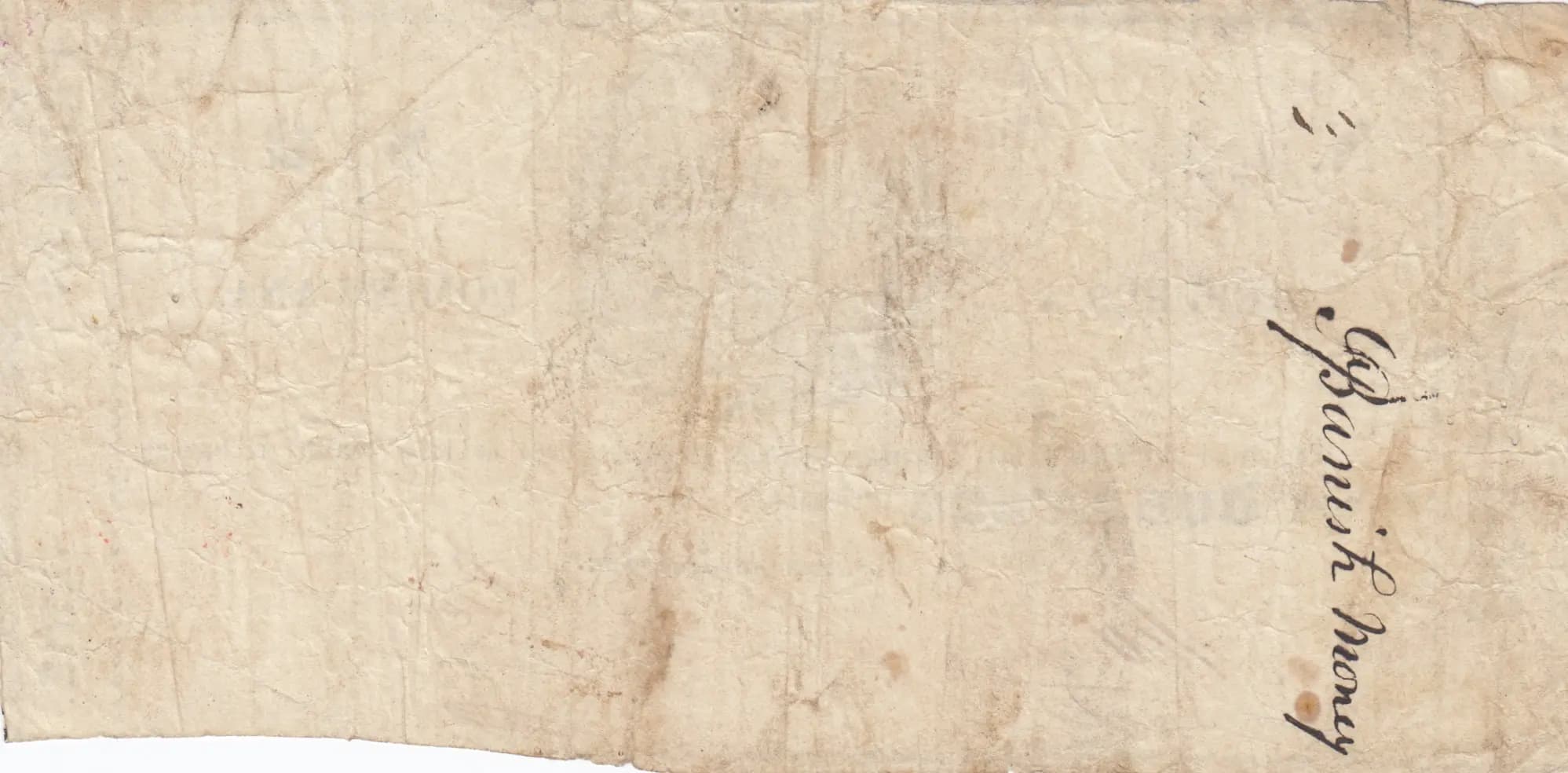
The obverse features the Dominican national coat of arms as the dominant central element, presented within an ornate oval frame and flanked symmetrically by palm fronds. The coat of arms displays a cross at its apex and includes the inscription 'PATRI' (referring to 'La Patria'—The Fatherland). Surrounding this heraldic centerpiece is an elaborate decorative border with geometric patterns typical of 19th-century banknote design. The denomination '$2' and country identification 'REPÚBLICA DOMINICANA' are prominently positioned. Authorization text citing the May 19, 1853 National Congress decree occupies a substantial portion of the note. Two blank signature lines appear below, indicating spaces for Finance Commission officials' authentication. The reverse is uniface (blank), showing only aged paper stock and a single handwritten notation.
Front side: 'REPÚBLICA DOMINICANA' (Dominican Republic); 'N.' (numbering prefix); '$2' (Two Pesos denomination); 'En virtud del decreto del Congreso Nacional de 19 de Mayo de 1853, circule el presente billete por DOS pesos nacionales.' (By virtue of the decree of the National Congress of May 19, 1853, this banknote circulates for TWO national pesos); 'La Comision de Hacienda.' (The Finance Commission); 'PRIMERA SERIE' (First Series); [Two illegible handwritten signatures]. Back side: [Illegible handwritten notation/name in cursive].
Intaglio printing (engraved line printing), standard for currency of the 1850s. The fine detail of the coat of arms, ornamental borders, and text demonstrate the precision characteristic of hand-engraved intaglio plates. Single black ink color on cream-colored wove paper. No modern security features present, consistent with mid-19th century Dominican monetary practice. The printer/security printer for this specific Pick number is not definitively attributed in standard references, though early Dominican currency was often produced by European security printers.
This note is identified as Pick catalog P-15 for the 2 Pesos 1853 issue. The visual analysis indicates this is 'PRIMERA SERIE' (First Series), which may distinguish it from later series of the same denomination and year if they exist. The handwritten signatures and serial number prefix 'N.' represent individual authentication and numbering variants typical of hand-signed currency. Without additional comparative examples, specific signature variety identification is not possible from this single specimen image.