10 kroner 1966 replacement
About This Note
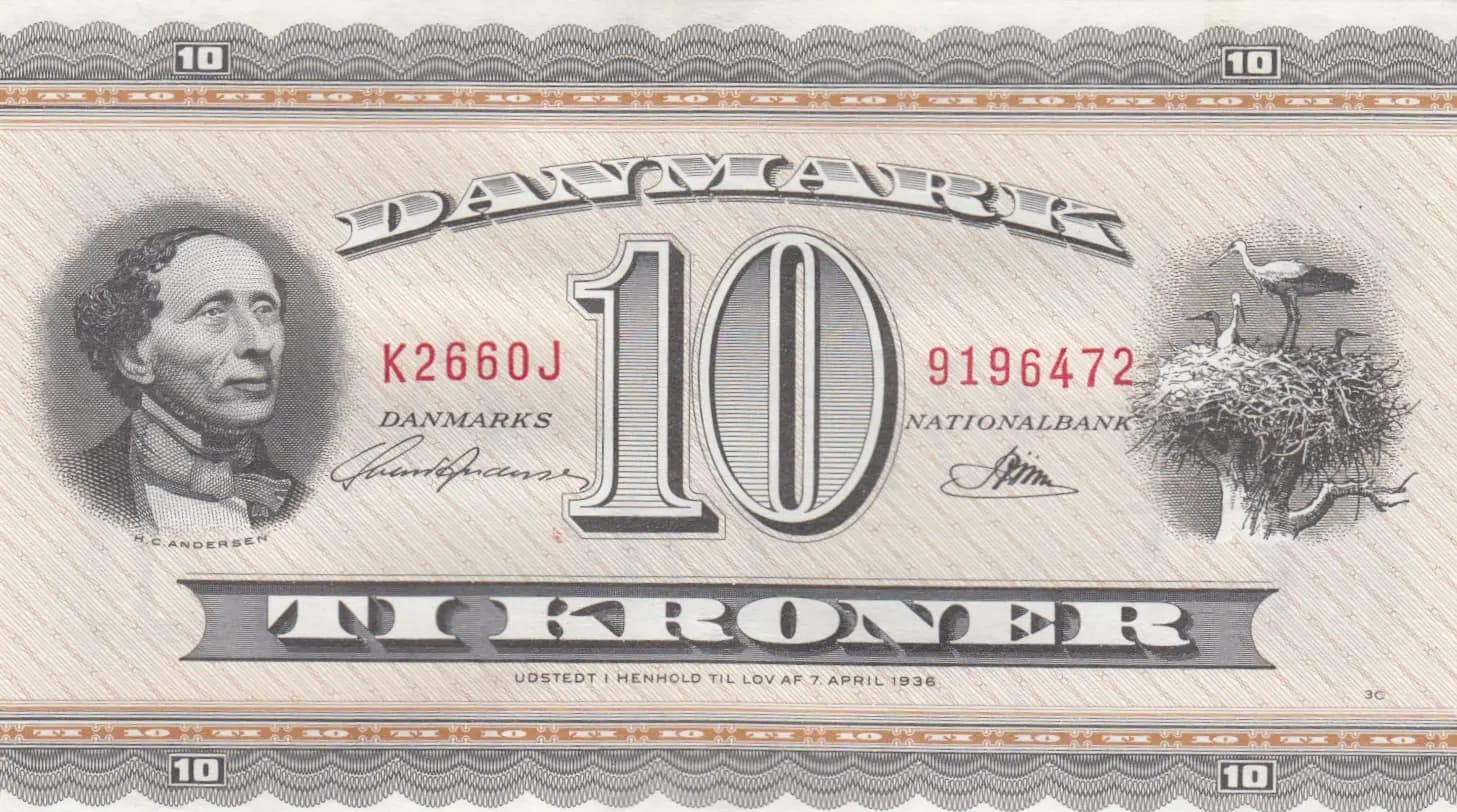
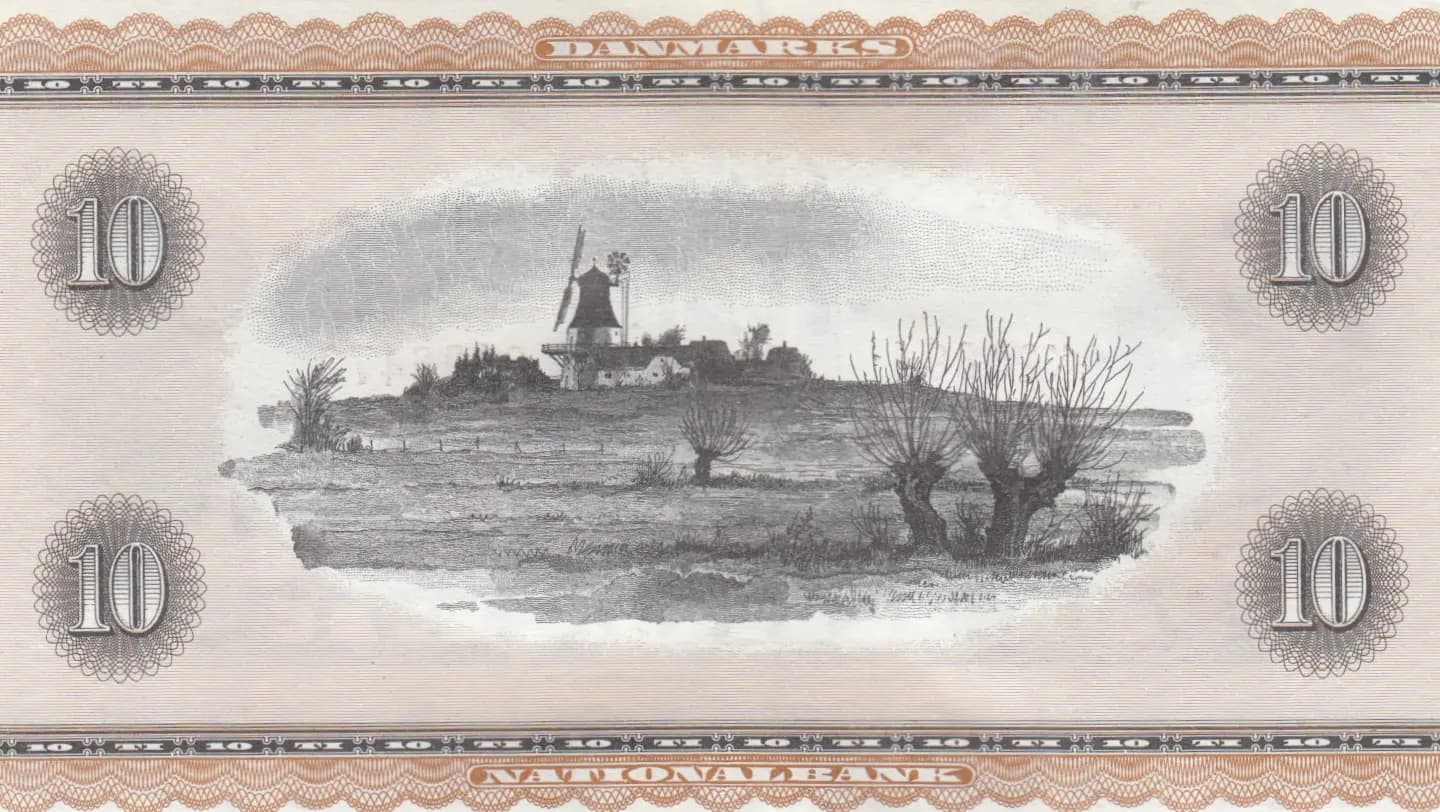
This is a magnificent example of Denmark's 10 kroner note from 1966, graded UNC and representing the replacement issue (P-44y*) with distinctive red serial numbering. The note showcases exceptional intaglio engraving quality with pristine condition, featuring the iconic portrait of Hans Christian Andersen on the obverse and the picturesque Egeskov windmill on the reverse. The fine line work, intricate border patterns, and complete absence of wear make this an excellent specimen of mid-20th century Scandinavian currency design.
Common. The 1954-1974 series of 10 kroner notes had substantial print runs across all variants. While this specific replacement note (P-44y*) represents one of several catalogued varieties for the base Pick number, replacement issues typically had print runs comparable to standard issues. No historical evidence indicates a particularly short production run or recall status for this variant. The denomination and series remain readily available in the numismatic market.
Issued by Danmarks Nationalbank in 1966 under the authority of the Law of April 7, 1936, this note reflects Denmark's post-war monetary system during a period of economic stability. The choice to honor Hans Christian Andersen—Denmark's most celebrated writer and cultural ambassador—demonstrates the nation's pride in its literary heritage, while the Egeskov windmill represents Danish agricultural tradition and the rural character of Fyn Island, connecting the currency to Denmark's regional identity and historical commerce.
The obverse features a left-positioned three-quarter portrait of Hans Christian Andersen in formal 19th-century dress with bow tie, rendered by engraver R.C. Andersen. A complementary landscape vignette with trees and natural scenery occupies the right side. The reverse displays a detailed central landscape engraving of Egeskov Castle's historic windmill—a distinctive Dutch-style structure set on elevated terrain with a water feature, willows, and pastoral surroundings, characteristic of the Fyn Island location. All four corners are ornamented with decorative rosette patterns containing the denomination '10'. The entire design is framed by ornate geometric borders with wave patterns and repeating decorative bands at top and bottom. The color scheme employs black and gray intaglio printing on cream-colored paper.
Front side: 'DANMARK' (Denmark), '10' and 'TI KRONER' (Ten kroner), 'DANMARKS NATIONALBANK' (Danmarks National Bank), 'UDSTEDT I HENHOLD TIL LOV AF 7.APRIL 1936' (Issued in accordance with the law of April 7, 1936), 'R.C.ANDERSEN' (artist/engraver credit). Back side: 'DANMARK' (Denmark), '10' (denomination numeral appearing in four corner rosettes). Serial number observed: K2660J 9196472.
Intaglio engraving (line engraving), evidenced by the fine line work, intricate cross-hatching and shading throughout, and the precision of decorative borders and rosette patterns. The detailed vignettes and microprinting in ornamental elements are characteristic of high-security currency engraving. This note was produced by the Danish State Printing Office (Statens Værksted), the official printer for Danmarks Nationalbank currency of this period.
This is a P-44y* replacement note from 1966, identified by the red serial number K2660J. The PMG population data references variants P-44b, P-44q, and P-44v, all with repeated '10' watermark. The 1966 date is derived from the block number system noted in catalog references (where 2nd and 3rd digits of block identify the year). The red serial numbering distinguishes replacement notes from standard green-numbered issues in the broader 1950-1974 series.