3 piastres 1943
Market Prices
10 salesAbout This Note
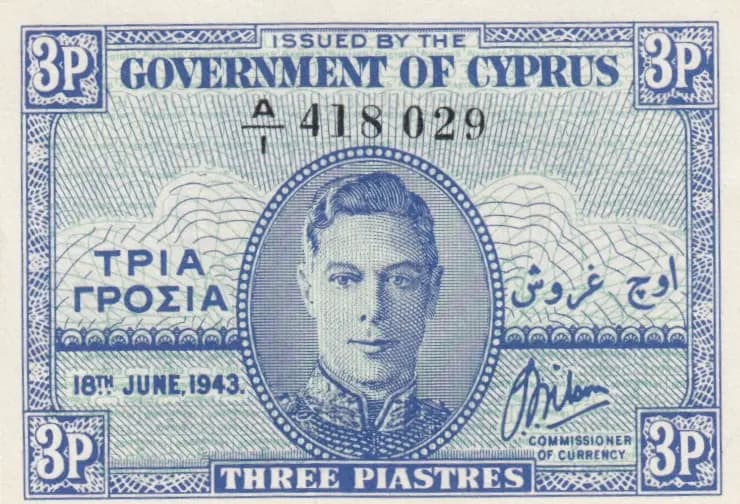
This is a crisp, uncirculated example of Cyprus's 3 Piastres banknote from 1943, featuring a formal portrait of King George VI in a central circular medallion rendered in blue ink. The note displays exceptional condition with sharp printing, clean surfaces, and no evidence of circulation, making it an attractive specimen for collectors of British Commonwealth currency or pre-independence Cyprus issues.
Common. While this is a wartime issue from the colonial period, the 3 Piastres denomination circulated widely and had substantial print runs. eBay market data shows consistent trading in the $40-80 range for VF-AUNC grades, with UNC examples catalogued at approximately $40 (2016 values). Recent sales data (2014-2024) shows regular availability with VF examples selling for $75-76, indicating steady but not scarce supply in the collector market. No evidence of recall or scarcity that would elevate this beyond common status.
Issued on 18 June 1943 by the Government of Cyprus during the British colonial period, this banknote reflects Cyprus's status as a crown colony under British administration during World War II. The portrait of King George VI at the center affirms the island's political allegiance to the British Crown, while the trilingual inscriptions in English, Greek, and Arabic demonstrate the multicultural composition of the island's population and British colonial administrative practice.
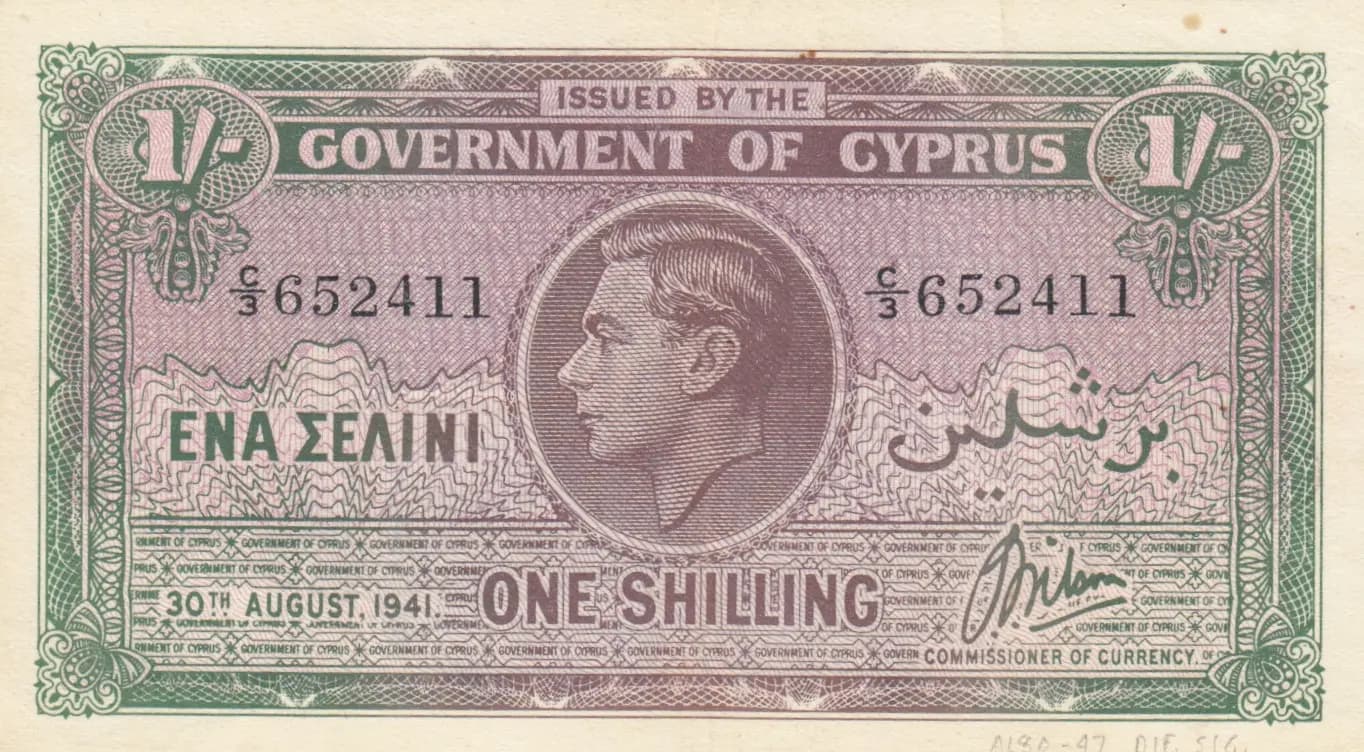
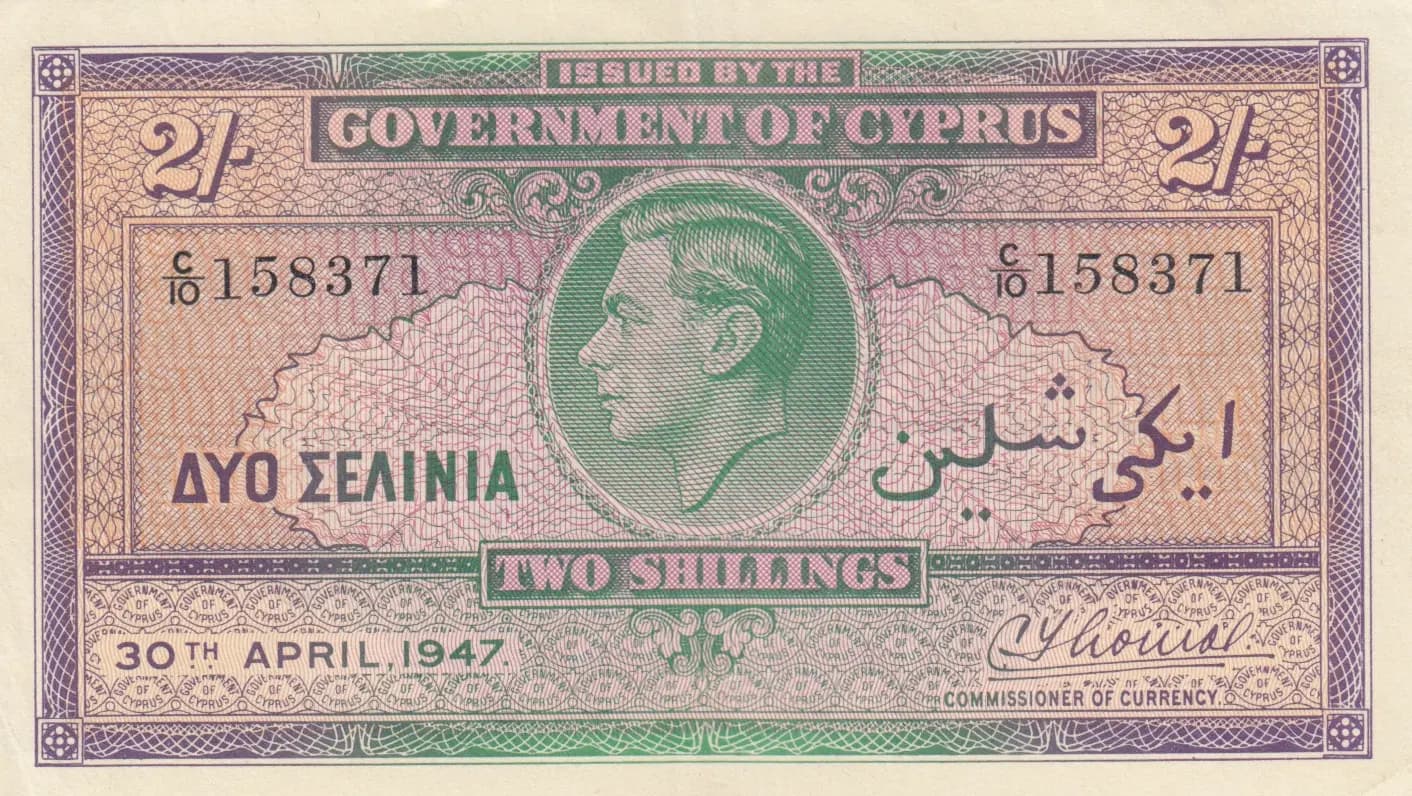
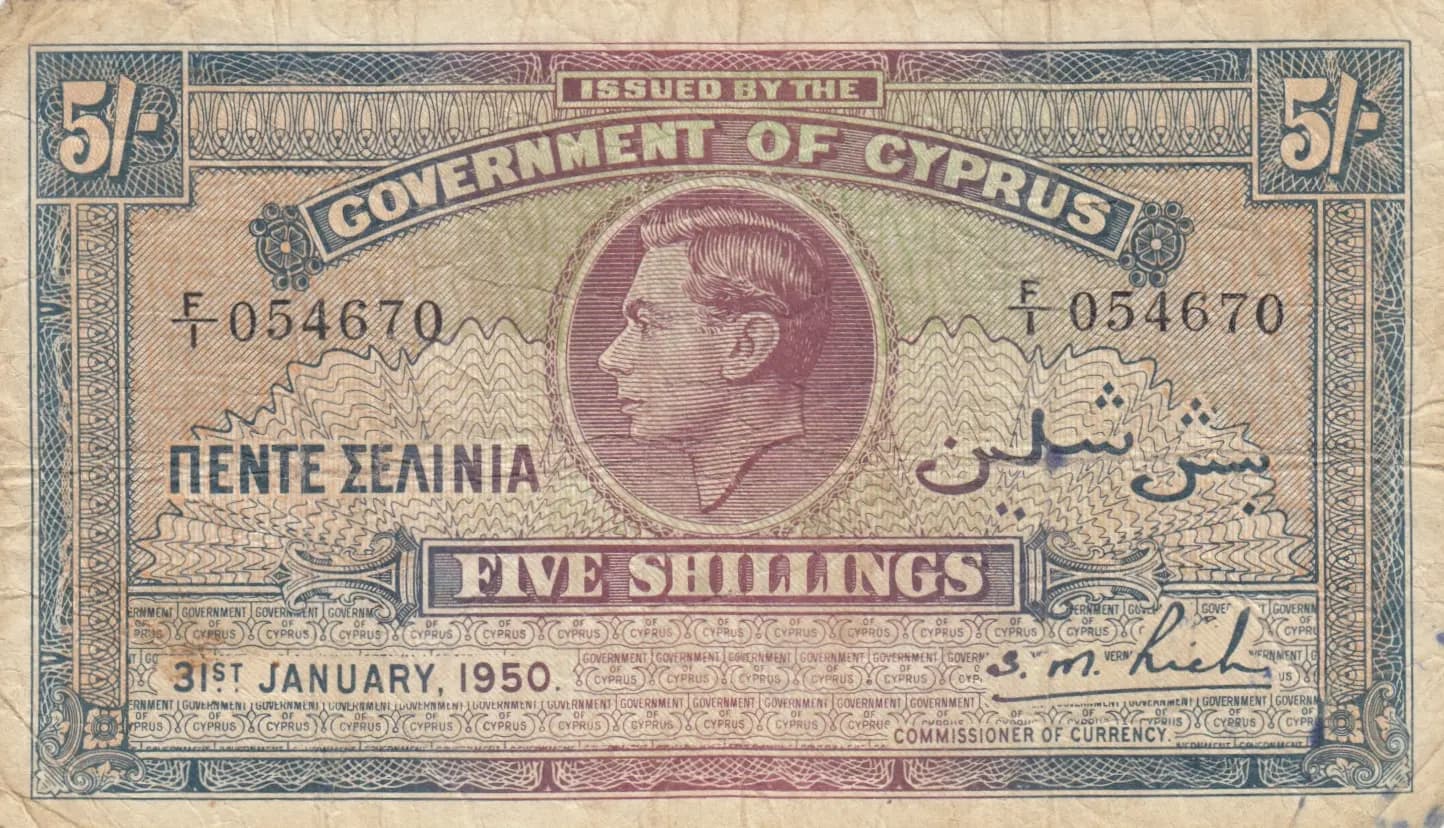
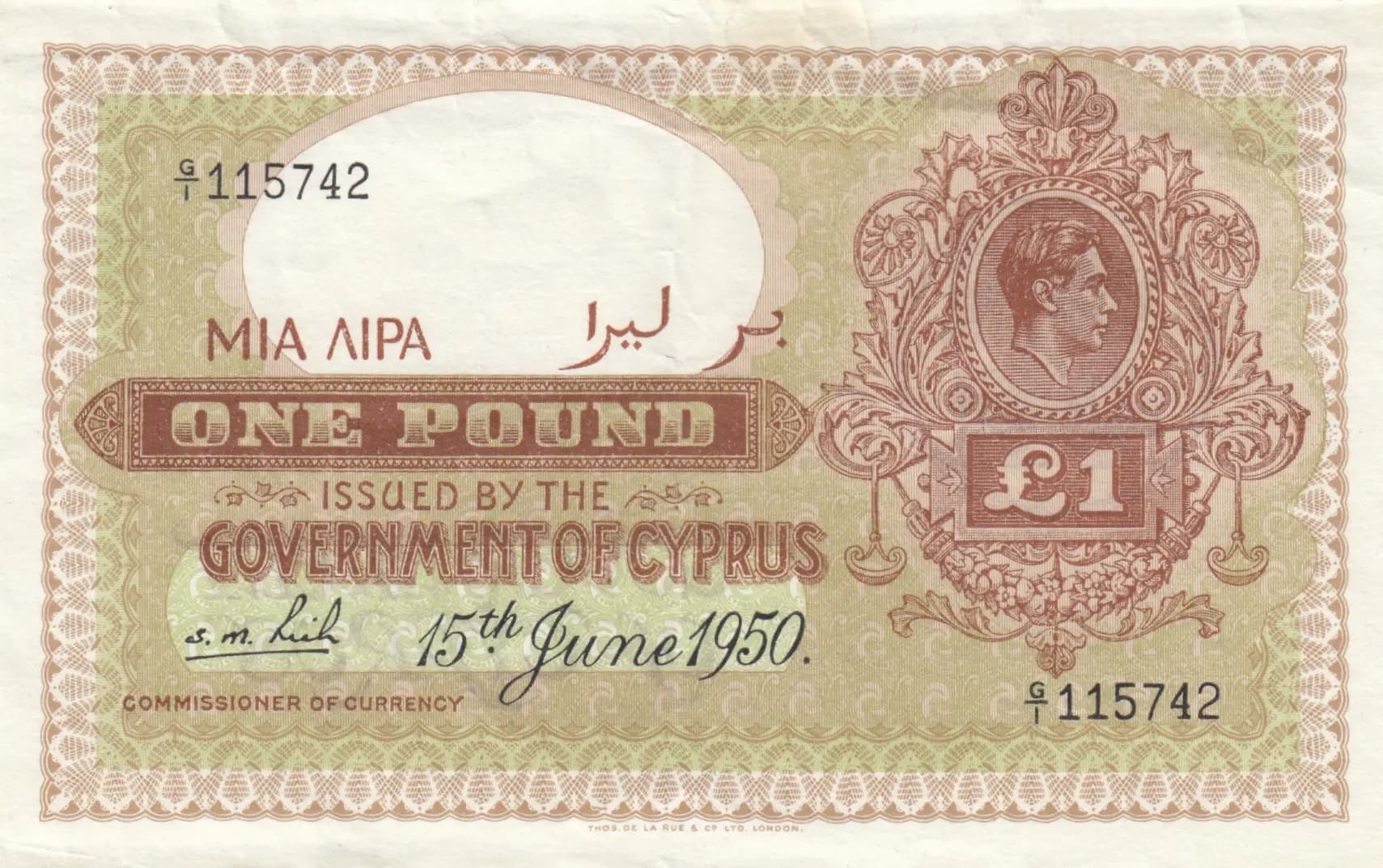
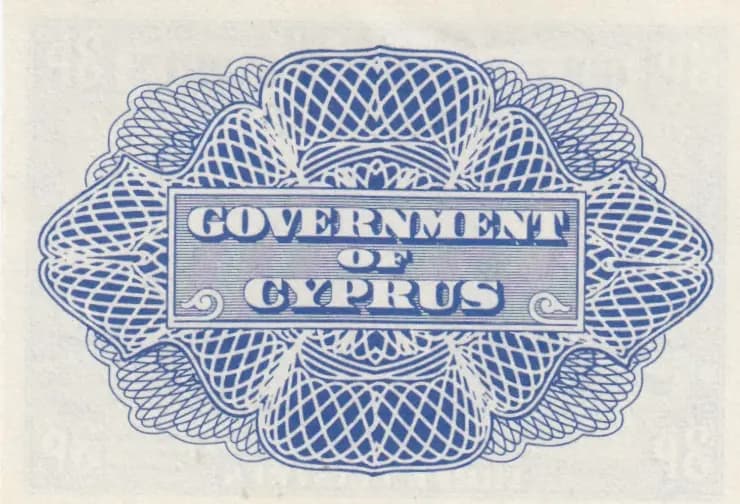
The obverse features a formal portrait of King George VI positioned centrally within an ornamental circular frame, surrounded by elaborate crosshatched and geometric borders typical of Security Printing Company engraving work. The portrait depicts the King in formal attire with slicked-back hair, rendered with fine detail characteristic of high-security currency design. The reverse displays a symmetrical, ornate rosette or decorative medallion containing the issuer identification, with intricate geometric and floral patterns forming an elaborate border. The bilateral denomination markers '3P' appear in corner elements on the obverse. The overall design follows classical British colonial currency aesthetics with its emphasis on portraiture, ornamental security patterns, and multilingual text.
FRONT SIDE: 'ISSUED BY THE GOVERNMENT OF CYPRUS' (English); 'THREE PIASTRES' (English); 'TPIA GROSIA' (Greek - Three Piastres); 'OURCH GROUSIA' (Arabic - Three Piastres); '18TH JUNE 1943' (English - issue date); 'COMMISSIONER OF CURRENCY' (English); Serial number: 4180929. BACK SIDE: 'GOVERNMENT OF CYPRUS' (English, displayed across the ornate central medallion).
Intaglio (engraved) printing, characteristic of British Commonwealth currency security printing of the 1940s era. The fine-line work, crosshatching patterns, and detailed geometric elements visible throughout both sides are consistent with the process used by Security Printing Company or similar British security printers of the period. The precision of the circular frame around the portrait and the intricate medallion design on the reverse further confirm traditional engraved banknote production methods.
This note corresponds to Pick P-28a (the only catalogued variant for base Pick number P-28). The specific issue date of 18 June 1943 and serial number 4180929 are consistent with the initial release of this denomination. PMG population data indicates this variant has been professionally graded with documented examples in various grades. No overprints, date variations, or signature variants are apparent in the observed specimen.