2 shillings 1947
Market Prices
8 salesAbout This Note
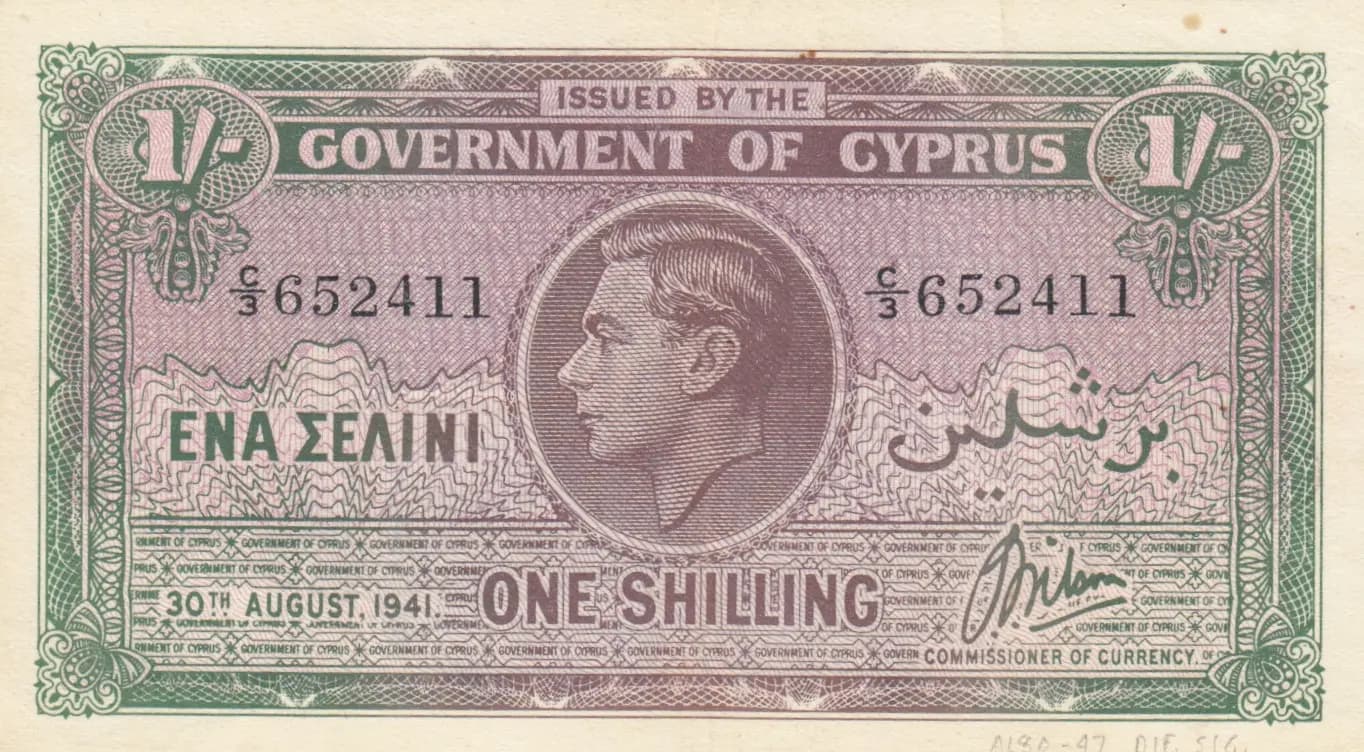
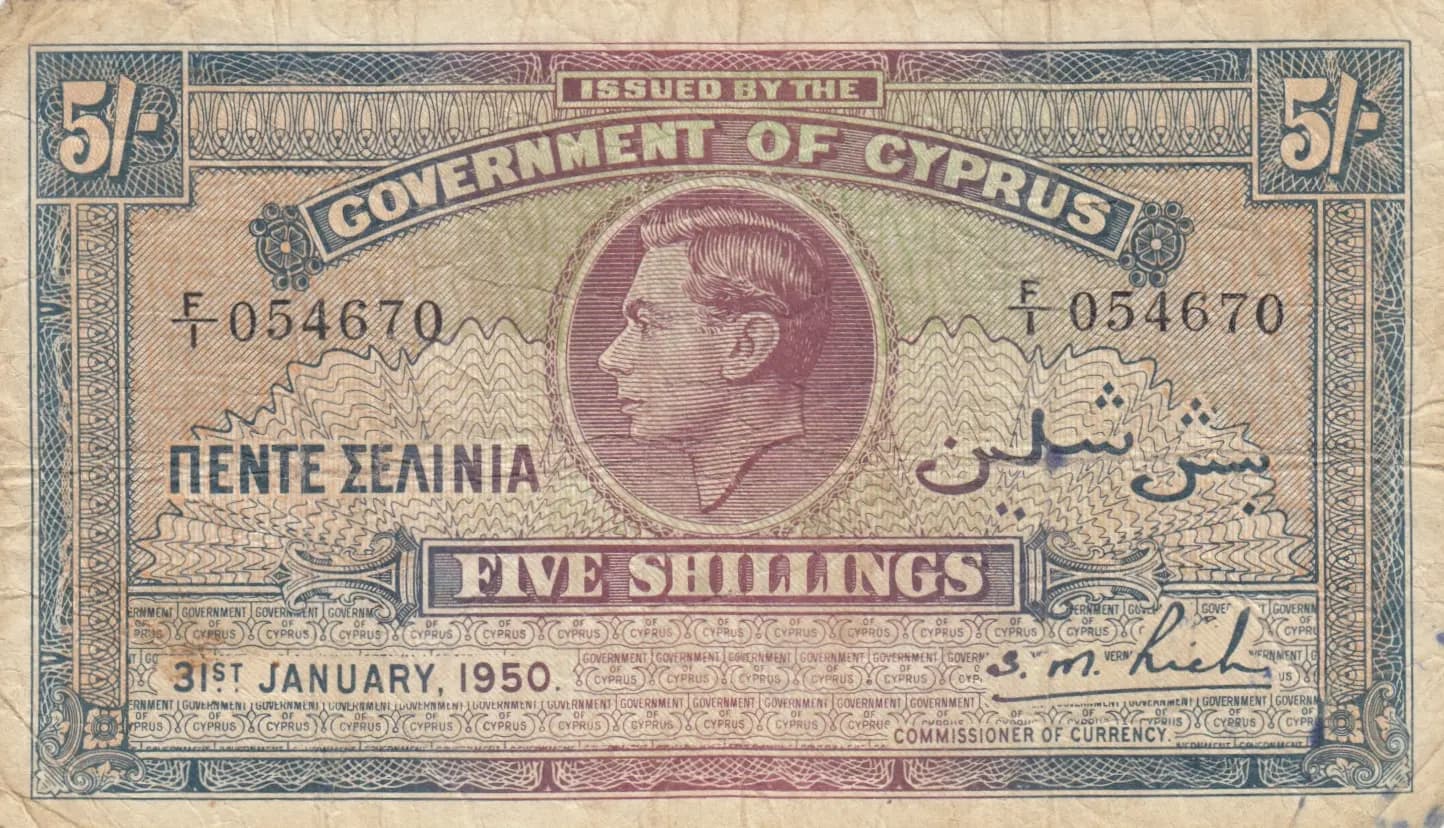
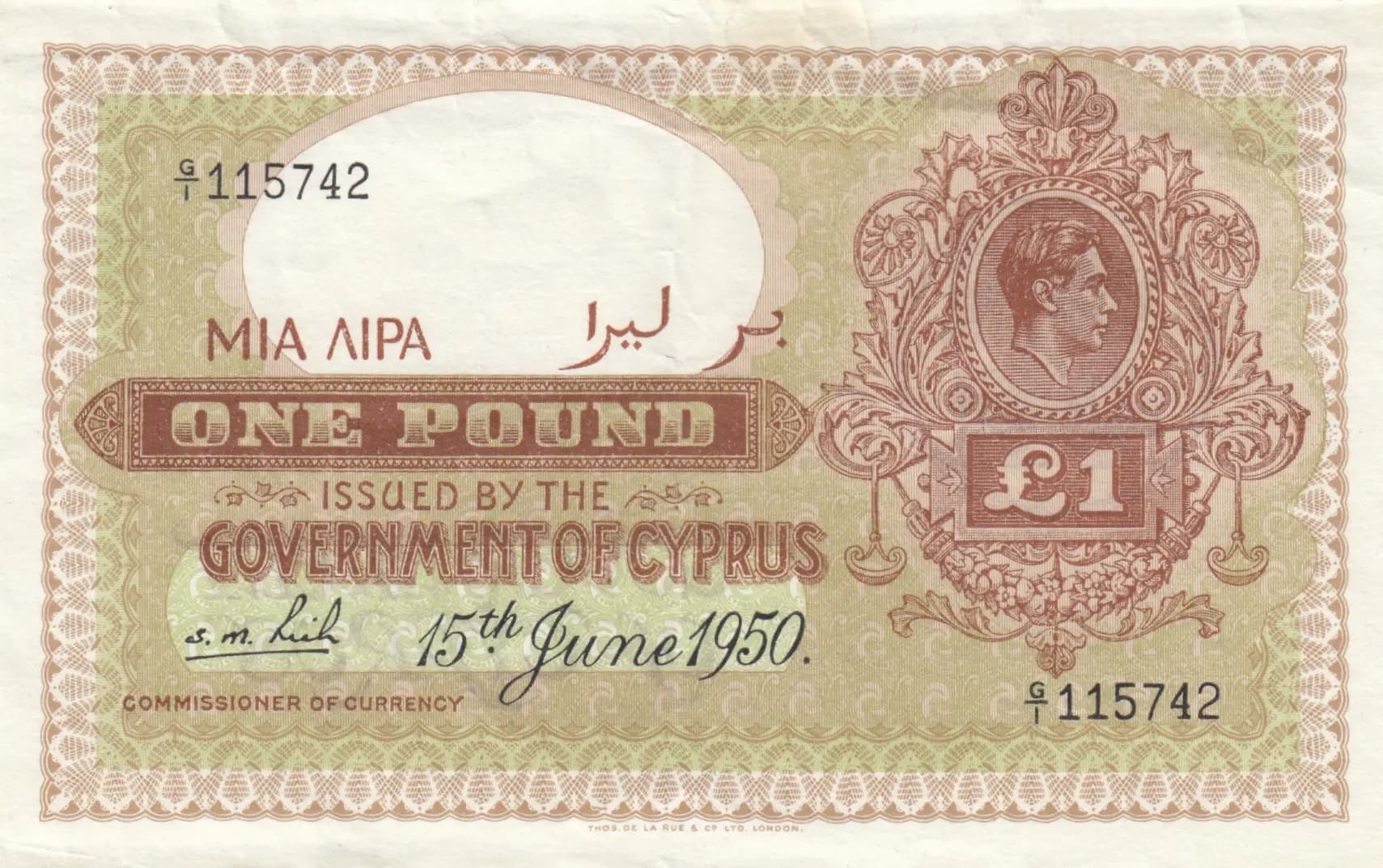
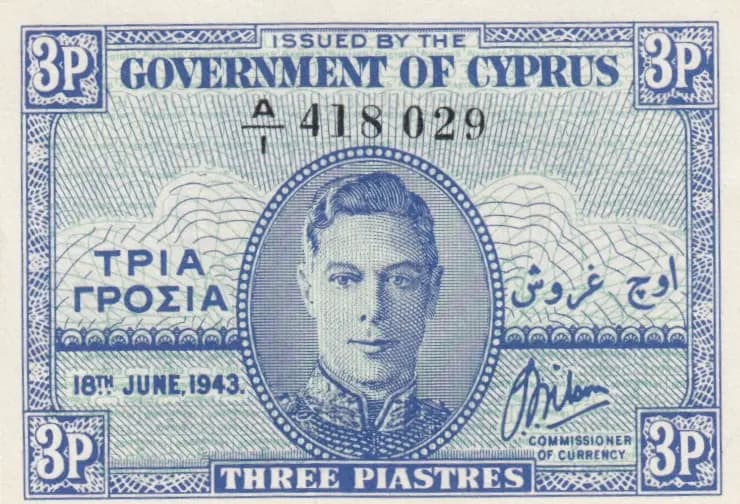
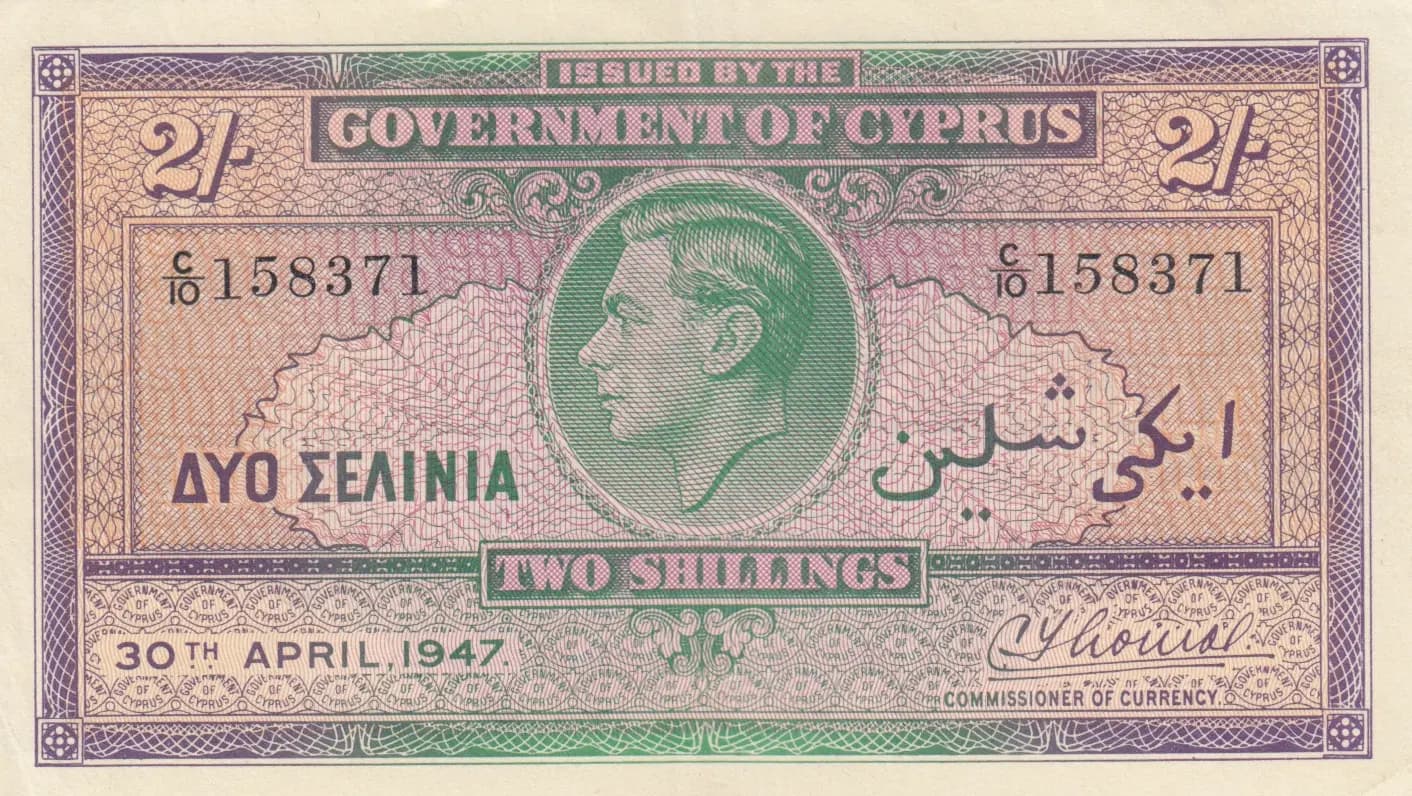
This is an exceptionally well-preserved example of Cyprus's 1947 Government Issue 2 Shillings banknote (Pick P-21), graded EF with crisp printing and no visible wear or damage. The note features a striking portrait of King George VI in profile within an ornamental oval frame, rendered predominantly in green with complementary purple, pink, and cream tones creating a visually balanced design. The trilingual inscriptions in English, Greek, and Arabic reflect Cyprus's diverse cultural heritage during the British mandate period, making this an historically significant example of Commonwealth currency design from the immediate post-WWII era.
Common. While this note represents a specific historical period (1939-1947 issue date range), the Pick P-21 2 Shillings is not particularly scarce. eBay sales data shows consistent trading activity across multiple condition grades (VG, VF, EF, UNC) spanning from 2009 to 2025, with EF examples selling for approximately $125 in recent sales. The 2016 catalog values ($20 VG, $100 VF, $450 UNC) and the relatively broad price range indicate active collector demand but not rarity. The note was part of a standard circulation series for Cyprus during the mandate period, and surviving examples in various grades remain readily obtainable, placing it firmly in the common category despite its historical significance.
Issued on 30th April 1947 by the Government of Cyprus during the final years of British administration, this banknote represents the transitional currency period between World War II and Cyprus's path toward independence (achieved in 1960). The prominent portrait of King George VI emphasizes British sovereignty over the island at a time when colonial territories were beginning to reassert national identity—reflected in the inclusion of Greek and Arabic text alongside English, acknowledging the local populations. This series (dated 1939-1947) bridged the wartime and immediate post-war economic stabilization in Cyprus, making it an important artifact of mid-20th century Mediterranean numismatics.
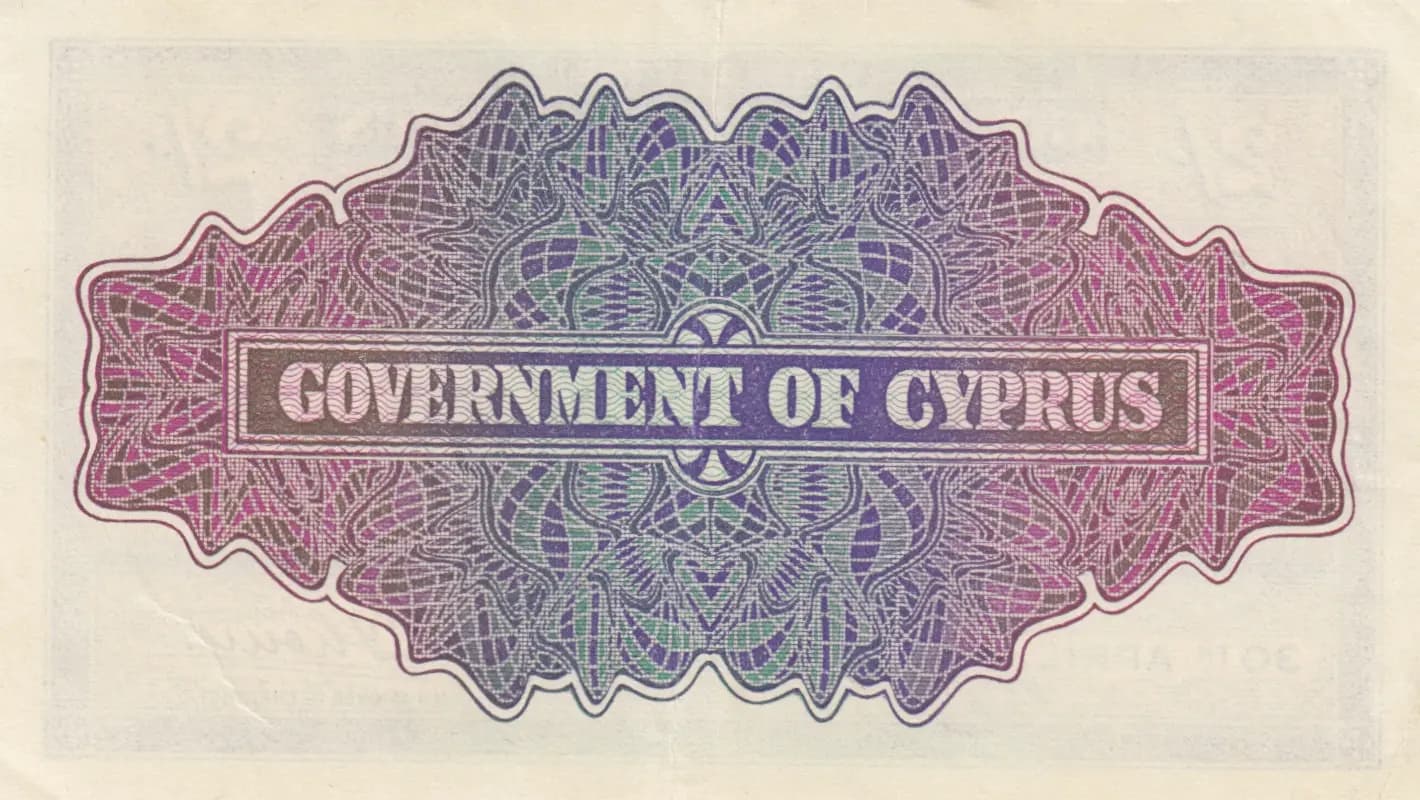
The obverse features a left-facing profile portrait of King George VI centered within an ornate oval frame, executed in fine engraved line work typical of high-security currency production. The portrait is surrounded by elaborate baroque-style flourishes and scrollwork above and below. The reverse displays a large decorative cartouche with scalloped wavy borders containing the issuing authority text, set against an intricate background of geometric and floral patterns rendered through fine cross-hatching. The entire design employs multiple color separation printing in green, purple, pink/rose, blue, and cream/tan, creating visual complexity that served as a security measure against counterfeiting. Serial numbers appear in matching positions on both sides of the obverse portrait, with the date prominently displayed.
FRONT: 'ISSUED BY THE GOVERNMENT OF CYPRUS' (English); '2/' and 'TWO SHILLINGS' (English denomination); 'ΔΥΟ ΣΕΛΙΝΙΑ' (Greek: Two Shillings); 'شيلنج' (Arabic: Shilling); '30TH APRIL, 1947' (issue date); Serial number: 'C 10 1583371' (appears twice, flanking the portrait); 'COMMISSIONER OF CURRENCY' (authorizing officer title). BACK: 'GOVERNMENT OF CYPRUS' (English, within ornamental cartouche frame).
Intaglio/engraving process with multiple-color lithographic overlay, characteristic of 1930s-1940s British Commonwealth banknote production. The fine line cross-hatching patterns throughout both sides, the depth and clarity of the portrait engraving, and the precise color separation visible in the image indicate professional security printing, likely executed by a British currency printer such as De La Rue or Waterlow & Sons, which produced most Commonwealth currency during this period. The security features include intricate geometric background patterns and multiple color printing techniques designed to prevent counterfeiting.
This specific example bears the date '30TH APRIL, 1947' with serial number prefix 'C 10'. The Pick P-21 designation indicates one primary variant according to PMG population data. Signature varieties are noted in the catalog reference as existing for this issue, though the specific signature authority is not clearly legible in the visual analysis provided. No overprints or secondary design modifications are apparent. Collectors should note that examples from different date periods within the 1939-1947 range may exist, and signature varieties may affect values, though these do not appear to be major sorting factors for most collectors of this relatively accessible series.