1 pound 1978
Market Prices
14 salesAbout This Note
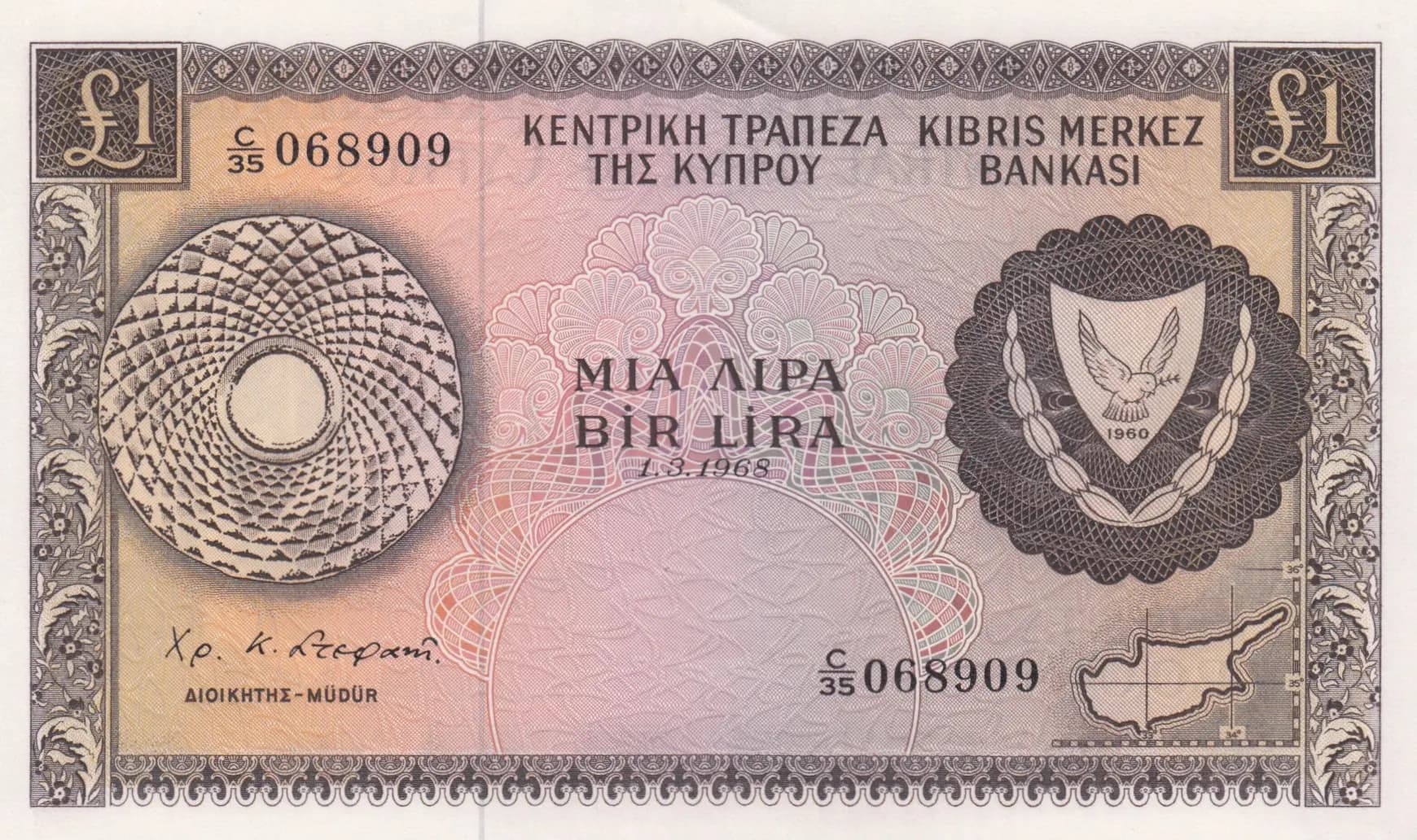
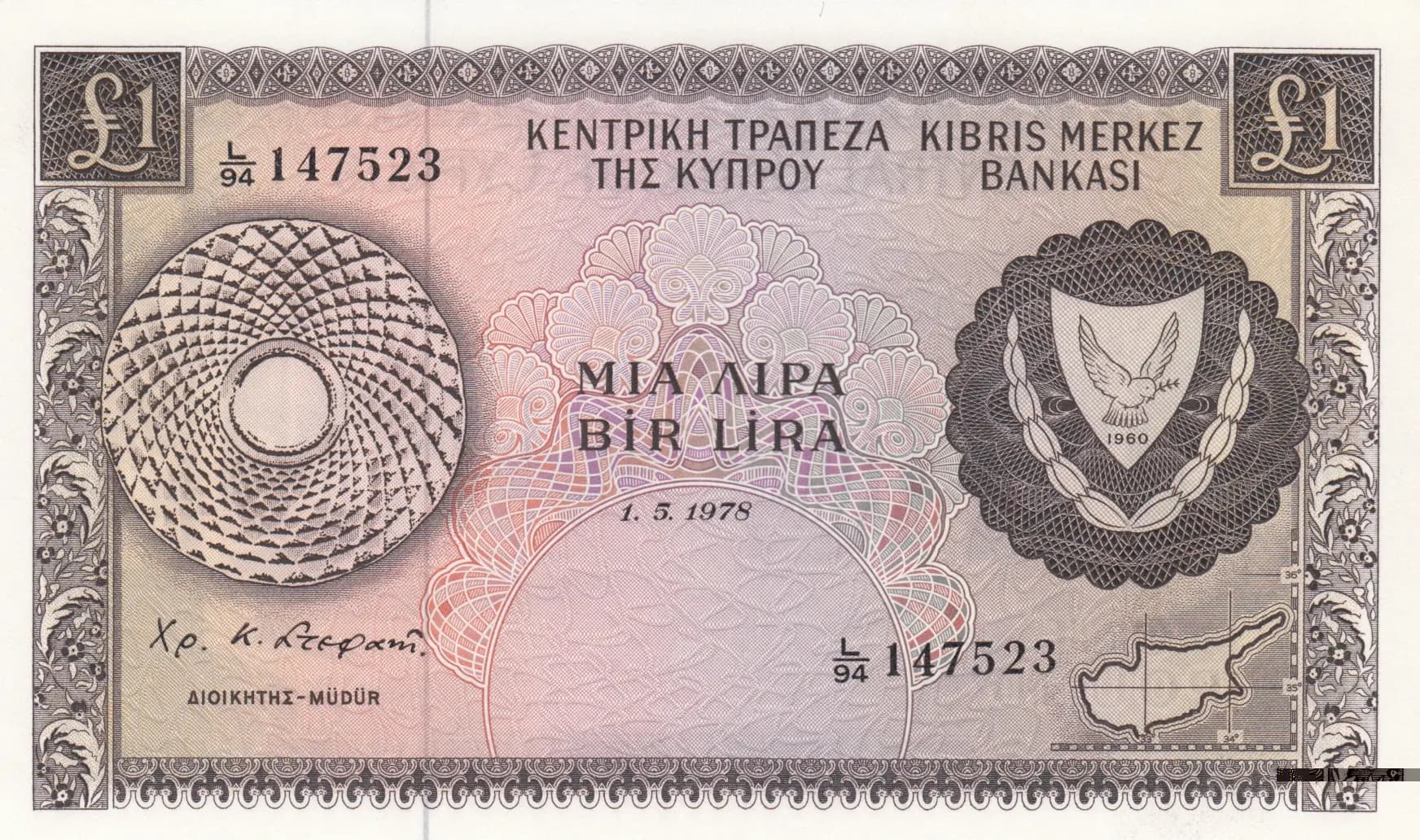
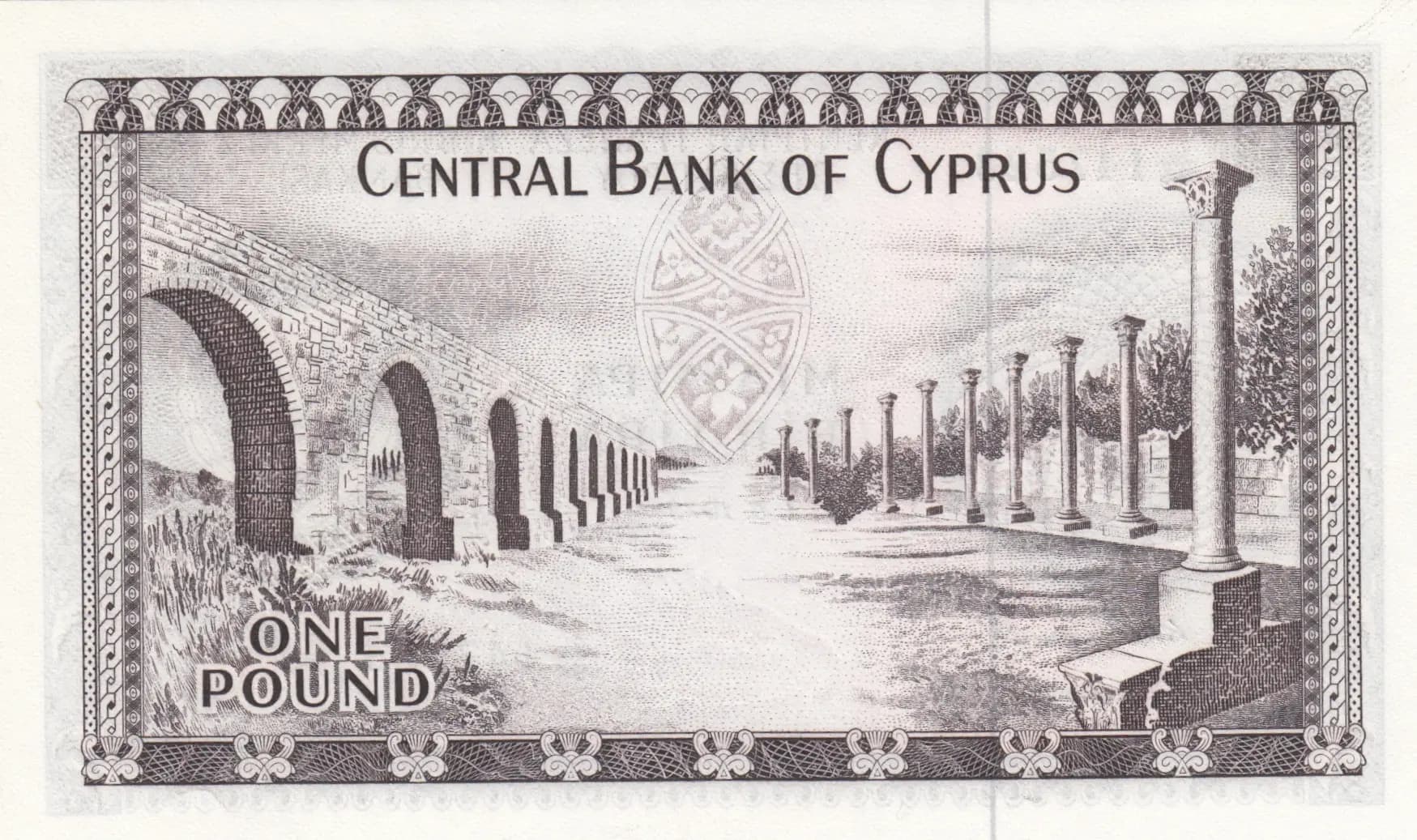
This is a crisp, uncirculated example of the Central Bank of Cyprus 1 Pound note from 1978 (Pick 43c), featuring the iconic white dove emblem of Cyprus on the obverse and classical Mediterranean ruins on the reverse. The note displays sharp engraving detail throughout with no visible wear, creases, or handling marks, consistent with the UNC grade assigned. This particular specimen represents the 1978 dated issue and reflects Cyprus's post-independence numismatic identity through its carefully chosen national symbolism.
Common. This note had a substantial print run during the 1976-1978 issuance period and remains readily available in the collector market. eBay transaction data shows consistent sales across all grades, with UNC examples selling in the $60-$150 range historically (2013-2025), indicating steady collector demand but no scarcity premium. Thousands of examples exist in private collections and institutional holdings, consistent with a standard-issue circulating denomination from a Central Bank's regular series.
Issued in 1978, this banknote reflects the Central Bank of Cyprus's mandate following the island nation's independence from British rule in 1960 and the subsequent establishment of its monetary authority. The obverse features the white dove—a symbol of peace and Cyprus's aspirations—while the reverse depicts classical architectural ruins representative of the island's rich Mediterranean heritage, specifically referencing Roman-era structures near Larnaca and the ancient city of Salamis, underscoring Cyprus's role as a bridge between East and West civilizations.
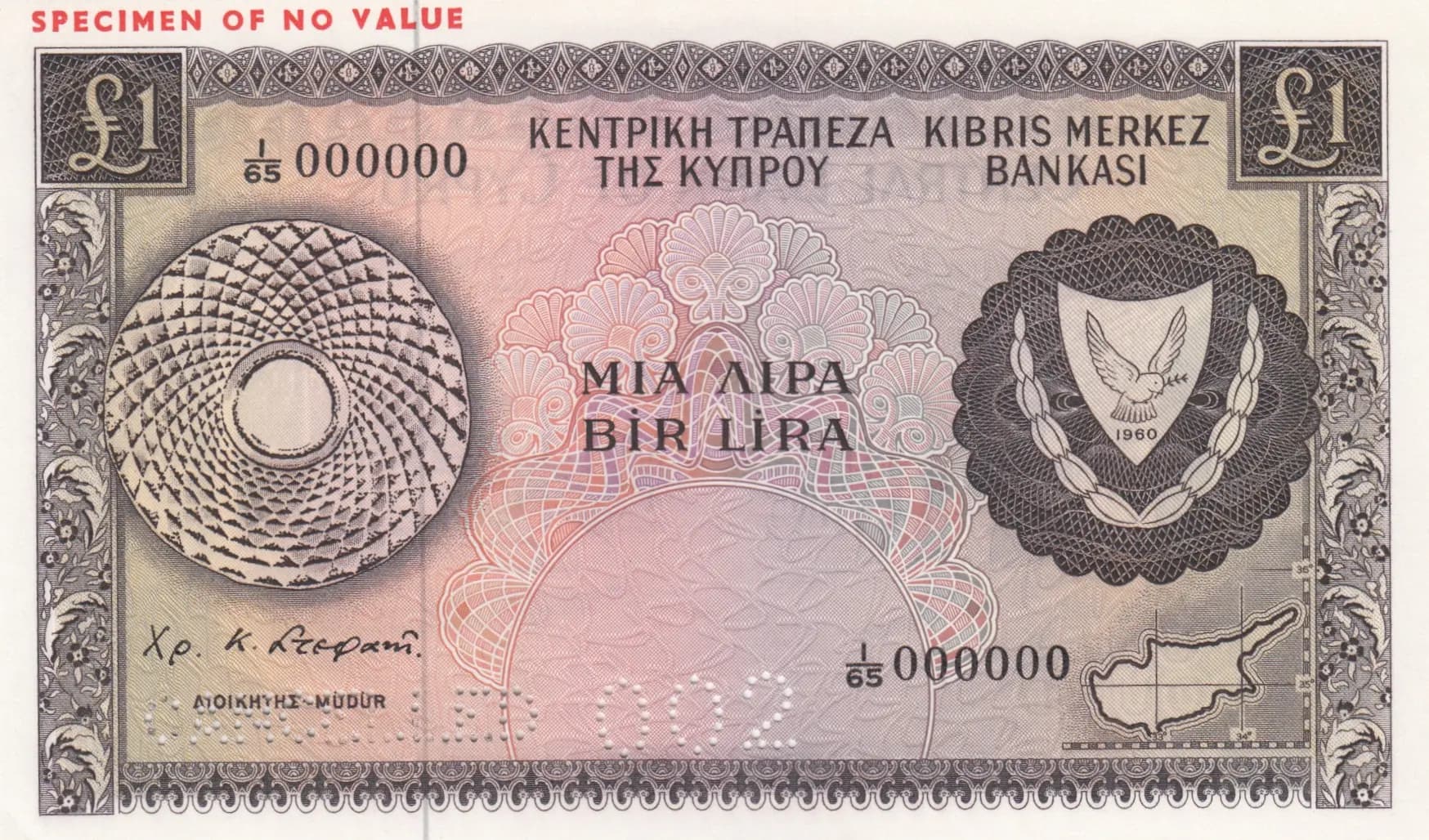
The obverse centers on the coat of arms of the Republic of Cyprus, dominated by a white dove holding an olive branch within a heraldic shield, flanked by decorative geometric rosette patterns and ornamental vine borders with leaf motifs. The right side features an elaborately rendered heraldic emblem with wreath and doves, emphasizing national symbolism. The reverse depicts a classical Mediterranean landscape scene featuring a Roman-era arched viaduct or aqueduct with multiple stone arches (characteristic of structures near ancient Larnaca) and standing Corinthian or composite capital columns (representative of Salamis archaeological site), with cypress trees completing the ancient architectural composition. A geometric cross pattern appears within a central oval medallion. The color scheme of brown and multicolored underprints on the obverse contrasts with the grayscale engraving of the reverse, a common design choice for banknotes of this era.
OBVERSE: 'ΚΕΝΤΡΙΚΗ ΤΡΑΠΕΖΑ ΤΗΣ ΚΥΠΡΟΥ' (Central Bank of Cyprus in Greek) | 'KIBRIS MERKEZ BANKASI' (Central Bank of Cyprus in Turkish) | 'ΜΙΑ ΛΙΡΑ' / 'BIR LIRA' (One Pound in Greek and Turkish respectively) | '1.5.1978' (issue date: 1 May 1978) | 'ΔΙΟΙΚΗΤΗΣ - MÜDÜR' (Director/Governor in Greek and Turkish) | 'Χρ. Κ. Κέρπανη' (signature of bank official). REVERSE: 'CENTRAL BANK OF CYPRUS' (English) | 'ONE POUND' (English denomination). The trilingual inscriptions (Greek, Turkish, and English) reflect Cyprus's complex political and cultural identity during this period.
Intaglio engraving (recess printing), executed by BWC (Bradbury Wilkinson & Company), a renowned security printer. The fine line work, detailed cross-hatching, microprint-style patterns, and intricate security line patterns throughout both sides are characteristic of high-security intaglio production. The elaborate texture rendering of stone architectural elements and the precision of the geometric border designs confirm the use of traditional engraved plate printing with multiple color passes for the multicolored underprint on the obverse.
Pick 43c variant as cataloged by PMG, indicating this is the third known variety of the 1 Pound note for this issue. Varieties within Pick 43 (43a, 43b, 43c, and 43s) likely differ in printer details, signature variations, or subtle printing changes across the 1976-1978 issuance window. The observed specimen bears the date '1.5.1978' and signature of bank official Χρ. Κ. Κέρπανη (Chr. K. Kerpani), Governor, with serial number format '94 L 147523', typical of late-period printing. The BWC printer attribution and absence of imprint mark are consistent with P-43c specifications.