10 colones 1951
Market Prices
About This Note
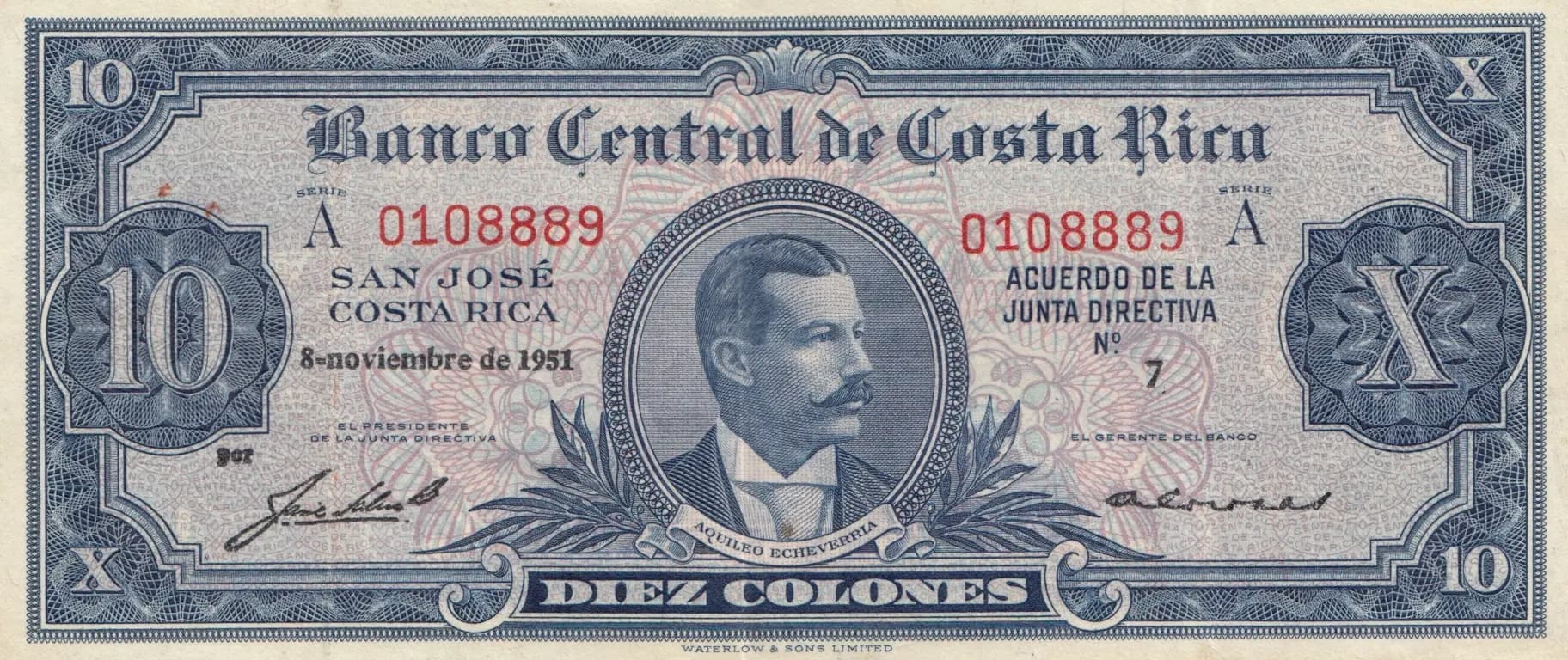
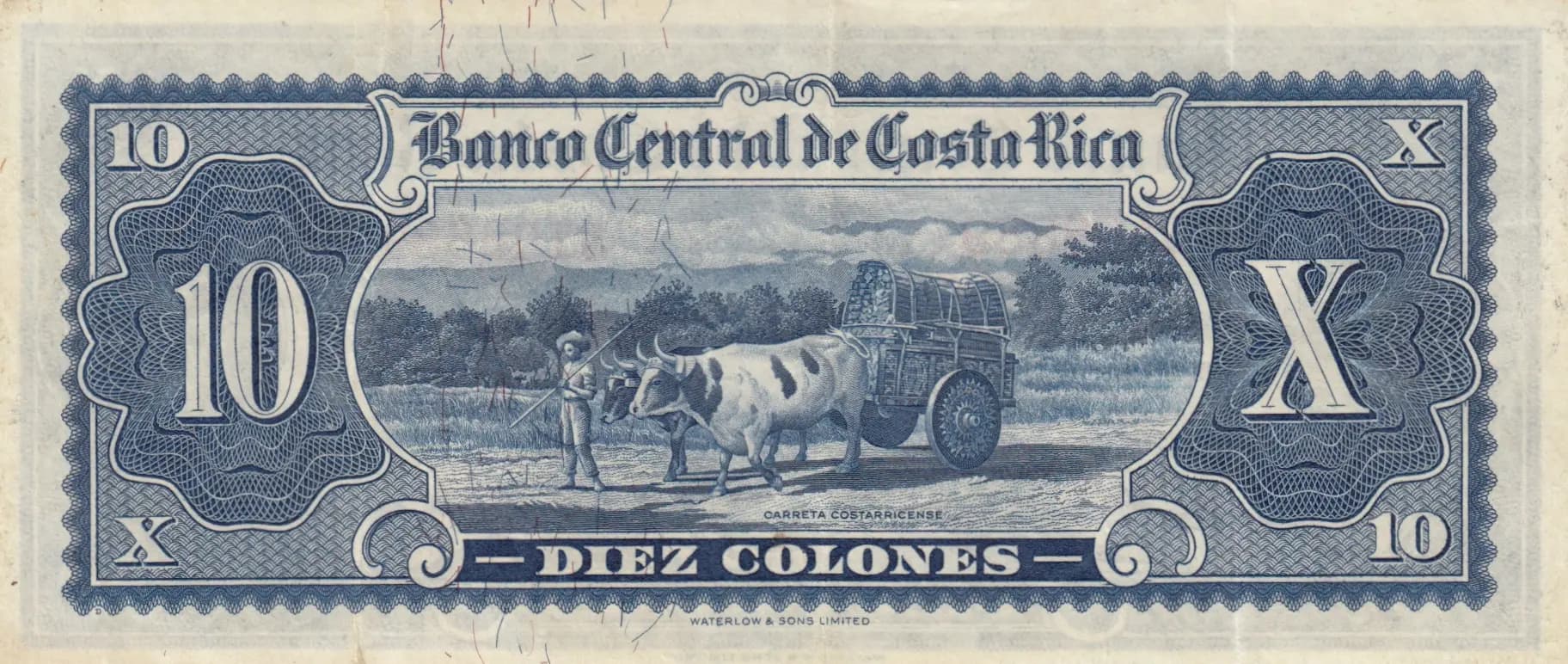
This is a Costa Rican 10 Colones banknote from 1951, issued by the Banco Central de Costa Rica and printed by Waterlow & Sons Limited in London. The note features a striking blue-toned design with a portrait of Aquileo Echeverría on the obverse and a culturally significant scene of a traditional Costa Rican ox-cart (carreta costarricense) on the reverse. The specimen shows genuine circulation wear with visible creasing and light foxing consistent with AU grade, making it a well-preserved example of this important post-war Central American currency.
Common. While this is a 1951-dated note from the early years of the Banco Central de Costa Rica, the Pick P-221a remained in regular circulation through at least 1962 according to catalog data. eBay market data shows wide availability with numerous listings, with prices typically ranging from $1.69 to $99.99 USD depending on condition and seller pricing strategies. Most examples trade in the $2–$25 range, indicating substantial surviving quantities. The AU-graded specimen observed here represents a well-preserved but not exceptional example; catalog value suggests approximately $25–$120 depending on grade, confirming common status.
This 1951 issue represents the early years of the Banco Central de Costa Rica's modern banknote production, issued just one year after the Central Bank's establishment in 1950 following the civil war period. The obverse honors Aquileo Echeverría, a significant Costa Rican cultural figure, while the reverse depicts the iconic carreta costarricense—a symbol of Costa Rica's rural heritage and agricultural economy that remained central to national identity during this period of post-conflict reconstruction and economic stabilization.
The obverse features a formal portrait of Aquileo Echeverría, a Costa Rican writer and cultural personality, depicted in three-quarter profile facing left within an ornate circular medallion at the note's center. He is shown in formal business attire with a distinctive mustache, surrounded by laurel wreaths and elaborate scrollwork. The reverse depicts a rural Costa Rican scene centered on a traditional ox-drawn cart (carreta)—a symbol of the nation's agricultural heritage—complete with oxen and a farmer, set within a pastoral landscape with vegetation and trees. Both sides employ sophisticated security printing with intricate cross-hatching, fine line work, and complex decorative borders in navy and light blue tones. Denomination '10' and Roman numeral 'X' appear in ornamental corner boxes. The design reflects the pride in Costa Rican national heritage and agricultural traditions during the early post-war reconstruction period.
FRONT: 'Banco Central de Costa Rica' (Central Bank of Costa Rica); 'DIEZ COLONES' (Ten Colones); 'SERIE A' (Series A); '8-noviembre de 1951' (November 8, 1951); 'SAN JOSE COSTA RICA' (San Jose Costa Rica); 'ACUERDO DE LA JUNTA DIRECTIVA N° 7' (Agreement of the Board of Directors No. 7); 'EL PRESIDENTE DE LA JUNTA DIRECTIVA' (The President of the Board of Directors); 'EL OFERENTE DEL BANCO' (The Bank's Representative); 'WATERLOW & SONS LIMITED' (printer identification); Serial number 'A 0108889'. BACK: 'Banco Central de Costa Rica' (Central Bank of Costa Rica); 'CARRETA COSTARRICENSE' (Costa Rican Cart); 'DIEZ COLONES' (Ten Colones); 'WATERLOW & SONS LIMITED' (printer identification).
Intaglio (engraved) printing by Waterlow & Sons Limited, London, evidenced by the fine detail work, complex cross-hatching patterns, intricate mesh work in background areas, and the sophisticated line work visible throughout the design. The red serial number stamps appear to have been applied separately. This technique was the standard for security banknote production by this renowned British security printer during the 1950s.
This specimen displays 'SERIE A' designation and serial number prefix 'A', consistent with the standard early Series A issue. The note is dated '8-noviembre de 1951' on the obverse, matching the primary issue date for P-221a. No overprints of 'POR' are visible on this example, though catalog references note that some specimens of this type include 'POR' added to the left of signature title. The Waterlow printing credit and standard signature lines are present. This appears to be a standard P-221a variety without special overprints or emergency markings.