20 colones 1903 specimen
Market Prices
About This Note
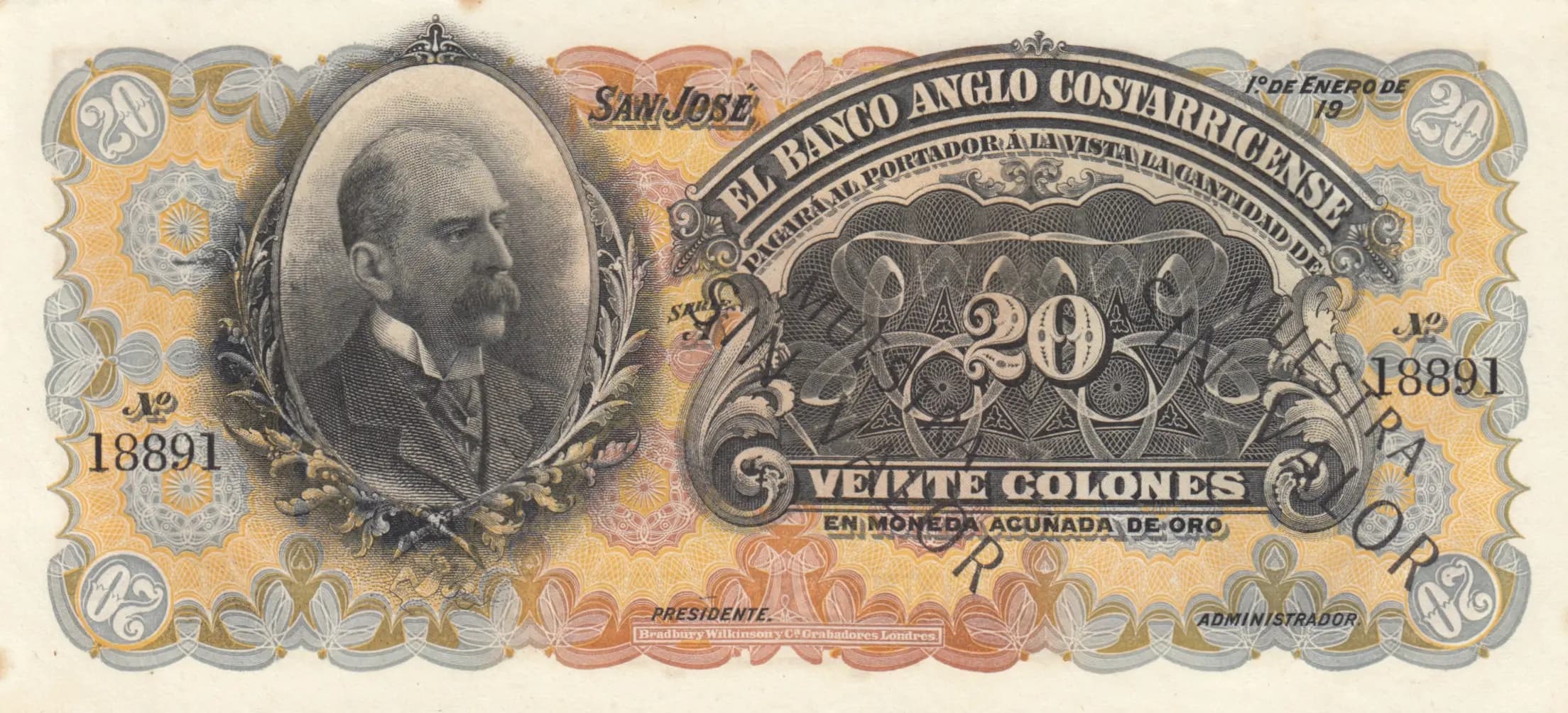
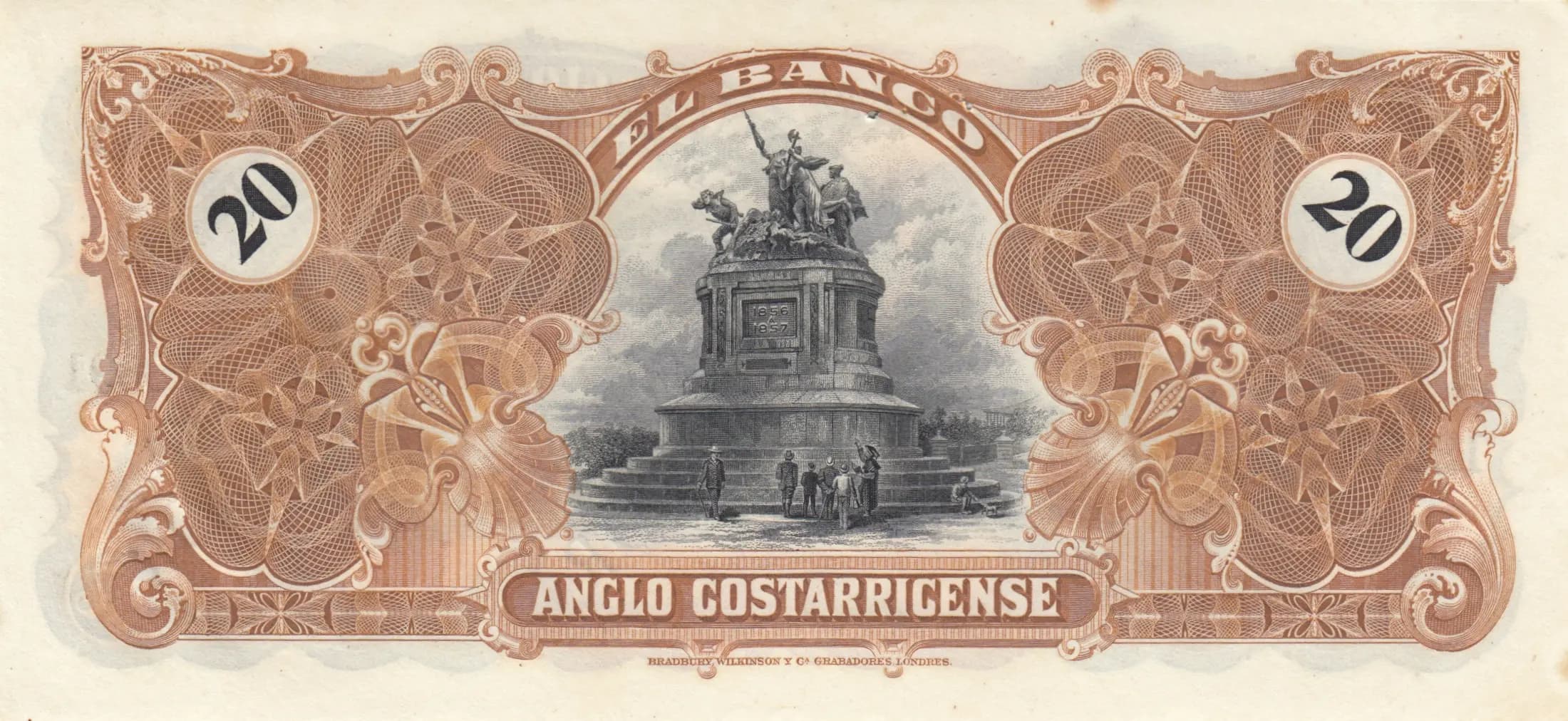
This is a spectacular 1903 specimen note from the Banco Anglo-Costarricense, rendered in exquisite multicolored engraving with dominant blues, golds, and creams. The obverse features a distinguished bearded gentleman in profile within an ornate oval medallion, while the reverse showcases a classical domed monument with allegorical sculptural figures—a masterwork of late 19th-century security printing. In uncirculated condition with crisp impression and minimal age-related discoloration, this specimen exemplifies the high artistic and technical standards of Costa Rican banking currency during the early 1900s.
common
The Banco Anglo-Costarricense was a significant financial institution in Costa Rica's modernization period, and this 1903 issue reflects the country's economic development at the turn of the century. The classical monument depicted on the reverse (dated 1856 on its base) likely commemorates a major national event or civic achievement, while the promise to pay 'in minted gold currency' reflects Costa Rica's adherence to the gold standard. The use of London engravers (Bradbury Wilkinson & Co) underscores the international prestige associated with Costa Rican banking during this era of relative stability and growth.
The obverse presents a portrait of an unidentified male dignitary in three-quarter profile facing right, rendered with fine detail and enclosed within an ornate oval medallion surrounded by decorative laurel wreaths—classical symbols of honor and achievement. Ornate corner cartouches frame the composition with elaborate scrollwork and geometric patterns. The reverse depicts the National Monument (Monumento Nacional) of Costa Rica, a grand classical rotunda with a domed cupola crowned by a sculptural group representing allegorical or historical figures in dynamic poses. The monument sits on a stepped base with figures of people surrounding it, dated 1856 (likely the year of the actual monument's conception or dedication). Both sides feature intricate guilloche patterns and fine engraved line work characteristic of the highest security standards of the period.
FRONT: 'EL BANCO ANGLO COSTARRICENSE' (The Anglo Costa Rican Bank); 'DIRECTORA PORTADORA LA VISTA LA CANTIDAD DE' (Director Bearer At Sight The Amount Of); 'VEINTE COLONES' (Twenty Colones); 'EN MONEDA ACUÑADA DE ORO' (In Minted Gold Currency); 'SAN JOSÉ' (San José, the capital); 'PRESIDENTE' (President); 'ADMINISTRADOR' (Administrator); '1 DE ENERO DE 1903' (January 1, 1903); Serial number '18891'. BACK: '20' (denomination numerals); 'ANGLO COSTARRICENSE' (Anglo Costa Rican); 'BANCO' (Bank); 'BRADBURY WILKINSON & Co GRABADORES LONDRES' (Bradbury Wilkinson & Co Engravers London); '1856' (date commemorated on monument base).
Steel engraving with multi-color printing, executed by the prestigious London security printer Bradbury Wilkinson & Co. The note displays characteristic fine line work, complex guilloche patterns, and intricate geometric designs typical of late Victorian-era banknote security printing. The multicolored underprint on the obverse (blues, golds, creams, oranges) combined with the brown and black reverse demonstrate sophisticated chromatic separation and register control, indicating advanced intaglio printing technology of the period.
This is identified as a specimen note (Pick P-S124s), indicated by the 'S' designation. The note displays the issue date of '1 DE ENERO DE 1903' (January 1, 1903) and serial number '18891'. Known varieties for Banco Anglo-Costarricense 20 colones notes include regular issues dated 1909, 1911, and 1917. This 1903 specimen represents an earlier issuance by the bank. Specimen notes of this period often lack the signatures of officers or bear special specimen perforations or overprints (not clearly visible in the provided images), confirming its status as a proof or non-circulating specimen.