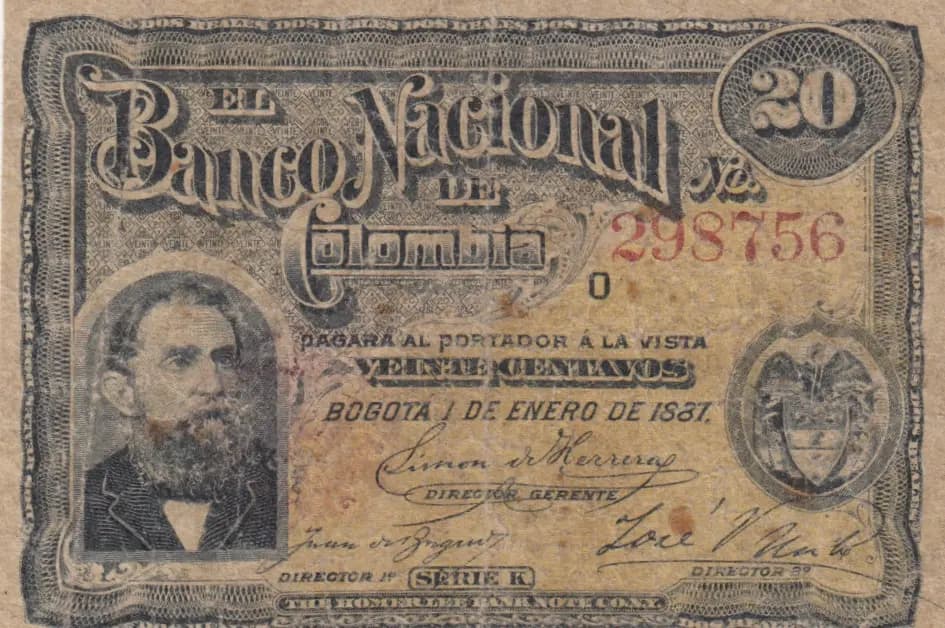
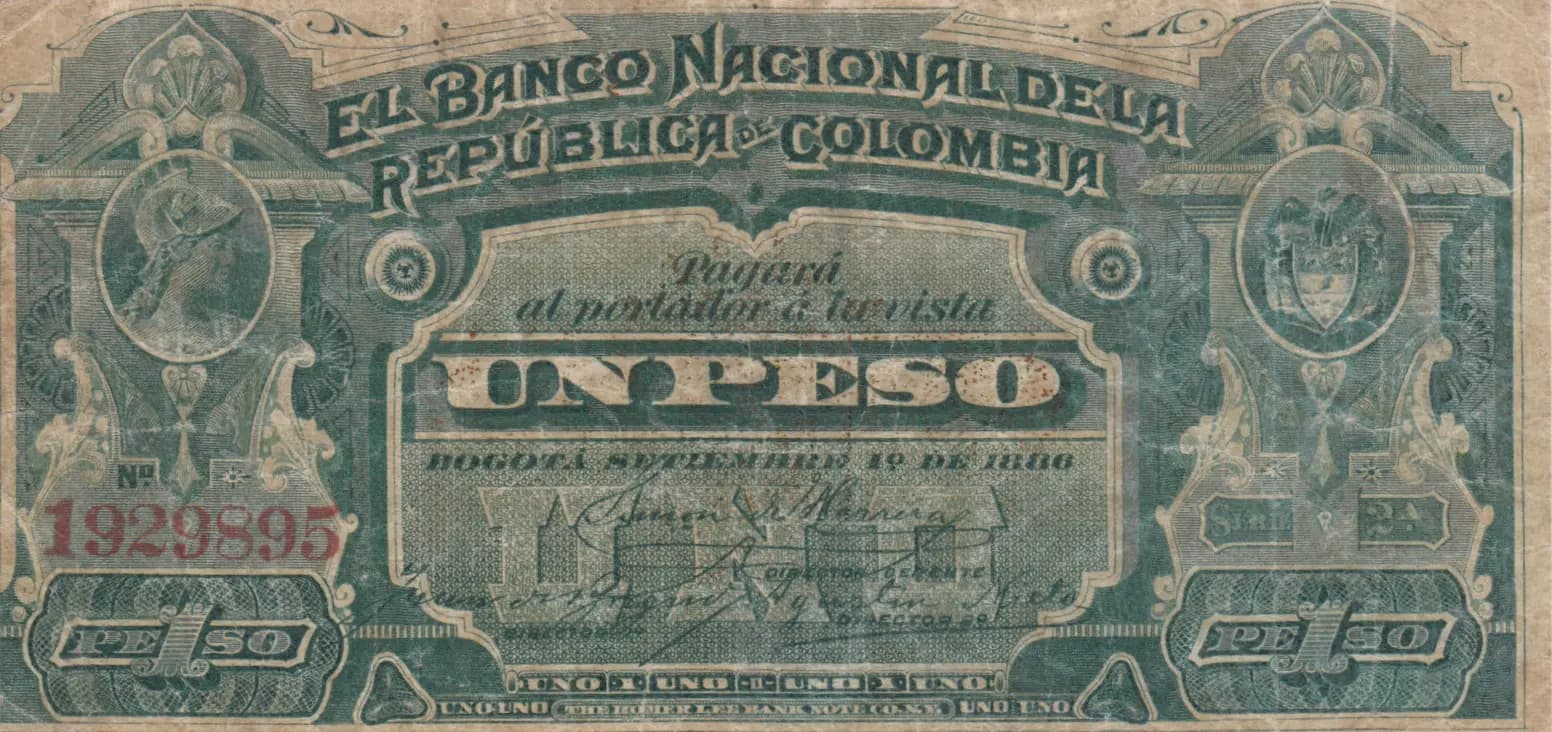
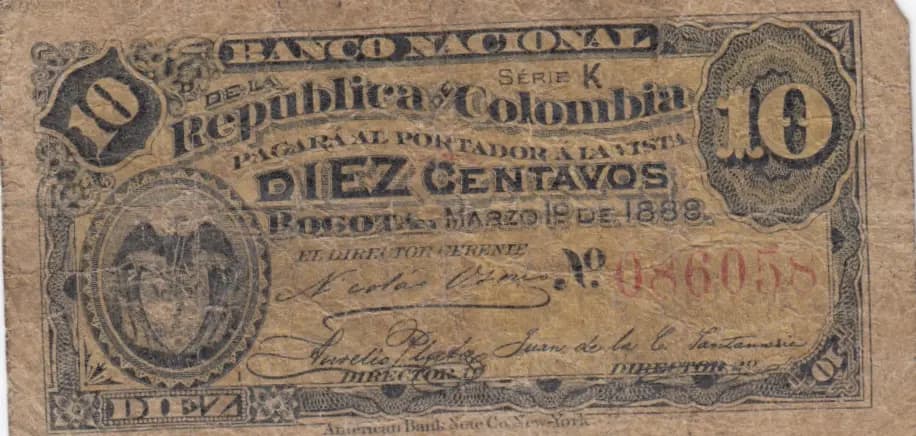
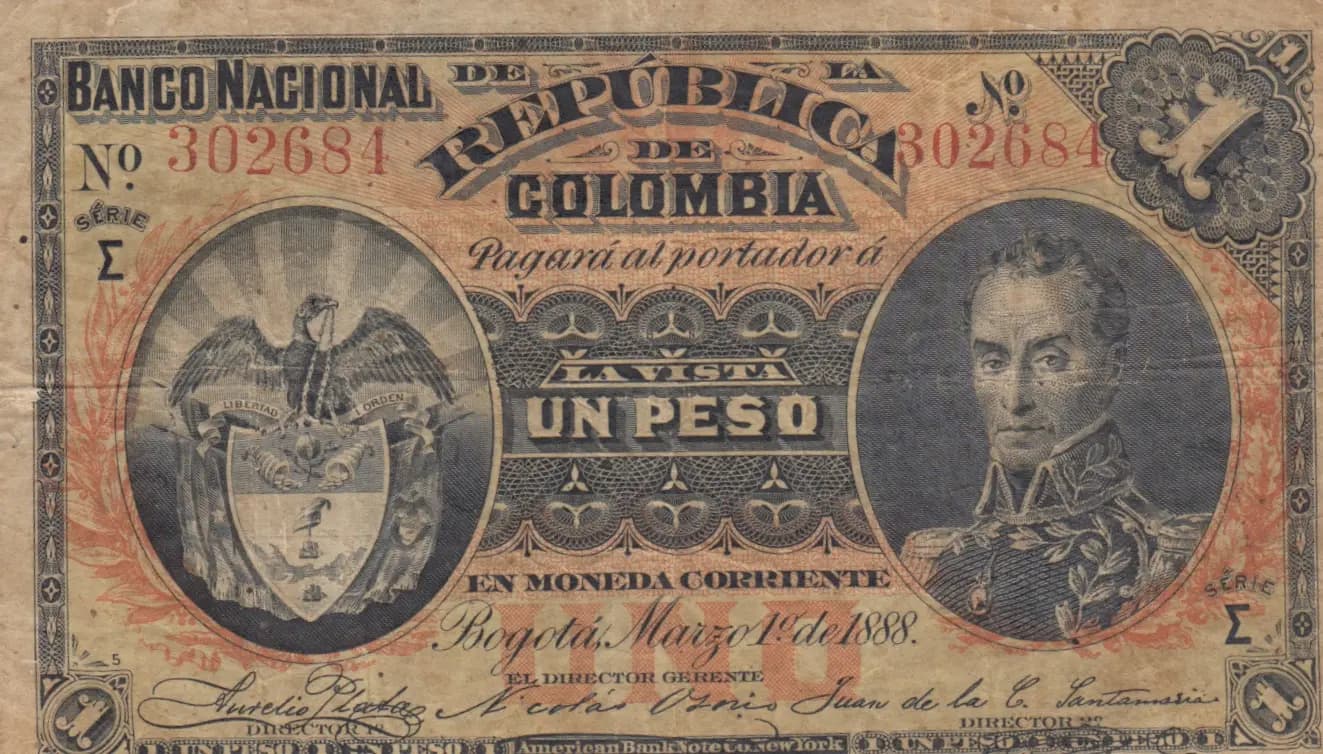
20 centavos 189x
About This Note
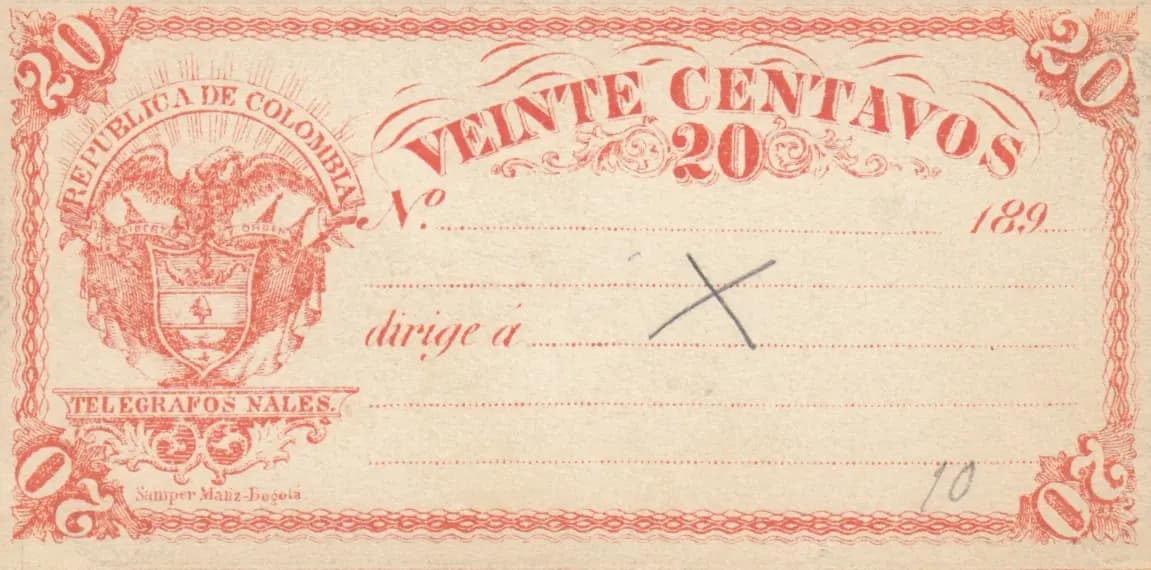
This is a Colombian 20 centavos telegraph stamp from the 1890s, issued by Telegrafos Nacionales and printed by Samper Maiz in Bogotá. The piece is an unfilled or partially used telegraph form featuring the Colombian coat of arms with an eagle and shield, ornamental borders, and denomination text in red/pink ink on aged cream paper. In AU condition, it displays minor foxing and a handwritten X mark, representing a scarce example of 19th-century Colombian postal/telegraph ephemera with both front and reverse inscriptions.
Uncommon. This is a specialized telegraph form rather than a circulating banknote, making it inherently less numerous than standard currency denominations. The unlisted Pick catalog status indicates limited institutional recording of this particular issue type. The partial use and handwritten notations suggest this is a documentary artifact rather than a pristine collectible item. While Colombian postal ephemera from the 1890s exists in modest quantities, telegraph stamps are distinctly more specialized than regular postage stamps or banknotes, placing this piece in the uncommon category rather than common circulation notes.
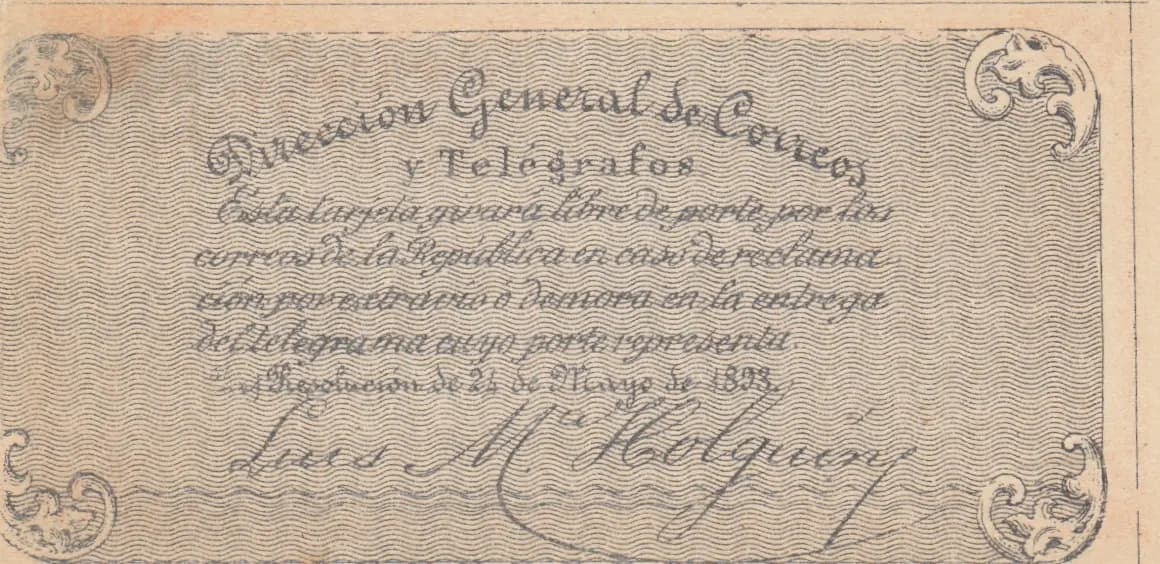
This telegraph stamp documents Colombia's late 19th-century postal and telecommunications infrastructure under the administration of Telegrafos Nacionales. The handwritten notation referencing 'Marcelino Guardia Gral. Filopator' on the reverse suggests official government use during a period of Colombian institutional development. The 1890s dating and fine engraved design reflect the technical capabilities and governmental formality of the Colombian state during this transitional period in the nation's political and administrative history.
The obverse features the official coat of arms of the Colombian Republic, depicting an Andean condor (eagle) with outstretched wings positioned above a shield, rendered in fine engraved detail. The denomination 'VEINTE CENTAVOS' appears in large, decorative serif lettering across the upper portion. Ornamental corner flourishes frame all four corners with intricate scrollwork and botanical motifs typical of late 19th-century security printing. The lower portion contains a field with dotted lines for filling in telegraph routing information, marked with 'N°' and a date field. The reverse displays a fine wavy horizontal line security pattern across the entire background, with ornamental corner designs repeated in all four corners, and substantial handwritten cursive text overlay serving as an official notation or message field.
FRONT: 'REPÚBLICA DE COLOMBIA' (Republic of Colombia) | 'VEINTE CENTAVOS' (Twenty Centavos) | 'TELEGRAFO NALES' (National Telegraph) | 'dirije a' (addressed to) | '189_' (year 189[0-9]) | 'Samper Maiz Bogotá' (printer attribution). BACK: 'Marcelino Guardia Gral. Filopator' (Marcelino Guardia General Filopator) | Multiple lines of cursive handwritten text in Spanish forming an official message or certification, partially legible due to flowing script style, appearing to reference official dates and governmental information.
Intaglio engraving (line engraving) for the primary design elements, coat of arms, borders, and security patterns, evidenced by the fine detail work and crisp line definition visible in the ornamental borders and eagle design. The printer was Samper Maiz of Bogotá, as credited on the obverse. The fine wavy line background pattern on the reverse is consistent with security printing techniques of the period intended to prevent counterfeiting. Single color production (red/pink ink) with handwritten completion and annotations.
This specific piece is dated to the 1890s (189_) with an incomplete year designation. The reverse contains a unique handwritten inscription referencing 'Marcelino Guardia Gral. Filopator,' suggesting this particular form was issued to or completed by this official. The presence of the X mark crossing out a section indicates this form was drafted or used and subsequently marked as void or superseded. The handwritten nature of the back inscription makes this a one-of-a-kind documentary variant rather than a standardized printing variety. No standard Pick catalog number assignment suggests this telegram form type was not systematically cataloged in major philatelic/numismatic references.