1 peso 1886
Market Prices
About This Note
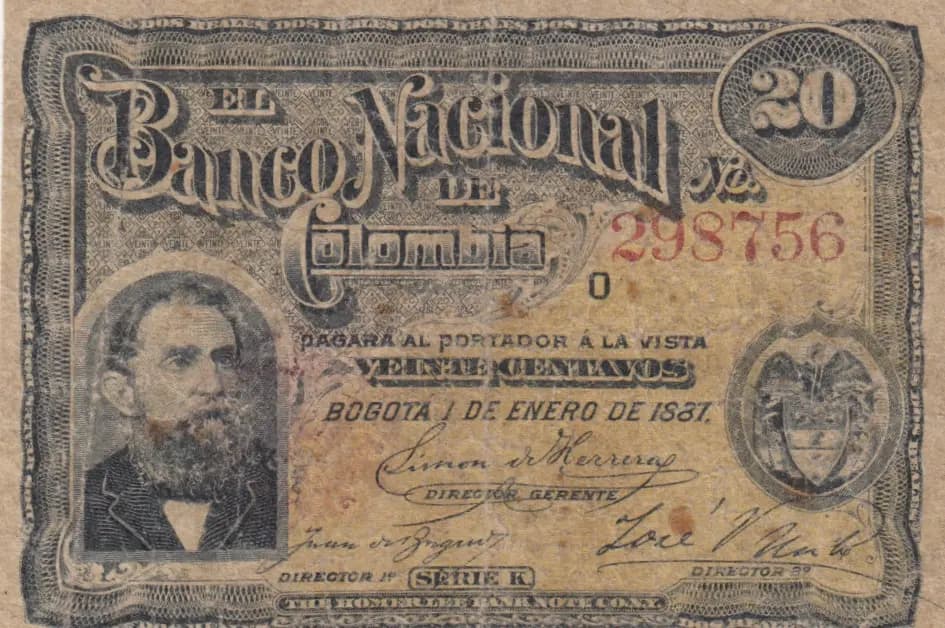
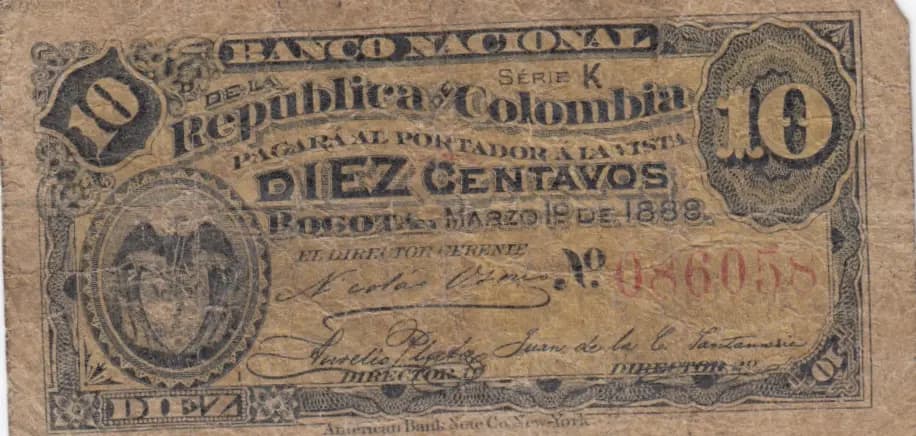
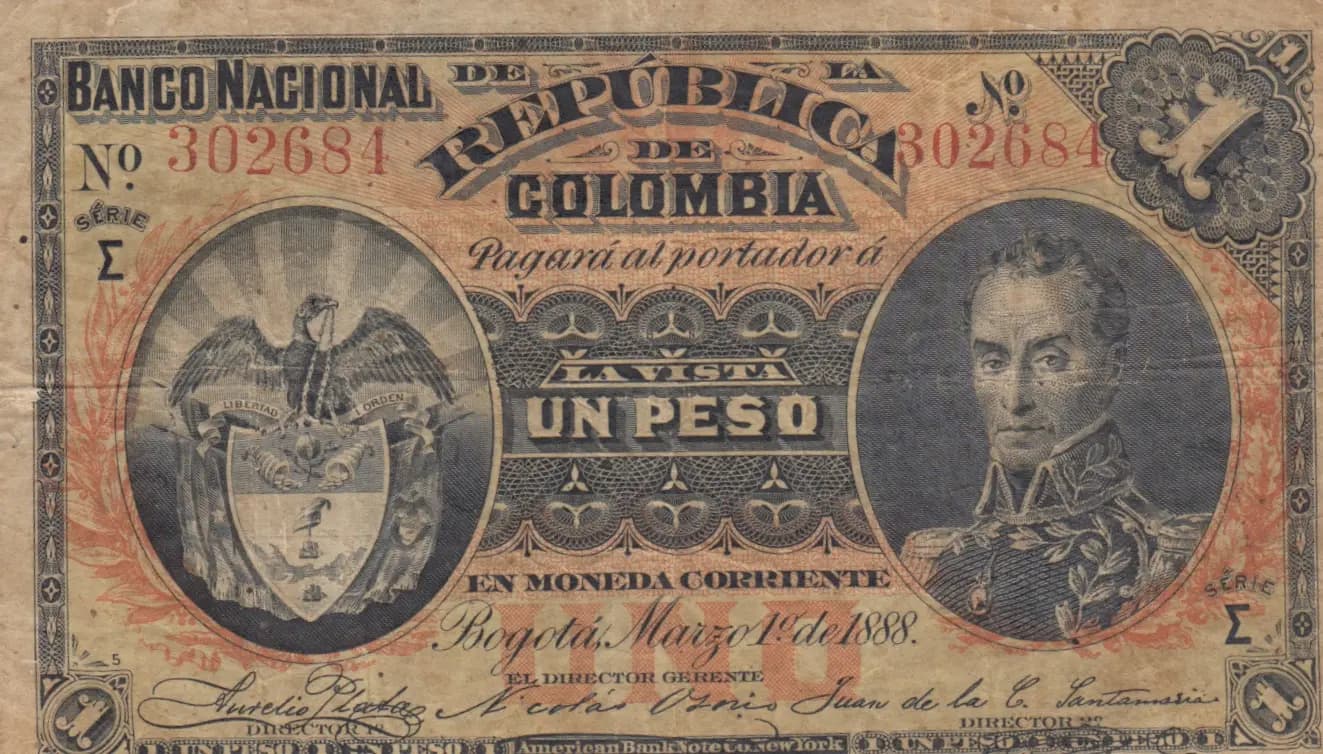
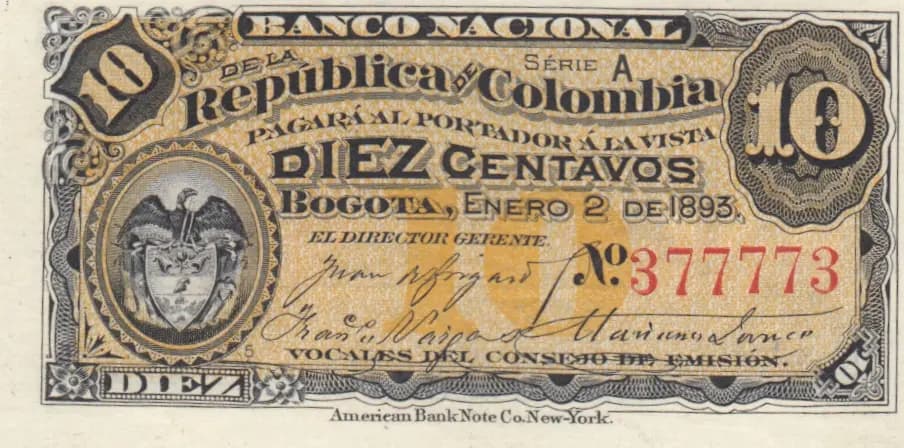
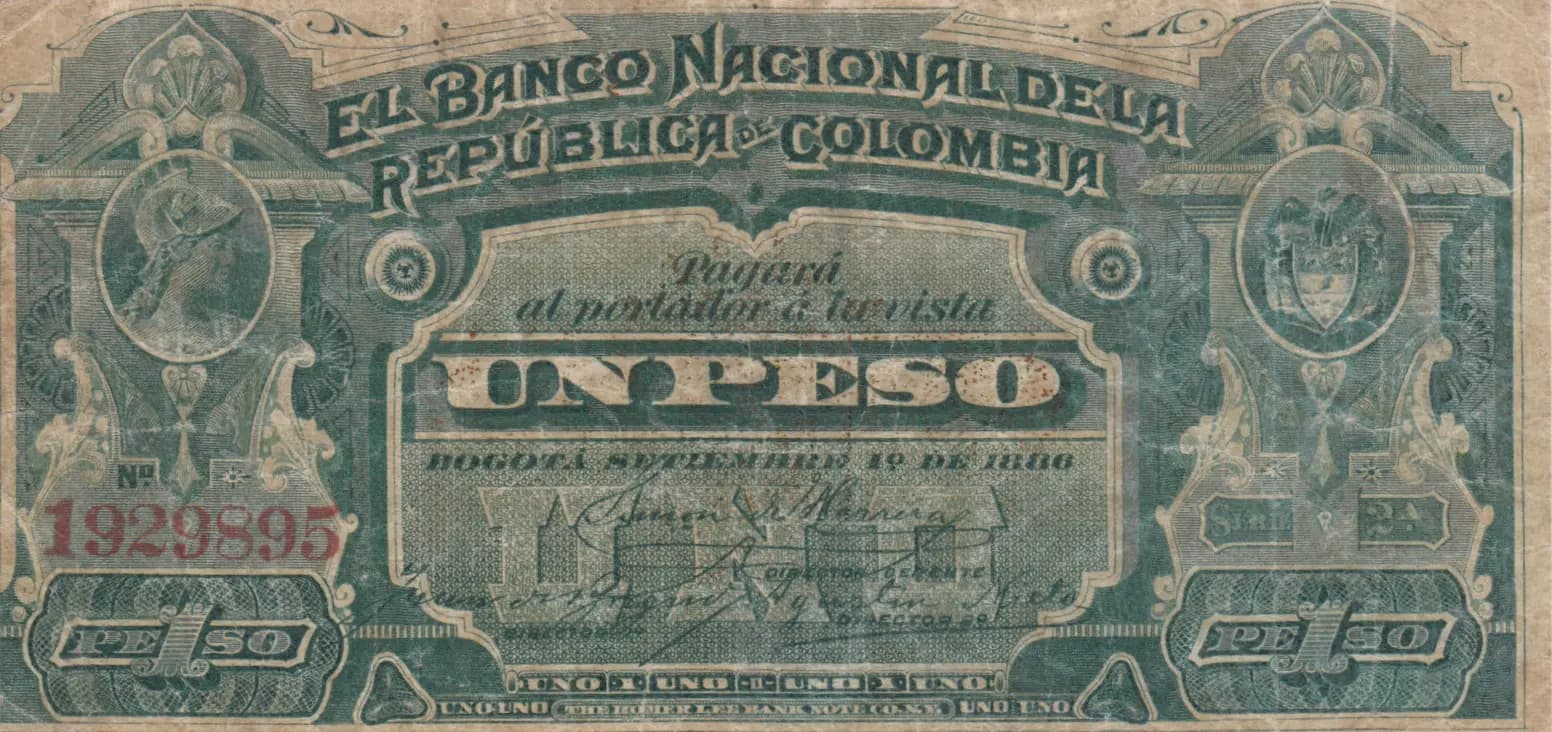
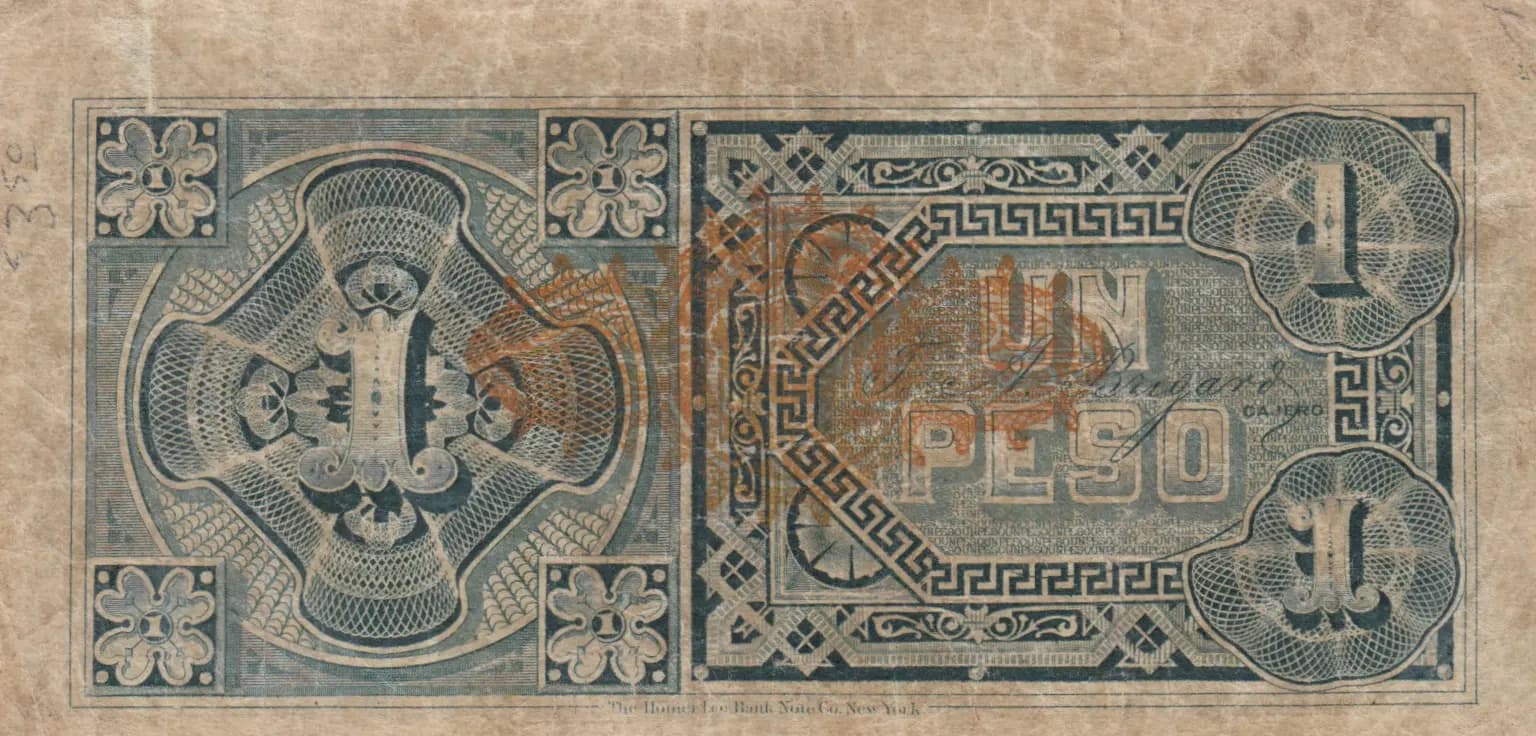
A scarce Colombian 1 peso from 1886 issued by the Banco Nacional de la República de Colombia, printed by Homer Lee Bank Note Company of New York. This Fair condition example displays the hallmark classical engraving of the period with ornate borders, multiple portrait medallions, and heraldic imagery in green on the front and blue-green on the reverse. The note shows appropriate age-related wear including foxing, creasing, and discoloration consistent with 130+ years of circulation, making it a historically significant specimen from Colombia's early national banking period.
Uncommon. While Colombian 1886 banknotes are not frequently encountered in the market, the catalog value of $25 USD in Fair condition and eBay listings around $799.99 USD suggest moderate scarcity rather than true rarity. The note is not from a short-lived issuing authority (the Banco Nacional operated for many years), and while print runs for 1886 issues were not enormous by modern standards, sufficient examples survive to classify this Pick number as uncommon rather than rare. The Fair condition grade contributes to the moderate pricing; better-preserved examples would command significantly higher values according to the 2016 catalog scale ($6 Good, $25 Fair, $100 Extremely Fine), indicating demand exists among collectors.
This note was issued during a critical period in Colombian financial history, just four years after the country adopted a new constitution in 1886 under Miguel Antonio Caro's presidency. The Banco Nacional de la República de Colombia, depicted through classical heraldic imagery and the Colombian coat of arms with eagle, represented the nation's effort to establish centralized monetary authority during a period of political consolidation. The classical allegorical design featuring Athena and other historical figures reflects late 19th-century banking iconography, emphasizing stability, wisdom, and national identity during a formative period for Colombian institutions.
The front features a classical design centered on Athena (represented in the oval portrait medallions) as the primary allegorical figure, symbolizing wisdom and protection. Four portrait medallions are arranged around an ornate central cartouche containing what appears to be an architectural scene—likely a government building or cathedral representing Colombian civic pride. Colombian national heraldic shields appear in the upper corners, flanked by ornamental crowns and floral designs. The composition demonstrates symmetric classical engraving with intricate line work throughout decorative borders. The reverse features the Colombian coat of arms with a heraldic eagle displayed with wings spread, surrounded by two facing profiles in a shield arrangement. Greek key geometric patterns and wreath designs frame the denomination panel on the right, creating a balanced, symmetrical composition typical of late 19th-century bank note design standards.
Front: 'EL BANCO NACIONAL DE LA REPÚBLICA COLOMBIA' translates to 'The National Bank of the Colombian Republic'; 'UN PESO' means 'One Peso'; serial number '1928890' is numeric identification; 'POR / 50' appears as a fractional or reference marking. Back: 'UN PESO' again confirms the denomination as 'One Peso'; 'The Home Life Bank Note Co. New York' identifies the printer as The Home Life Bank Note Company of New York (note: catalog reference mentions Homer Lee Bank Note Company—the visual analysis shows Home Life, indicating a potential printer attribution variance). Additional markings 'UNO Y MEDIO' on front translates to 'One and a Half,' possibly indicating fractional note or variant designation.
This note was produced using steel plate intaglio engraving, the standard security printing method for banknotes of the era. The fine parallel line work visible throughout both sides, the depth of portrait detail in the medallions, and the intricate geometric patterning are characteristic of intaglio engraving from steel dies. The printer attribution—variously recorded as Homer Lee Bank Note Company or Home Life Bank Note Company (both of New York)—indicates professional American security printing of the highest contemporary standard. The multi-color printing (green on front, blue-green on reverse) was achieved through multiple passes of the intaglio plates, each carrying a different colored ink.
This example represents the green-back variety of the 1886 1 Peso issue (Pick P-192), as the catalog specifically notes that a similar note with blue color on back exists (Pick P-193). The serial number 1928890 is visible on this specimen. Printer attribution requires clarification: the visual analysis identifies 'Home Life Bank Note Co.' while the catalog reference indicates 'Homer Lee Bank Note Company'—both New York-based printers of the era. This discrepancy should be verified against primary sources. No other specific varieties (signature variants, date variations, or major overprints beyond the visible rust-colored mark) are apparent from the visual analysis, though the serial number range may indicate multiple print runs. The presence of the rust-colored stamp/overprint on the reverse warrants notation as a post-issuance marking.