2 pesos 1977
Market Prices
69 salesAbout This Note
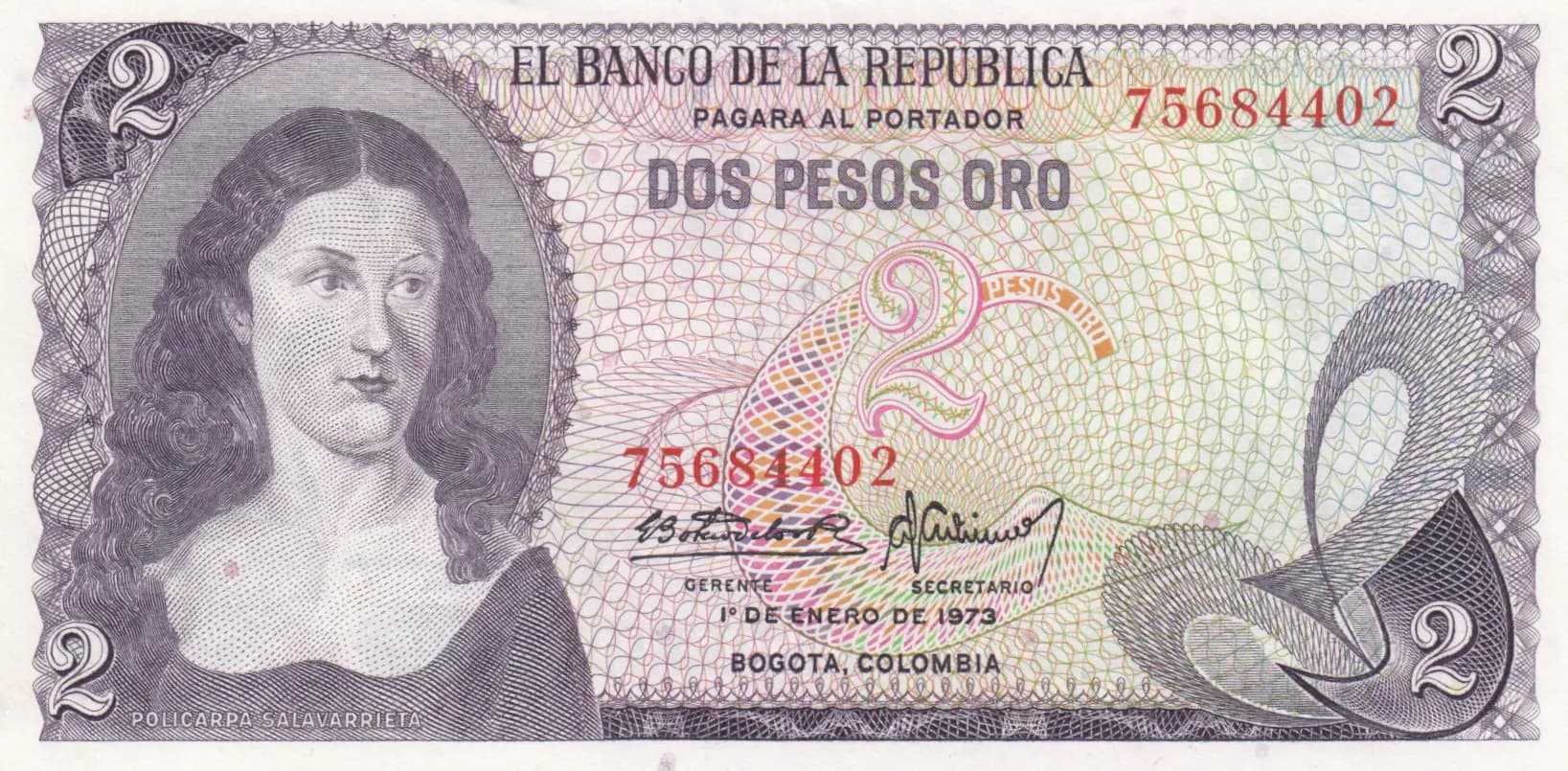
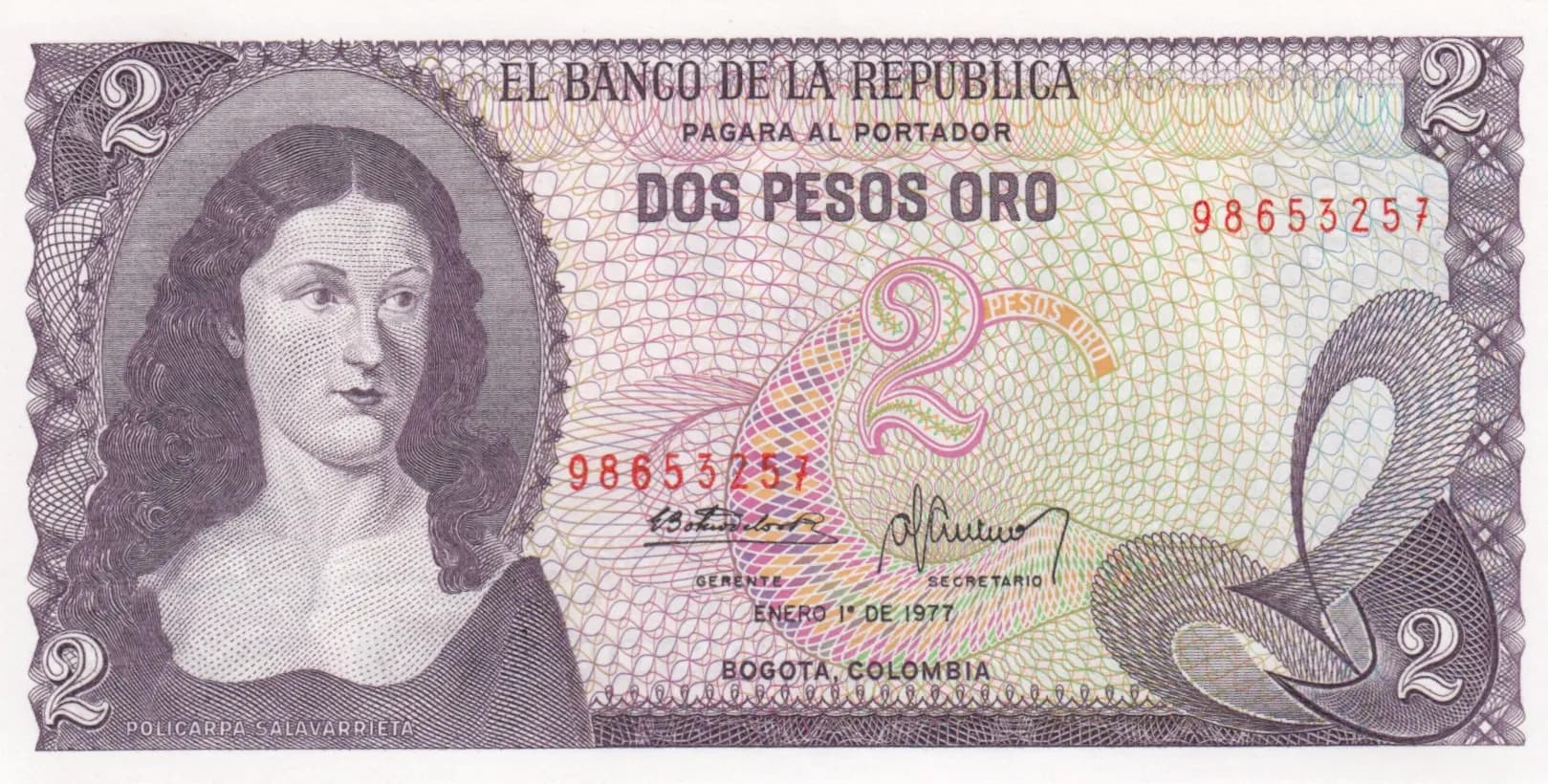
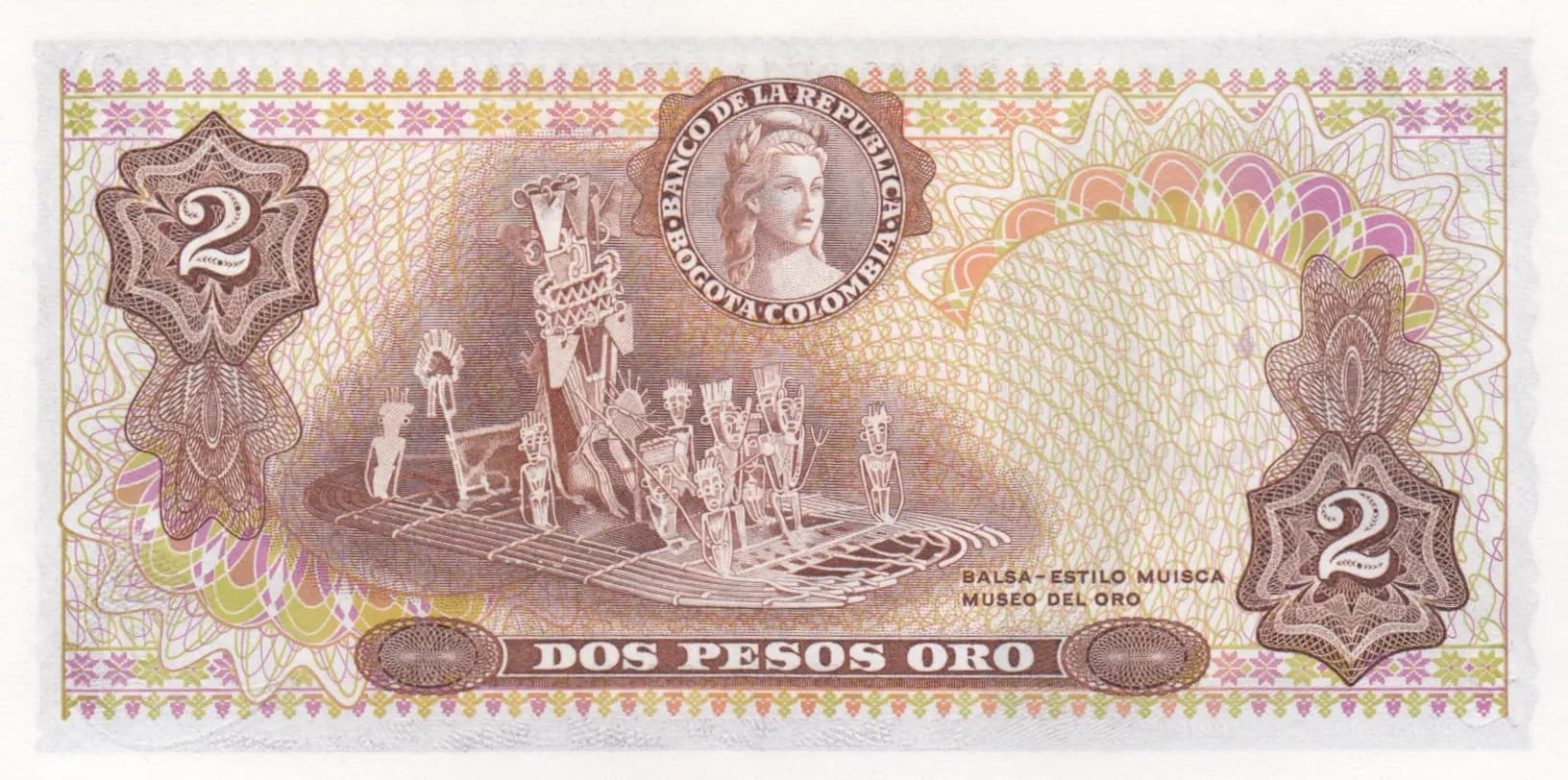
This is an uncirculated Colombian 2 Pesos Oro note from 1977, featuring the historical figure Policarpa Salavarrieta in profile on the obverse. The note displays exceptional preservation with no visible wear, creases, or stains, and showcases the intricate purple-toned design with elaborate guilloche patterns characteristic of Colombian currency from this period. The reverse depicts the Golden Muisca raft (El Dorado) from the Gold Museum, making this an important representation of Colombian cultural and numismatic heritage.
Common. This is a regular-issue Colombian banknote from a substantial print run spanning 1976-1977. The extensive eBay sales history documented above (over 80 transactions) demonstrates strong market circulation and widespread collector availability. Most sales have been in the $1.50-$5.00 range for uncirculated examples, with even graded PMG specimens typically not exceeding $20-22 USD. The 2019 catalog value of $5 UNC confirms this note's common status in the numismatic market.
This 1977 banknote honors Policarpa Salavarrieta, a Colombian independence heroine who was executed in 1817 for her role as a spy in the liberation movement against Spanish colonial rule. The reverse features the iconic Golden Muisca raft (Balsa Muisca), a pre-Columbian artifact displayed in Bogotá's Gold Museum, symbolizing Colombia's indigenous heritage and the legendary El Dorado myth. Together, these designs represent both Colombia's struggle for independence and its rich pre-Hispanic cultural legacy during the presidency of Alfonso López Michelsen.
The obverse features a left-facing profile portrait of Policarpa Salavarrieta, the Colombian independence patriot and martyr, rendered in fine line engraving. Her distinctive long wavy hair and determined expression occupy the left portion of the note. The design employs a predominantly purple/lavender color palette with intricate geometric guilloche patterns and decorative numerals '2' positioned in the top left and bottom right corners. The center contains ornamental circular designs with issuing authority text. The reverse displays the famous Golden Muisca raft (Balsa Muisca) artifact from Bogotá's Gold Museum in a central scene, surrounded by an ornate circular medallion frame at the top. This is accompanied by elaborate decorative frames on both sides incorporating the denomination numeral '2'. The reverse palette features warm browns, tans, yellows, and complementary multicolored accents with fine line engraving throughout the border designs.
Front Side: 'EL BANCO DE LA REPUBLICA' (The Bank of the Republic), 'PAGARA AL PORTADOR' (Will pay to the bearer), 'DOS PESOS ORO' (Two gold pesos), 'ENERO 1º DE 1977' (January 1st, 1977), 'BOGOTA, COLOMBIA' (Bogotá, Colombia), 'POLICARPA SALAVARRIETA' (Policarpa Salavarrieta), 'GERENTE' (Manager), 'SECRETARIO' (Secretary), Serial number: 98653257. Back Side: 'EL BANCO DE LA REPUBLICA' (The Bank of the Republic), 'DOS PESOS ORO' (Two gold pesos), 'BALSA - ESTILO MUISCA' (Balsa - Muisca style), 'MUSEO DEL ORO' (Gold Museum).
Intaglio printing (engraving) was the primary technique used for this banknote, as evidenced by the fine line engraving visible throughout both sides, the intricate guilloche patterns, and the dimensional security design elements. The multi-color effect was achieved through sequential intaglio passes with different colored inks. The Colombian note printing during this period was typically handled by Banco de la República's own printing facilities, which employed world-class intaglio security printing technology to prevent counterfeiting.
This note corresponds to Pick catalog P-413b. The catalog data indicates at least two documented varieties (P-413a and P-413s), with P-413b representing the main 1977 issue variant shown in these images. The visual analysis indicates the serial number is positioned small and at the right far from the upper border, consistent with later print varieties. The specific date observed is January 1st, 1977 ('ENERO 1º DE 1977'), which falls within the 1976-1977 issuance period. Minor variations in signatures (GERENTE and SECRETARIO) exist between different examples.