2 pesos 1955
Market Prices
17 salesAbout This Note
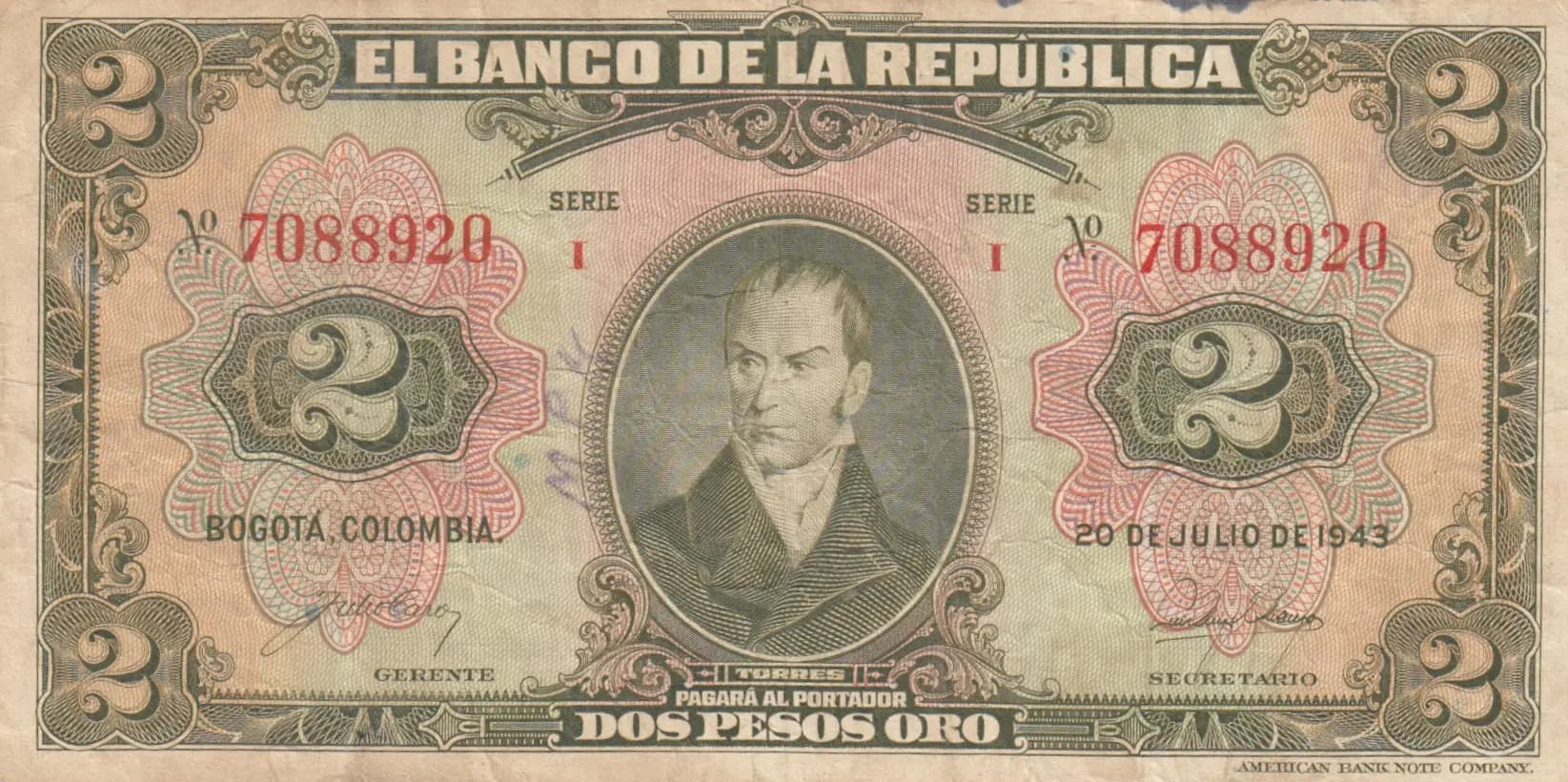
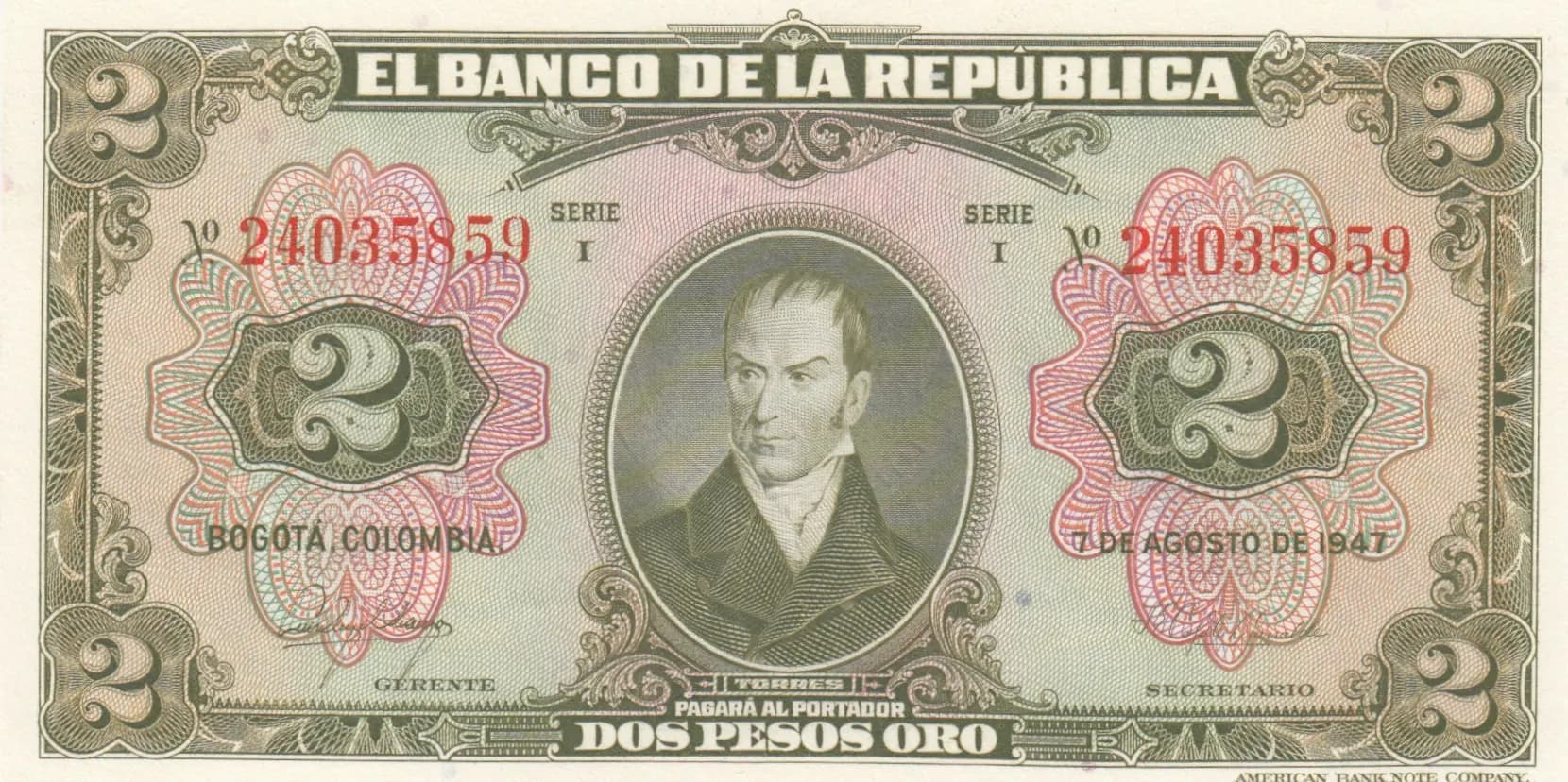
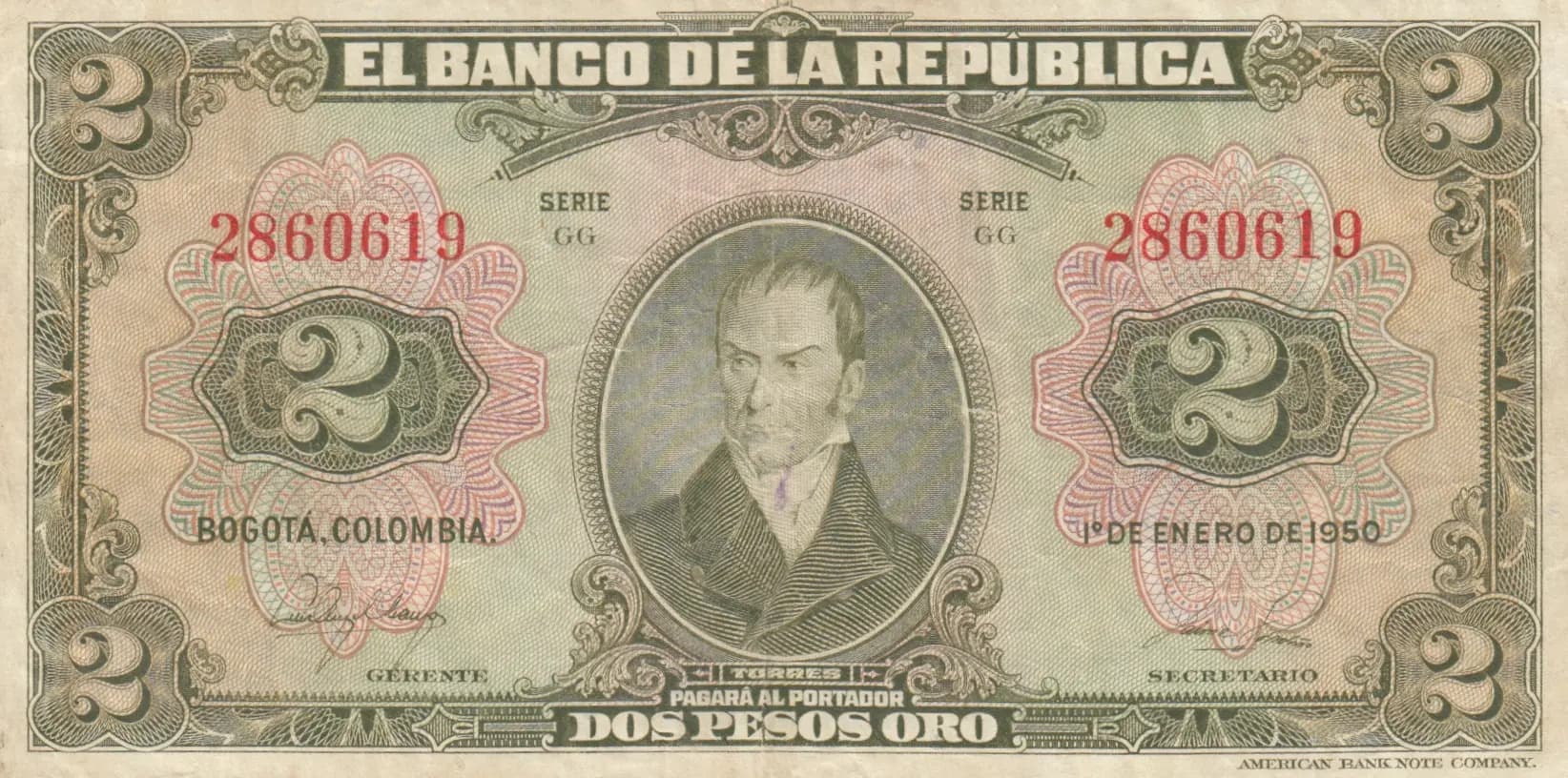
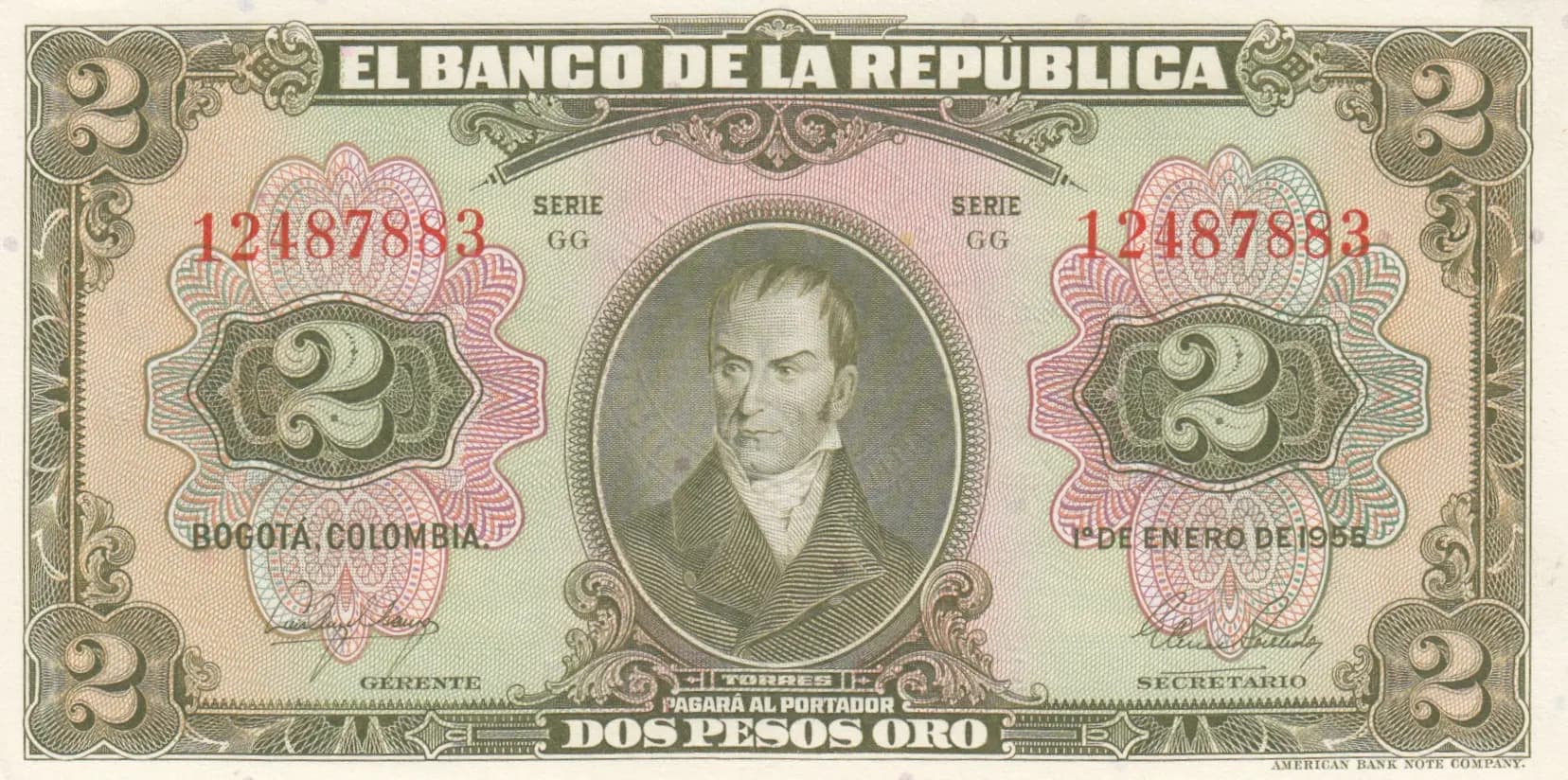
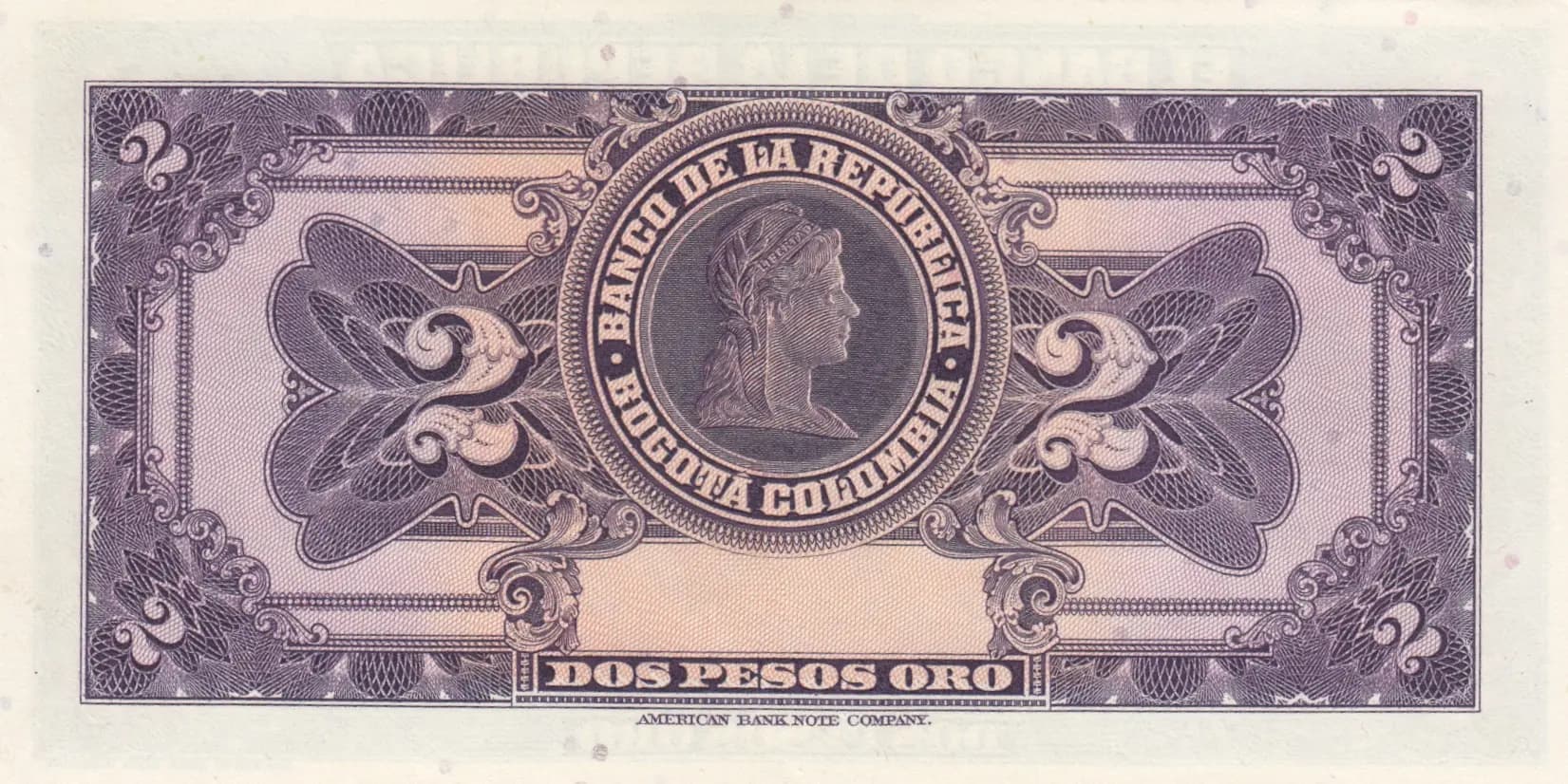
This is a pristine, uncirculated example of Colombia's 2 Pesos Oro note from 1955 (Pick P-390d), issued by Banco de la República and printed by the American Bank Note Company. The note displays exceptional preservation with sharp engraving detail throughout, featuring a portrait of Camilo Torres on the obverse and a Liberty figure on the reverse, both rendered in the intricate line-work style characteristic of ABNC's security printing. The Series GG designation and the formal presentation make this an attractive example for collectors of Colombian currency or 20th-century Latin American banknotes.
Common. Secondary market data from eBay sales shows consistent pricing in the $5-$50 range depending on condition grade, with UNC examples selling for approximately $13-$15.50 in the 2012-2013 period and EF/UNC examples reaching $15-$21 as recently as 2018. The 2016 catalog valuation of $8 for UNC confirms this is a widely available note. The series GG designation and the note's production during the stable 1942-1955 issuing period indicate a substantial print run. This is a standard circulating issue of its era, not a scarce variety.
This note was issued during a period of monetary stability in Colombia following the Banco de la República's establishment of standardized currency designs in the mid-20th century. The 1958 date visible on the obverse and the 'Pesos Oro' (gold pesos) denomination reflect Colombia's historical monetary system before decimalization. The portraiture of Camilo Torres on the front and the allegorical Liberty figure on the reverse exemplify the nationalist and classical design themes favored by Colombian authorities during this era.
The obverse features a formal portrait of Camilo Torres, a historical Colombian figure, rendered in an oval frame within ornate scrollwork borders executed in green and pink coloring. The denomination numerals '2' are positioned in decorative pink rosette designs in the upper corners. The text 'PAGARA AL PORTADOR DOS PESOS ORO' establishes this as a bearer instrument. The reverse presents an allegorical female figure (Liberty/Britannia) in profile facing right, crowned with a laurel wreath, centered within a circular medallion surrounded by concentric text reading 'REPUBLICA COLOMBIANA' and 'BANCO PARIETARIO.' Winged decorative elements flank the central design, rendered in purple and violet tones. Both sides display the characteristic fine cross-hatching, intricate line-work, and complex border ornamentation typical of American Bank Note Company's premium security printing.
FRONT: 'EL BANCO DE LA REPÚBLICA' (The Bank of the Republic) | 'SERIE GG' (Series GG) | Serial number: 12487883 | 'BOGOTA COLOMBIA' | '1º DE ENERO DE 1958' (January 1st, 1958) | 'GERENTE' (Manager) | 'SECRETARIO' (Secretary) | 'TORRES' (Torres - surname of portrayed figure) | 'PAGARA AL PORTADOR' (Will Pay to Bearer) | 'DOS PESOS ORO' (Two Gold Pesos) | 'AMERICAN BANK NOTE COMPANY' (printer attribution). BACK: 'REPUBLICA COLOMBIANA' (Colombian Republic) | 'BANCO PARIETARIO' (Savings Bank) | 'DOS PESOS ORO' (Two Gold Pesos) | 'AMERICAN BANK NOTE COMPANY' (printer attribution).
Intaglio engraving (steel plate gravure) executed by American Bank Note Company of New York, the industry standard for high-security banknote production in the mid-20th century. The visual evidence of fine cross-hatching, detailed portrait rendering, intricate scrollwork, and complex border patterns are hallmarks of intaglio technology. The sharp definition and three-dimensional quality visible in the pristine UNC example confirm the high-quality engraved plates characteristic of ABNC's security printing.
This is Series GG as noted on the obverse. The visual analysis confirms the standard design matching Pick P-390d for the 1955 date, with the characteristic 'PAGARA AL PORTADOR' and signature lines for GERENTE and SECRETARIO. The 1958 date visible on the note itself (rather than 1955) indicates this specific example was signed/authorized in 1958, representing a later issue within the P-390d type's production span (1942-1955 per catalog, though notes were clearly still in circulation and being formally authorized into the early 1960s). No overprints or other distinguishing features indicating a major variety are observed.