2 pesos 1947
Market Prices
6 salesAbout This Note
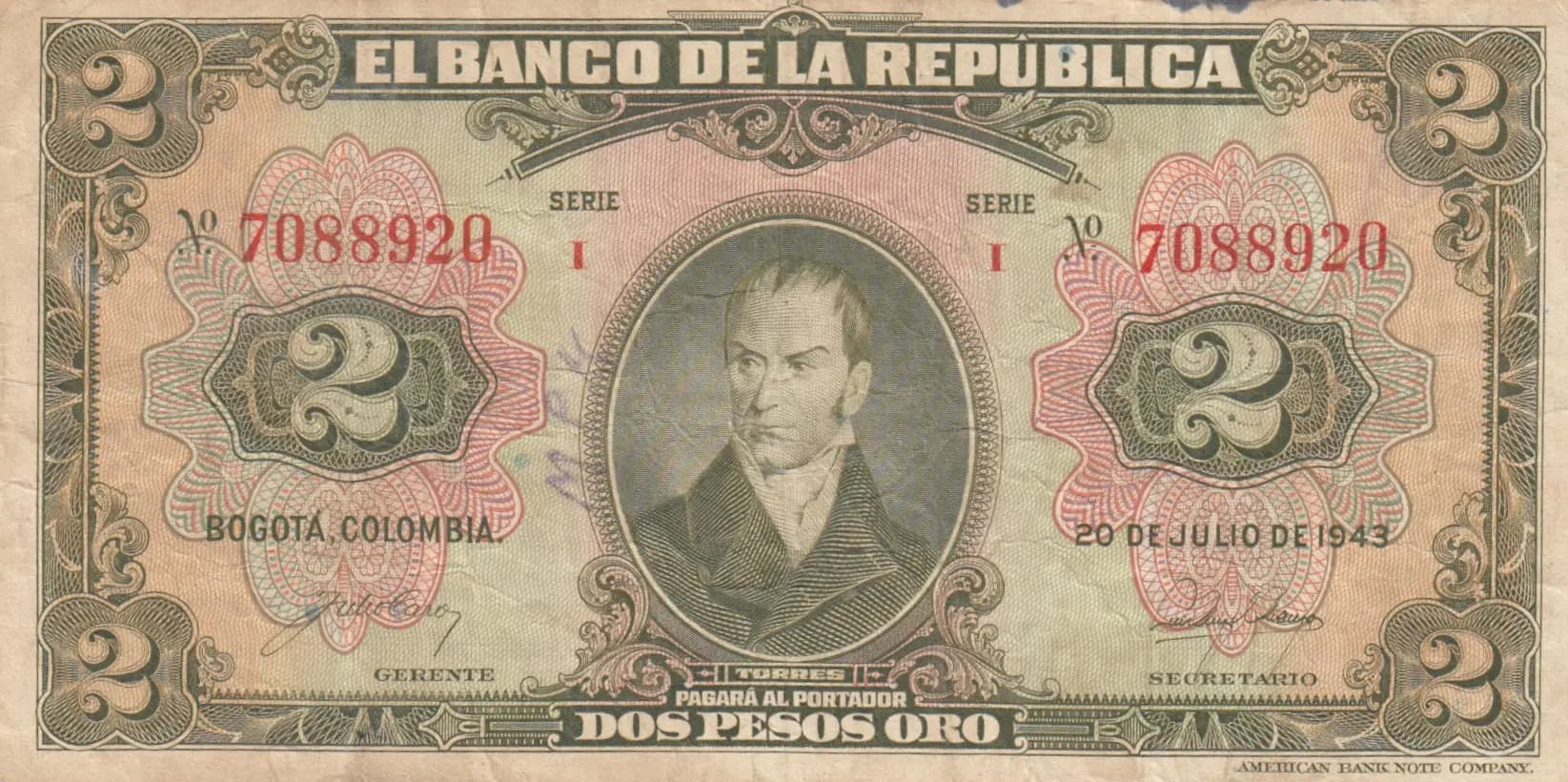
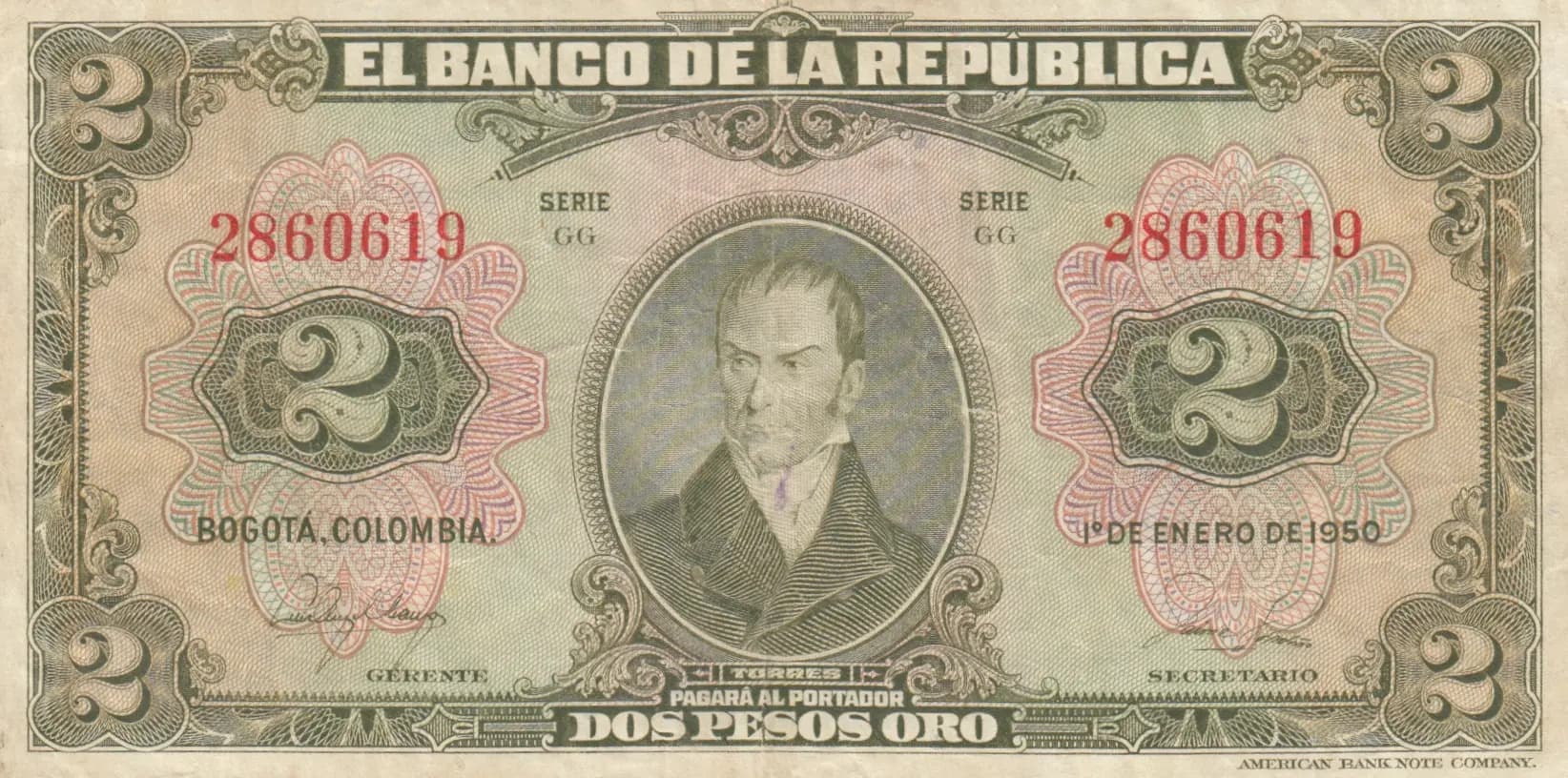
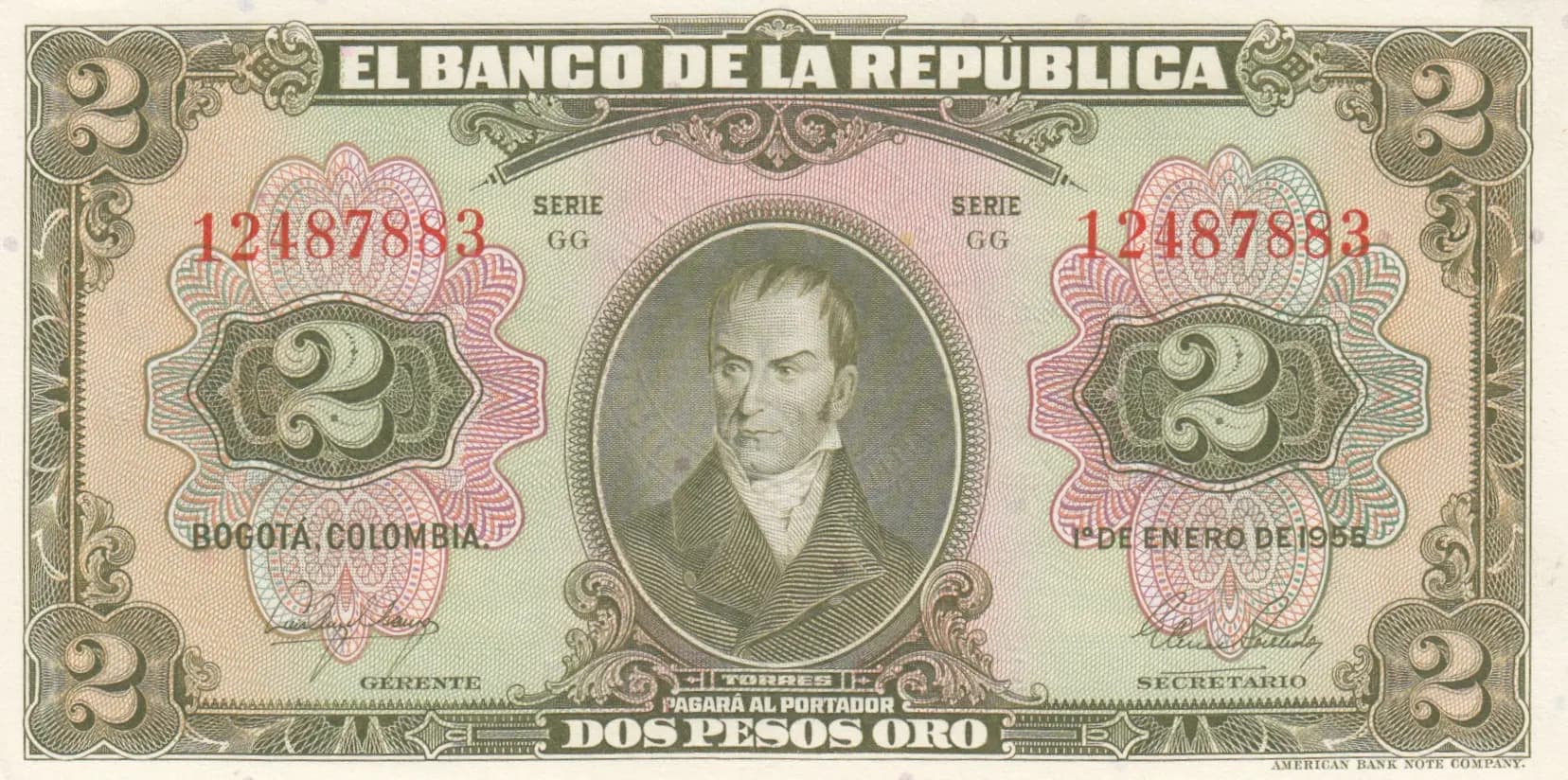
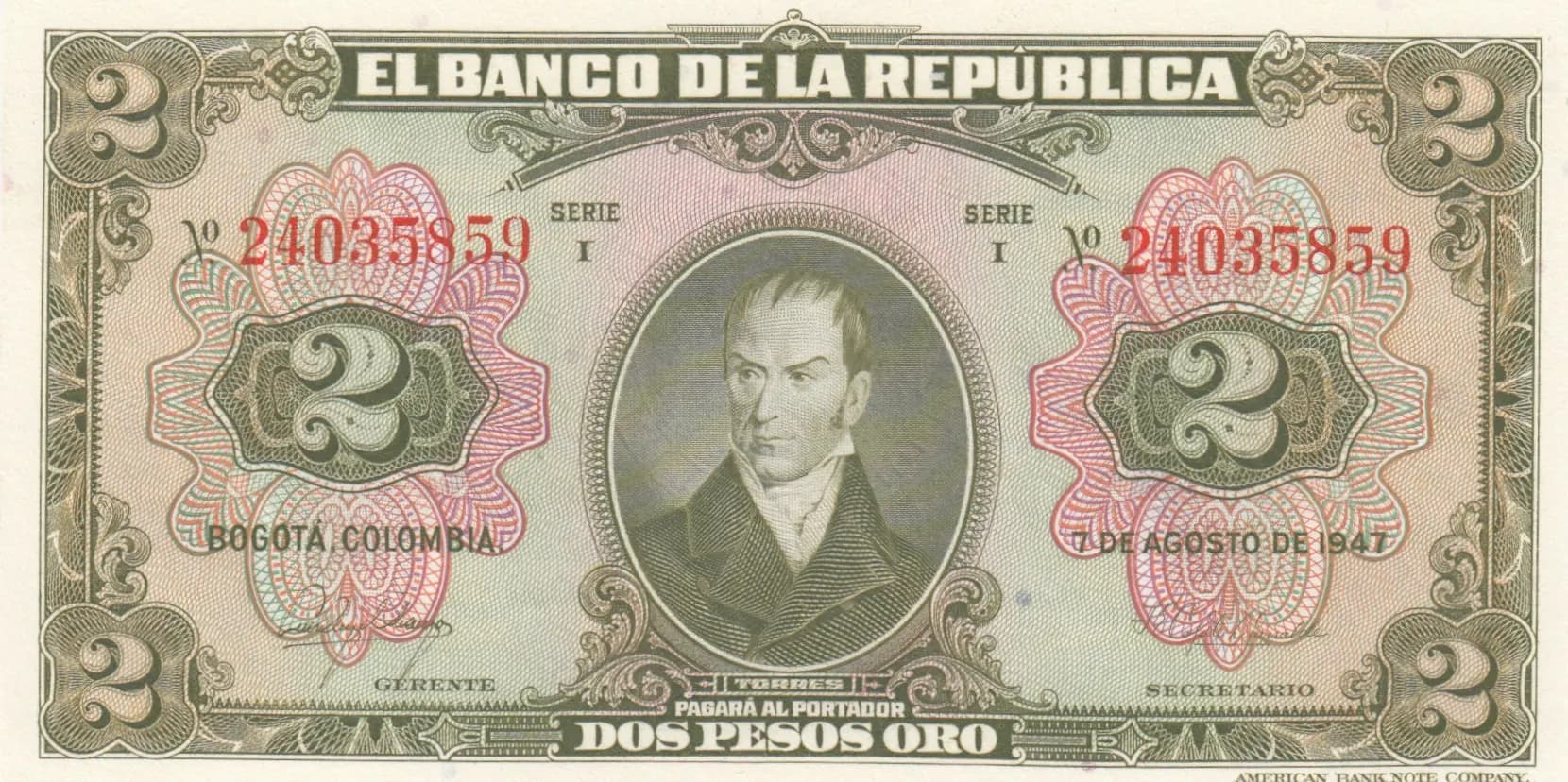
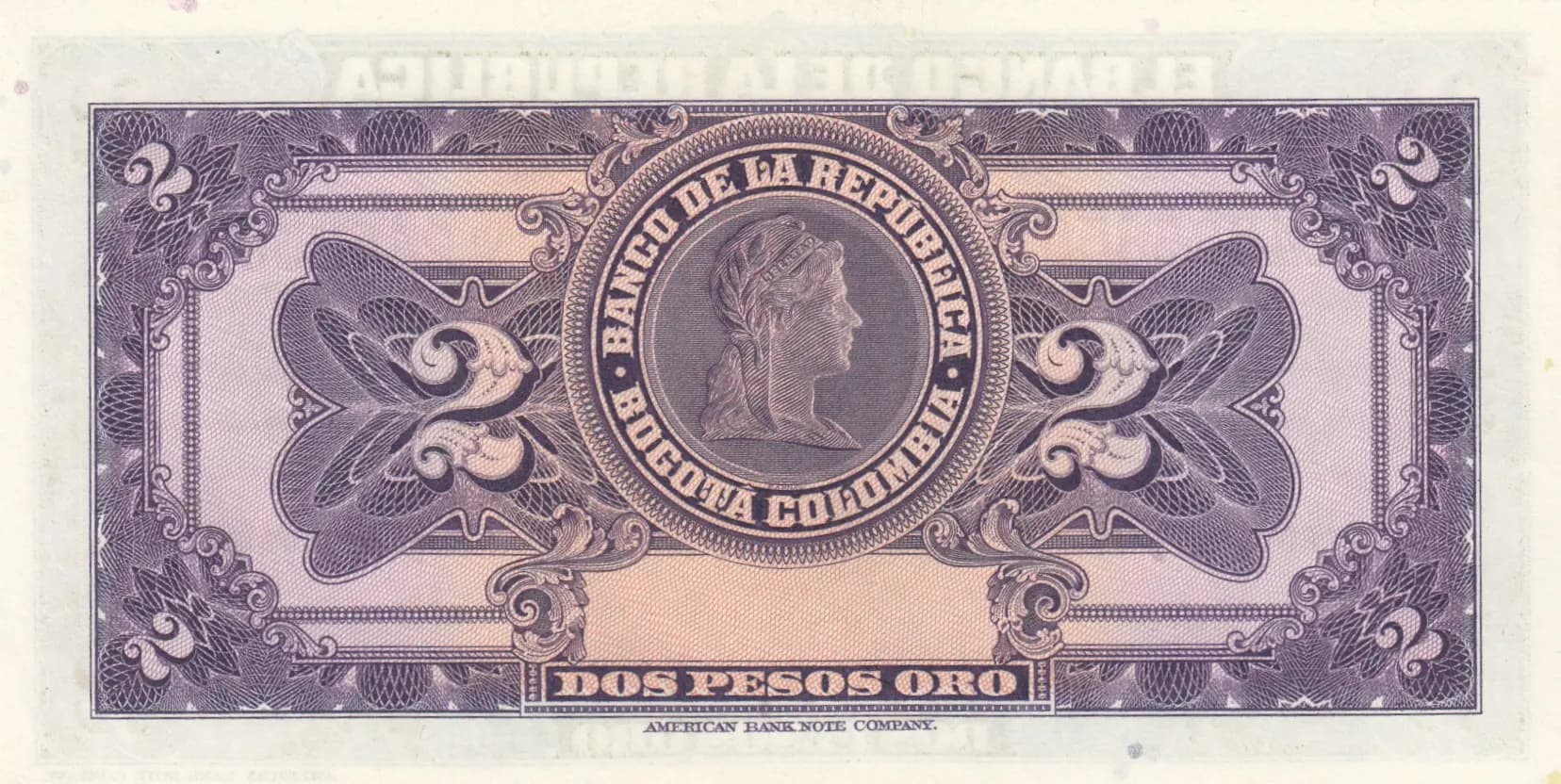
This is an uncirculated 2 Pesos Oro banknote from Colombia's Banco de la República, dated 7 August 1947 (Pick P-390b). The note exhibits pristine condition with crisp, vibrant printing in green and pink on the obverse and purple on the reverse, featuring ornate Victorian-era engraving with no visible wear, creases, or staining. The central portrait of Camilo Torres on the front and allegorical Liberty figure on the back are rendered in fine detail, exemplifying the American Bank Note Company's high-quality security printing from this era.
Common. eBay market data shows consistent sales in the $3-$89 range (with UNC examples at $30-$89 catalog value as of 2016), indicating steady availability in the collector market. With an issue period spanning 1942-1955 and substantial print runs typical of a regular circulation 2 Peso denomination, this Pick number is not rare. The denomination's low face value and long production window further support common status.
Issued during the post-war period when Colombia maintained the gold peso standard, this 1947 note represents the Banco de la República's regular circulation series produced between 1942-1955. The choice of Camilo Torres—a key figure in Colombia's independence movement—and the allegorical Liberty figure reflect the nation's emphasis on patriotic and democratic values during this stable economic period. The American Bank Note Company printing indicates Colombia's reliance on experienced international security printers to produce trustworthy currency during the mid-20th century.
The obverse features Camilo Torres, the prominent Colombian independence leader, depicted in a formal 19th-century military dress within an ornate central oval frame. The design employs sophisticated scrollwork and geometric borders in the corners with floral and vine patterns in pink/red on both lateral sides, typical of high-security banknote design. The reverse presents an allegorical female figure representing Liberty or Colombian prosperity (identified by the caption 'Bueneta Colombiana'), wearing classical dress with a laurel wreath, positioned within a circular frame with text radiating around the perimeter. Both sides exhibit the characteristic Victorian ornamental style favored by American Bank Note Company for Latin American clients during this period.
FRONT: 'El Banco de la República' (The Bank of the Republic), 'Dos Pesos Oro' (Two Gold Pesos), 'Pagará al Portador' (Payable to Bearer), 'Bogotá, Colombia', 'De Agosto de 1947' (Of August 1947), 'Serie I' (Series I), 'Gerente' (Manager), 'Secretario' (Secretary), 'American Bank Note Company'. BACK: 'Banco de la República' (Bank of the Republic), 'Bueneta Colombiana' (Colombian Prosperity/Abundance), 'Dos Pesos Oro' (Two Gold Pesos), 'American Bank Note Company'.
Intaglio (engraved) printing by American Bank Note Company, New York. The fine line work visible in the detailed borders, portrait rendering, and security patterns, combined with the crisp color separation between the green/pink on the obverse and purple on the reverse, indicates traditional steel plate engraving with multiple passes. Red serial numbers were applied as an additional security feature.
Series I variety in olive (as noted in reference data). The visual analysis confirms 'SERIE I' inscription. Date varieties exist within the 1942-1955 issue period; this example is specifically dated 7 August 1947. The note bears signatures for Gerente (Manager) and Secretario (Secretary) positions, typical of this series. Serial number 24035859 in red ink. No overprints are evident on this specimen.