5 yen 1938
About This Note
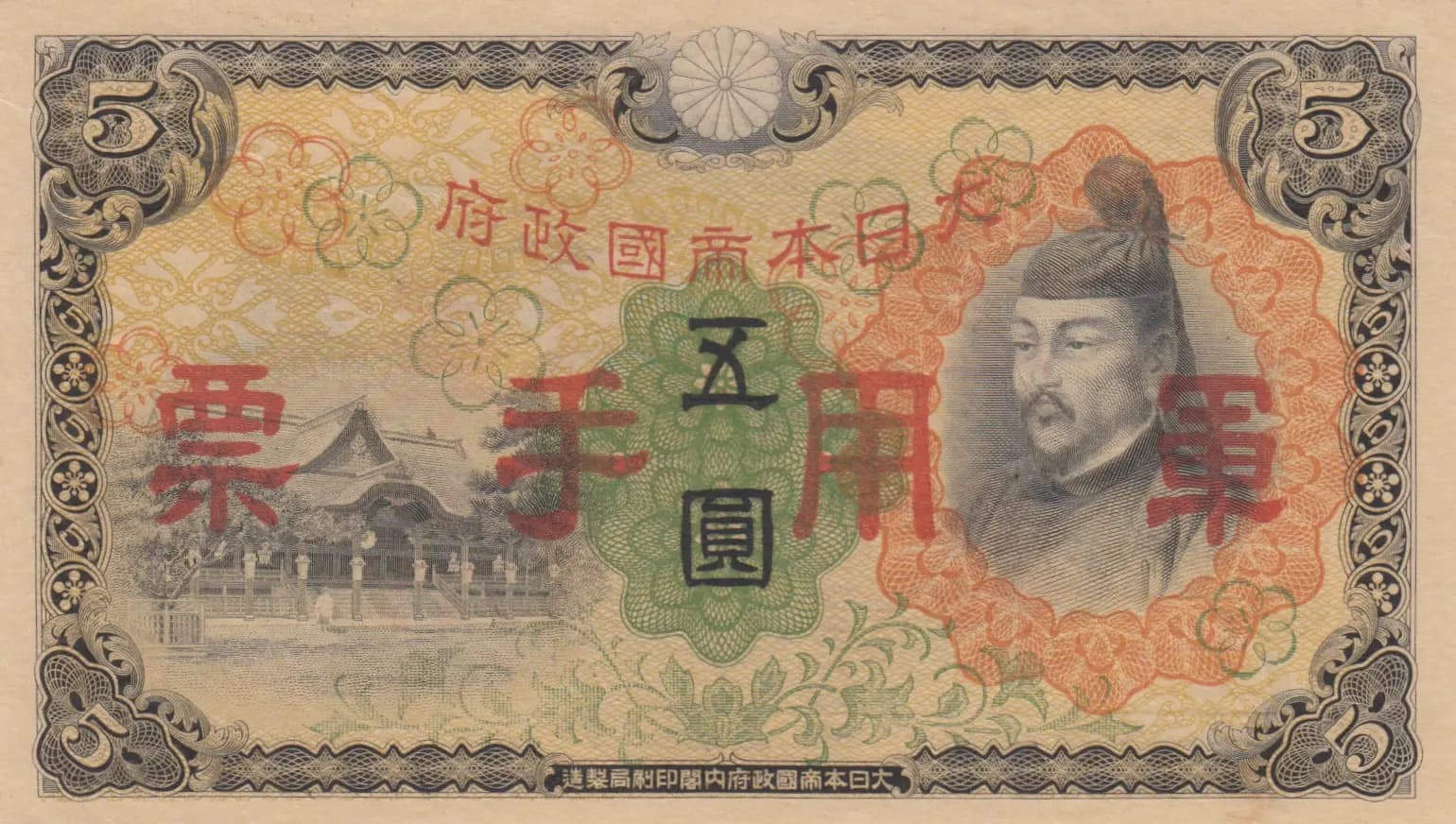
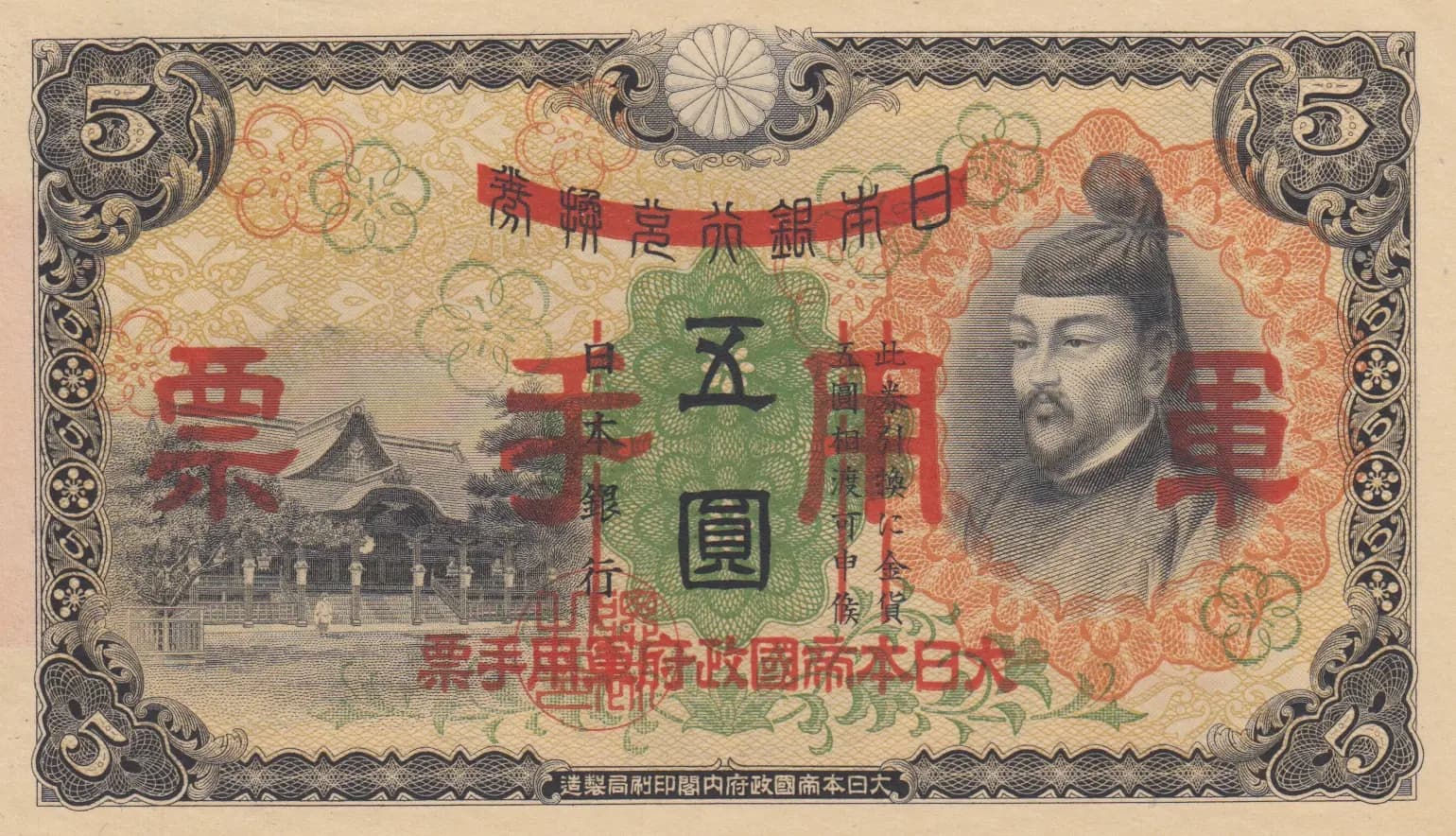
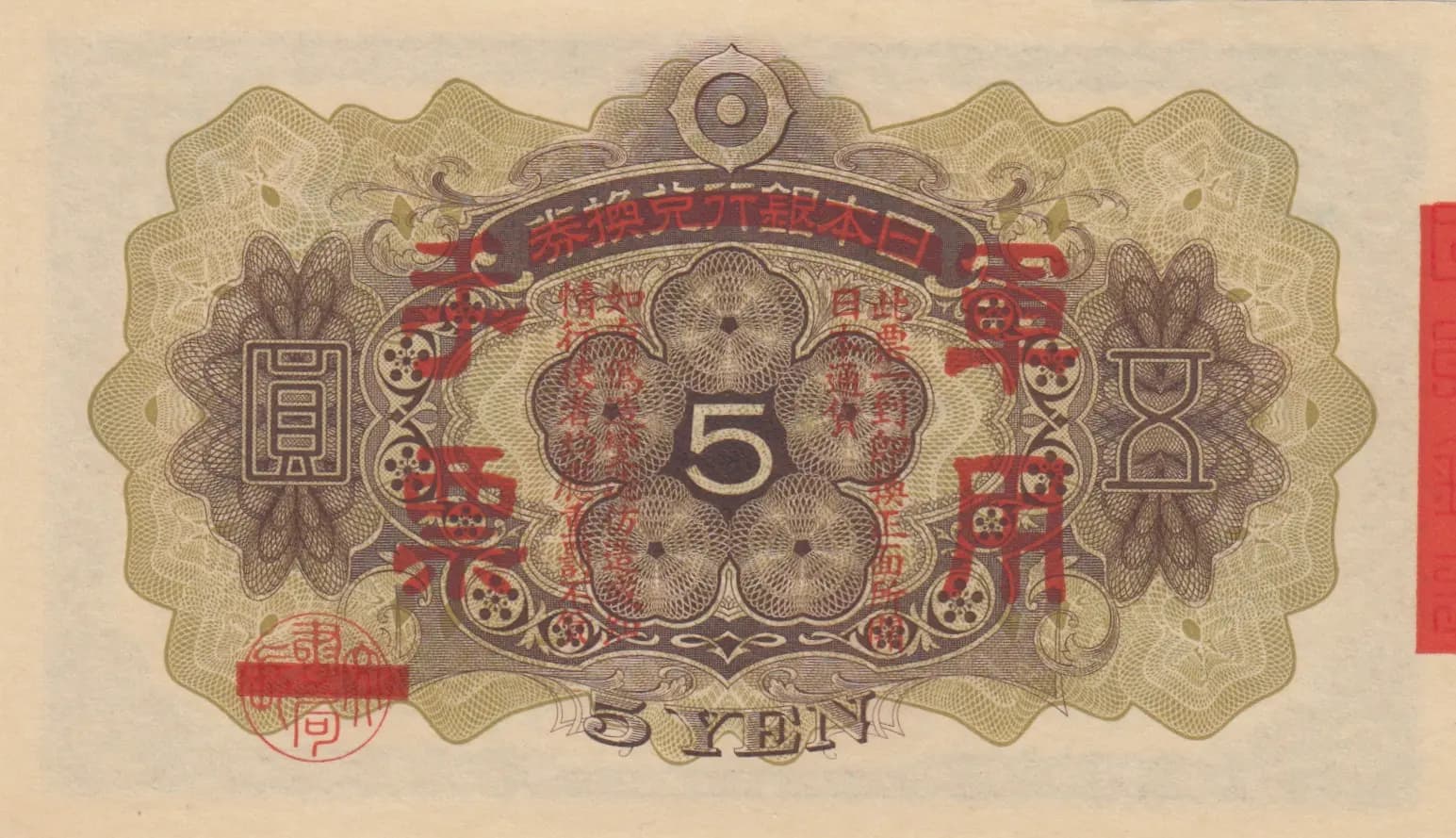
A well-preserved example of a Japanese Military occupation currency note issued for use in China in 1938. This 5 Yen note features exceptional engraving quality with ornate decorative borders, a traditional East Asian pagoda structure, and a portrait in period dress, all rendered in fine detail with cream, black, red, and green coloring. The note exhibits crisp overprints and minimal wear, consistent with uncirculated condition, making it a desirable specimen for collectors of WWII-era occupation currencies.
Common. Japanese Military occupation currency issued for China in 1938 was produced in substantial quantities to facilitate economic administration of occupied territories. The Pick M24 5 Yen denomination represents a standard denomination in the series with no documented historical rarity or scarcity. While the note is historically significant and desirable to collectors of WWII memorabilia and occupation currencies, it was not issued in limited quantities and examples in various conditions remain available to collectors.
This note was issued by the Japanese Military during its occupation and expansion in China in the late 1930s, representing Japan's assertion of economic control over occupied territories. The bilingual inscriptions in both Chinese and Japanese, combined with the presence of administrative red overprints and official seals, reflect the complex political situation of Japanese military administration in China. The depicted traditional East Asian architecture and period portrait imagery served to project legitimacy and cultural continuity despite the foreign occupation.
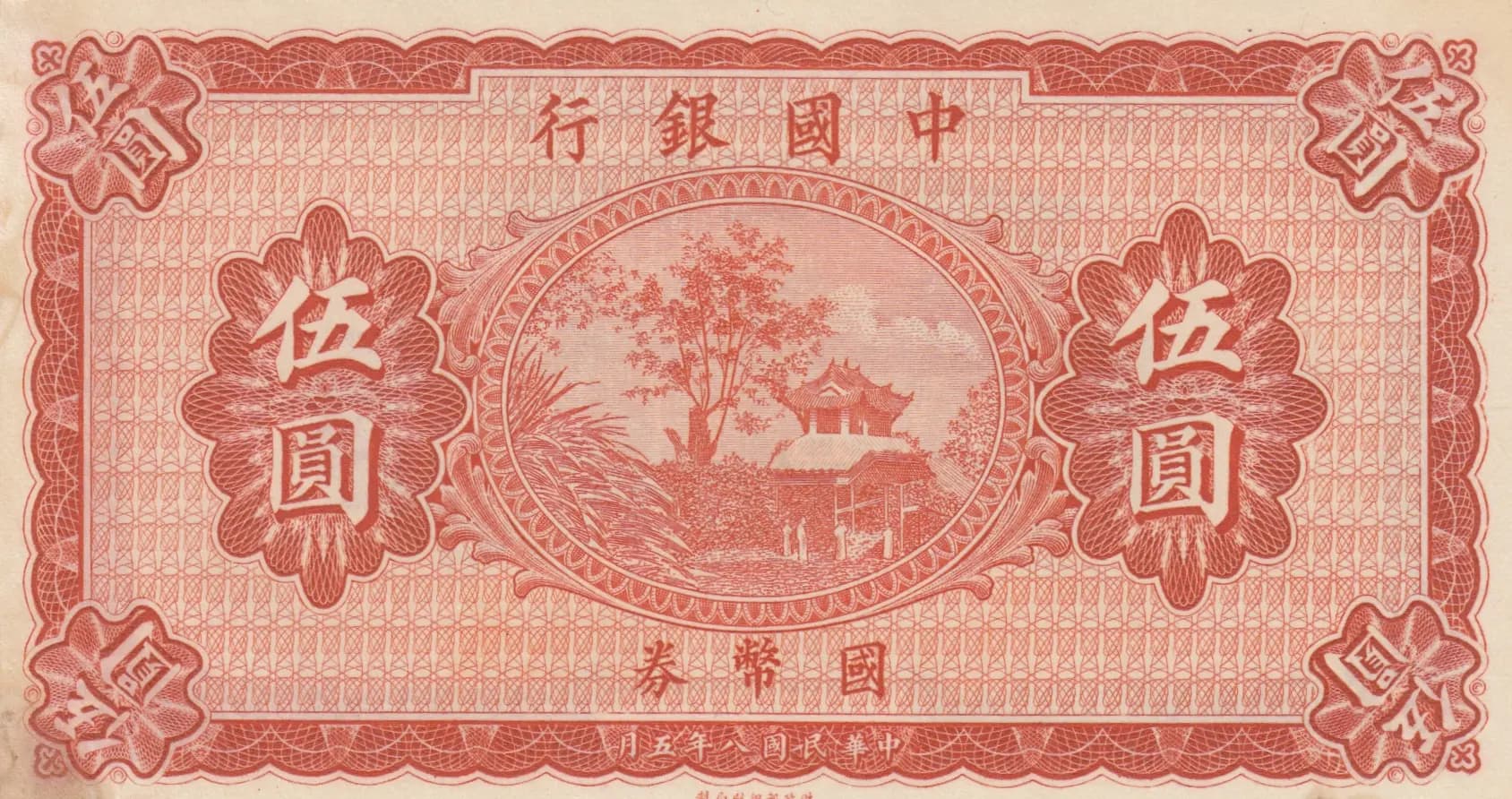
The front of this note features an ornate composition with a traditional East Asian pagoda or temple structure rendered in black and grey tones on the left side, symbolizing the cultural context of the occupied region. On the right is a portrait of a dignitary or official figure wearing traditional headgear (likely representing Chinese authority figures), rendered in fine monochromatic engraving style and shown in left-facing profile. The reverse displays a large symmetrical scalloped cartouche with elaborate floral and geometric interior decoration, emphasizing the denomination '5' at its center. Both sides are framed by intricate decorative borders featuring scrollwork and floral patterns, with a prominent circular seal with scalloped edges as a central design element on the obverse. The extensive use of red and green overprints throughout indicates post-printing administrative authorizations or validations.
Front Side: 五圓 (Five Yuan) | 大日本帝國政府紙幣 (Great Japanese Empire Government Banknote) | 中華民國政府五圓紙幣 (Republic of China Government Five Yuan Banknote) | 帝國日本紙幣政府 (Japanese Empire Banknote Government) | Various red stamp overprints and official seals (Administrative markings). Back Side: 5 YEN (English denomination) | 日本帝國政府紙幣 (Japanese Empire Government Banknote) | 五圓 (Five Yuan) | Red overprint text at top (Administrative or official marking) | Round seal character visible on lower left (Official seal).
Steel plate intaglio engraving (recess printing) for the primary design and denominations, producing the fine detail work and sharp impressions visible throughout. The decorative borders, portrait rendering, and ornamental elements show characteristic fine line engraving. Red and green color overprints were applied separately, likely through lithographic or stamp application methods. The crisp registration of overprints and the quality of impression suggest professional security printer work, typical of Japanese government-issued occupation currency from this period.
The red administrative overprints visible on both obverse and reverse are consistent with Japanese Military occupational practice in China during 1938-1945, serving as validation marks by various regional administrative authorities. Variations in the specific overprint characters and their placement may exist across different batches or regional distributions, but without visible serial numbers in the provided images, the specific variety designation cannot be definitively determined. The note appears to be from the standard printing with no visible security printer marks or special variety indicators within the observed design elements.