1000 yuan 1945
Market Prices
2 salesAbout This Note
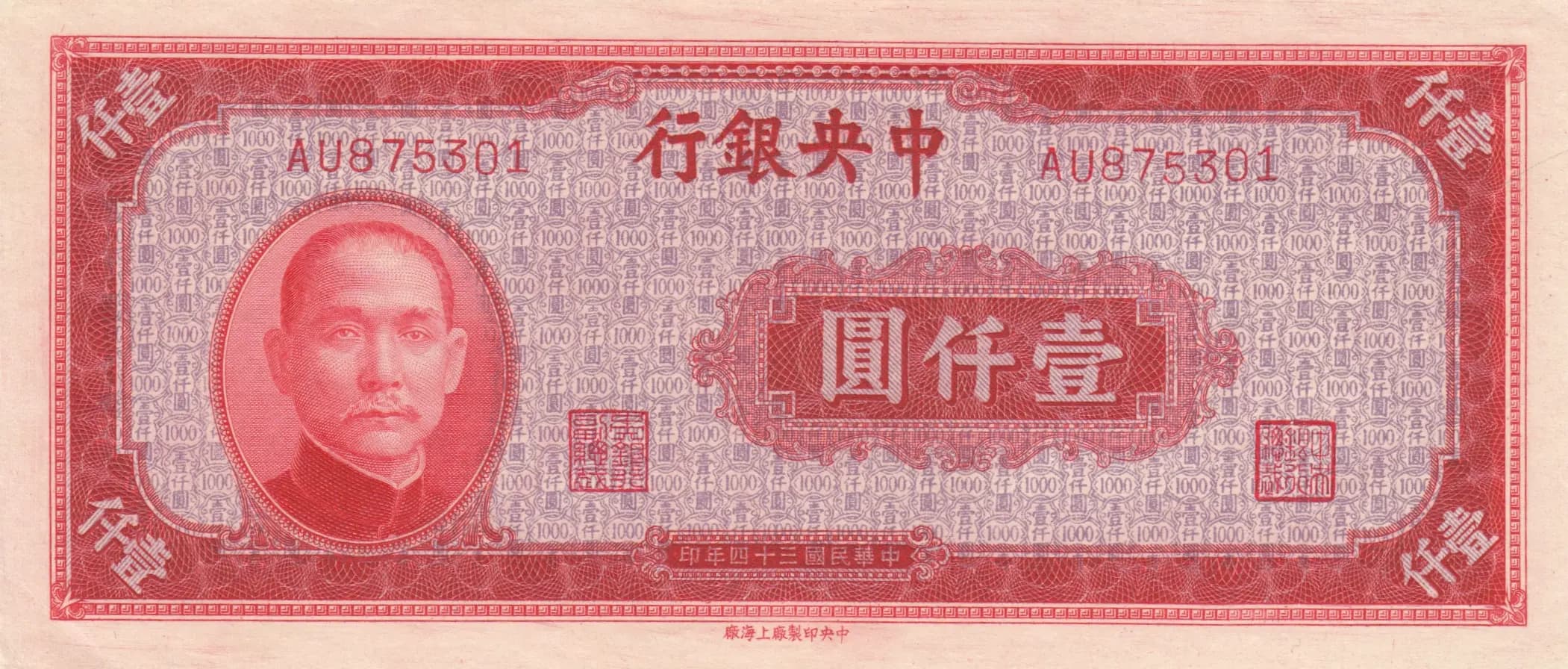
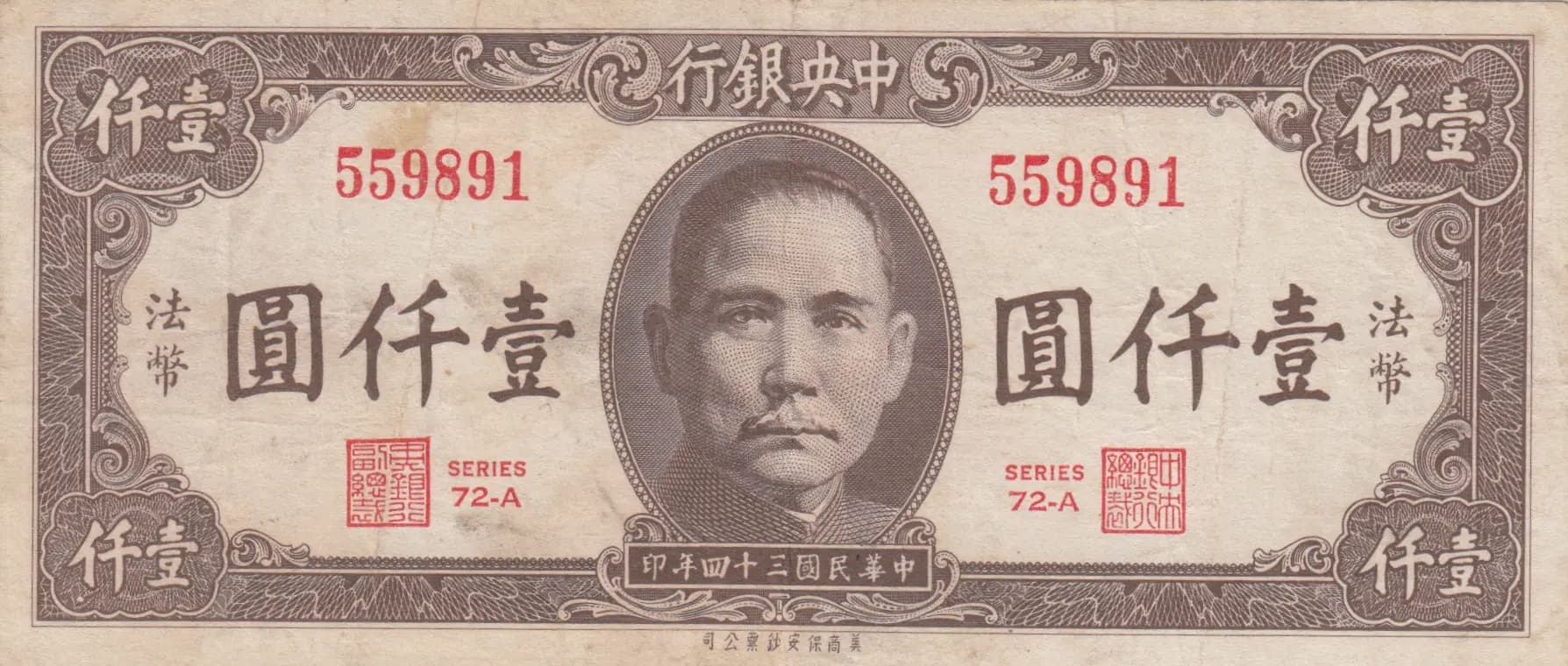
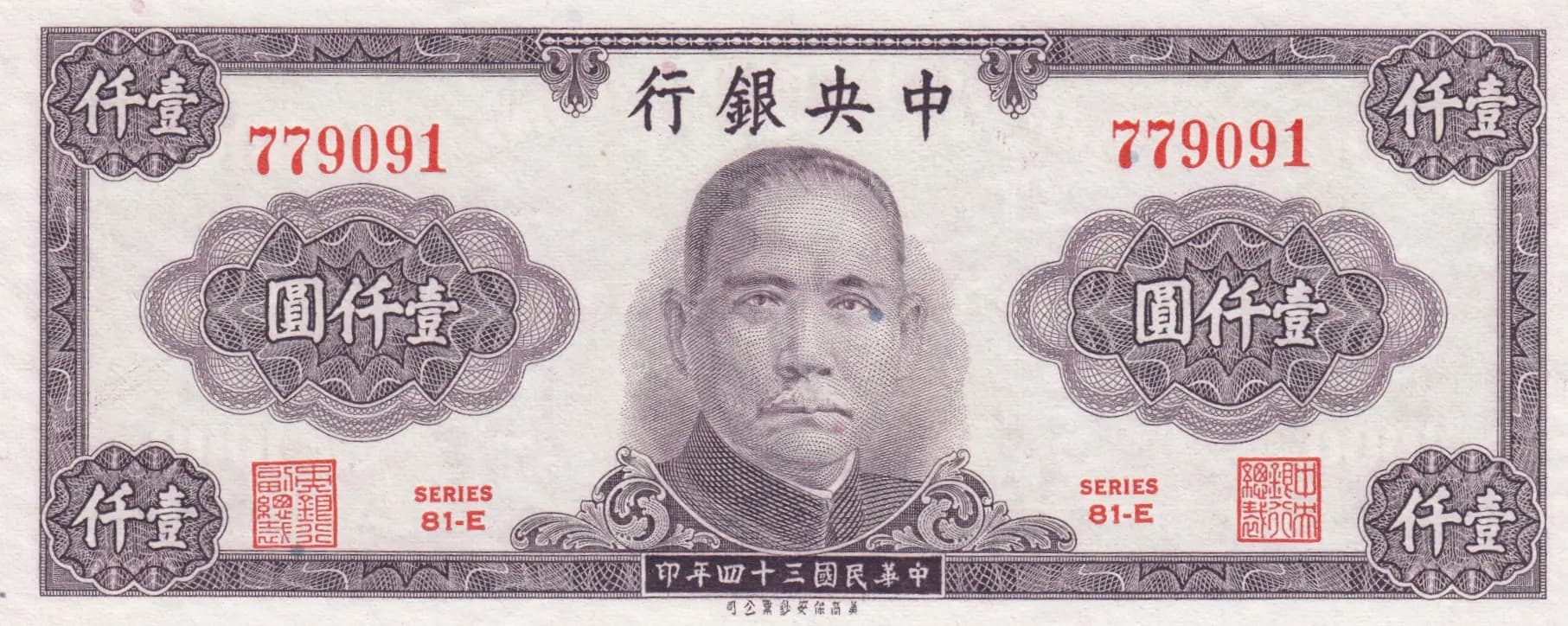
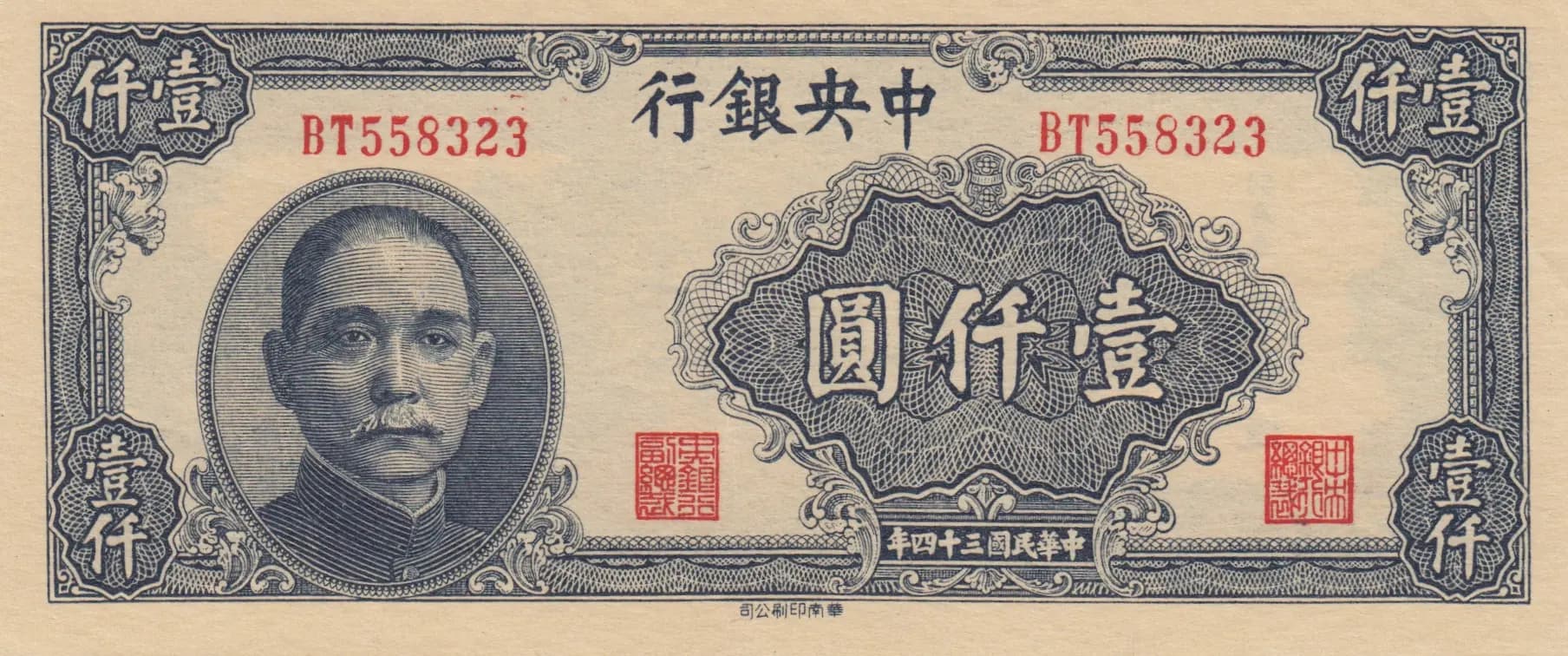
This is an uncirculated 1945 Central Bank of China 1000 Yuan note (Pick P-298) featuring a distinguished portrait of Sun Yat-sen in an oval medallion on the obverse. The note exhibits pristine condition with sharp, clear printing throughout and no visible signs of wear, creases, or damage. The intricate engraving work, traditional Chinese ornamental borders, and red seal impressions exemplify the high-quality security printing standards of the Chinese currency during the final year of the Republic of China's wartime period.
Common. While this is a historically significant 1945 issue from the final year of the Republic of China period, the eBay price tracking data shows substantial circulation of examples in various grades, with even UNC examples cataloged at $35 (2016 valuation). Multiple sales records exist at modest prices ($5.50-$13.50), indicating adequate supply in the numismatic market. The printing was likely substantial to support wartime currency demands, and surviving examples in uncirculated condition are available to collectors without difficulty or premium scarcity premiums.
Issued in 1945 during the final year of the Second Sino-Japanese War, this banknote represents the Central Bank of China's currency production in the waning months of the Republic of China era. The portrait depicted is Sun Yat-sen (孫中山), the founding father of the Chinese Republic, whose image was a standard feature on high-denomination notes as a symbol of national authority and continuity. The date inscription '中華民國三十四年' (Republic of China Year 34) corresponds to 1945, a pivotal moment before the subsequent Chinese Communist takeover and currency reforms.
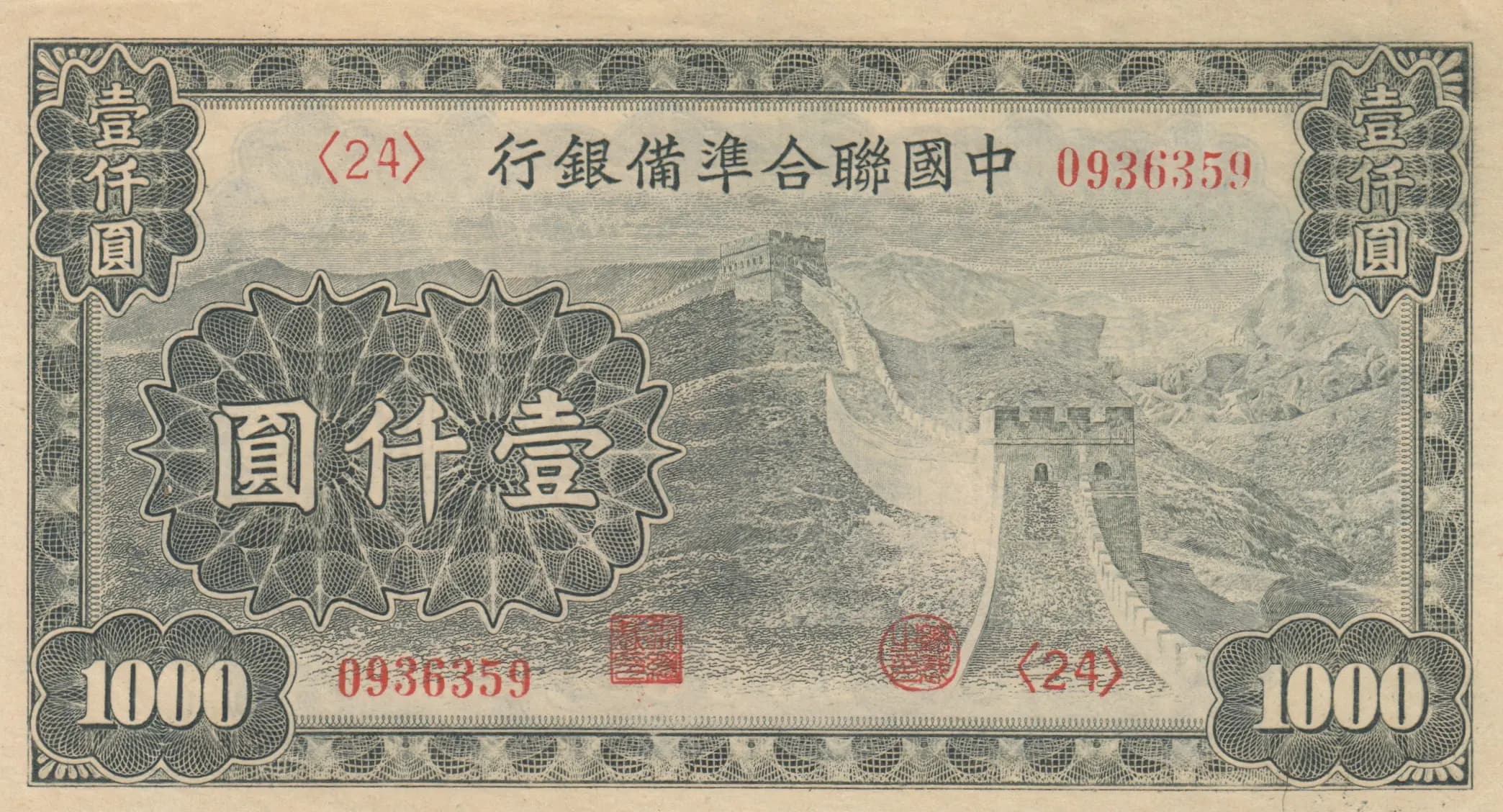
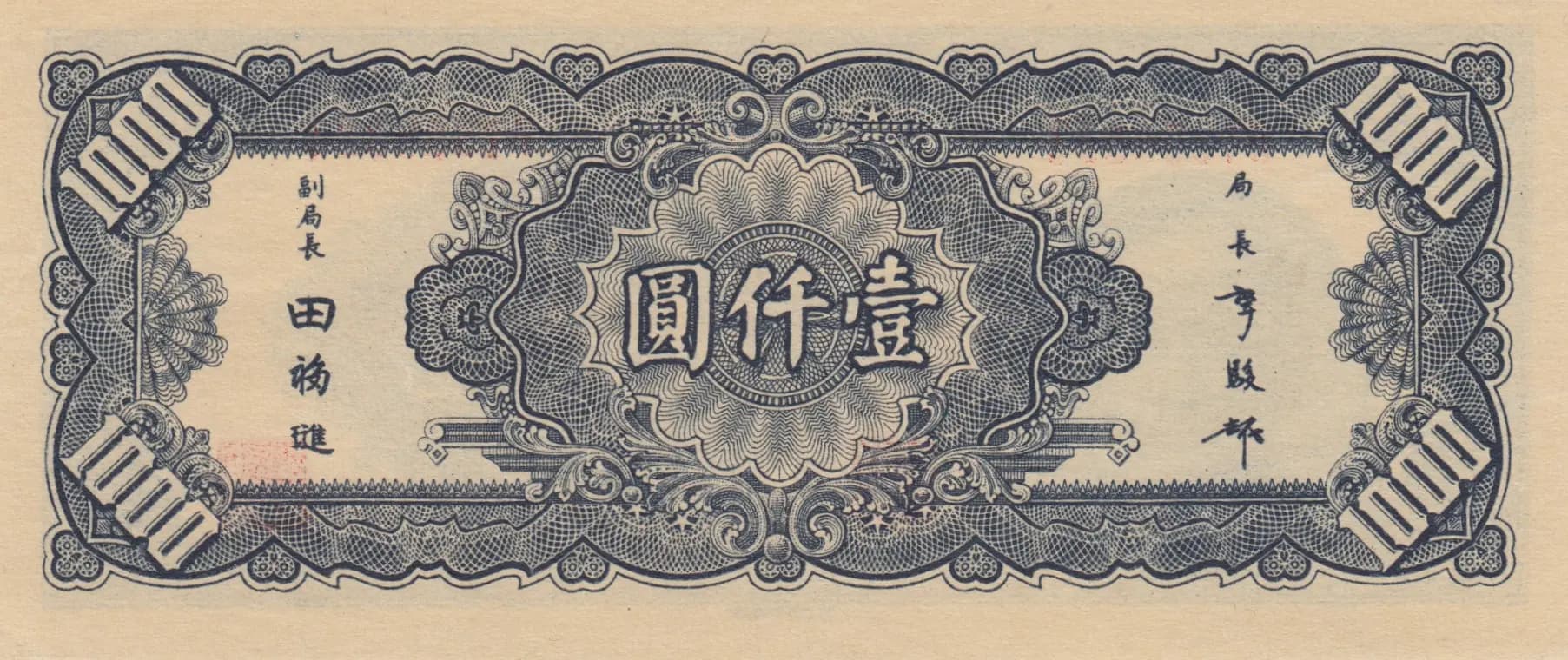
The obverse features a portrait medallion containing Sun Yat-sen, the Father of the Chinese Republic, positioned on the left side in profile facing left, rendered in detailed line-engraving with fine crosshatching for dimensional effect. The reverse displays a large rounded rectangular cartouche as the central design element, with corner ornaments featuring horizontal striped patterns representing the Chinese numeral for 1000. Both sides are framed by elaborate traditional Chinese geometric borders with rosette patterns and scrollwork, employing symmetrical layout principles consistent with classical Chinese numismatic design. The cream/beige paper stock contrasts sharply with dark blue/black intaglio printing, while red ink emphasizes official seals and authority marks.
FRONT SIDE: '中央銀行' (Central Bank), '壹仟圓' (One Thousand Yuan), 'BT558323' (Serial number), '中華民國三十四年' (Republic of China Year 34), '傳壹' (transmission/official designation). BACK SIDE: '壹仟圓' (One Thousand Yuan), '劉自長' and '烏長李' (Official signatures), '鋤定' (Approval/validation mark). The red seals visible on both sides carry additional institutional authority markings typical of Central Bank of China issues.
Intaglio (recess) engraving, the standard security printing method for high-value banknotes of this era. The note exhibits the characteristic fine line work, crosshatching, and deep impression quality typical of intaglio production. The printer information appears in Chinese characters on the obverse as referenced in catalog sources, though the specific printer is not definitively identified from the visual analysis alone. The security features include intricate border engravings and detailed portraiture that would have been challenging to reproduce by counterfeiting methods available in 1945.
Serial number BT558323 indicates this specimen belongs to the 'BT' prefix series. The signatures visible on the reverse ('劉自長' and '烏長李') represent the specific authorized officials for this printing. Varieties of this Pick P-298 issue may be distinguished by signature combinations and serial number prefixes, which were common practice for Central Bank of China notes to indicate different authorization periods or batches. The thin or thick character variations in signatures mentioned in catalog sources may represent additional varieties within the 1945 printing, though the visual analysis does not definitively establish which signature variant this particular note exhibits.