100 yuan 1944
About This Note
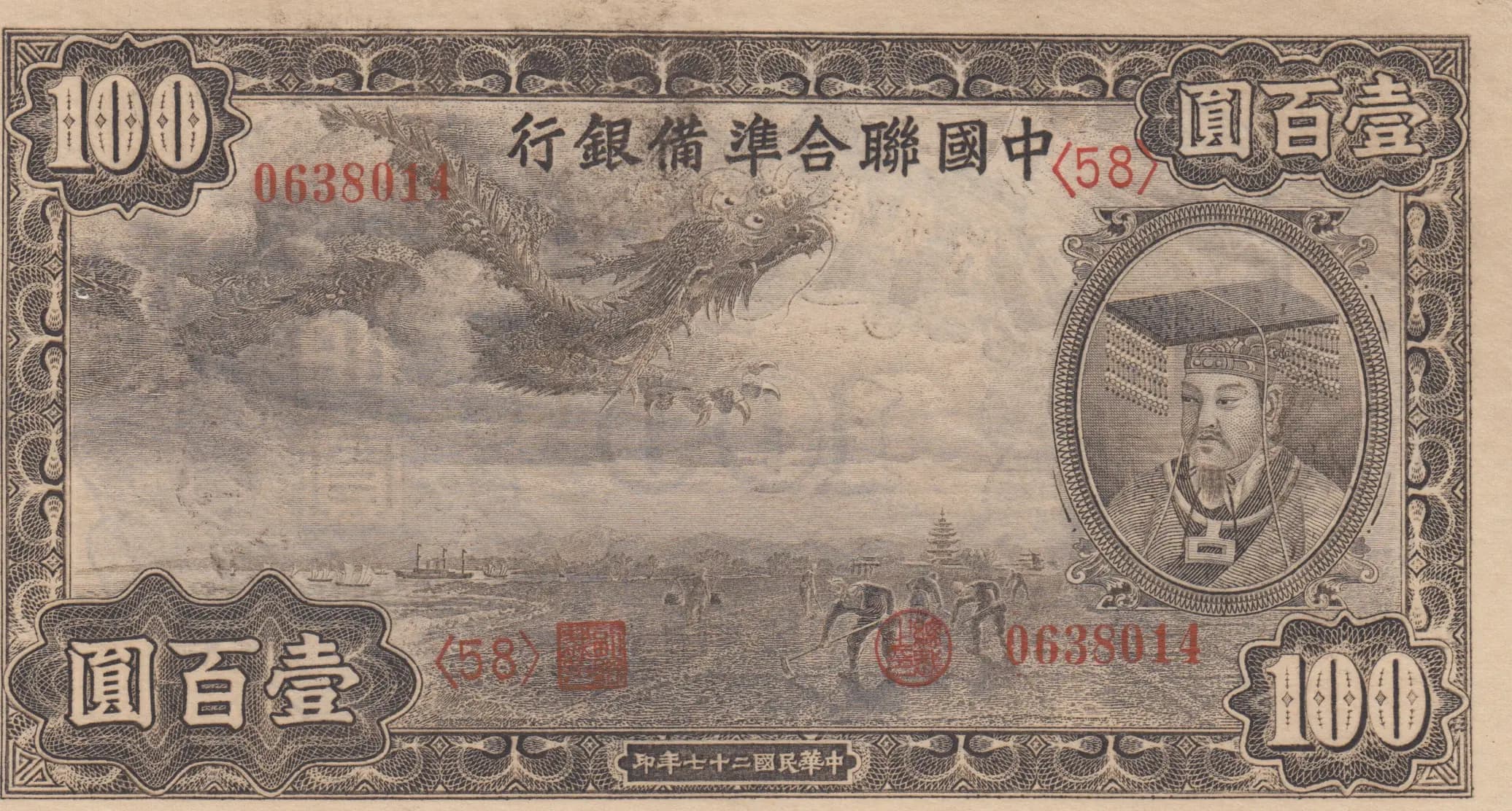
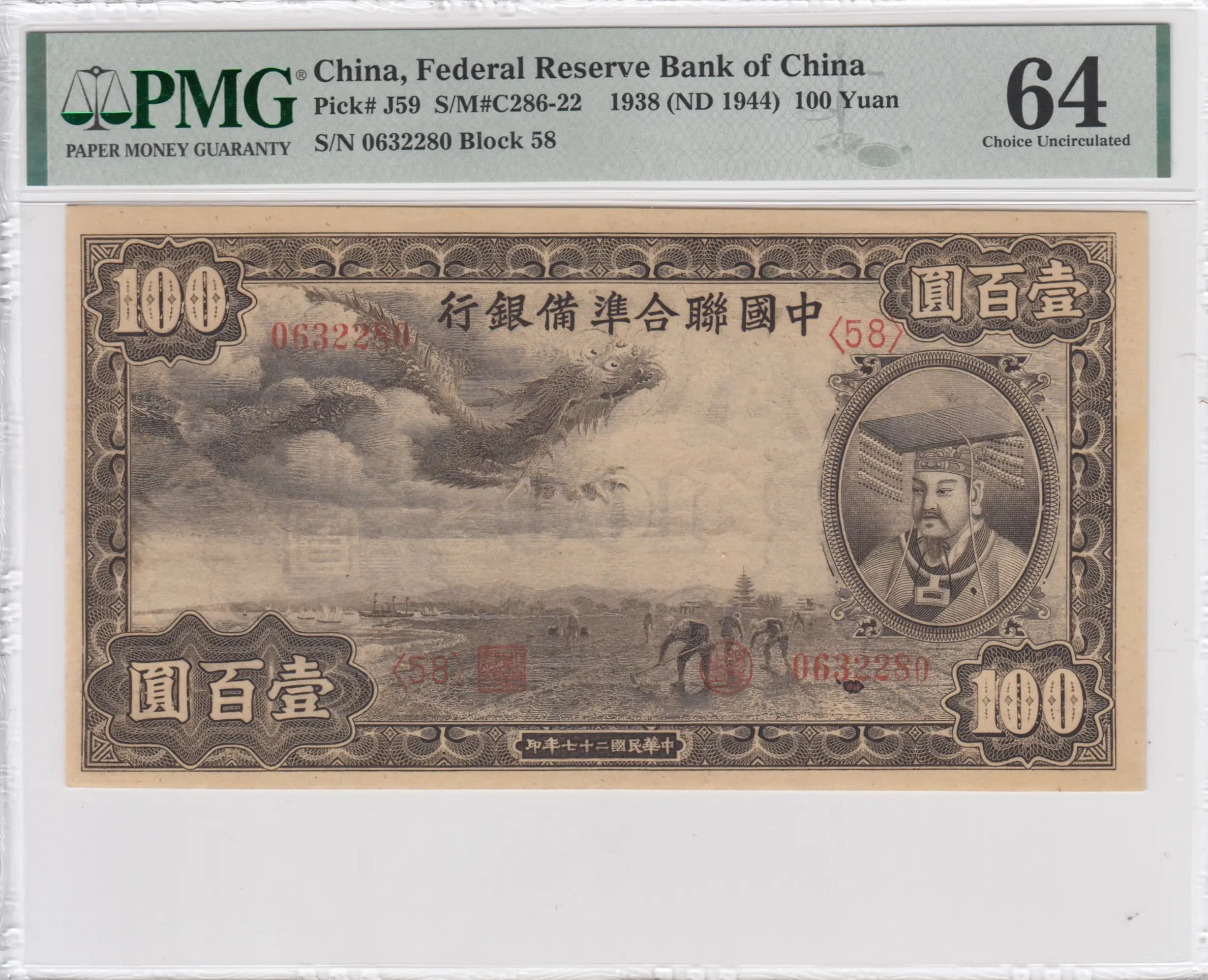
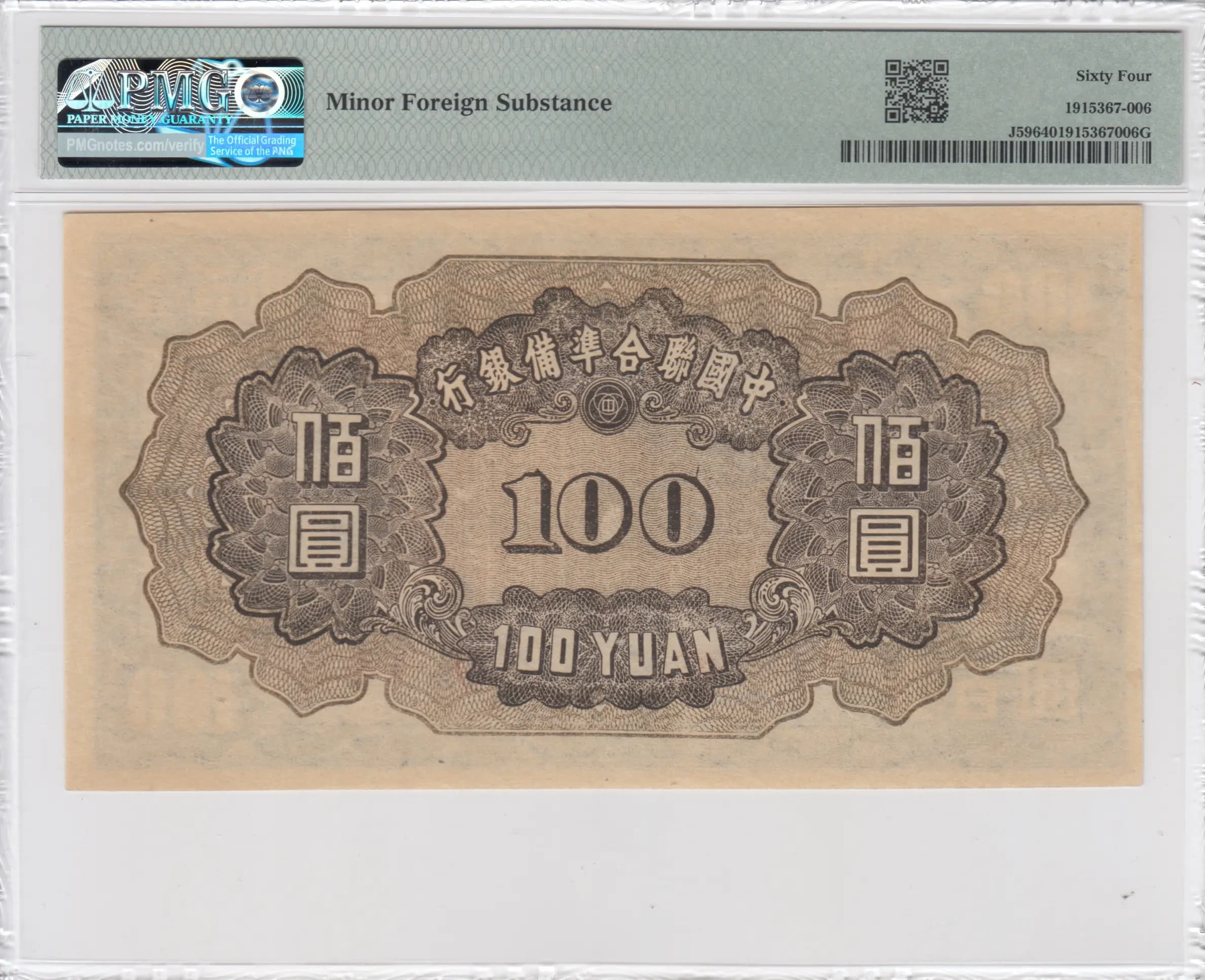
This is a PMG-graded 64 (Choice Uncirculated) example of the 1944 Federal Reserve Bank of China 100 Yuan note (Pick J59), featuring exceptional preservation with minimal handling. The note displays the characteristic horizontal composition with a prominent dragon symbol in the upper left, an oval-framed portrait of a bearded Asian dignitary in traditional formal dress on the right side, and a riverside landscape vignette with architectural elements in the lower center. Red official stamps and a handwritten serial number (0632280, block 58) are visible on the obverse, consistent with period authentication practices, while the reverse presents an ornate centered denomination design—all rendered in brown ink on a tan/beige paper base that shows virtually no aging or deterioration.
Common. The 100 Yuan denomination of the Federal Reserve Bank of China (Pick J59) from 1944 was part of a substantial wartime emission and survives in appreciable quantities in the collector market. PMG 64 examples are readily available at modest price points ($15-35 USD range depending on specific variety and block), indicating robust supply. No print run restrictions, recalls, or short-lived issuing authority factors elevate this to scarce status. While the note holds historical interest for WWII-era Chinese currency collectors, it is not rare by numismatic standards.
Issued during the final year of World War II, this Federal Reserve Bank of China note represents the National Government's wartime currency during the Second Sino-Japanese War and the broader Pacific conflict. The dragon motif and traditional Chinese architectural imagery reflect nationalist symbolism and cultural continuity during a period of extraordinary national stress, while the formal portrait likely depicts a prominent government or institutional leader of the Republic of China. The 'Republic Year 72' designation (corresponding to 1944 in the ROC calendar system) anchors this note to the Chiang Kai-shek era, when the Federal Reserve Bank of China functioned as a key monetary institution for the Nationalist government.
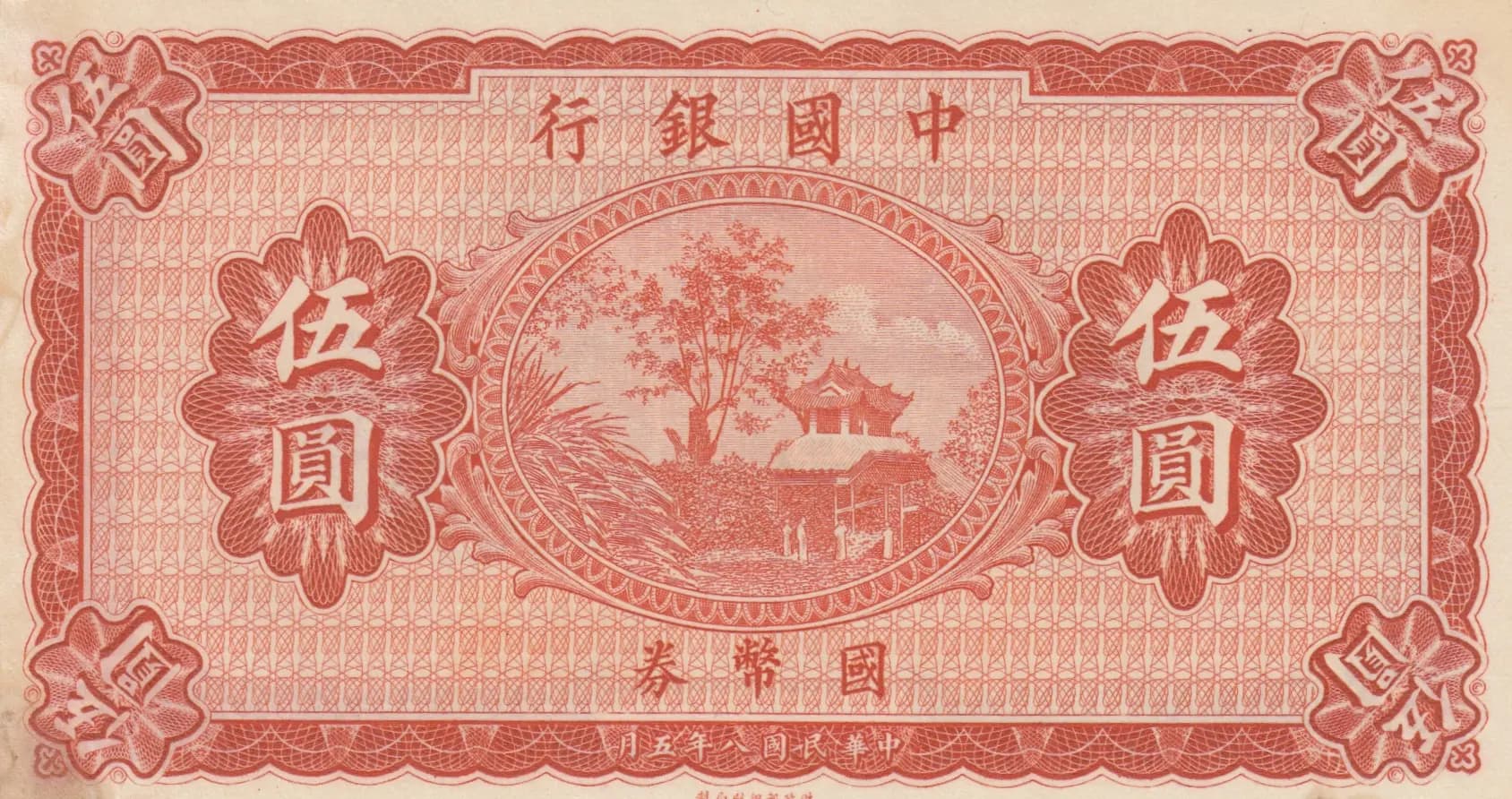
The obverse features a horizontally-oriented composition anchored by a classical Chinese dragon in the upper left quadrant, rendered as a symbol of imperial and national authority. The dominant design element is an oval portrait frame containing a bearded Asian male figure in traditional formal court dress with an ornate headdress, positioned in the right portion of the note—likely depicting Sun Yat-sen, founder of the Republic of China, though the specific individual would require signature verification. The lower central area contains a detailed landscape vignette depicting a riverside or coastal scene with traditional Chinese architecture including pagodas and possibly junks or river vessels, executed in fine line work characteristic of intaglio printing. The reverse presents a balanced, symmetrical design centered on the numeral '100' in large format, surrounded by elaborate ornamental frames incorporating traditional Chinese scroll and geometric motifs. The entire note employs a classical security design aesthetic typical of 1940s currency production, with intricate border patterns serving dual purposes of beauty and counterfeiting prevention.
FRONT: '中國聯合準備銀行' (China Federal Reserve Bank); '壹百圓' (100 Yuan); '民國七十二年' (Republic Year 72, i.e., 1944); Serial number '0632280' (handwritten in red); Block number '58' (in red); '100' (denomination numerals in corners). BACK: '中華民國聯合準備銀行' (Republic of China Federal Reserve Bank); '壹百圓' (100 Yuan); '100 YUAN' (English denomination); '100' (central numeral design); PMG certification details: '1815367-006' (certification number), 'Minor Foreign Substance' (grading note), and barcode identifier 'J5964019153670006G'.
This note was produced using intaglio (steel plate engraving and printing) methodology, the standard security printing technique for currency of this era. The fine detail visible in the portrait, dragon, landscape vignette, and ornamental borders—combined with the crisp registration of brown ink on tan paper—are characteristic of high-quality intaglio work. The Federal Reserve Bank of China notes of this series were typically produced by the China Federal Reserve Bank's own printing facilities or contract security printers in coordination with the Nationalist government. The red overprints and handwritten serial numbers were applied post-printing using separate authorization procedures.
The observed specimen exhibits block number '58' with handwritten serial number '0632280' in red ink on the obverse—details consistent with post-printing authorization protocols of the Federal Reserve Bank of China. Multiple block numbers and serial ranges are known for Pick J59. The red stamp markings visible on this example are typical of period institutional and official handling marks rather than printer varieties. No significant die varieties, signature varieties, or overprint varieties are evident in this specimen. The PMG certification holder notes 'Minor Foreign Substance,' indicating a small inclusion or spot that accounts for the Choice Uncirculated rather than Gem Uncirculated grade despite otherwise pristine preservation.