100 yen 1945
About This Note
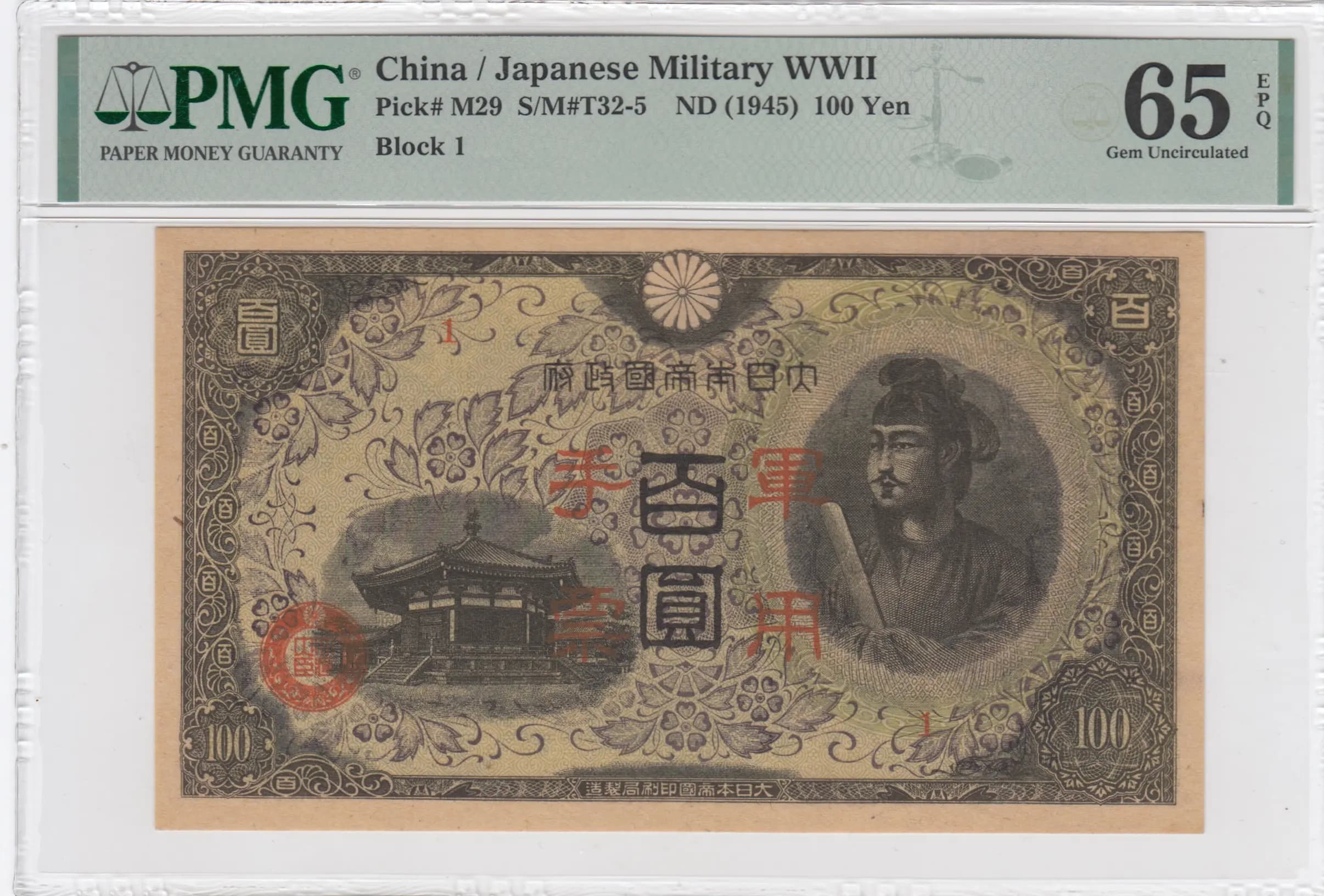
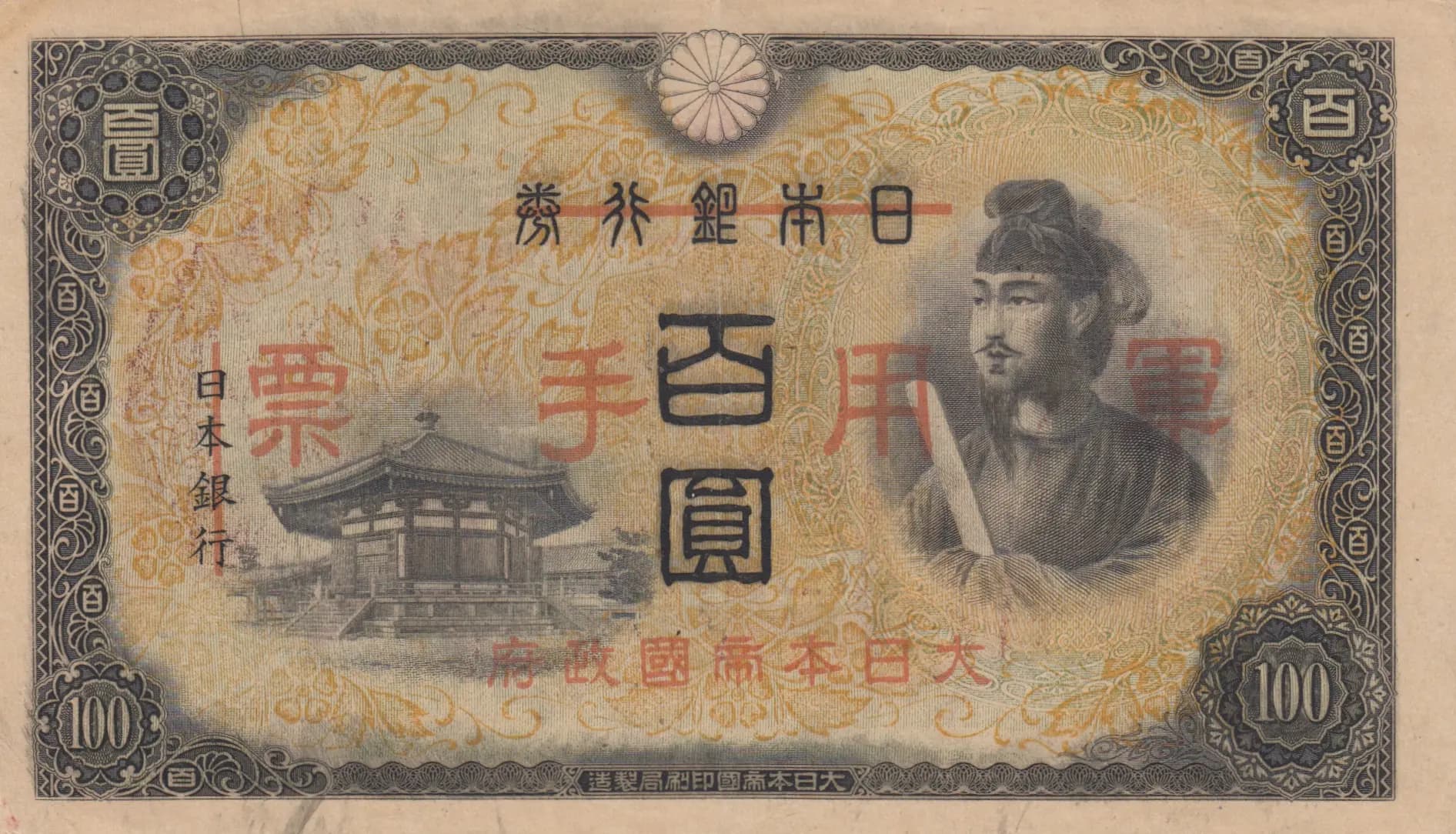
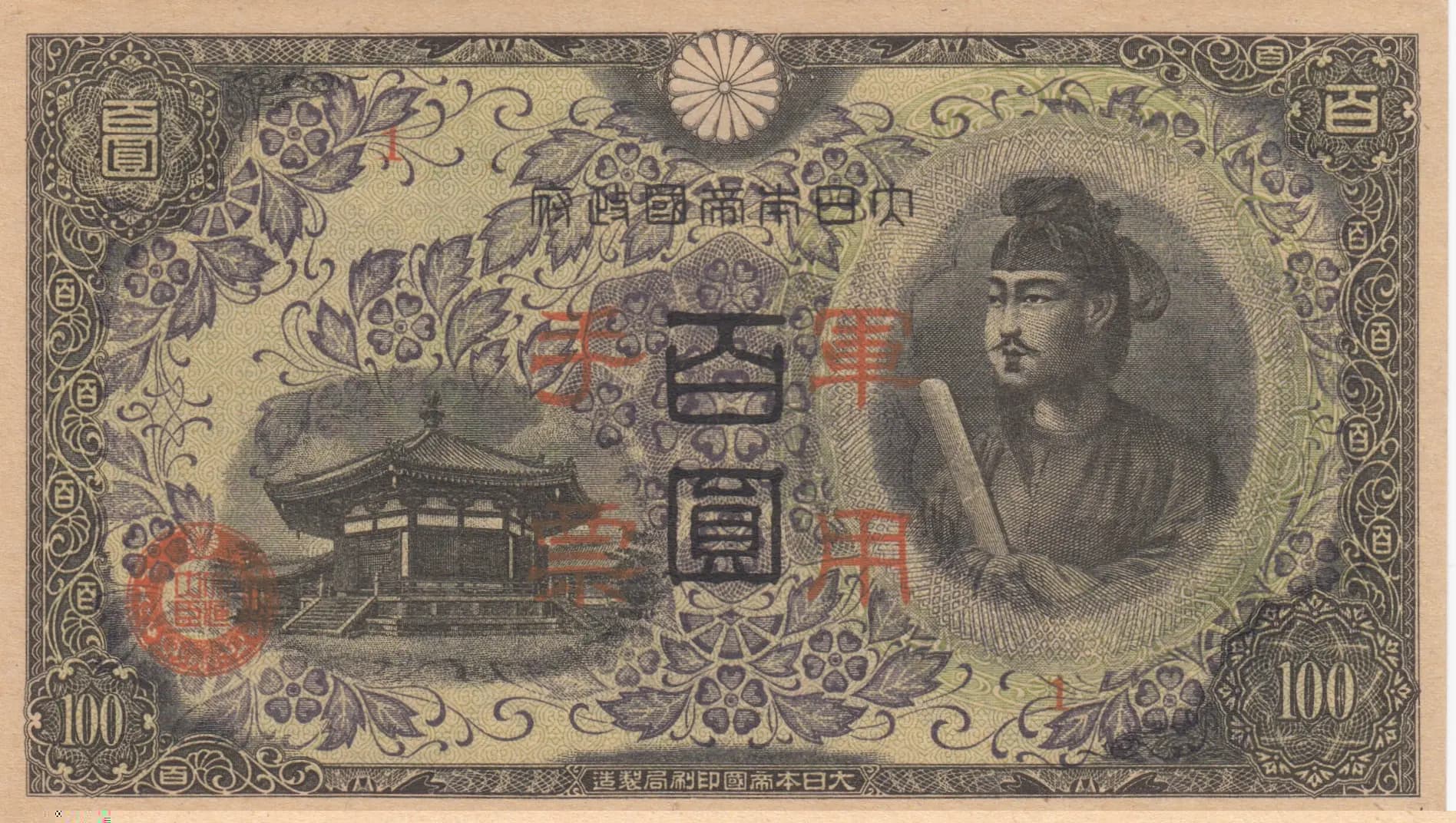
This is a 100 Yen banknote issued by the Japanese Military in 1945 (Pick P-M29), graded AU condition. The note features exceptional ornate engraving with cream and beige tones, accented by black and purple intaglio printing, and displays a portrait of a traditionally-dressed historical figure on the obverse alongside an intricately rendered pagoda structure. Notably, the note bears visible red stamp overprints that appear to be cancellation or security marks, adding to its historical significance as a late-war Japanese military currency issue.
Common. Japanese military yen notes from 1945, while historically significant, were produced in substantial quantities as occupation currency across multiple territories. The Pick P-M29 designation with only one cataloged variant and AU condition grade indicates this is a standard-issue note without exceptional scarcity factors. Post-war survival rates for these notes are reasonable given their relatively recent date and the stable condition observed, typical of preserved currency from this period.
This military yen note was issued during the final year of World War II, representing Japan's occupation currency system established in conquered territories. The traditional Asian architectural imagery (pagoda and temple complex) and period styling reflect the imperial Japanese military's cultural presentation during its territorial expansion. The presence of cancellation stamps suggests this note may have been part of post-war demonetization or accounting procedures, common for military scrip following Japan's surrender in August 1945.
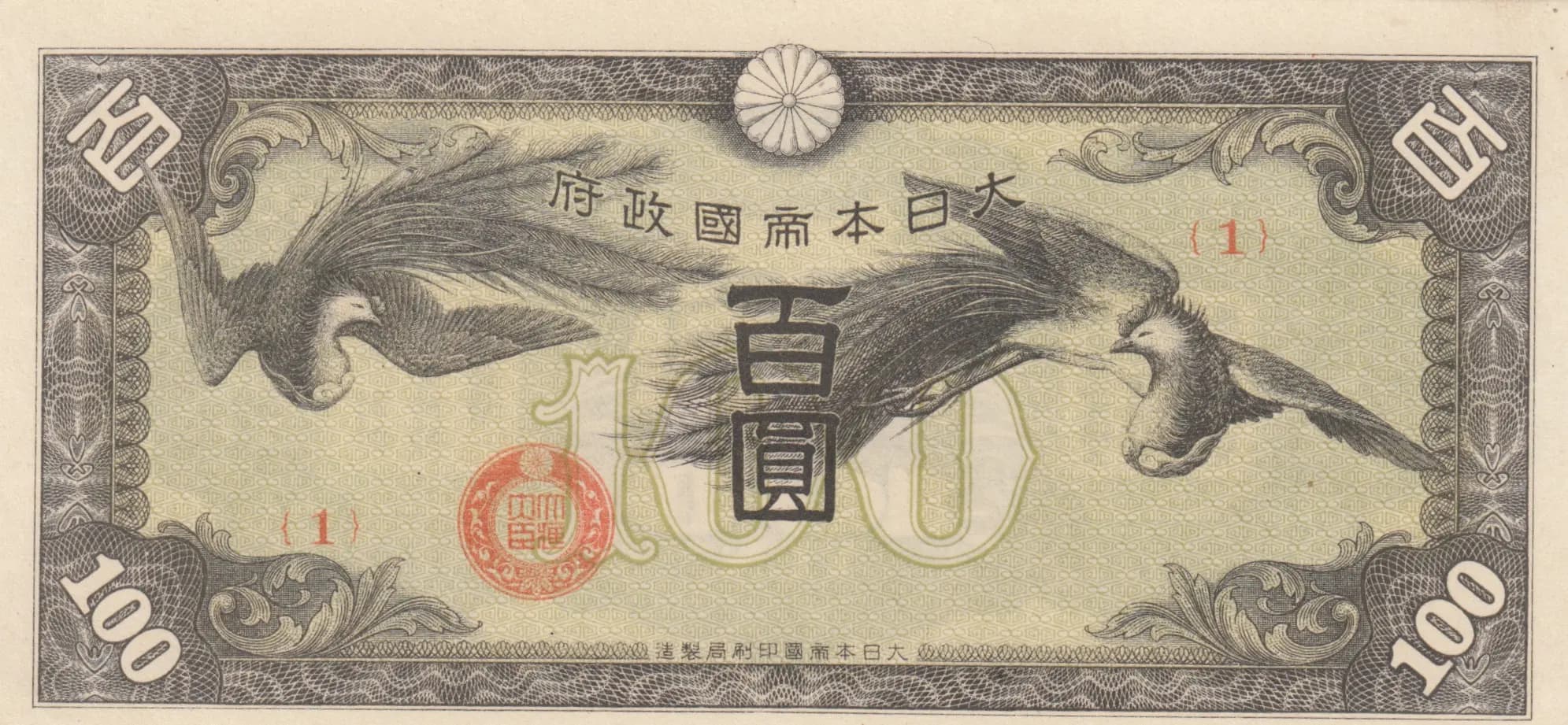
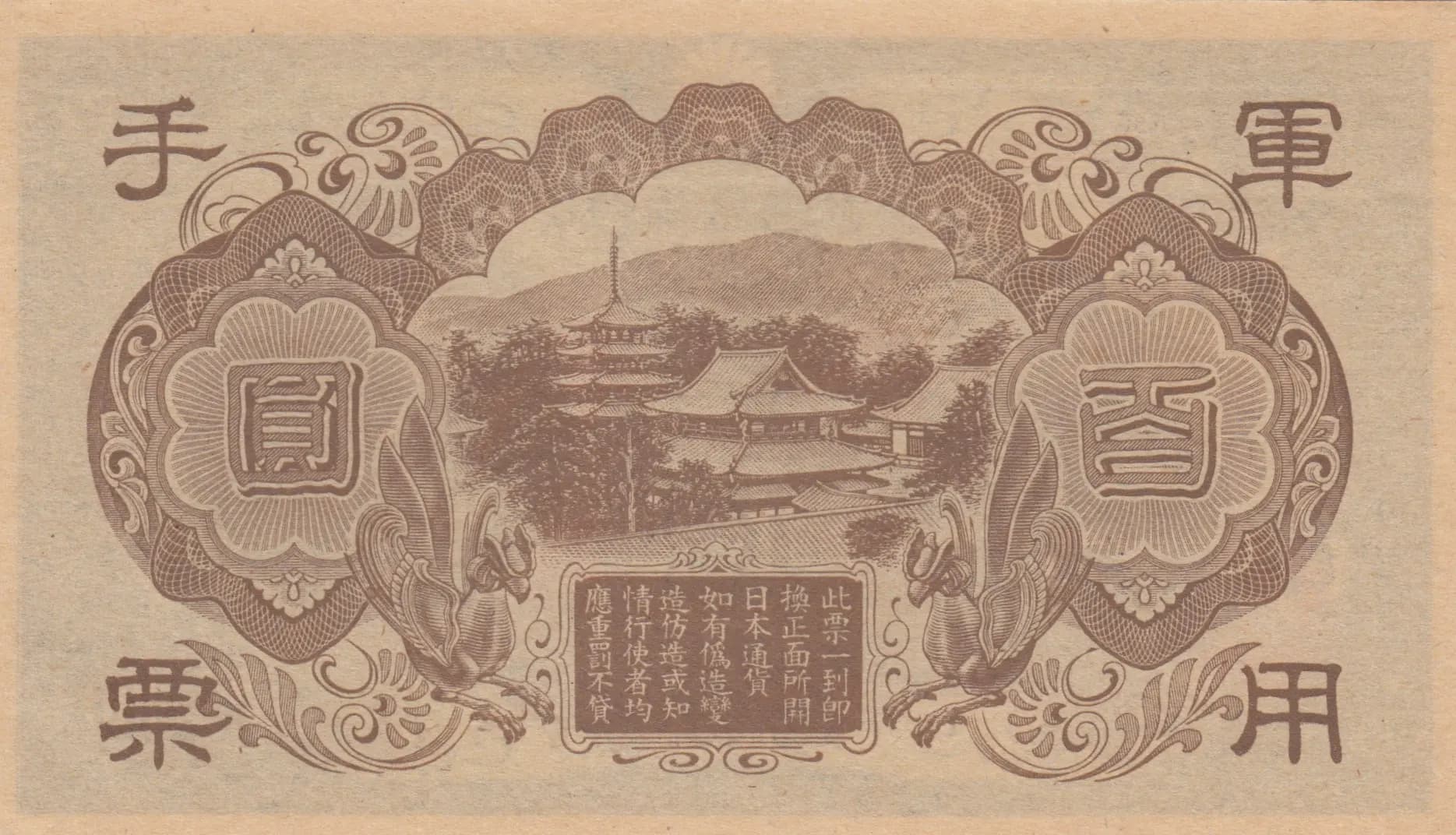
The obverse features a right-facing profile portrait of a historical Asian dignitary wearing traditional formal robes and classical hairstyle, positioned on the right side of the note. The central vignette showcases a multi-tiered East Asian pagoda or temple structure with classical architectural proportions. The reverse depicts an expansive landscape scene featuring a temple or pagoda complex nestled in mountainous terrain with forested areas, framed by ornate floral vine borders and cloud-like scrollwork elements. Both sides incorporate decorative cartouches, dragon or mythical creature motifs, and intricate geometric patterning consistent with high-value currency design of the era.
Front side: '明德帝皇国帝大日本' (related to the Japanese Empire/Great Japan concept); '日本帝国' (Japanese Empire); Arabic numerals '100' (denomination in bottom corners). Back side: '国円' (national yen/currency); '手車' (descriptive or authenticating text); Central text panel contains extended Japanese text regarding currency authenticity, printing authorization, and official legitimacy statements typical of formal currency documentation.
Intaglio engraving (line engraving and fine hatching), evidenced by the crisp, detailed rendering of portraits, architectural vignettes, complex border patterns, and security features. The multiple color registration (cream, black, purple/dark gray tones, and red overprints) indicates multi-plate printing. Standard Japanese military currency security printer techniques of the period, likely produced by Japan's official currency printing facilities under military authorization.
The visible red stamp overprints observed on the obverse represent a notable feature of this specific specimen, likely indicating post-war cancellation, accounting verification, or demonetization marking. These overprints may distinguish this note as a 'cancelled' or 'specimen' variety within the P-M29 classification. The single variant cataloged by PMG for this Pick number suggests limited recognized varieties, with this AU-graded example potentially being representative of the standard circulation type with post-war administrative markings.