100 yen 1945
About This Note
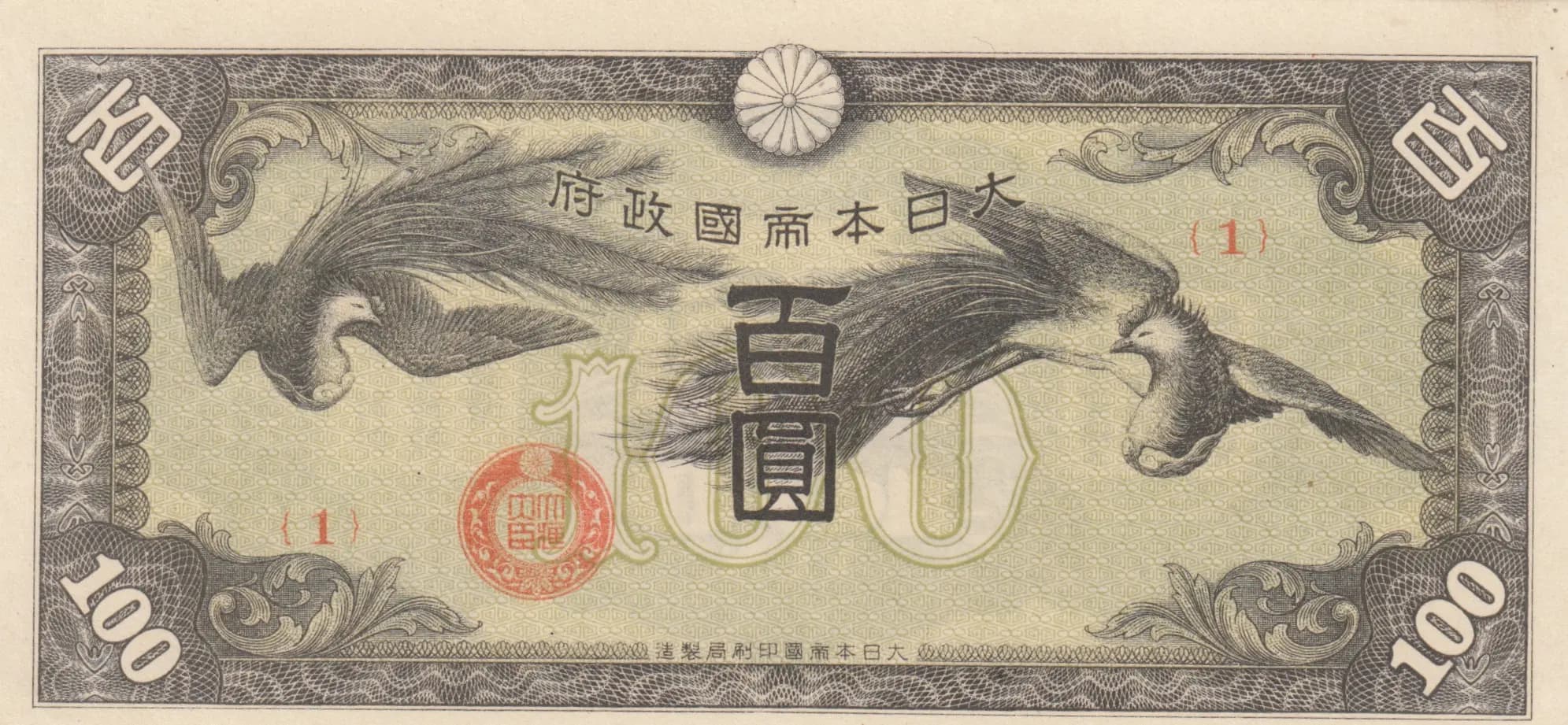
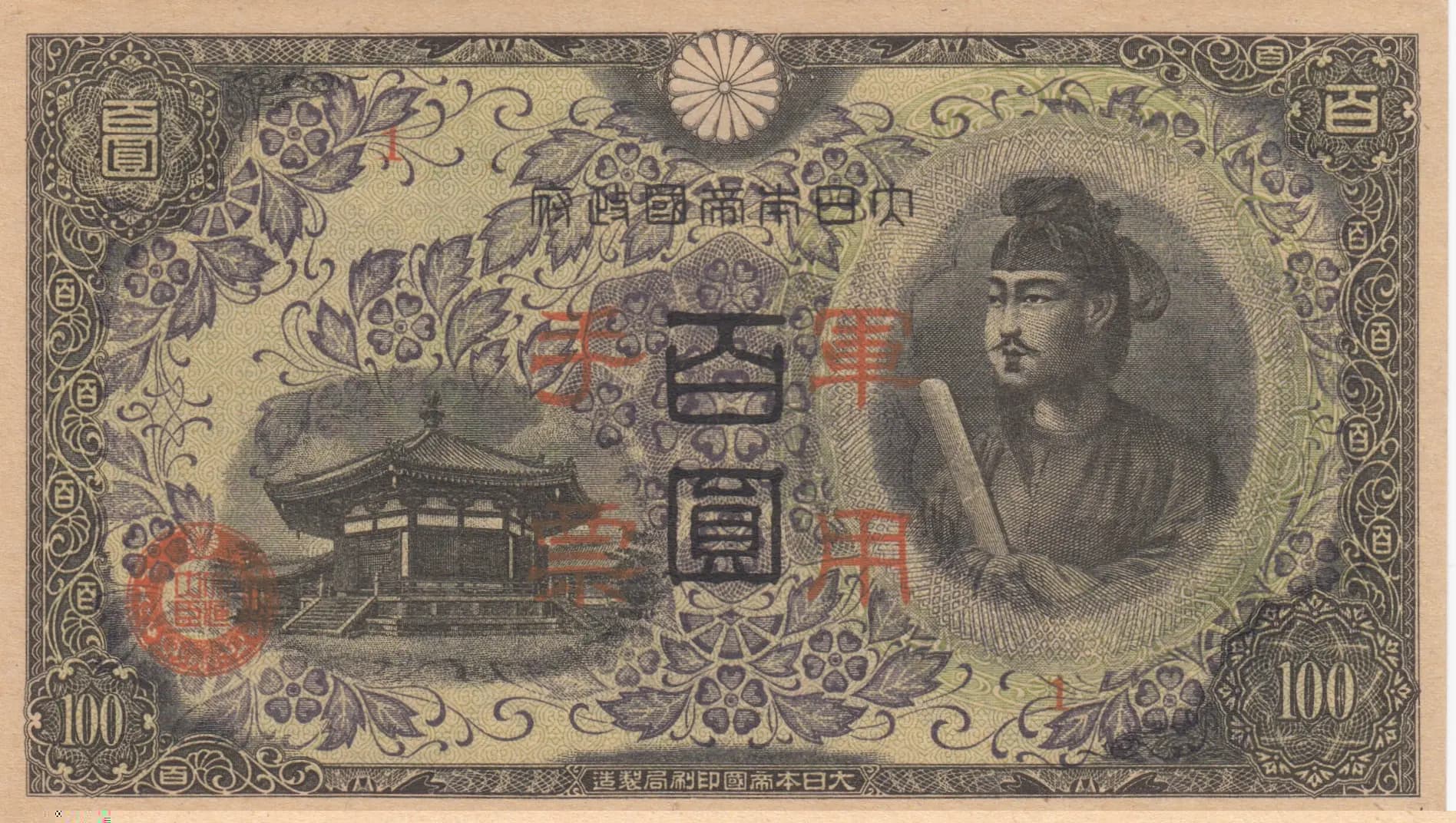
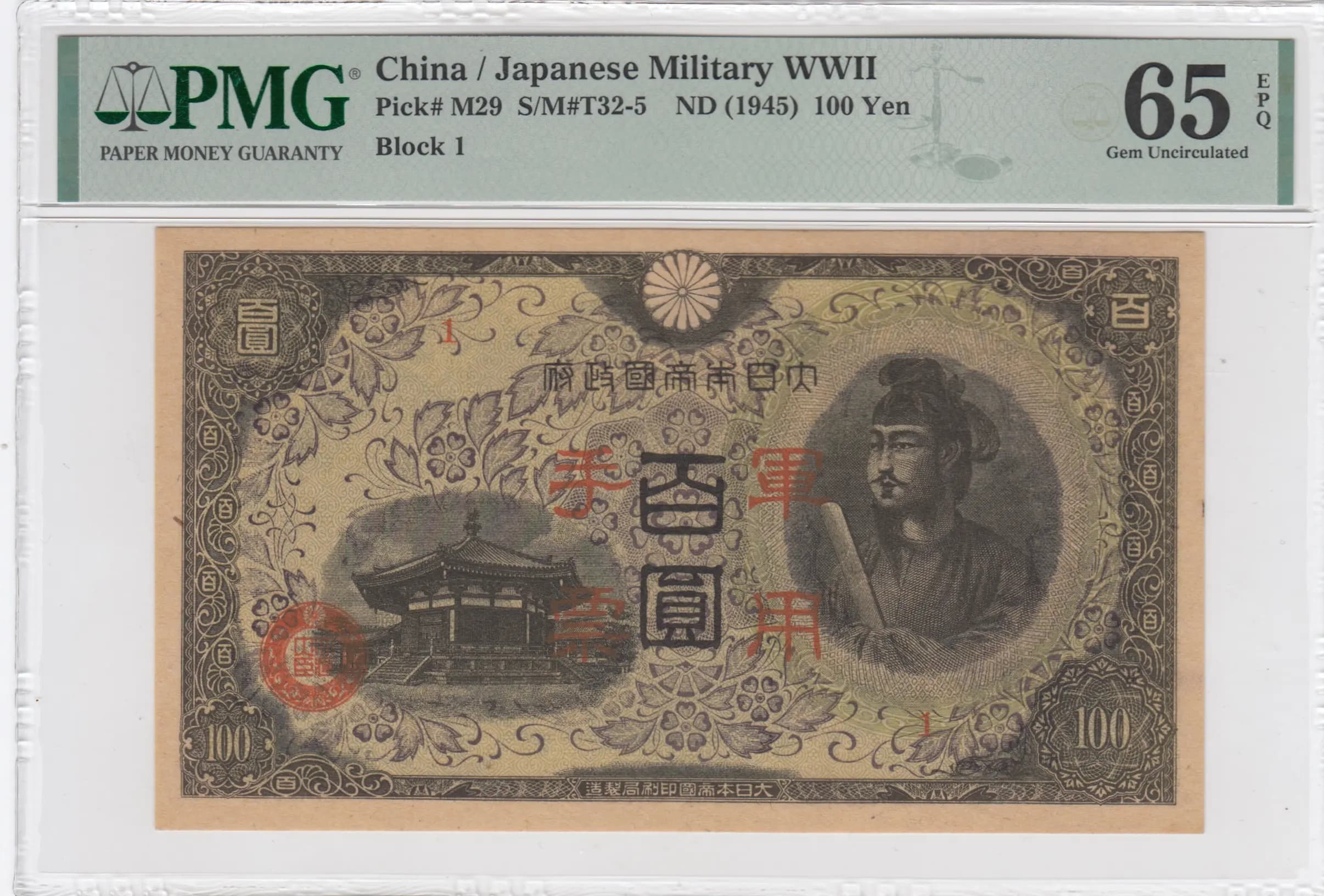
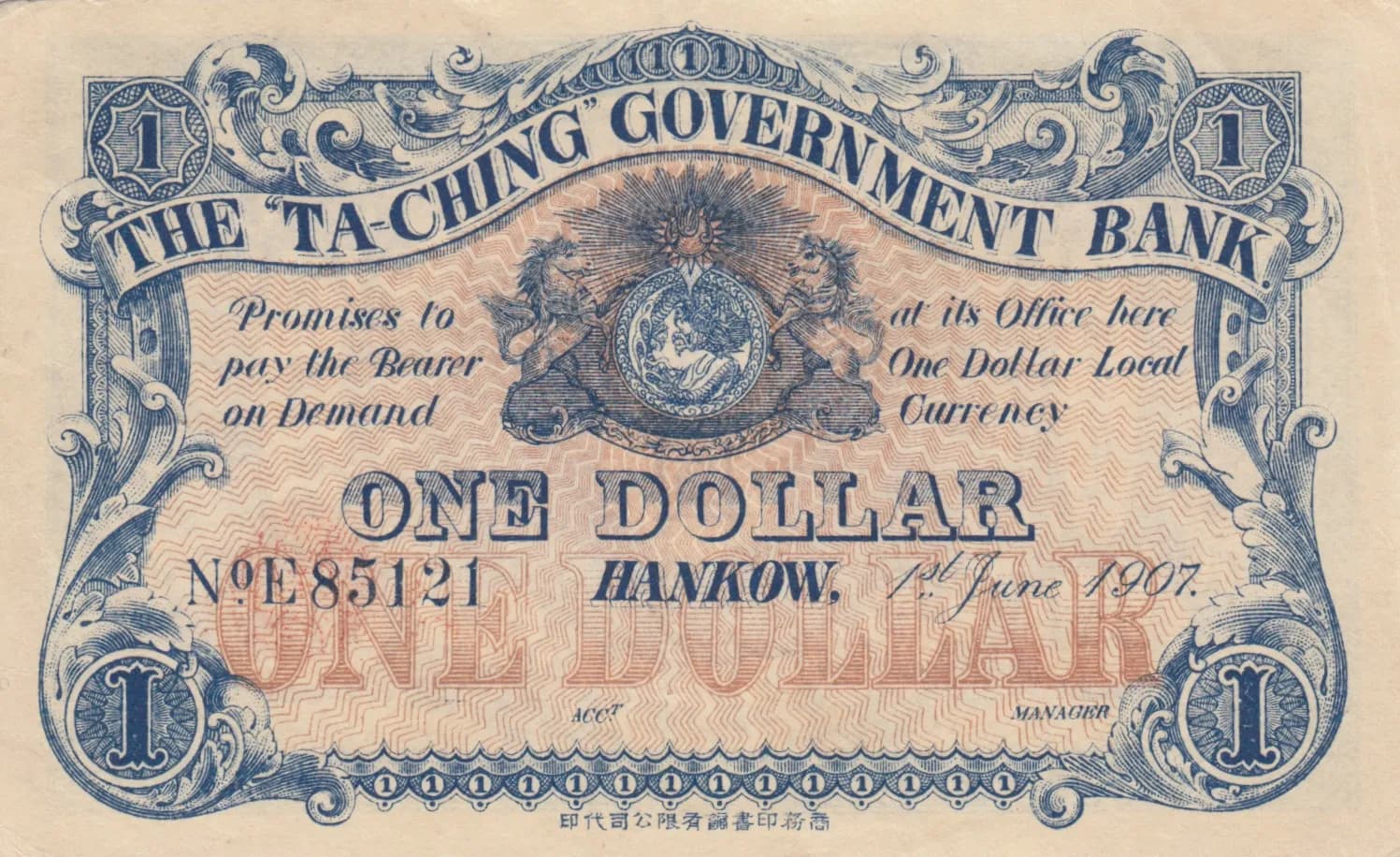
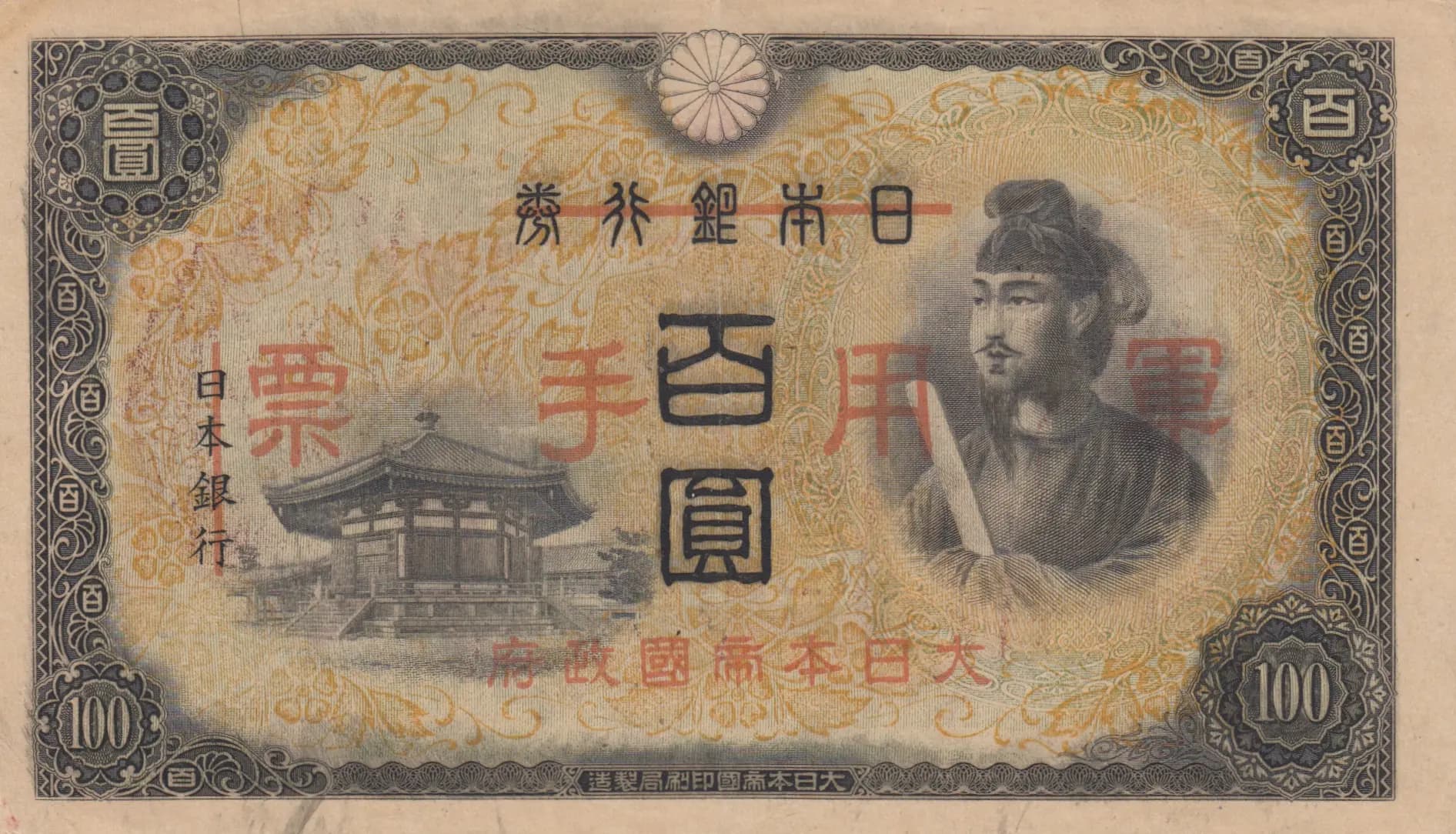
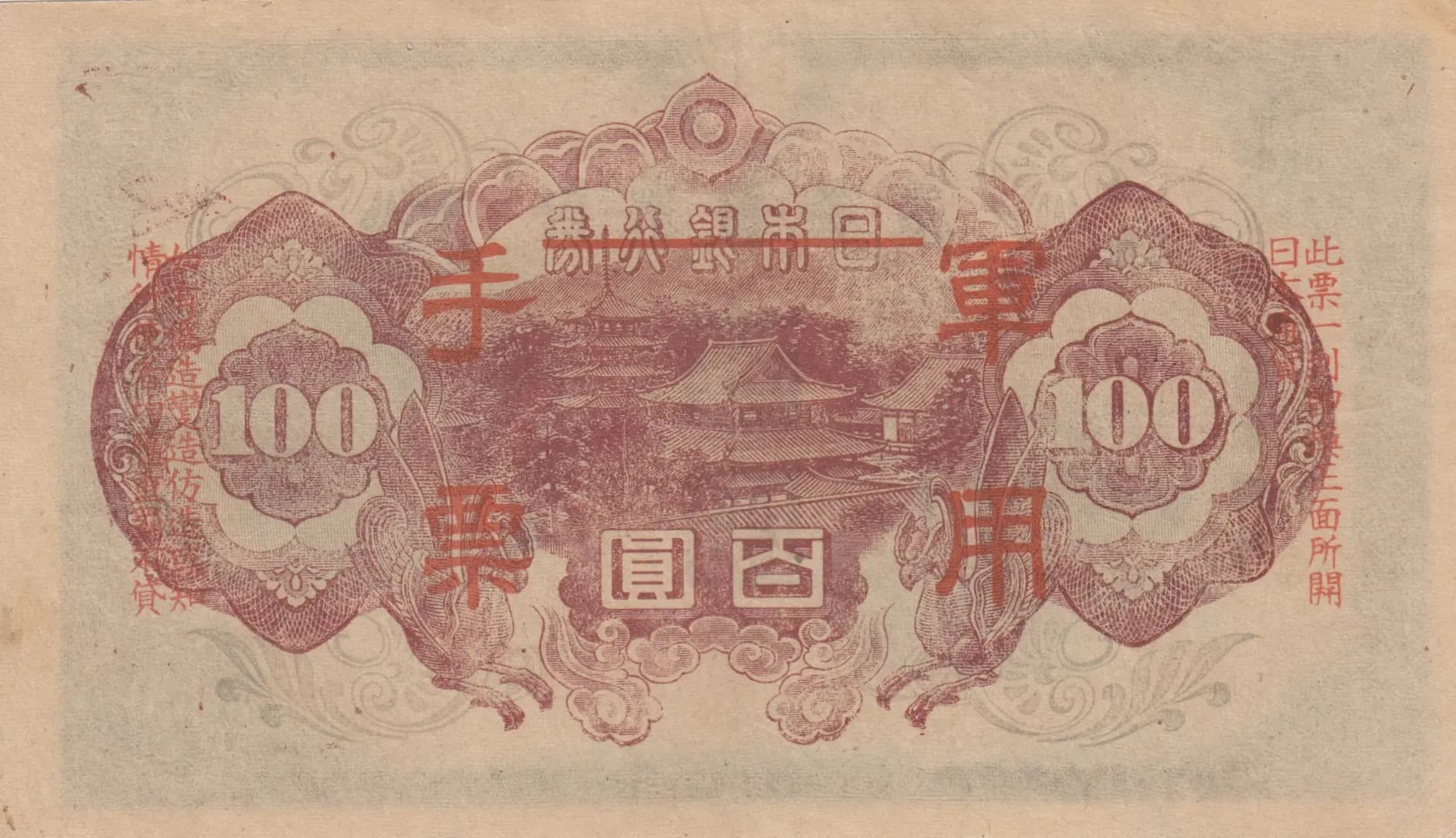
This is a 100 Yen note issued by the Japanese Military Government in 1945, catalogued as Pick P-M28. The note presents a cream/tan obverse featuring an ornate portrait of a man in traditional East Asian dress and a pagoda building, while the reverse displays a rich red/brown landscape scene with traditional architecture and mountains. In EF condition, the note shows expected age-related patina with foxing and discoloration consistent with a 1945 issue, making it a historically significant example of late-war Japanese military currency.
Common. Japanese military occupation currency from 1945 was issued in substantial quantities across occupied territories. The Pick P-M28 (100 Yen) denomination was among the standard denominations produced. While post-war circulation was limited due to currency repatriation and destruction, surviving examples are not particularly scarce in the philatelic market. EF-graded examples represent well-preserved specimens but do not command premium valuations that would indicate rarity.
This banknote represents Japanese military occupation currency issued during the final year of World War II, when Japan's Imperial Government maintained control over various territories and currencies. The imagery—featuring traditional East Asian architectural elements, imperial symbols including the chrysanthemum, and bilingual Japanese/Chinese inscriptions—reflects Japan's Greater East Asia Co-Prosperity Sphere ideology and attempts to legitimize its occupation through cultural imagery. The specific designation as issued by the 'Japanese Imperial Government' (日本帝國政府) and the mixed Japanese-Chinese text indicate this was currency for use in occupied territories during 1945.
The obverse features a formal portrait of a dignitary or historical figure in traditional dress with a topknot hairstyle, positioned on the right side, accompanied by an ornate pagoda-style building on the lower left. The center displays large denomination numerals within elaborate decorative borders featuring geometric and floral patterns. The imperial chrysanthemum flower appears at top center as a symbol of Japanese sovereignty. The reverse presents a panoramic landscape composition with multiple traditional East Asian buildings featuring curved tiled roofs arranged across a mountainous terrain, enclosed in decorative cloud-form cartouches containing the denomination. The entire design employs intricate line work and overlapping patterns characteristic of high-security banknote engraving of the period.
FRONT: 日本銀行 (Bank of Japan) | 百円 (100 Yen) | 日本帝國政府 (Japanese Imperial Government) | 大日本帝國政府發行 (Issued by the Imperial Government of Greater Japan) | 百 (100). BACK: 百圓 (100 Yen/Yuan) | 日本帝國政府 (Japanese Imperial Government) | 此票所開 (This note issued/opened). Arabic numerals "100" appear on both sides in decorative cartouches.
Intaglio engraving (recess printing), the standard security printing method for Japanese military occupation currency of this era. The fine detail work evident in the portraits, architectural elements, landscape scenes, and ornamental borders—as well as the multiple overlapping pattern layers—are characteristic of precision intaglio production. The security printer for Japanese occupation notes of this period was typically the Japanese Government Printing Bureau (Nippon Printing Company), though specific attributions for P-M28 variants may vary.
The PMG population report indicates one catalogued variant for P-M28. No specific variety distinctions (such as signature varieties, date variants, or serial number prefix differences) are apparent from the visual analysis. The note appears to be a standard production example of the base P-M28 issue. Further variety information would require examination of serial numbers, signatures, and printing characteristics not fully legible in the provided images.