10 yuan 1941
About This Note
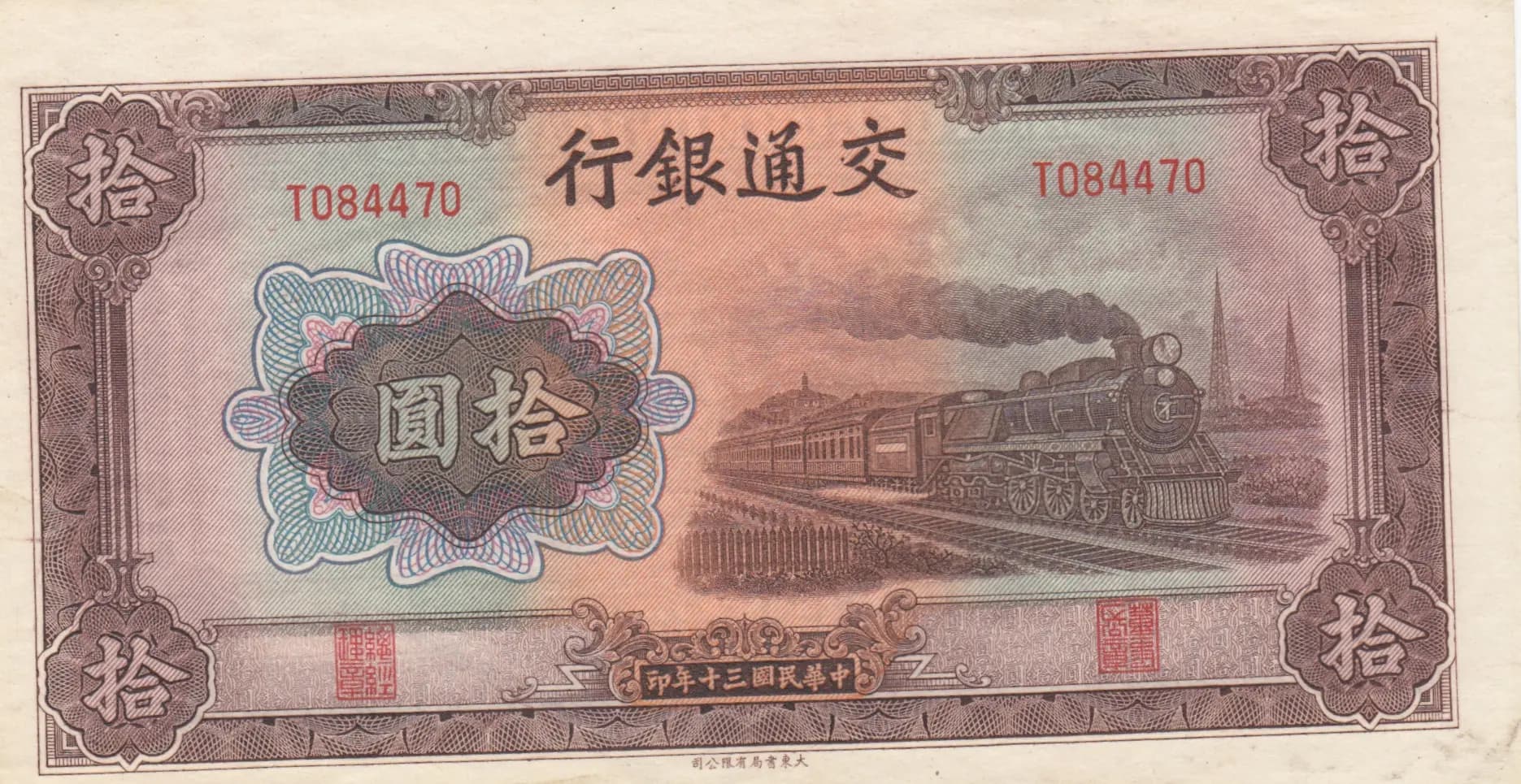
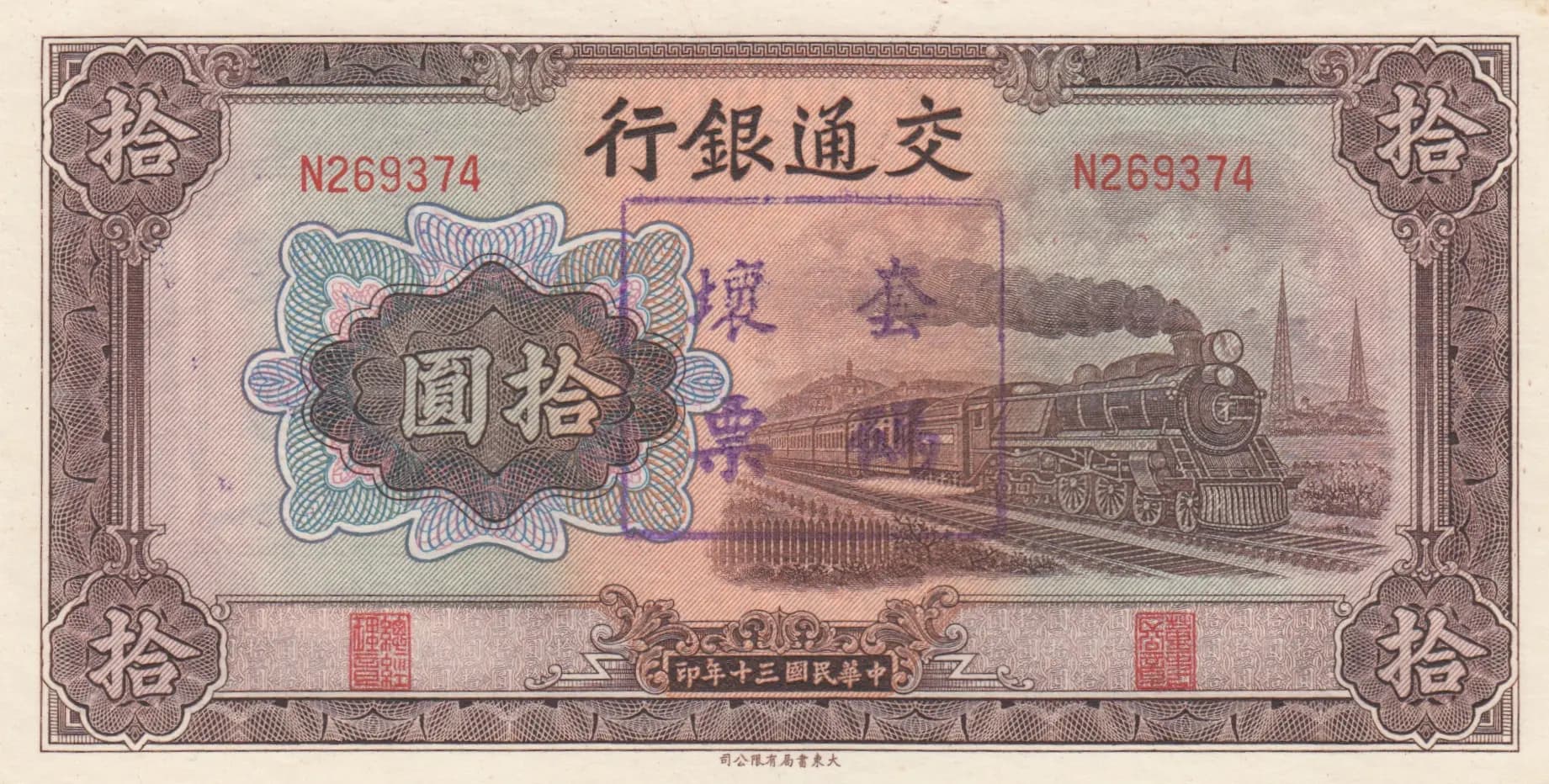
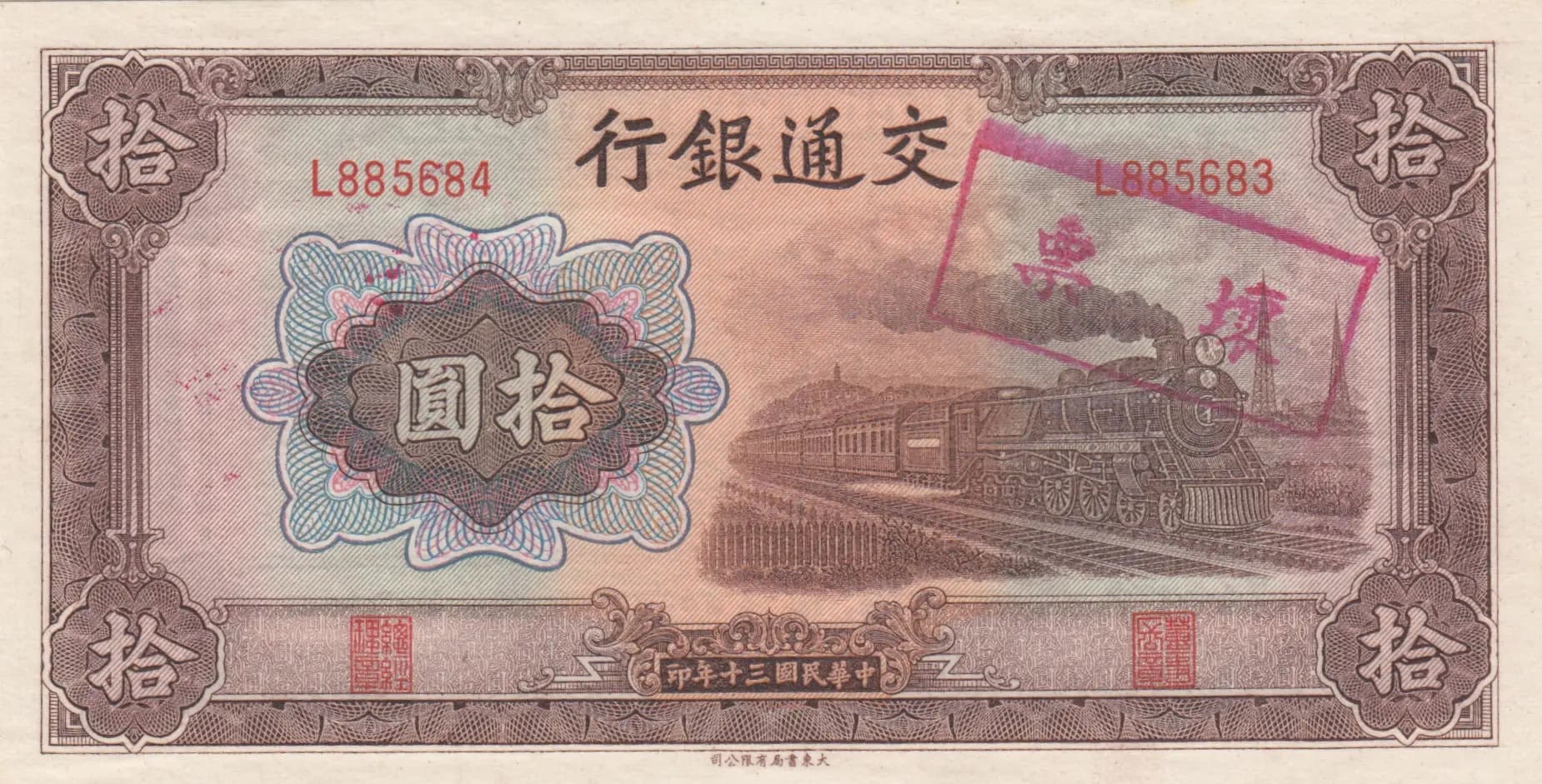
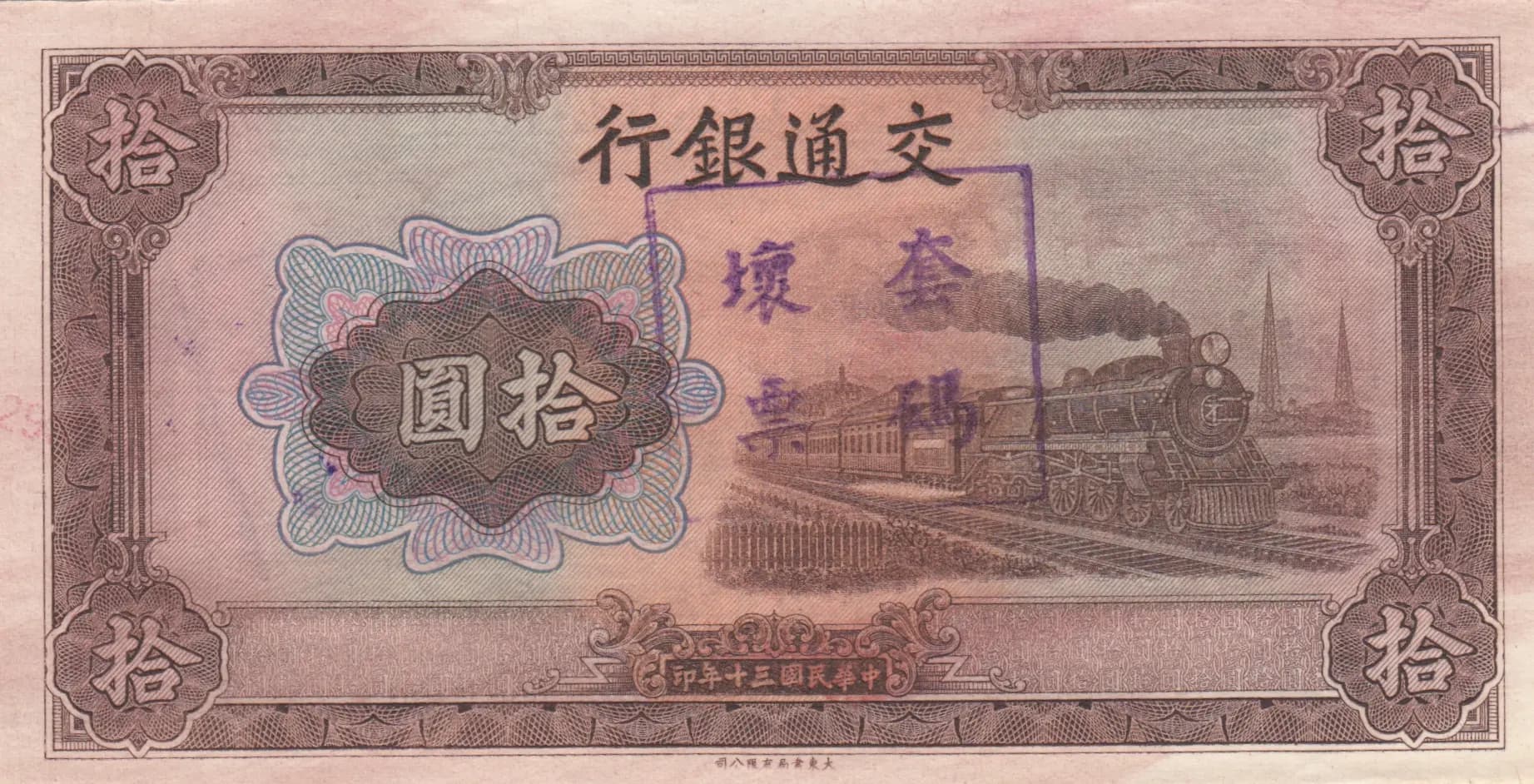
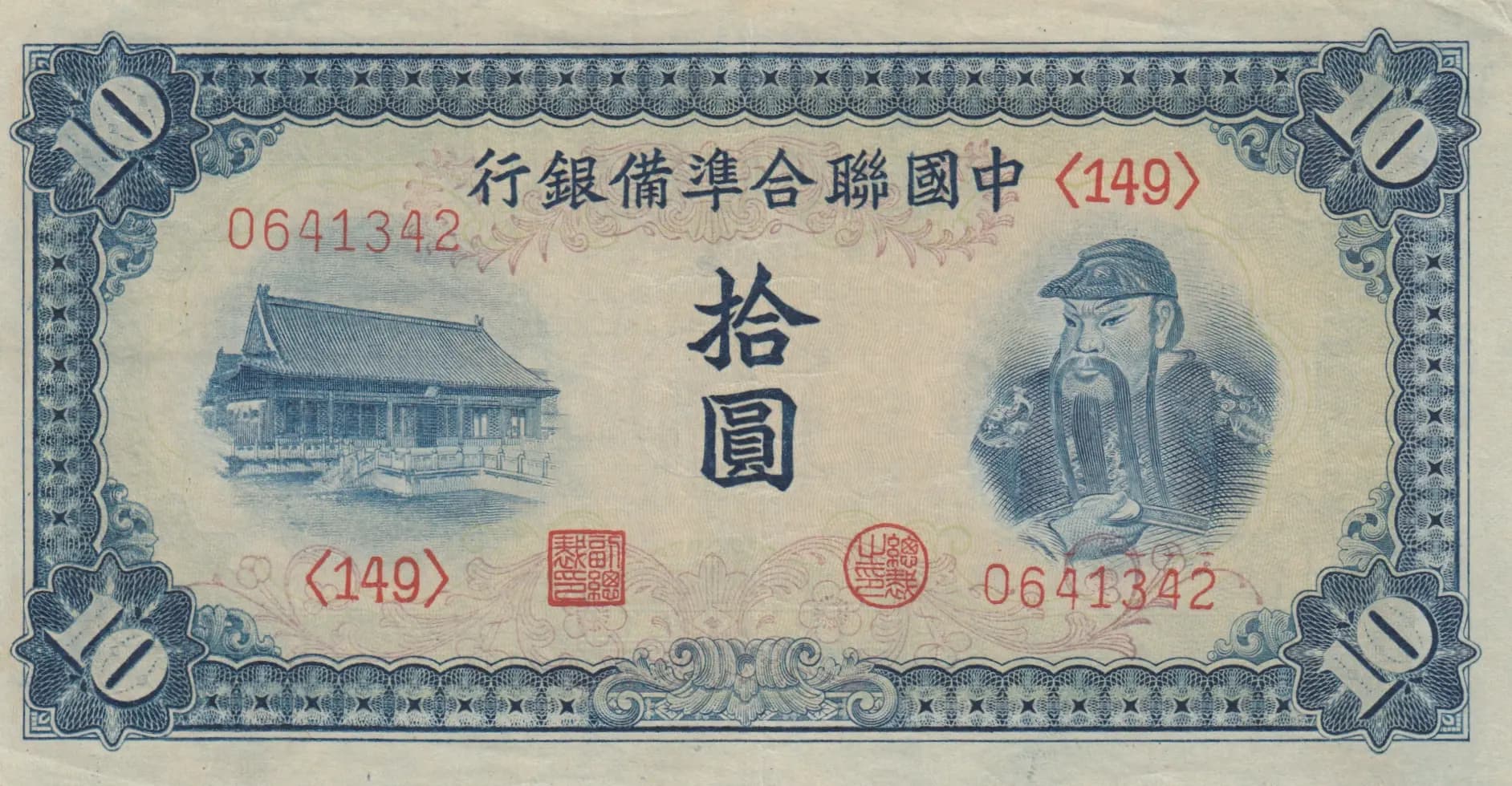
An exceptional example of China's 1941 10 Yuan note issued by the Federal Reserve Bank of China (Pick P-J74), presented in EF condition with well-preserved printing detail despite natural aging patina. The note features an impressive design combining traditional Chinese architectural and portraiture elements with ornate decorative borders in cream and teal inks, accented by multiple red official seals. This historically significant currency represents a critical period in Chinese monetary history during the Second Sino-Japanese War.
Common. While this is a historical note from wartime China with interesting political significance, the Federal Reserve Bank of China issued substantial quantities of currency during its 1938-1948 operational period. No evidence suggests this Pick number had a severely restricted print run or was subject to major recall operations. EF condition examples appear with reasonable frequency in the market, and this denomination and year are regularly available to collectors at moderate valuations consistent with common circulating currency of the period.
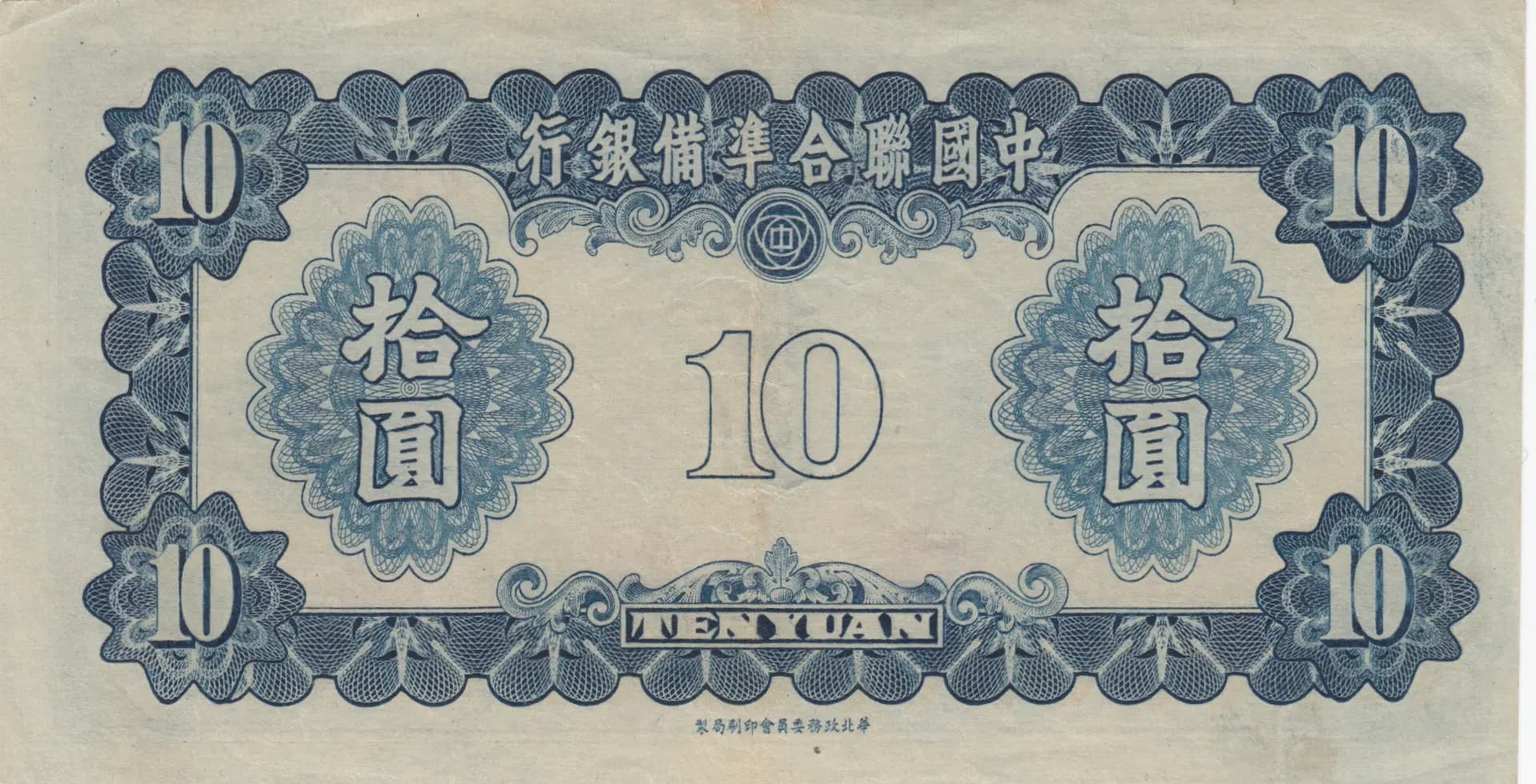
The Federal Reserve Bank of China (中國聯合準備銀行), depicted on both sides of this note, was established in 1938 as a unified central banking authority during China's wartime consolidation of financial institutions. The traditional Chinese architectural elements and the bearded portrait on the obverse reflect nationalist symbolism of the period, while the symmetrical reverse design emphasizes institutional authority and legitimacy during a tumultuous era of Japanese occupation and internal conflict.
The front features an ornate geometric and floral border frame in teal ink enclosing a cream-colored field. The left side displays a traditional Chinese building with characteristic curved roofline and decorative architectural details representing institutional permanence. The right side presents a portrait of a distinguished bearded gentleman in classical engraving style, wearing formal traditional Chinese clothing and cap, symbolizing leadership authority. Three red seals (circular and square formats) are strategically positioned as official validation marks. The reverse employs rigorous symmetry with large ornate rosette medallions featuring the denomination '10' and '拾圓' at the center, flanked by matching decorative elements. The overall design emphasizes security through intricate line work, complex geometric patterning, and multiple color registration points.
Front side: '中國聯合準備銀行' (Central Reserve Bank of China) at top; '拾圓' (Ten Yuan) as large denomination marking; Serial number '0641342'; Issue marker '<149>'. Back side: '中國聯合準備銀行' (Central Reserve Bank of China); '拾圓' (Ten Yuan) and '10' (Arabic numerals) displayed within ornate rosette medallions; 'INYANG' in Roman characters (likely romanization of a bank location or administrative designation).
Intaglio engraving (line engraving), evidenced by the sharp detail preservation, fine linear patterns in the decorative borders, precise rosette medallion designs, and the characteristic deep impression quality visible in the ornamental corner work. The multi-color registration (cream base, teal ink primary design, red seal overprints) indicates sequential printing stages typical of security banknote production of the 1940s era. This note was produced by the Chinese government security printer serving the Federal Reserve Bank of China during wartime operations.
This example shows serial number 0641342 with issue marker <149>. Varieties for P-J74 notes may exist based on different serial number ranges, signature variants (if present on this design), and printing run differences. The 1941 date and 'INYANG' romanization marking on the reverse may indicate a specific printing period or branch facility. Further variety documentation would require examination of multiple specimens with differing serial number sequences and any observable signature or overprint variations.