10 yuan 1941
Market Prices
70 salesAbout This Note
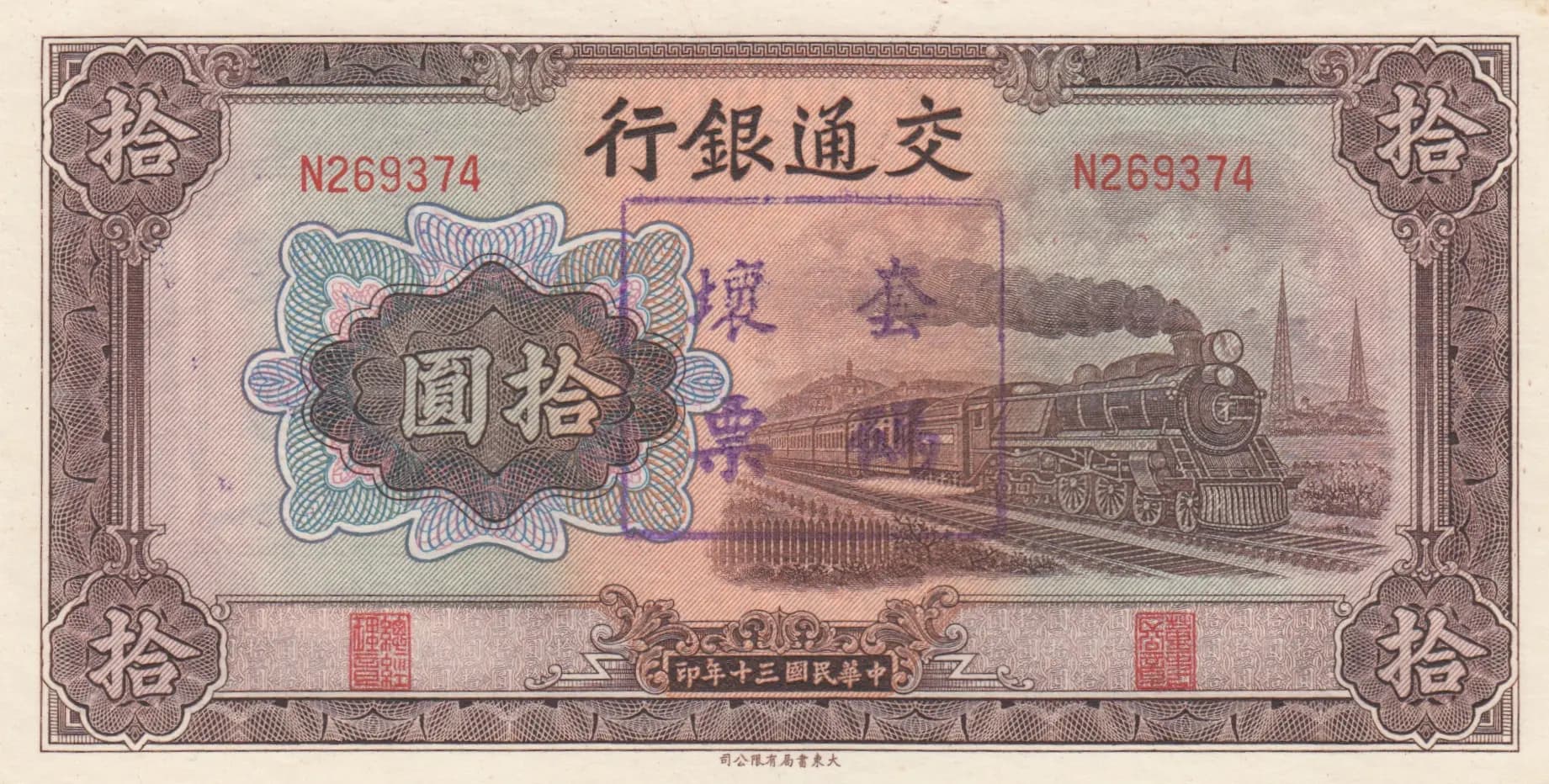
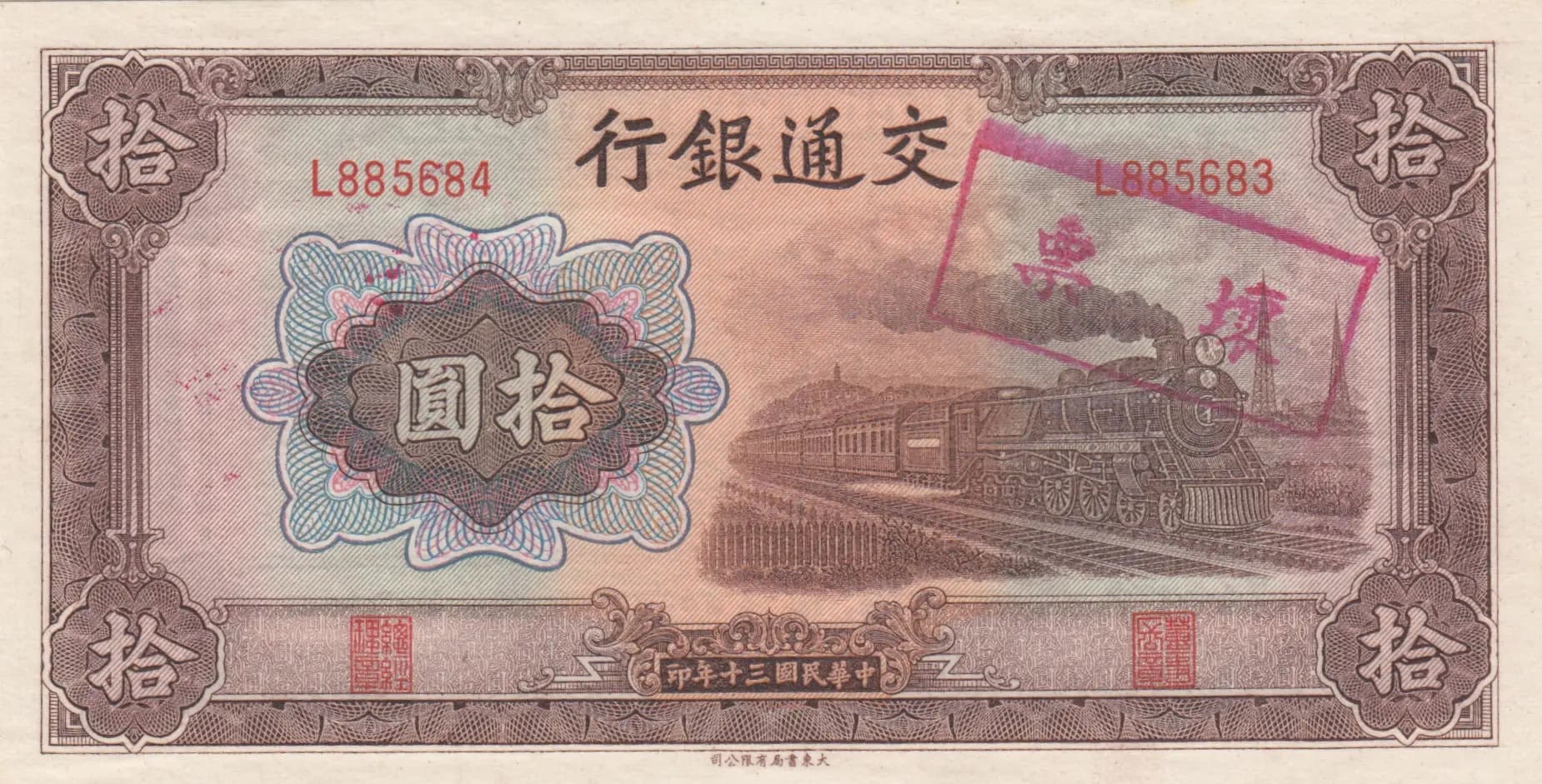
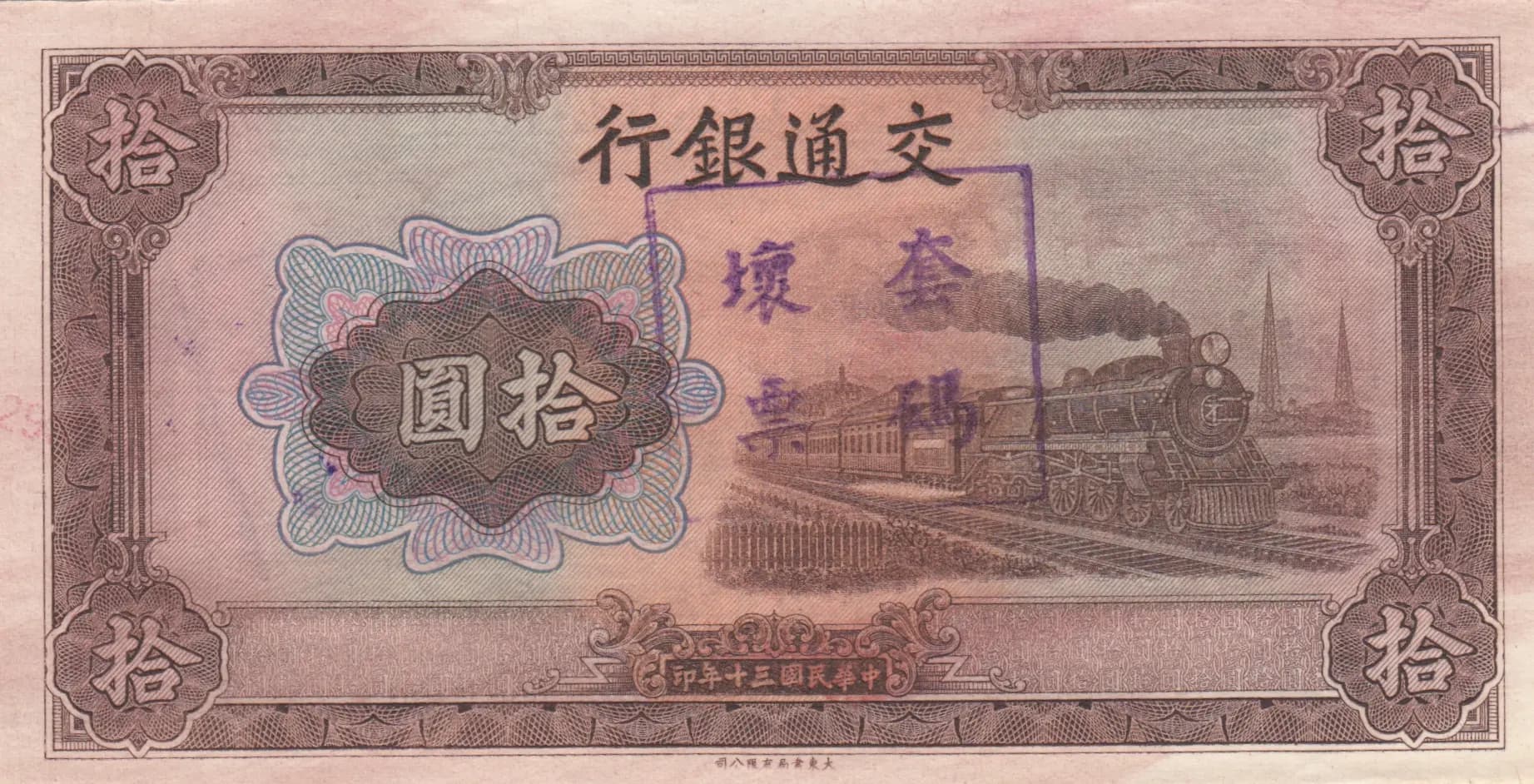
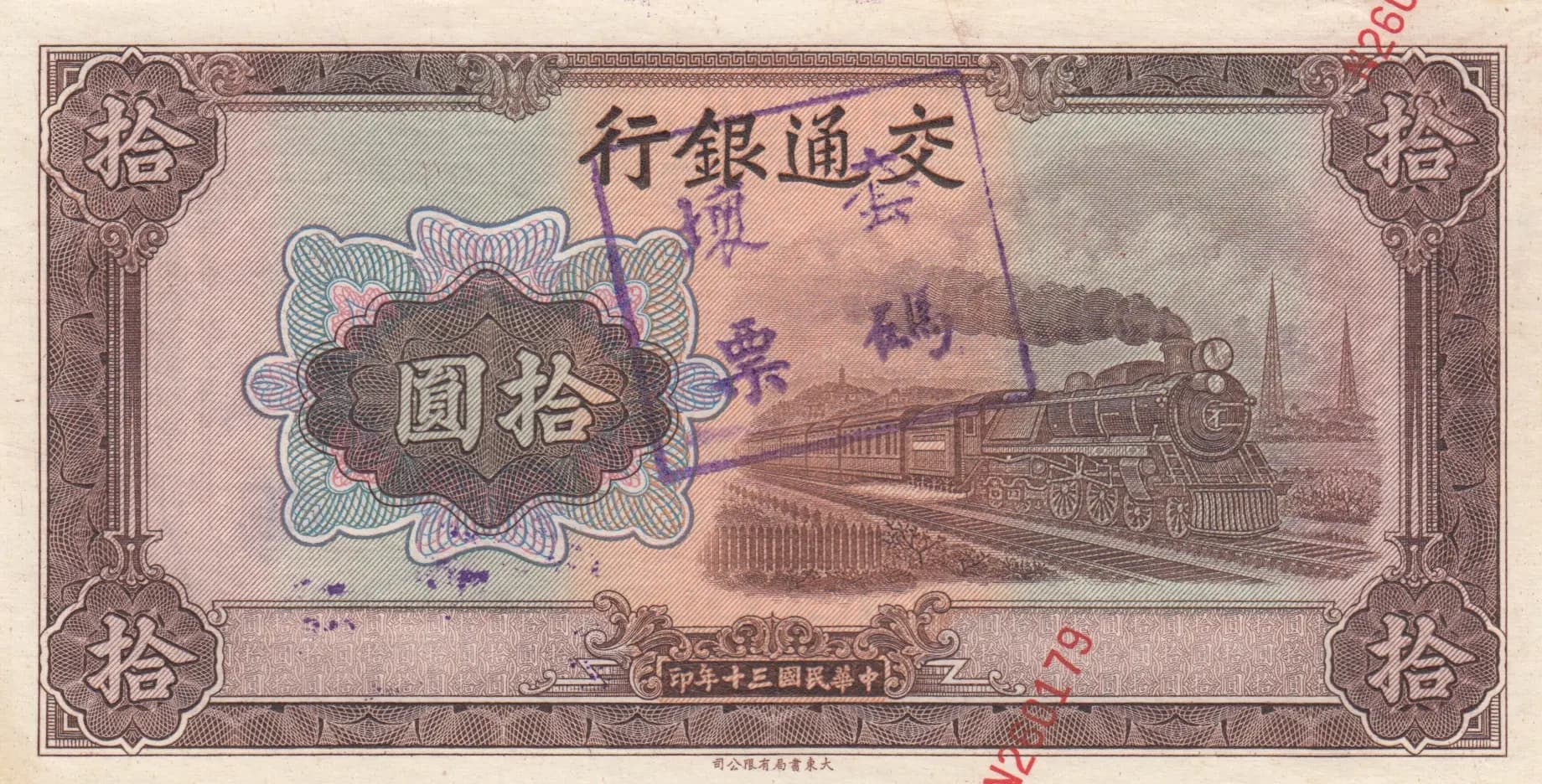
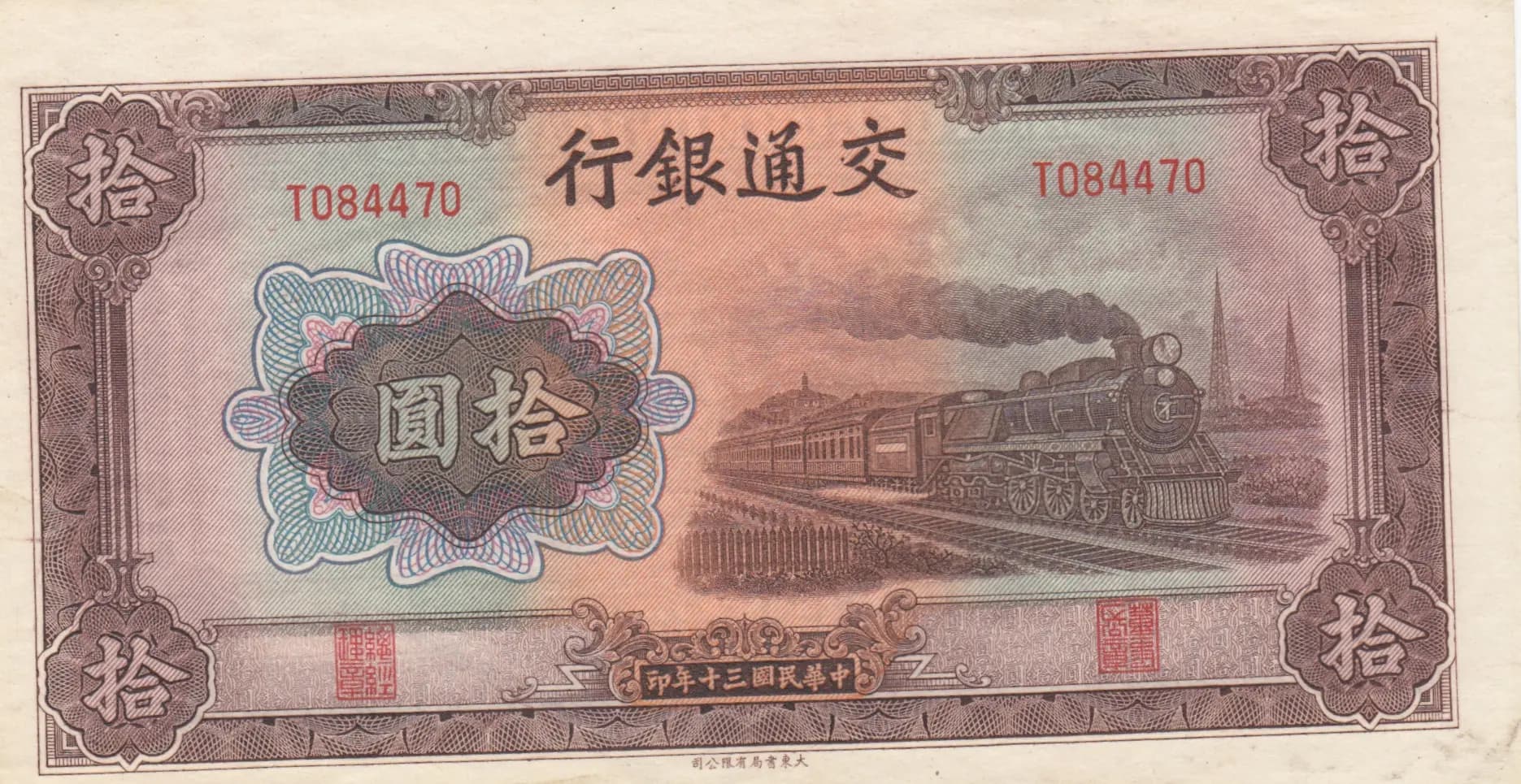
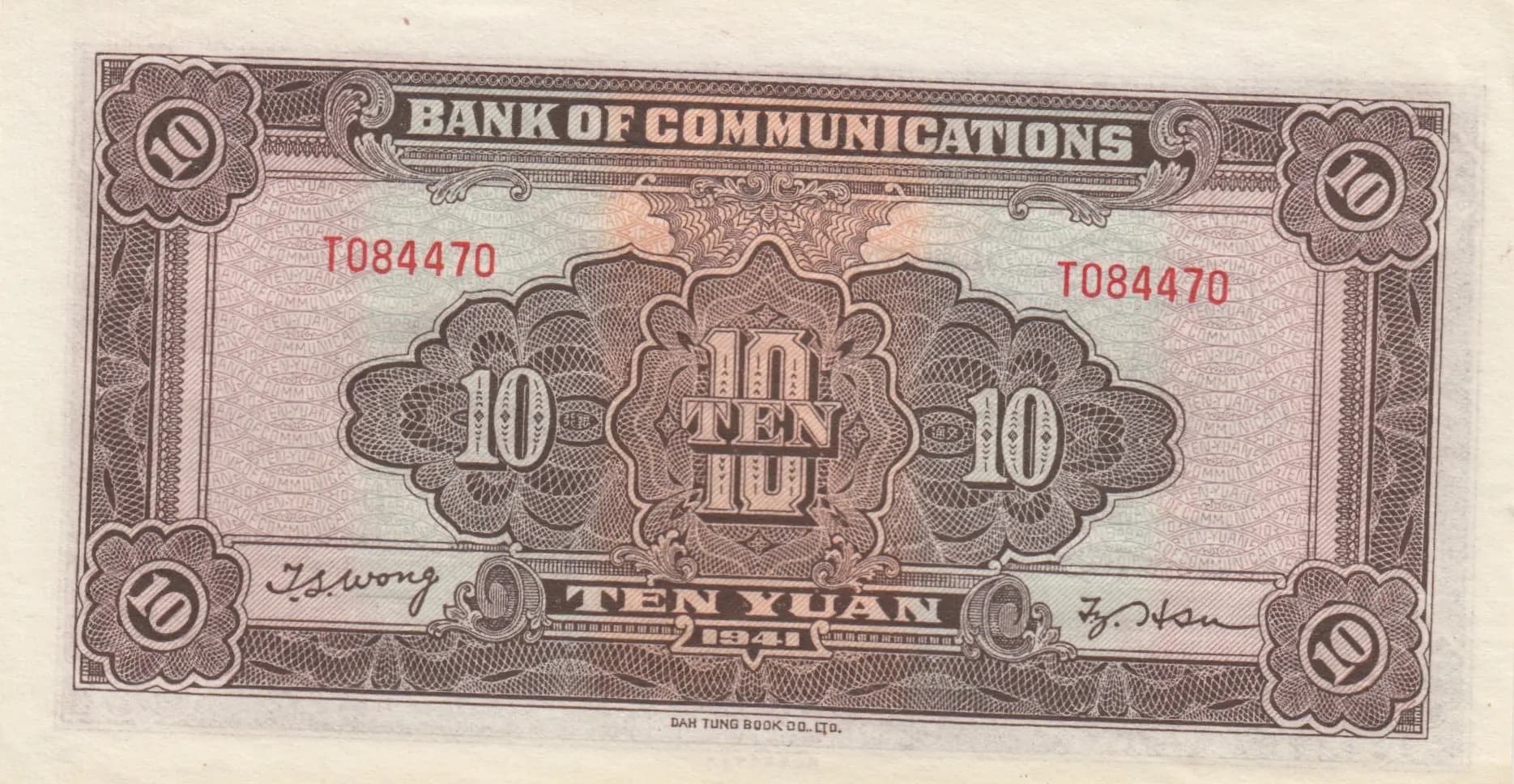
A well-preserved example of the Bank of Communications 10 Yuan from 1941, presenting in Uncirculated condition with light age-related toning consistent with an 82-year-old banknote. The note showcases exceptional engraving detail throughout, featuring a striking locomotive vignette on the obverse and ornate rosette designs on the reverse, representing the modernization aspirations of Republican-era China. The crisp impression, clean margins, and absence of creasing or wear make this an attractive specimen for collectors of Chinese currency or transportation-themed notes.
Common. While this is an older Chinese note from the wartime period, the eBay sales data demonstrates consistent market availability with UNC examples selling regularly between $8.75 and $54.60 over the past decade, with a median transaction price around $20-25. The 2026 recent sale at $34.59 and the stable pricing across multiple years indicate adequate supply in the market. This Pick number (P-159a) is a regular issue from a major bank with substantial print runs, not a recalled or exceptionally limited variety.
Issued during a pivotal moment in Chinese history when the Republic of China faced Japanese invasion (1937-1945), the Bank of Communications note reflects the nation's ambitions for modernization and industrial development, symbolized by the prominent steam locomotive imagery. The bilingual design—combining Chinese characters with English inscriptions—demonstrates the international commercial orientation of this era's banking institutions. The presence of signatures from T. Soong (Finance Minister) and H.S. Wong underscores the note's official governmental backing during the wartime period.
The obverse features a classical bilingual design with ornamental Chinese corner rosettes and Greek key borders framing the composition. The central vignette depicts a steam locomotive hauling multiple passenger cars through a landscape, symbolizing modern transportation and industrial progress. An elaborate nested rosette cartouche containing two Chinese characters anchors the left side. The reverse employs a strictly ornamental design with circular rosettes bearing the numeral '10' positioned in each corner, surrounding a central elaborate shield-form cartouche displaying 'TEN YUAN 1941' in English. The entire surface is rendered in fine line engraving with intricate cross-hatching and decorative flourishes typical of high-security banknote production.
Front side: '交通银行' (Bank of Communications), '拾' (Ten/denomination marker), '国十民共和' (Republic of China). Back side: 'BANK OF COMMUNICATIONS' (English translation of issuer), 'TEN' and 'YUAN' (denomination in English), '1941' (issue year), 'DAH TUNG BOOK CO., LTD.' (printer), with signatures of 'T. Soong' (Finance Minister) and 'H.S. Wong' (likely bank official). Serial number 'T084470' appears in red on both sides.
Intaglio/engraved printing by Dah Tung Book Co., Ltd. (identified on reverse as printer), evidenced by the fine line work, intricate rosette patterns, complex border designs, and precision detail throughout. The multiple layers of decorative line work and security-oriented engraving complexity are characteristic of professional banknote security printers of the 1940s era.
This specimen appears to be Pick-159a based on catalog data provided. The PMG Population Report indicates three catalogued variants exist (P-159f, P-159g, and P-159s), with variants f and g identified as produced by DTBC (Dah Tung Book Co., Ltd.), which matches this note's printer identification on the reverse. The serial number T084470 and the specific signature combination of T. Soong and H.S. Wong are consistent with 1941 Bank of Communications 10 Yuan emissions. No overprints or exceptional variety markers are apparent in the visual analysis.