10 yuan 1937
Market Prices
About This Note
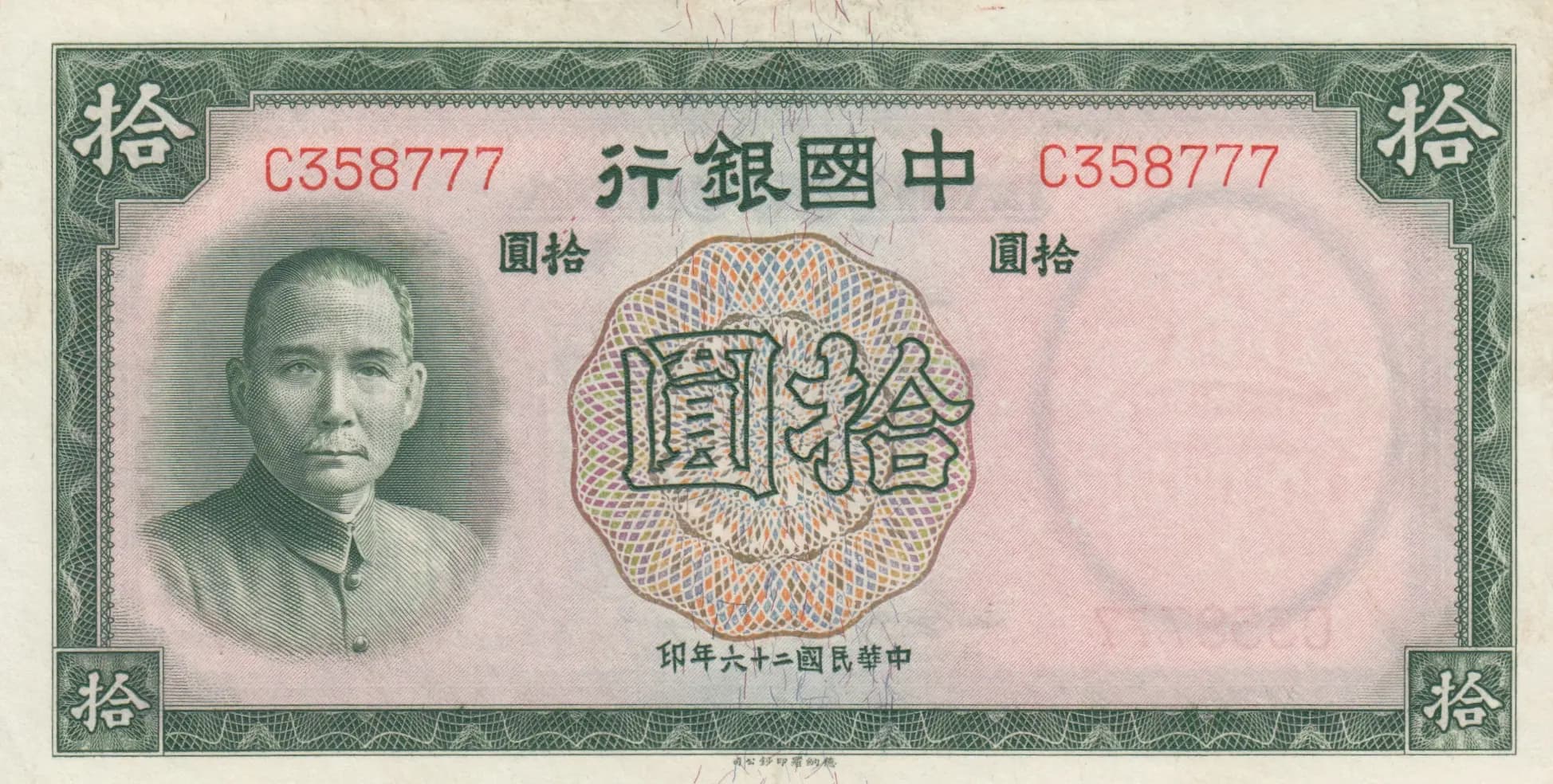
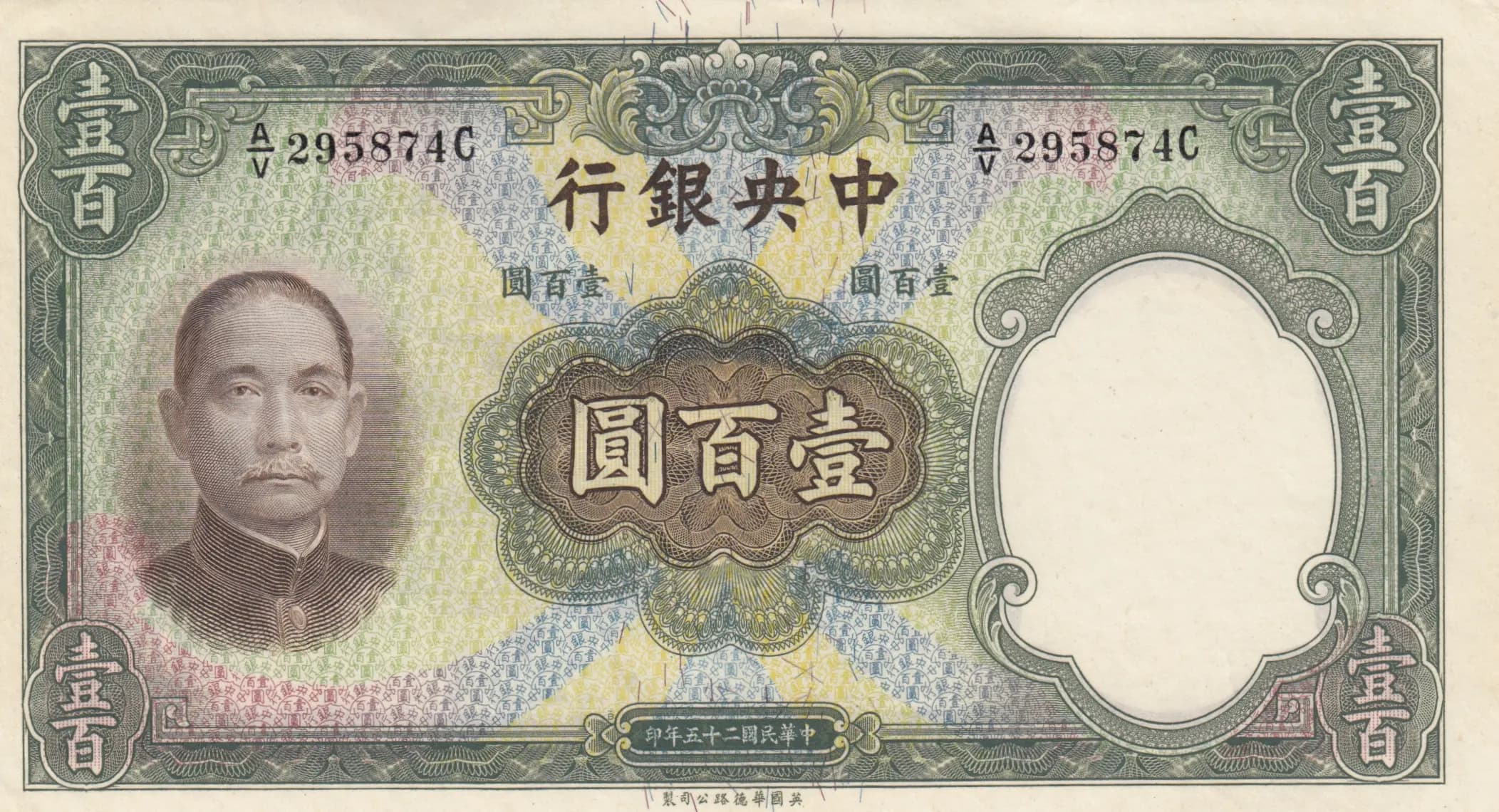
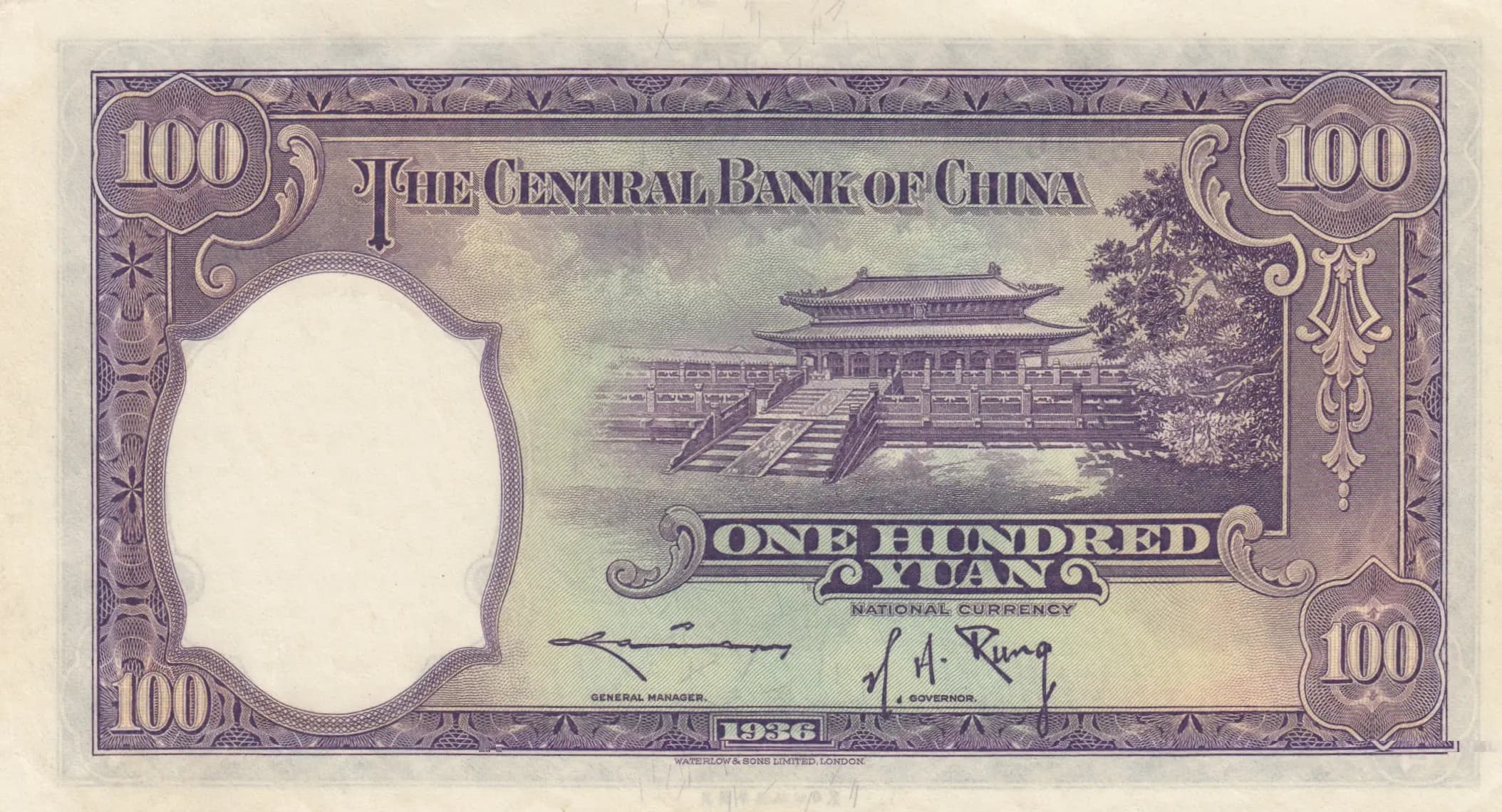
This is a Central Bank of China 10 Yuan note from 1937 (Pick P-223), though the visual analysis reveals some cataloging discrepancy as the inscriptions reference "One Hundred Yuan" denomination. The note exhibits period-appropriate design with a formal portrait on the obverse and traditional Chinese architecture on the reverse, printed by Waterlow & Sons Limited of London. The specimen shows significant age-related wear including foxing, discoloration, staining, and a prominent red/pink stamp marking, consistent with circulated to well-circulated condition despite the UNC grade designation in the catalog data.
Common. eBay market data shows UNC examples trading in the $17.88-$68.99 range, with catalog values of $175 for UNC (2016). The wide range of auction prices and consistent availability suggest regular circulation and trading. The 1937 10 Yuan from the Central Bank of China represents a standard regular issue from this period with sufficient print quantities to remain common in the modern collector market.
This note was issued during a critical period in Chinese history, produced by the Central Bank of China under the Republic of China government during the Second Sino-Japanese War era. The architectural imagery on the reverse depicts a significant Chinese cultural or governmental building, while the formal portrait on the obverse likely represents a notable financial official of the period. The use of London-based security printer Waterlow & Sons Limited reflects the international financial relationships and Western printing standards adopted by the Chinese central banking authority during this modernization period.
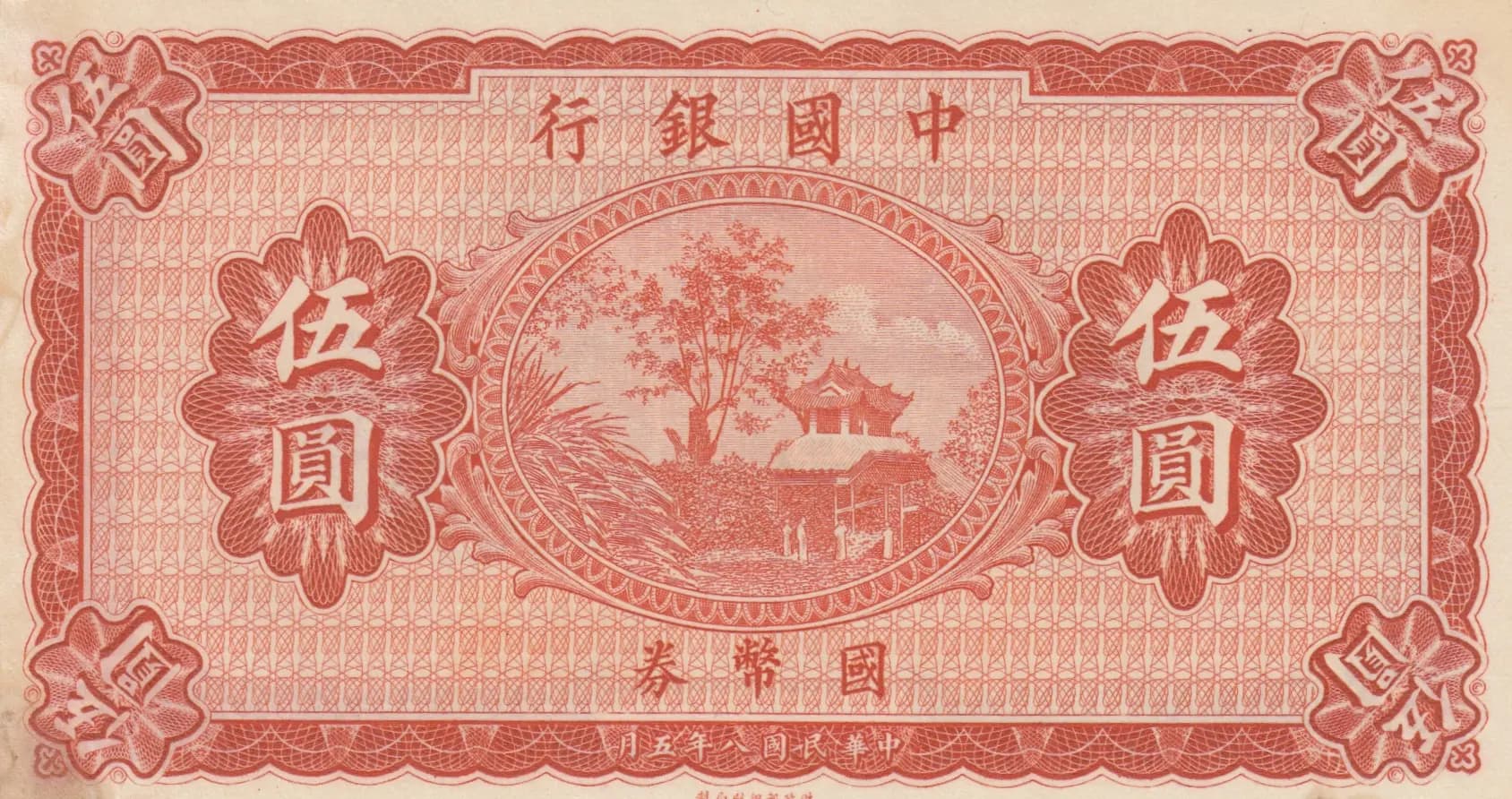
The obverse features a three-quarter facing portrait of a middle-aged Asian man wearing formal attire with high collar, positioned on the left side of the note, characteristic of early 20th-century Central Bank of China currency design. The portrait is surrounded by ornate decorative scrollwork, cloud-like motifs at top center, and circular emblems in corners containing Chinese characters. An empty oval frame occupies the right side. The reverse depicts a monumental traditional Chinese building with multi-tiered roofing, central stairs, ornamental railings, and surrounding landscaping with vegetation, rendered in detailed engraving. The color palette progresses from the green, gold, brown, and multicolored obverse to the purple-mauve architectural reverse. Security features include intricate cross-hatching, fine line engraving patterns, and decorative borders throughout.
FRONT SIDE: '中央銀行' (Central Bank), '壹百圓' (One Hundred Yuan), '圓百壹' (One Hundred Yuan - vertical orientation), '295874C' (Serial Number), '中民共和國' (Chinese Republic). BACK SIDE: 'THE CENTRAL BANK OF CHINA' (English), 'ONE HUNDRED YUAN' (English denomination), 'NATIONAL CURRENCY' (English), '100' (Numeric denomination), '1936' (Year printed), 'GENERAL MANAGER' (Title), 'GOVERNOR' (Title), 'H. Kung' (Signature), 'WATERLOW & SONS LIMITED, LONDON' (Printer attribution).
Steel-plate intaglio engraving, the standard security printing method for banknotes of this era. Produced by Waterlow & Sons Limited, a renowned London-based security printer specializing in currency production for international clients. The fine line work, cross-hatching detail, and layered color application visible in the visual analysis are characteristic of high-security intaglio currency production.
PMG has cataloged two variants for this Pick number (P-223a and P-223b), both attributed to printer CHB. The visual analysis shows 'H. Kung' signature and Waterlow & Sons Limited printer attribution with date 1936 on the reverse. The serial number visible is '295874C'. The note exhibits characteristics consistent with the main issue type, though without access to high-resolution security features and comparison specimens, definitive variety attribution (a vs. b) cannot be conclusively determined from the provided images alone.