10 yuan 1941
“numbers”
Market Prices
About This Note
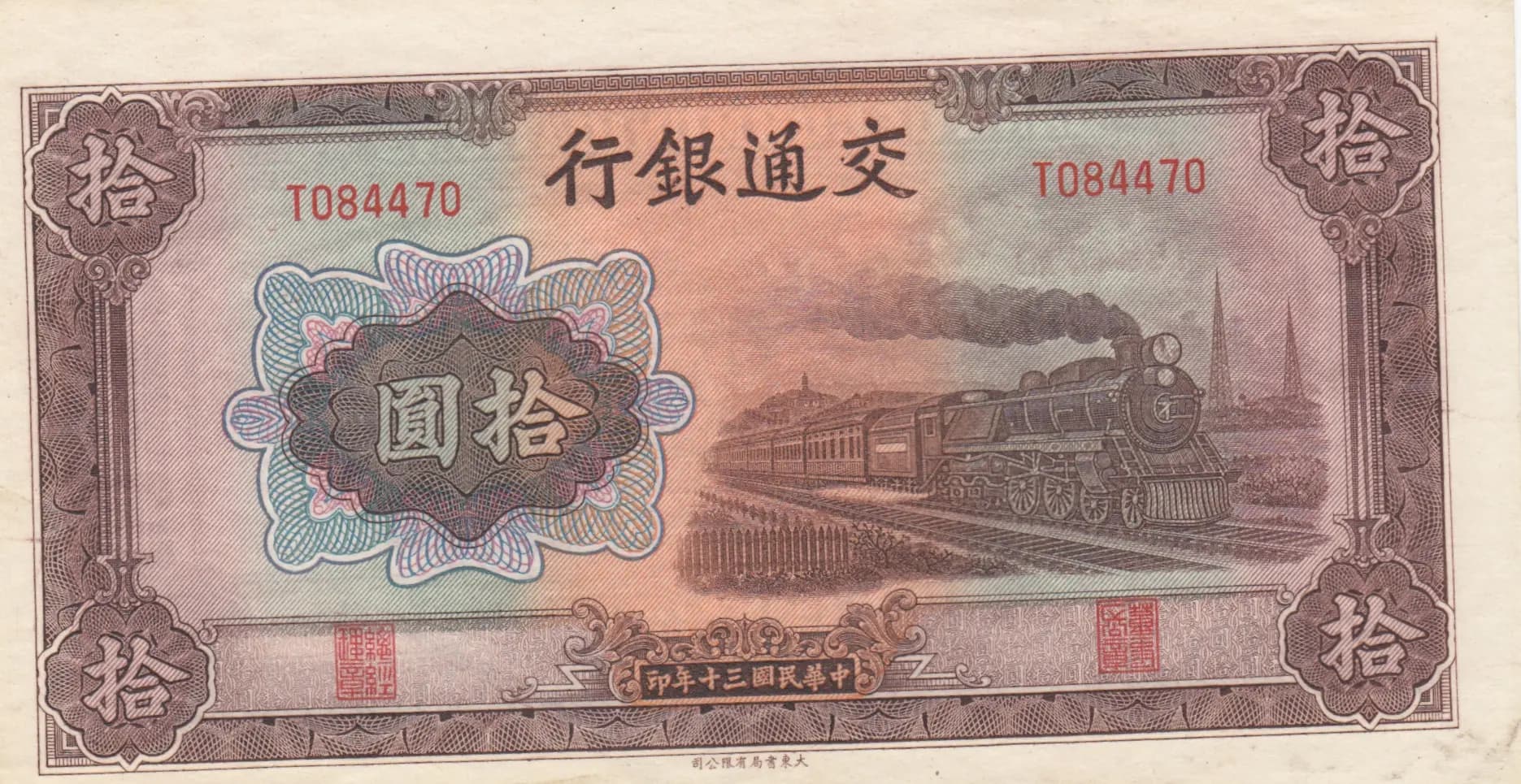
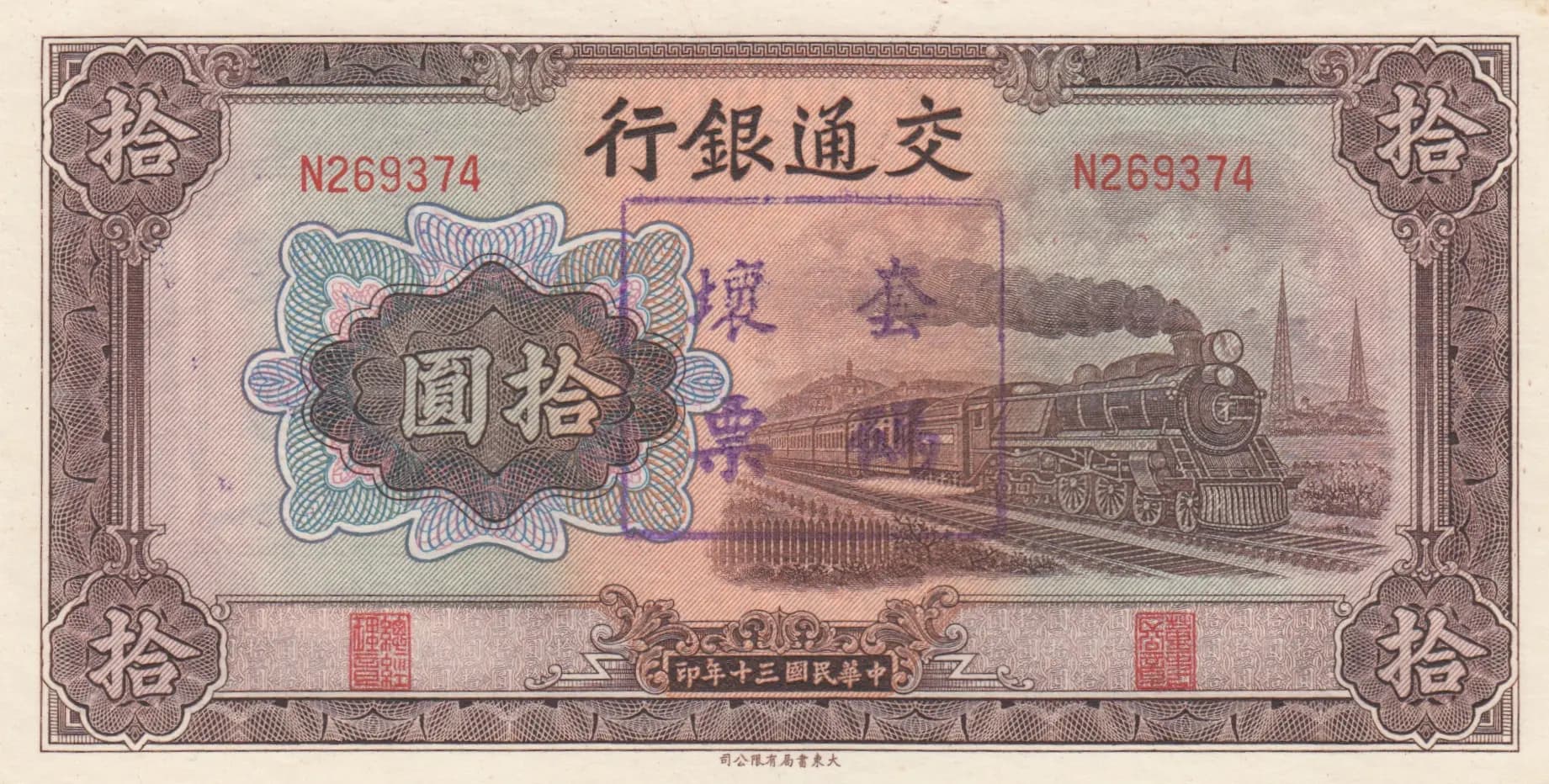
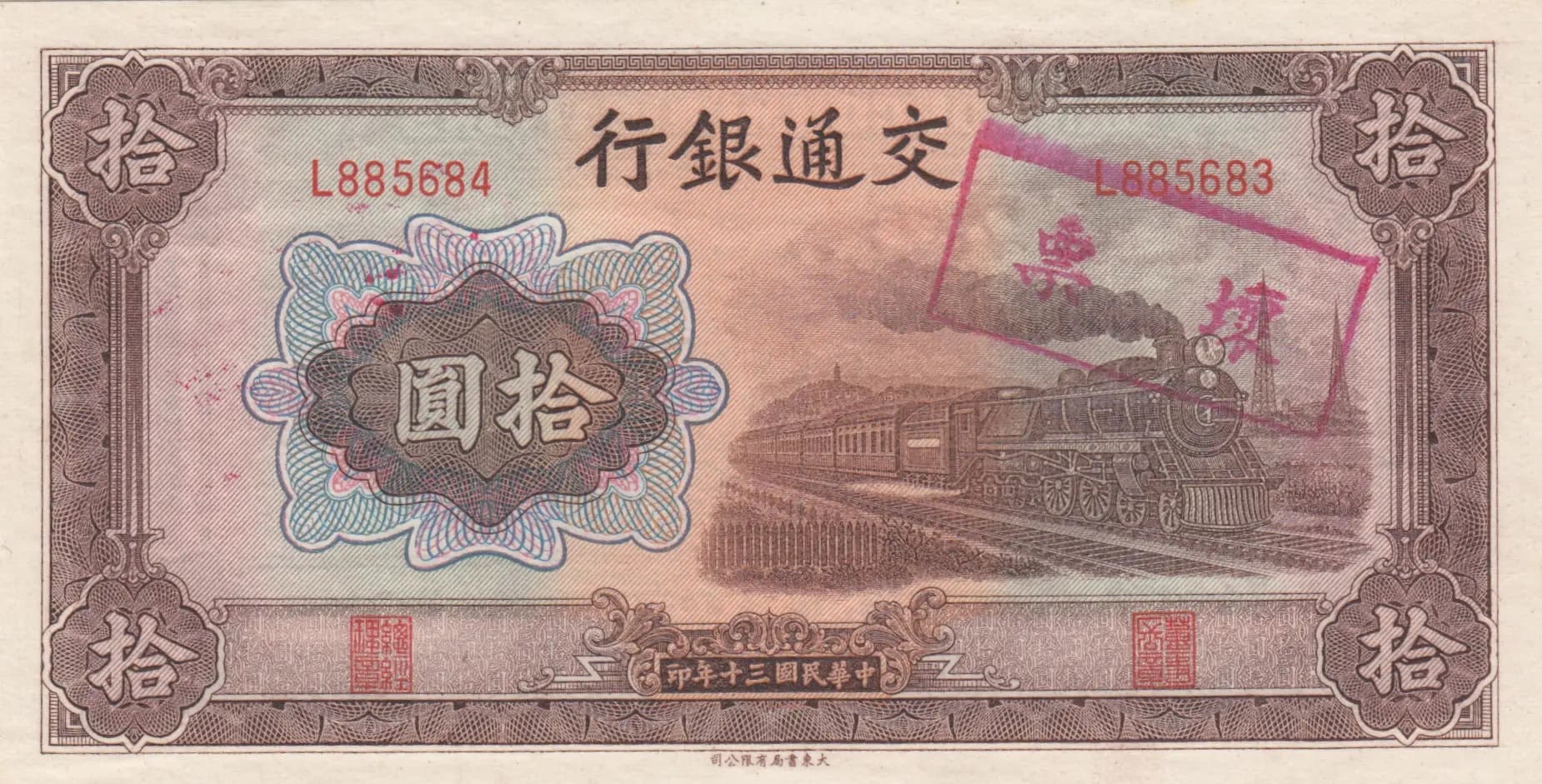
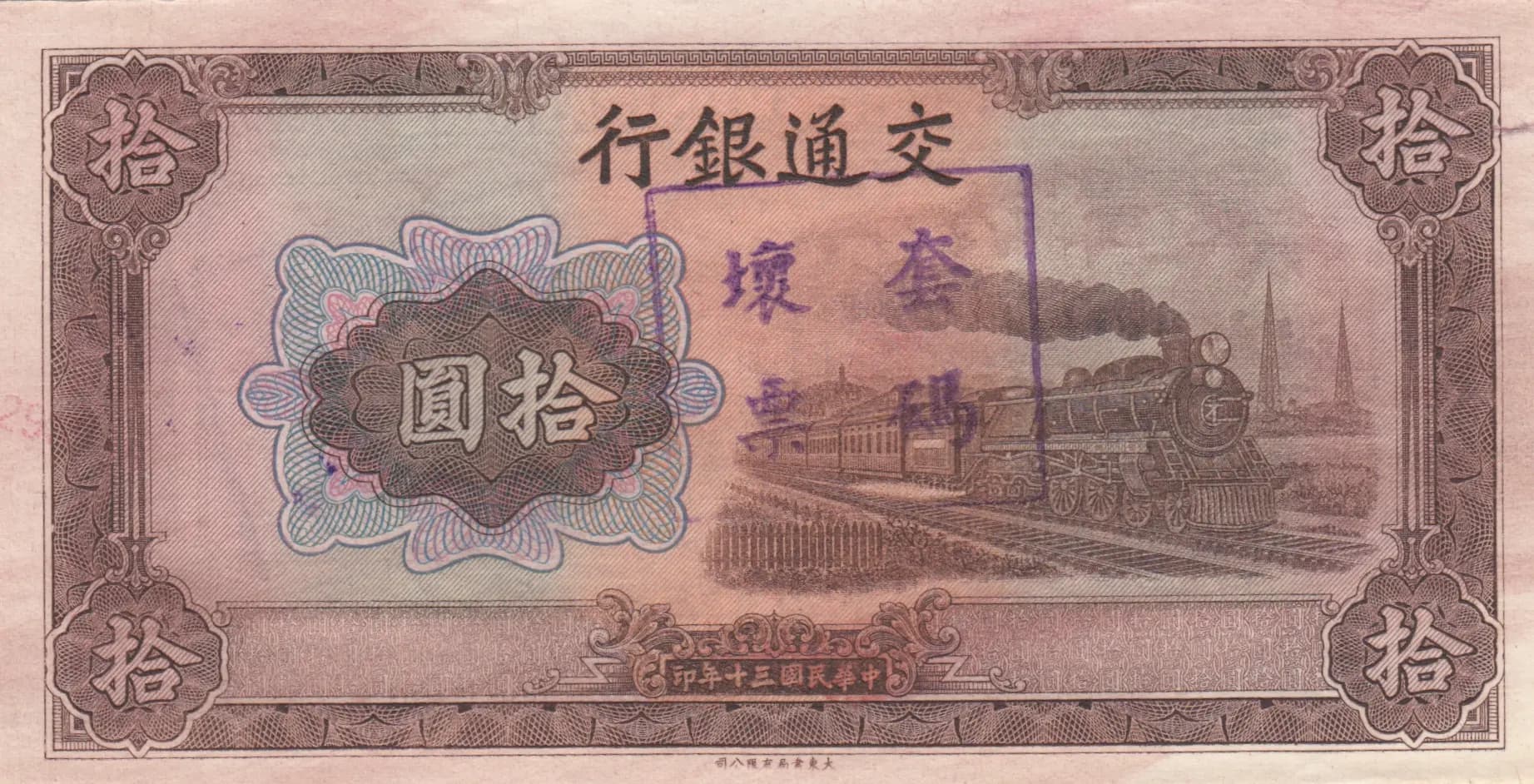
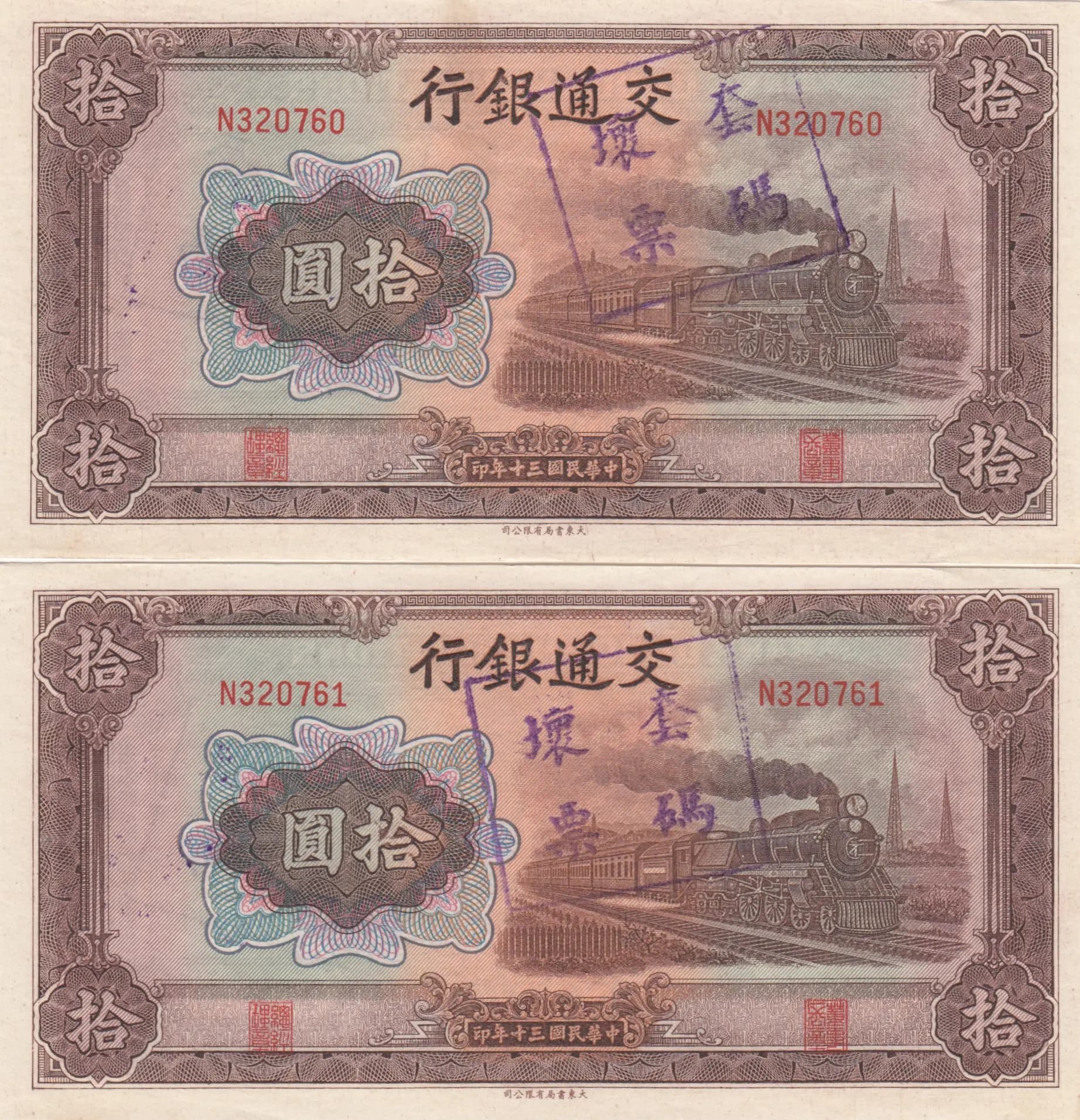
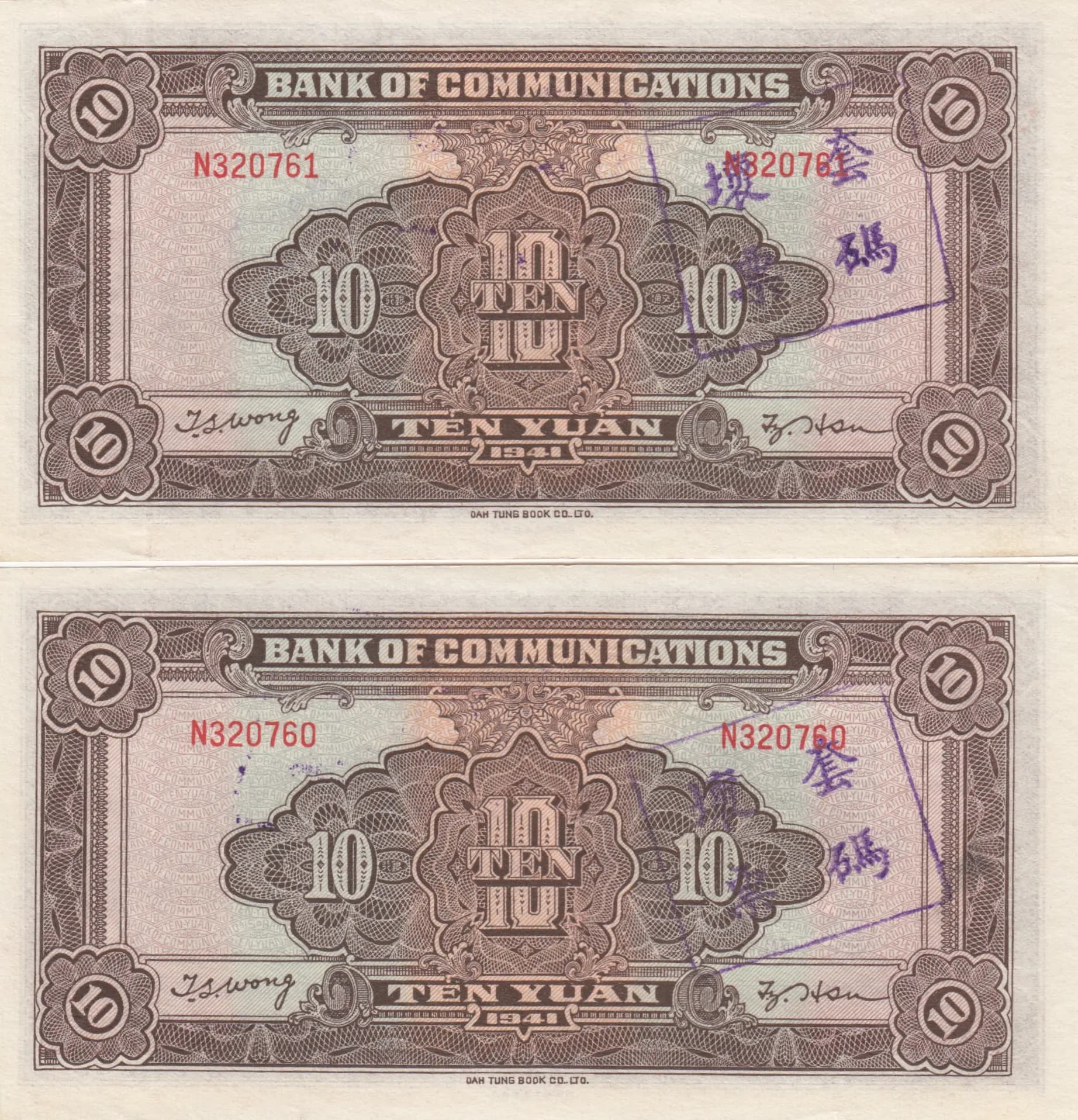
A pair of Bank of Communications 10 yuan notes from 1941 (Pick P-159h) displaying the iconic steam locomotive design that symbolized China's modernization during the Republic period. Both notes are presented in UNC condition with distinctive purple official stamps and seals across their faces, indicating institutional handling and validation. The serial numbers N320760 and N320761 suggest consecutive issue from the same printing batch, making this an interesting pairing for collectors of Chinese Republican-era currency.
Common. Bank of Communications 10 yuan notes from 1941 (P-159h) were issued in substantial quantities during this period and remain relatively available in the collector market today. The presence of two consecutive serial numbers in UNC condition suggests adequate surviving examples from the original printing. While Chinese Republican-era currency is historically significant, this particular denomination and issuer combination does not fall into the scarce or rare category based on market availability and print run estimates.
The Bank of Communications was a major Chinese financial institution during the Republic of China period, and this 1941 note reflects the era's emphasis on industrial progress and national development. The prominent steam locomotive imagery celebrates China's railroad infrastructure expansion, a symbol of modernization that dominated Chinese banknote design during the 1930s-1940s. The purple official stamps visible on both notes are characteristic of bank validation marks applied during the period, documenting their institutional processing and circulation within China's banking system.
The front features a dramatic steam locomotive traveling rightward on railroad tracks with mountains rendered in the background, symbolizing China's industrial progress and transportation modernization. An ornate rosette design containing the denomination characters (圓拾 - ten yuan) is positioned on the left side in traditional Chinese style. The reverse presents a larger, more elaborate central rosette in guilloche pattern containing the denomination in both numerical (10) and English (TEN) formats, with 'BANK OF COMMUNICATIONS' prominently displayed at the top. Decorative corner flourishes with geometric patterns and Asian motifs frame both sides, consistent with early 20th-century Chinese banknote aesthetics. The color palette of brown, tan, purple, and gray creates the characteristic appearance of Bank of Communications notes from this period.
FRONT: 交通銀行 (Bank of Communications) | 圓拾 (Ten yuan) | 中華民國十年 (Year 10 of the Republic of China, corresponding to 1921 in the ROC calendar) | Serial numbers: N320760 and N320761. BACK: BANK OF COMMUNICATIONS | TEN | 10 | YUAN | DAH TUNG BOOK CO. LTD. (printer attribution) | 1941 (Western calendar year of issue) | Additional signature lines present at bottom of reverse.
The notes employ intaglio (engraved) printing, evidenced by the fine line engraving visible throughout the borders, the precise rosette guilloche patterns, and the detailed locomotive illustration. The Dah Tung Book Company Limited served as the printer, as credited on the reverse. Security features include the intricate rosette designs created through fine-line engraving and the ornate border work. The purple stamps and seals are overprinted additions applied post-production for official validation purposes.
This lot represents consecutive serial numbers (N320760 and N320761) from what appears to be the same printing batch, which is notable for collectors seeking sequential pairs. The purple official stamps and seal marks visible on both notes are consistent with standard institutional handling of the 1941 issue. No significant varieties (such as signature variants or overprint differences) are apparent from the visual analysis, though the presence of intact signature lines on the reverse should be verified for completeness of the design. The 1941 Western calendar date on the reverse is standard for this Pick number's issue.