1 yuan 1960
Market Prices
67 salesAbout This Note
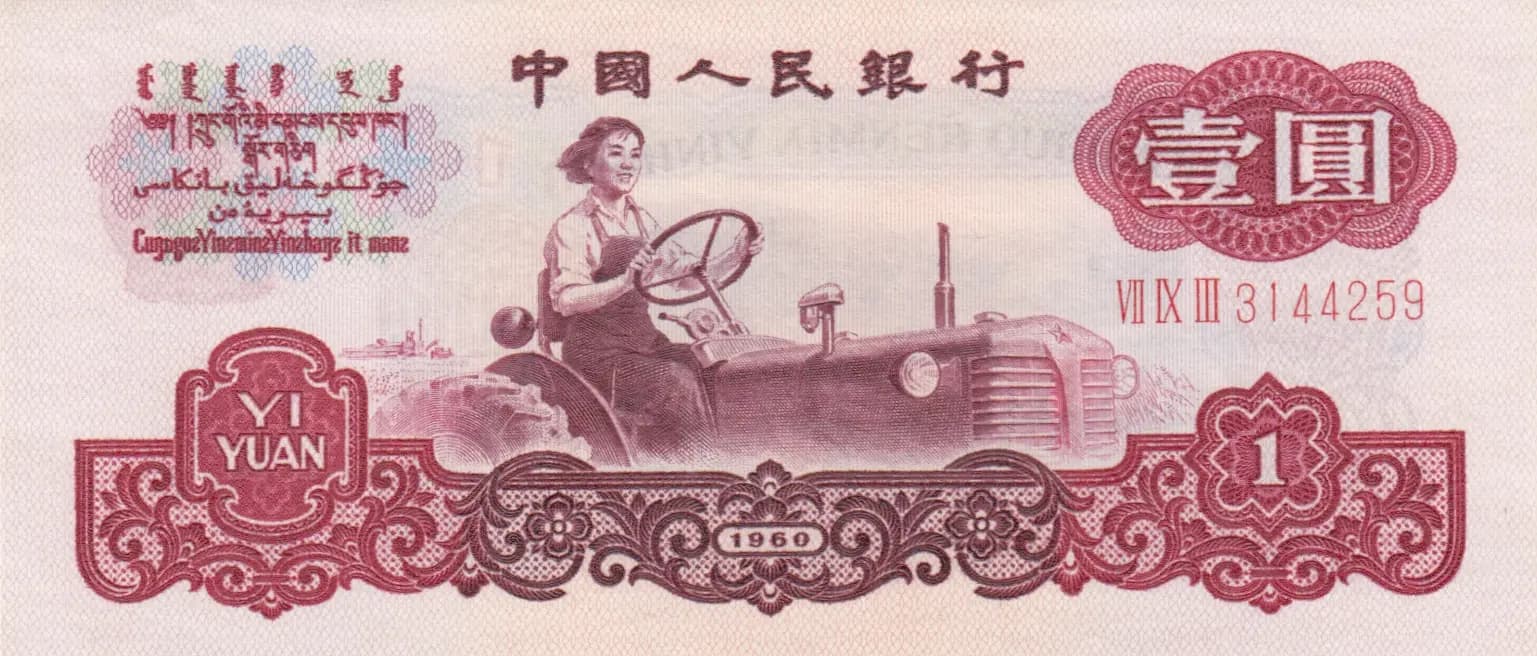
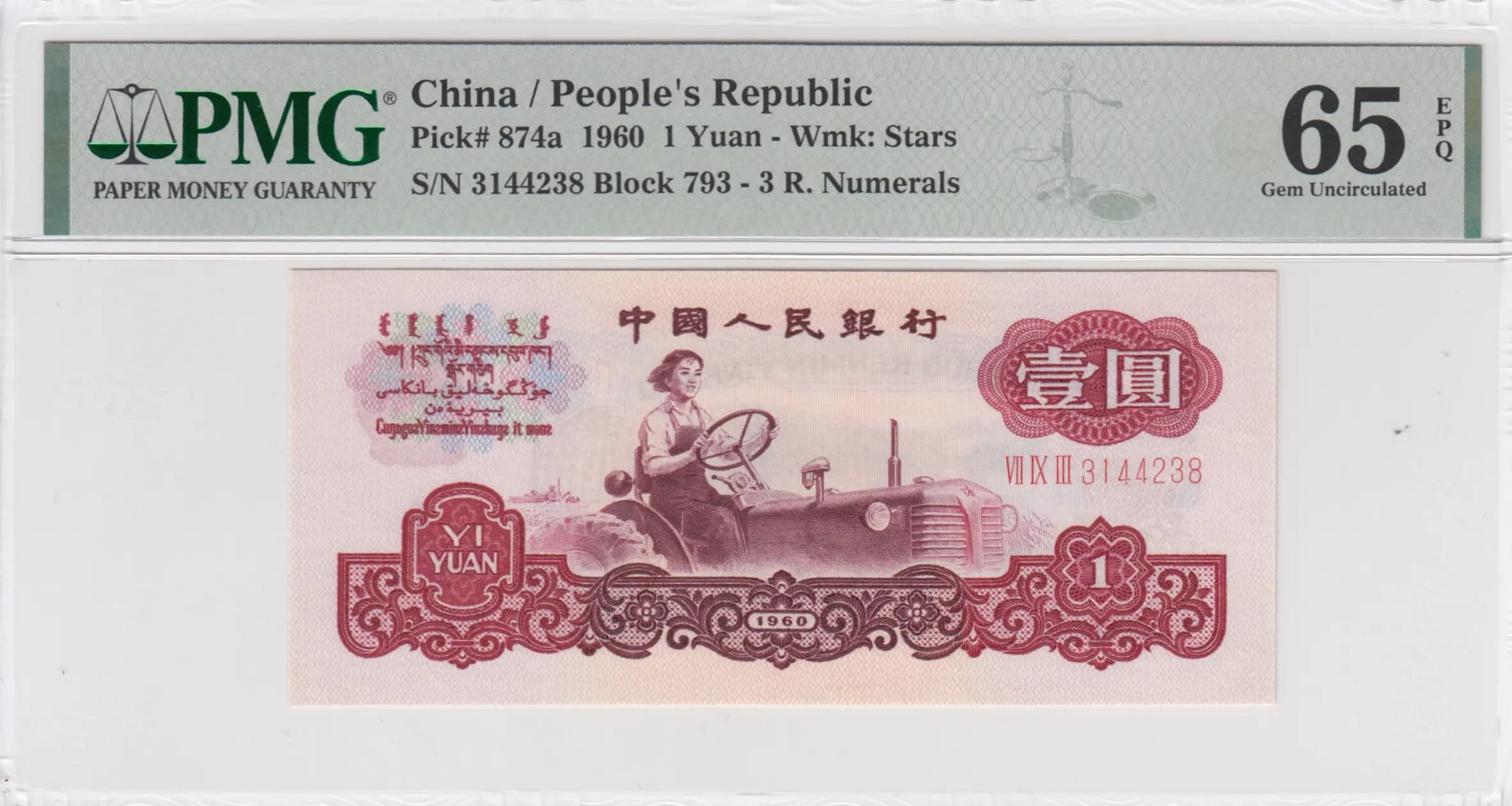
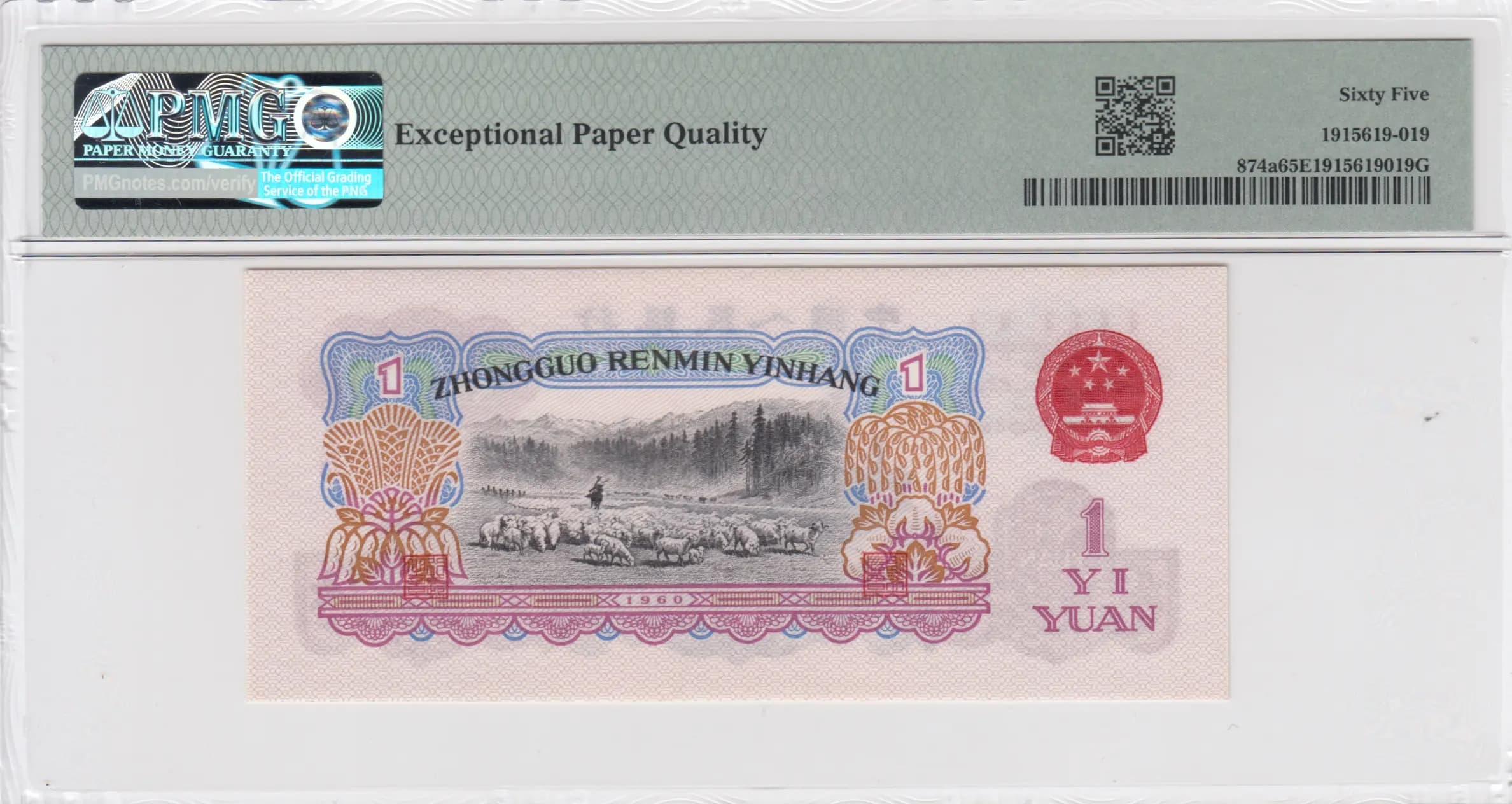
This is a PMG 65 EPQ example of the 1960 Chinese 1 Yuan note (Pick 874a), representing a key agricultural-themed design from the People's Bank of China. The obverse features a woman operating a tractor in red-brown and red-violet colors, while the reverse depicts a pastoral landscape with shepherds and sheep grazing before mountains, demonstrating the era's emphasis on mechanization and collective agricultural development. In Gem Uncirculated condition with exceptional paper quality, this note exhibits pristine presentation with no circulation wear, making it an attractive example for collectors of early PRC currency.
Common. While this is a classic early PRC note with collector appeal, the eBay market data demonstrates consistent high-volume availability across multiple condition grades over more than a decade of sales records. PMG 65 examples regularly appear in auctions, with prices generally ranging from $15-$35 depending on exact condition and bidder activity. The substantial number of sales records at various grades (PMG 65-69, UNC, etc.) and the relatively stable pricing indicate this is a well-circulated date in collector channels with no rarity constraints. Print runs for early PRC currency were substantial, and this denomination/date combination has not been subject to widespread recall or special scarcity factors.
Issued in 1960 during the Great Leap Forward period, this banknote reflects the People's Republic of China's ideological focus on agricultural and industrial modernization. The imagery of a woman operating a tractor and the pastoral sheep-herding scene on the reverse symbolized the CCP's commitment to transforming China's agrarian economy through mechanization and collectivization. This denomination and design series represents an important phase in PRC monetary history, issued just as China faced severe economic challenges that would characterize the early 1960s.
The obverse portrays a female agricultural worker in work clothes operating a Red Army-era tractor, depicted in profile against a red-brown and red-violet multicolor background with pink and beige undertones. Ornate decorative wreaths and scrollwork frame the design on left and right borders, with Chinese national emblem elements in the decorative corners. The reverse depicts a pastoral landscape scene featuring shepherds tending flocks of sheep in a mountainous region with forested peaks and natural scenery, employing a distinctly different color palette of blues, oranges, golds, and pinks. Both sides feature ornate circular denomination panels and fine-line engraving throughout, with the red national emblem seal positioned in the upper right of the reverse. The design exemplifies Socialist Realist artistic conventions common to early PRC currency, emphasizing labor and agricultural productivity.
Front: '中國人民銀行' (People's Bank of China) at top center; '壹圓' (One Yuan) in ornate denomination panel; 'YI YUAN' in English romanization; '1960' indicating the issue year; serial number format shown as 'VII IX III 3144238'. Back: 'ZHONGGUO RENMIN YINHANG' in Pinyin romanization (People's Bank of China); '1' and 'YI YUAN' in denomination panels; '1960' indicating issue year. All inscriptions are bilingual, reflecting PRC practice of including both Chinese characters and Latin-script romanizations.
This note was produced using intaglio (engraved) printing, evidenced by the fine detailed line work, precise registration of multiple colors, complex decorative border patterns, and the high-quality paper stock noted by PMG's 'Exceptional Paper Quality' designation. The multicolor design with distinct color zones on both obverse and reverse is characteristic of security-printed currency using traditional intaglio methods. The printer for this series was the Chinese government printing facility, with production standards typical of early PRC banknotes manufactured under Soviet technical influence.
The Pick number 874a designation indicates this is a identified variety within the 1960 1 Yuan series. The visible serial number format (VII IX III 3144238) uses Roman numerals for the first portion followed by Arabic numerals, consistent with PRC practice of the period. The Smithsonian catalog reference number C284- noted in the reference data may indicate printer or production lot variations. No overprints or error characteristics are apparent in this PMG 65 EPQ example. Collectors should note that the S/M number designation may indicate subtle design variations within the 1960 printing, though the basic obverse (tractor) and reverse (pastoral) designs remained constant for this Pick number throughout its circulation period.