100 dollars 1991 specimen
Market Prices
2 salesAbout This Note
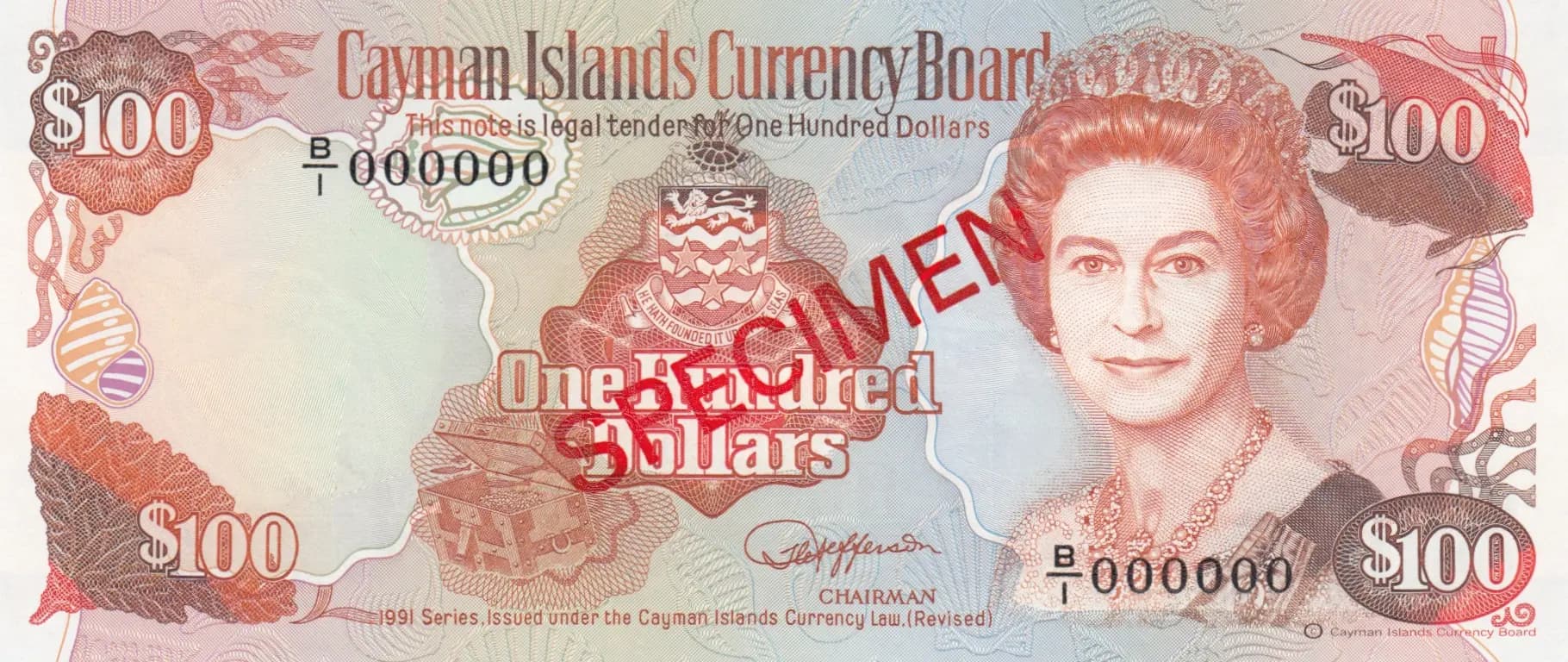
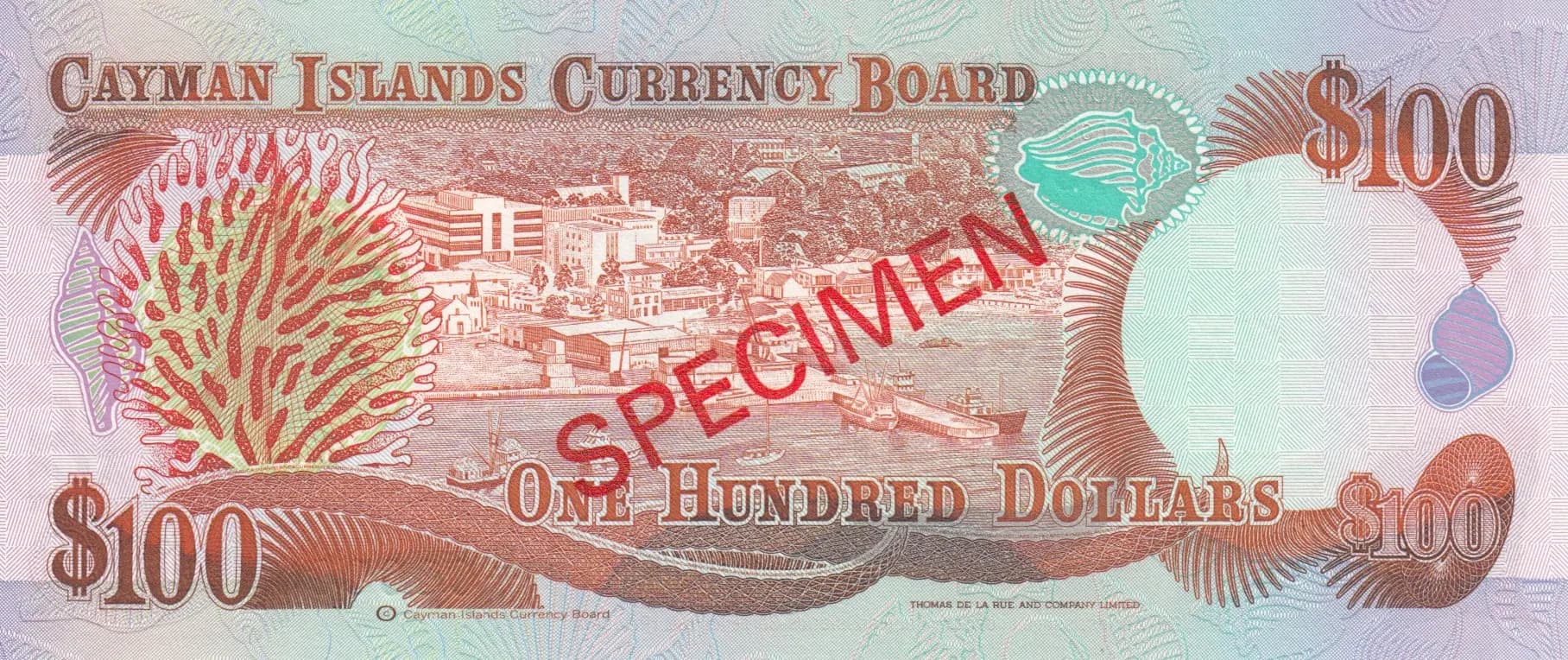
This is a 1991 Cayman Islands $100 specimen banknote (Pick P-15s) in pristine uncirculated condition, produced by Thomas de la Rue. The note features a portrait of Queen Elizabeth II on the obverse and a detailed engraved harbor view of George Town on the reverse, both rendered in the characteristic red, brown, cream, and teal color palette of this series. As a specimen note with the diagonal 'SPECIMEN' overprint, this piece represents an important reference example from the Cayman Islands Currency Board's 1991 series and is highly sought by collectors of Commonwealth currency and specimen notes.
Common. While specimen notes are generally less frequently encountered than regular circulation issues, the 1991 Cayman Islands $100 note remains relatively available in the collector market. The catalog value of $380 for UNC specimens and eBay transaction data showing sales in the $125–$221 range for circulated and graded examples indicate steady but not exceptional demand. No evidence of limited print runs, recalls, or short-lived issuance exists for this Pick number. Specimen notes from major security printers like Thomas de la Rue were typically produced in modest quantities for reference and archival purposes, but this particular denomination and series does not command premium scarcity premiums typical of rare notes.
Issued in 1991 by the Cayman Islands Currency Board under the revised Currency Law, this note reflects the Cayman Islands' status as a stable British Overseas Territory with its own currency authority. The obverse features Queen Elizabeth II in recognition of the islands' Commonwealth membership, while the reverse depicts George Town's iconic harbor—the economic and administrative heart of the Cayman Islands during this period of significant financial sector growth. The specimen designation indicates this was produced as a sample for bank officials, archival purposes, or promotional distribution rather than general circulation.
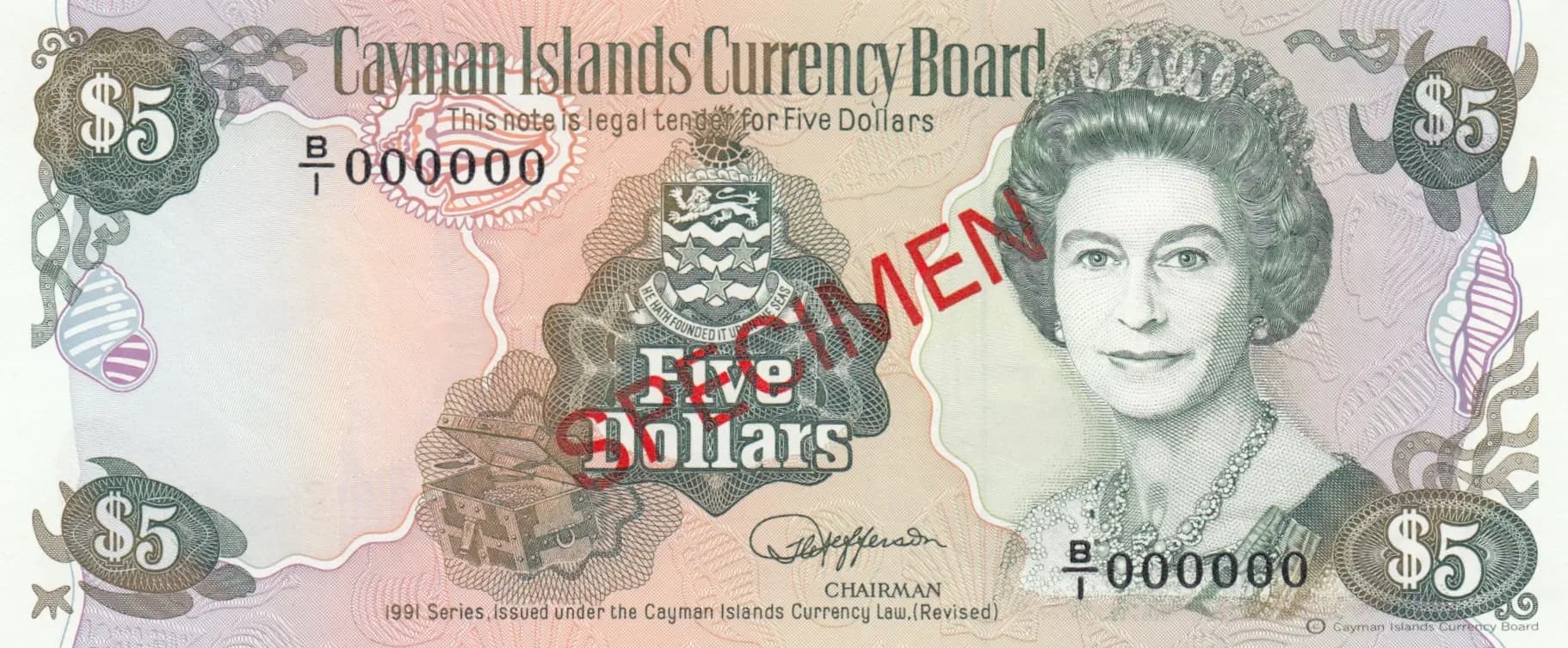
The obverse features a formal portrait of Queen Elizabeth II positioned on the right side of the note, reflecting her role as head of state for the Cayman Islands. The Cayman Islands coat of arms with its distinctive wavy shield design is prominently displayed at the center-upper portion of the note. Ornamental sea creature motifs (stylized serpent/seahorse designs) frame the left and right edges, adding security and aesthetic elements characteristic of Thomas de la Rue's design work. The reverse showcases a detailed landscape engraving of George Town's harbor, depicting colonial-era and administrative buildings, tropical vegetation including palm trees, and the waterfront area. A circular teal-colored emblem appears on the right side of the reverse, with ornamental coral/shell designs adorning the left border. The entire design incorporates sophisticated guilloche patterns and fine line engraving work throughout, with security features integrated into the ornamental framework.
FRONT: 'Cayman Islands Currency Board' (issuing authority); 'This note is legal tender for One Hundred Dollars' (legal tender declaration); '$100' and 'One Hundred Dollars' (denomination); 'SPECIMEN' (specimen overprint); 'B/I 000000' (serial number designation); 'CHAIRMAN' (signature line); '1991 Series, Issued under the Cayman Islands Currency Law, (Revised)' (issue authority and series designation). REVERSE: 'CAYMAN ISLANDS CURRENCY BOARD' (issuing authority); '$100' and 'ONE HUNDRED DOLLARS' (denomination); 'SPECIMEN' (specimen overprint); 'THOMAS DE LA RUE AND COMPANY LIMITED' (printer attribution); '© Cayman Islands Currency Board' (copyright notice).
Intaglio (recess) engraving produced by Thomas de la Rue and Company Limited, London. The visual analysis reveals intricate guilloche patterns, fine line engraving work, watermark areas, and complex architectural detail engraving characteristic of high-security banknote production. The multi-color printing visible in the dominant color palette (red, brown, cream, teal, purple, blue) indicates a sophisticated multi-plate intaglio process with careful color registration.
This is cataloged as Pick P-15s (specimen variant). The PMG population report indicates P-15 (regular issue) and P-15CS2 exist as variants for this base pick number. The visual analysis confirms this is a specimen note due to the prominent diagonal 'SPECIMEN' overprint and the standard serial number designation 'B/I 000000' characteristic of specimen printing. The serial number format and lack of personalized signatures (showing only 'CHAIRMAN' designation line) are consistent with specimen production standards. No date variants or printer variants are evident; Thomas de la Rue is consistently credited as the printer for this series.