500 riels 1958
About This Note
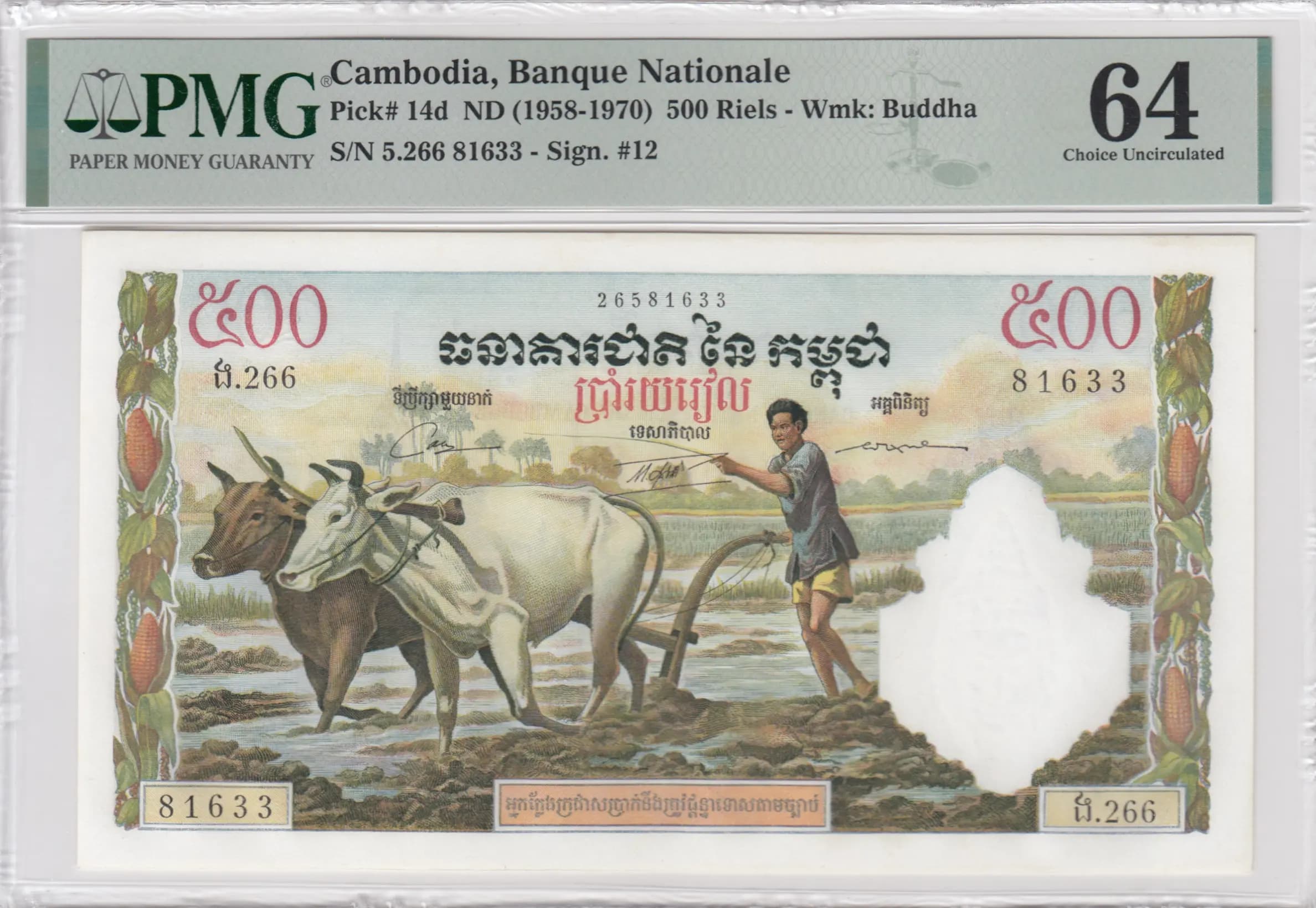
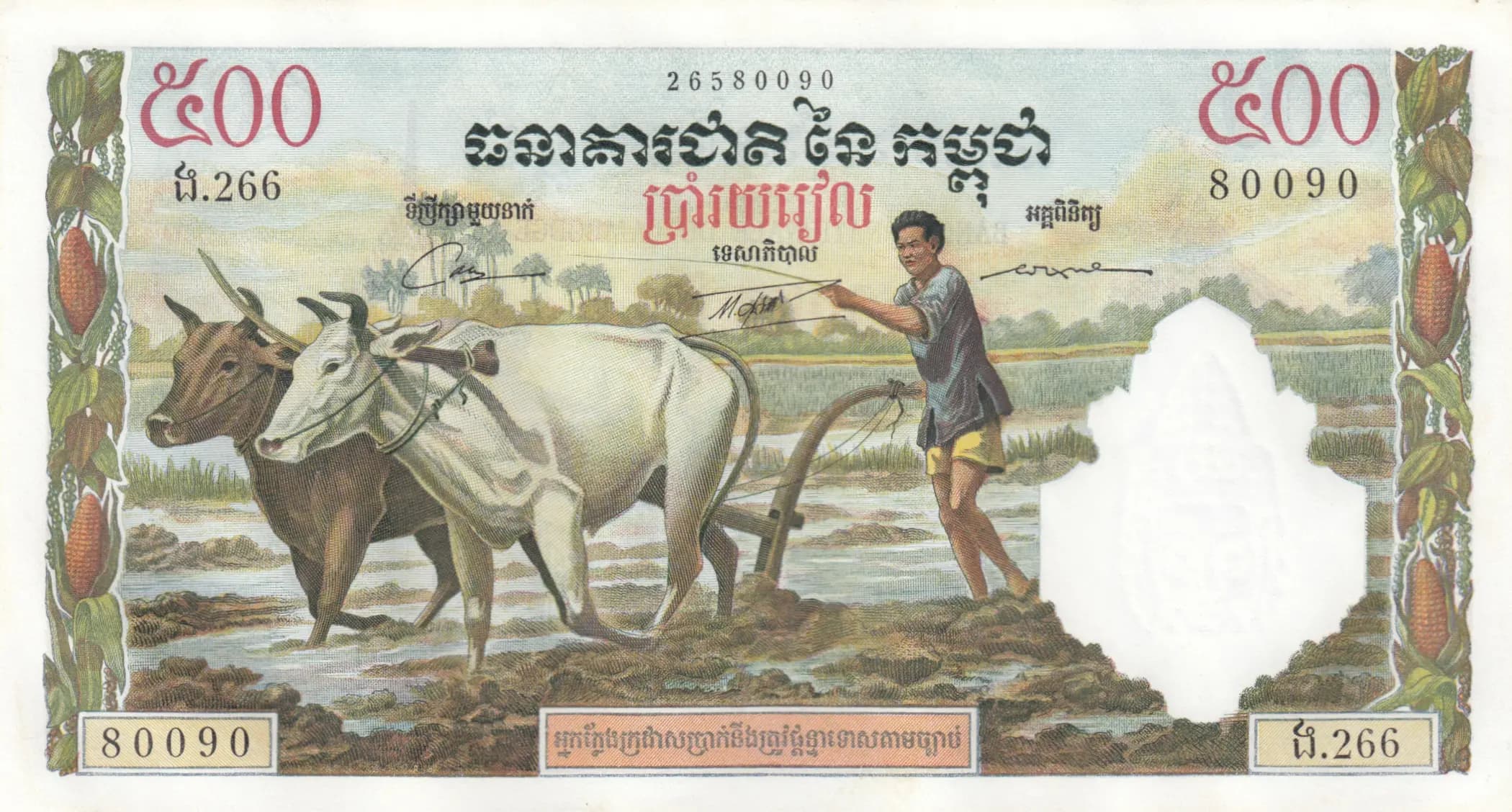
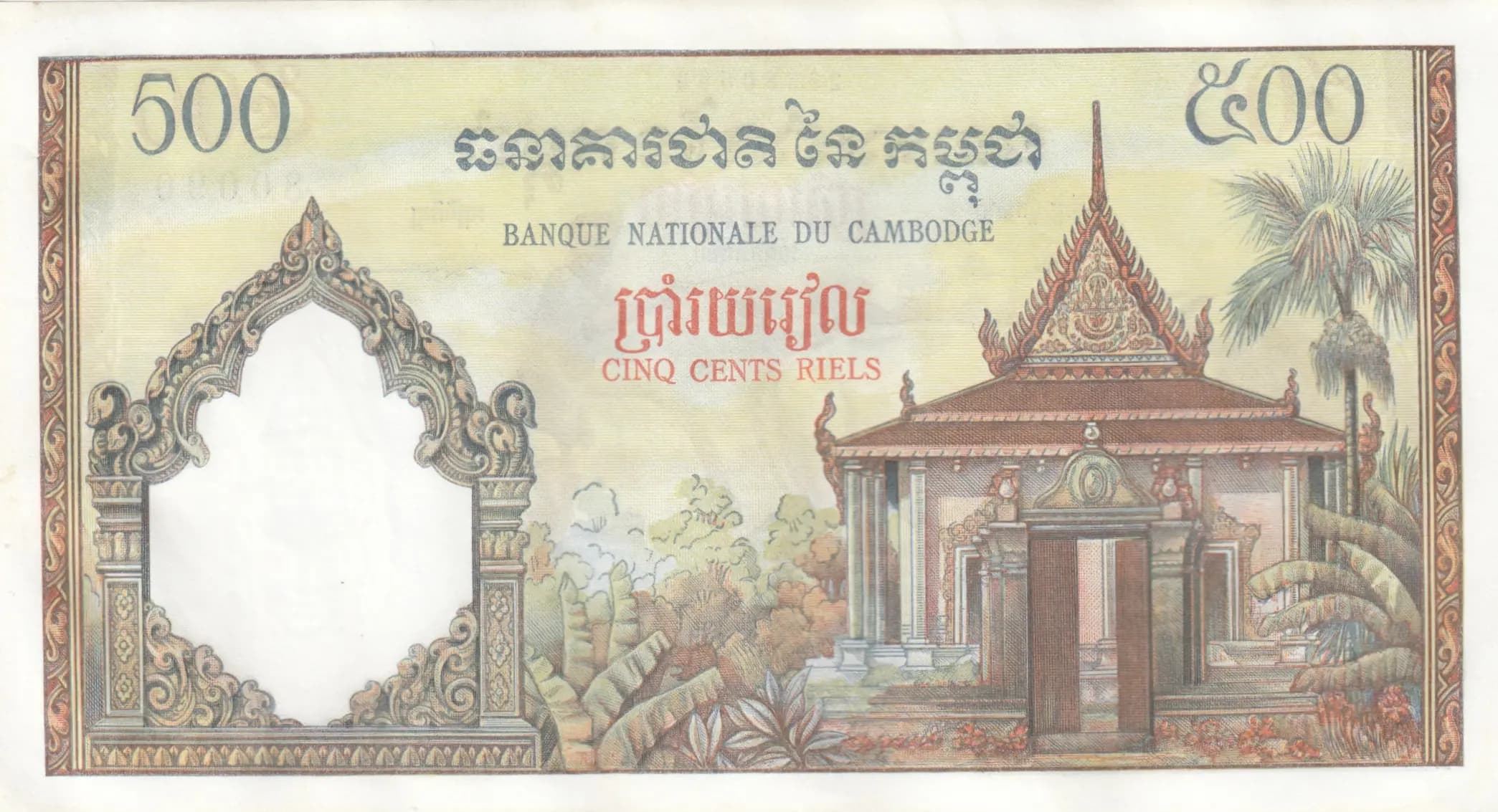
This is an exceptional example of the Cambodian 500 Riels from 1958 (Pick P-14d), issued by the Banque Nationale de Cambodge. The note is in pristine UNC condition with vibrant colors and sharp engraving details on both sides. The obverse features a striking rural agricultural scene depicting a farmer plowing rice paddies with oxen, while the reverse showcases ornate Khmer Buddhist temple architecture with traditional Southeast Asian design elements—both themes quintessentially representing Cambodia's agricultural heritage and cultural identity during the post-independence period.
Common. The 500 Riels P-14d from 1958 was a standard circulation issue of the Banque Nationale de Cambodge with substantial print runs. While early Cambodian banknotes have become less frequently encountered in high-grade condition due to the tumultuous history of Cambodia in subsequent decades, this particular denomination and issue was not produced in limited quantities, nor was it recalled or short-lived. UNC examples are desirable but not scarce in the numismatic market. The note's appeal lies primarily in its historical significance and artistic merit rather than rarity.
This note was issued in 1958, during Cambodia's early years as an independent kingdom following French colonial rule (independence granted in 1953). The deliberate iconography reflects the nation-building priorities of the era: the obverse's emphasis on rice cultivation underscores agriculture as the economic foundation of the newly sovereign state, while the reverse's prominent Buddhist temple architecture affirms Khmer cultural and religious identity as central to the nation's postcolonial identity. The bilingual inscription in Khmer and French reflects Cambodia's transitional status as it moved away from colonial administration while retaining French cultural influence.
The obverse depicts a rural Cambodian farmer in simple working attire (dark shirt and light shorts) actively plowing a flooded rice paddy with a pair of oxen, set against a background of water, cultivated fields, and trees characteristic of the Cambodian countryside. The composition is framed by decorative botanical borders featuring stylized grain or corn stalk motifs in red and green. The reverse showcases a magnificent multi-tiered Buddhist temple or royal palace structure with pointed spires and traditional Khmer architectural ornamentation, accompanied by an ornamental gateway or arch with intricate carved detailing on the left, surrounded by tropical vegetation including palm trees. Both sides are executed in fine engraving with meticulous attention to detail, employing a color palette of cream, browns, greens, reds, and gold tones that enhance the cultural and nationalist themes.
FRONT SIDE: Khmer text 'ឆ00' appears as denomination marking (500 riels); 'ស.266' denotes serial designation; '26580090' and '80090' are serial numbers in Arabic numerals; 'គម្ពុជាធនាគារ ដូលលរាជ្ឋ' reads 'National Bank of Cambodia' in Khmer; 'ប្រាក់រៀល' translates to 'Riels'. BACK SIDE: 'ឆ00' appears again as Khmer denomination (500); 'គម្ពុជាធនាគារ ដូលលរាជ្ឋ' repeats 'National Bank of Cambodia' in Khmer; French text 'BANQUE NATIONALE DU CAMBODGE' means 'National Bank of Cambodia'; '500' in Arabic numerals; 'ប្រាក់រៀល' again means 'Riels'; 'CINQ CENTS RIELS' in French translates to 'Five Hundred Riels'.
This note was produced using intaglio (engraving) printing, evidenced by the fine line work, sharp detail resolution, and layered color registration visible throughout both sides. The precise execution of the decorative borders, architectural elements, and facial features confirms traditional steel-plate engraving techniques. Based on the Pick catalog designation and historical records, this issue was printed by the Banque de France's printing facilities or under their supervision, as was standard for currency production in French-associated territories during this period. Security features include ornate engraving patterns and watermarking (visible as white areas in the analyzed images).
The observed serial number prefix 'ស.266' with serial numbers '26580090' and '80090' appears consistent with the standard P-14d issue. This particular example should be documented with its specific serial number range for future reference. No overprints or significant varieties are apparent in the visual analysis. The bilingual (Khmer/French) design remained consistent throughout this series. Collectors should note serial number prefixes and signatures if visible on reverse (not clearly detailed in provided analysis) to distinguish among any minor state variations within the P-14d designation.