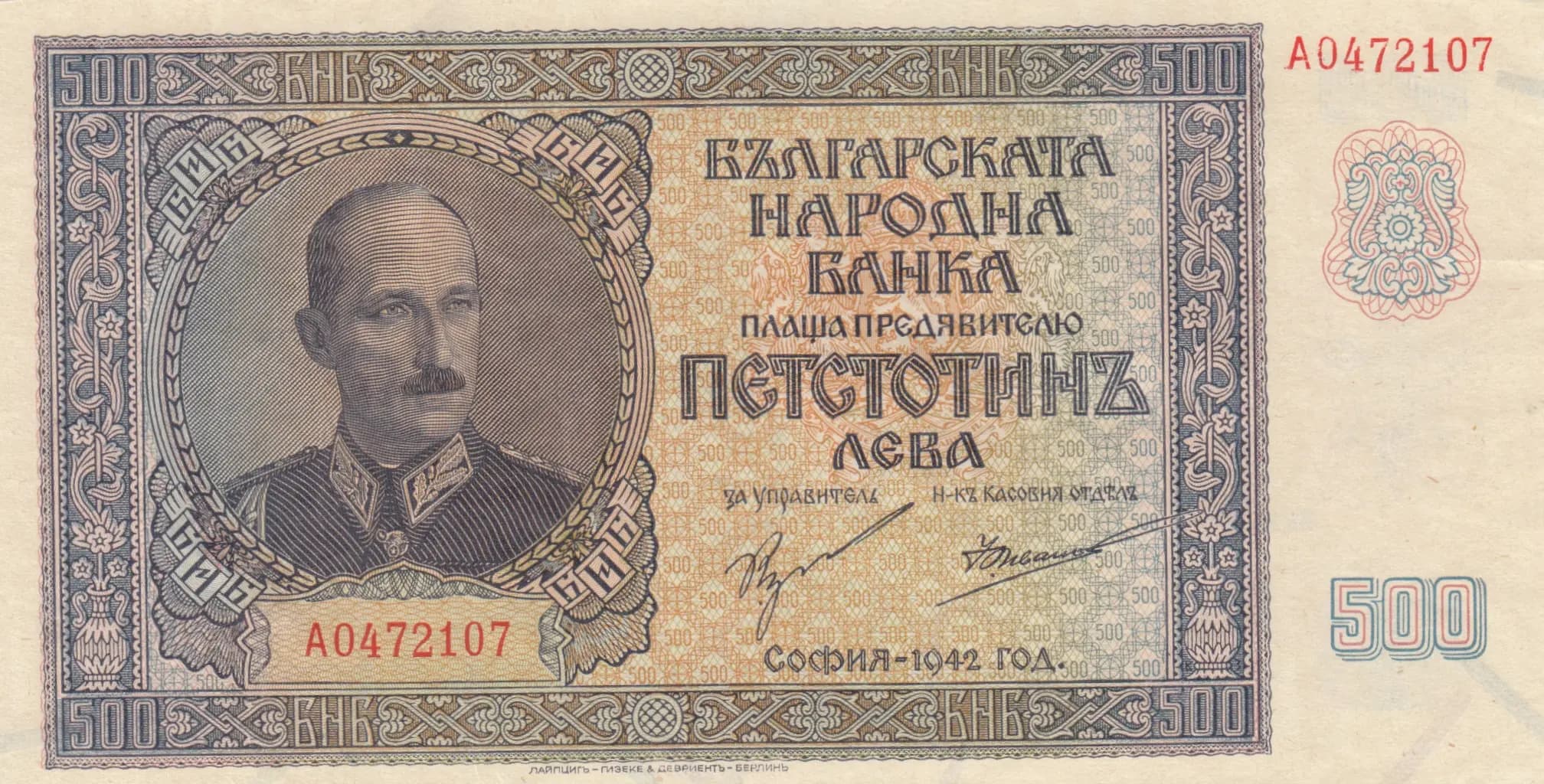
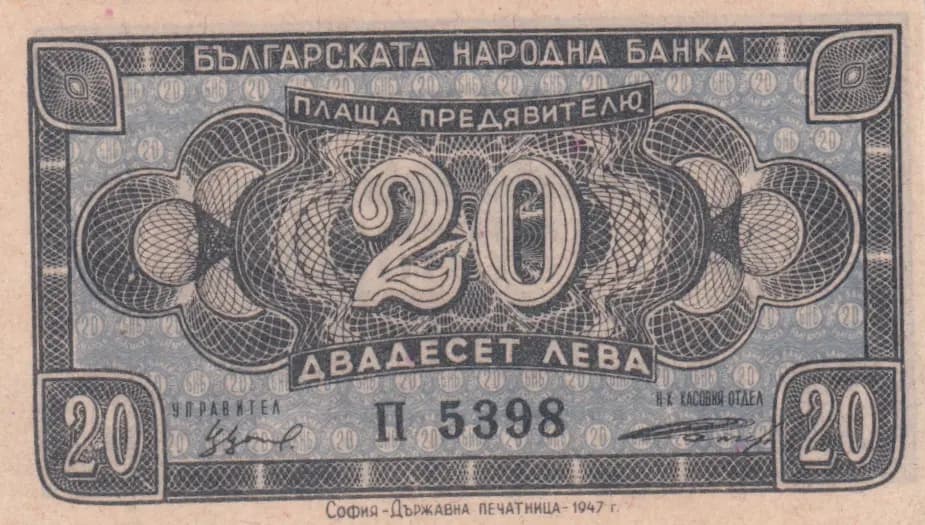
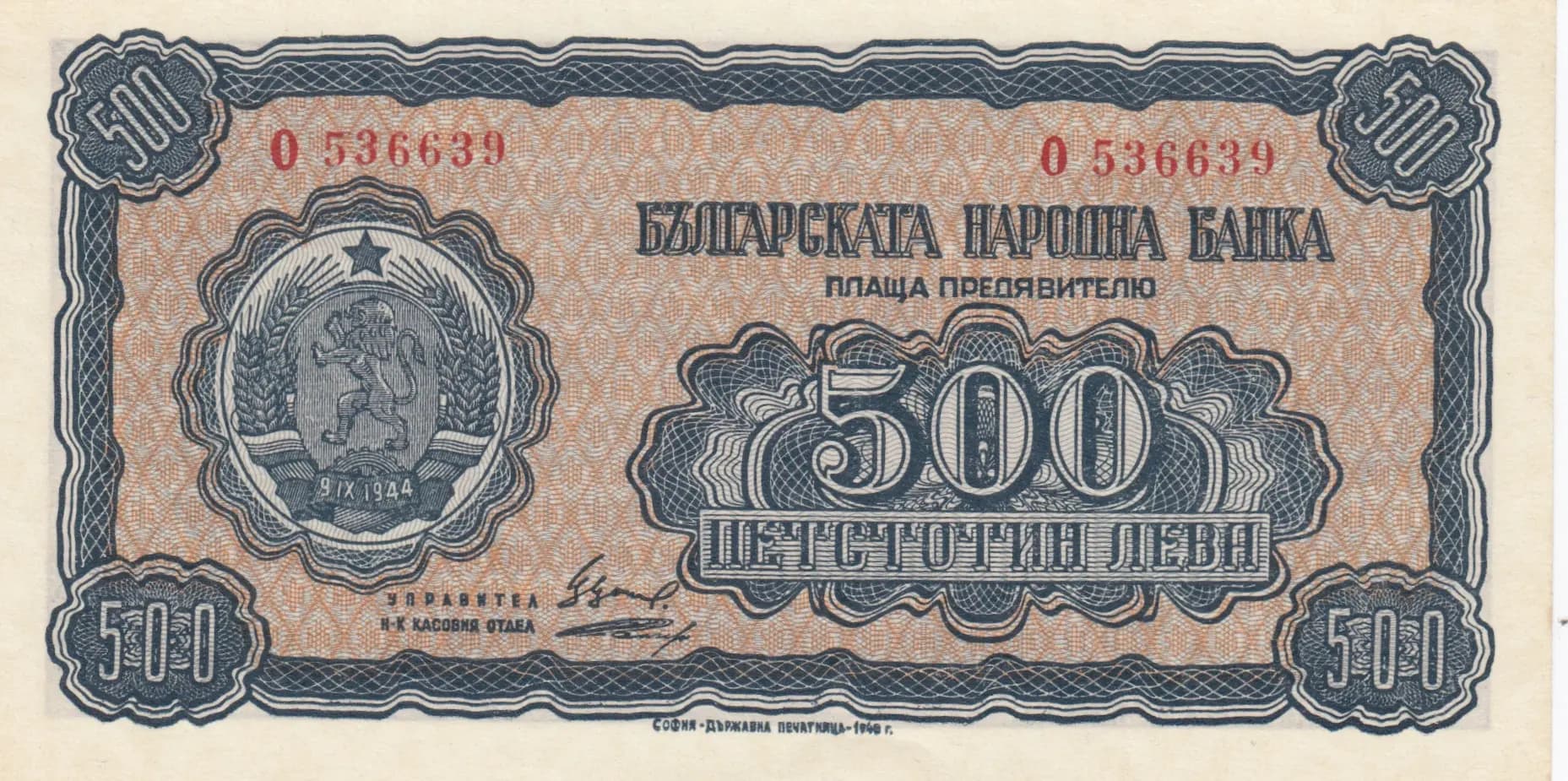
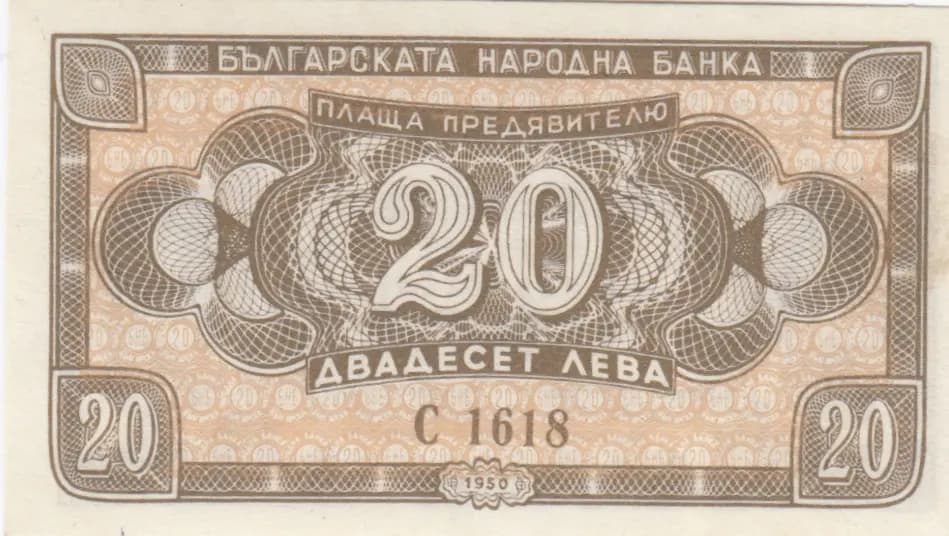
50 leva 1951
Market Prices
30 salesAbout This Note
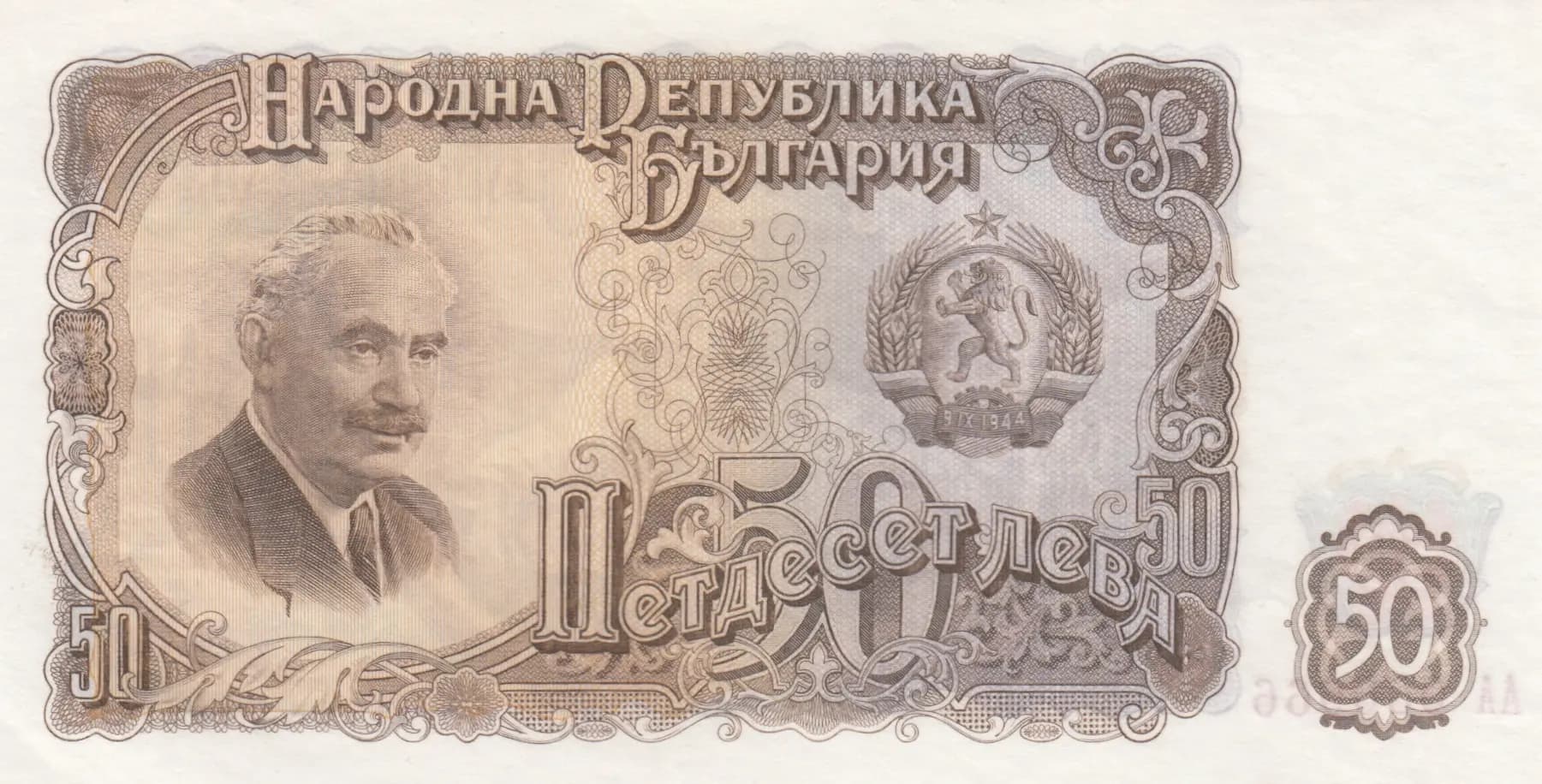
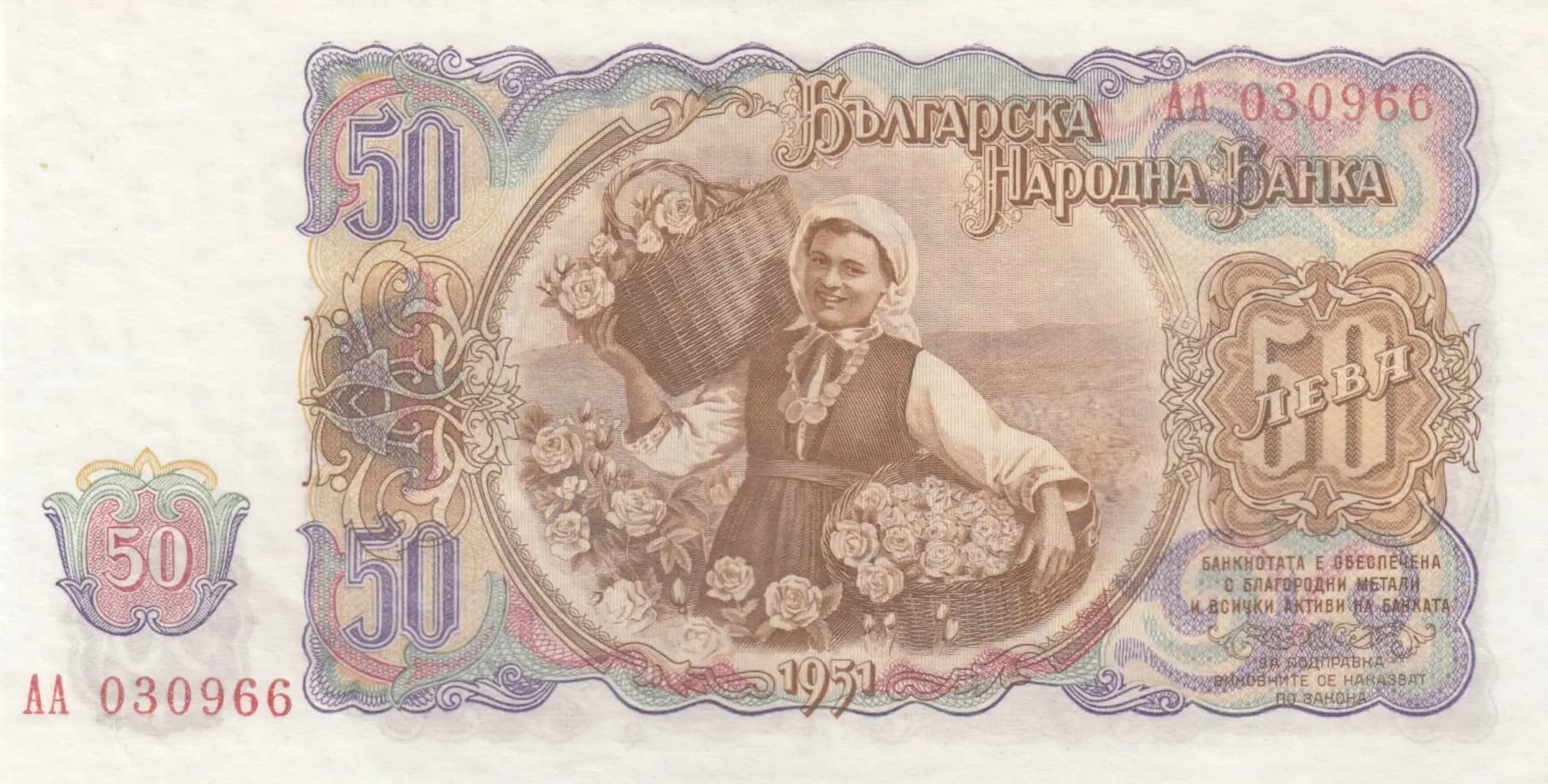
This is a Bulgarian 50 leva banknote from 1951, graded in uncirculated condition, representing a classic example of early Cold War-era Eastern Bloc currency design. The note features distinctive imagery on both sides: Georgi Dimitrov's portrait in formal attire on the obverse, and a woman in traditional Bulgarian folk costume holding roses on the reverse, both rendered in fine brown and multicolor engraving. As an ungraded UNC specimen from this iconic People's Republic issue, it represents an important piece of Bulgarian numismatic history, though common in the secondary market with modest collector value.
Common. Secondary market data from eBay sales spanning from 2013 to 2024 demonstrates consistent, regular availability with typical UNC specimens selling in the $0.99–$5.24 range, with occasional outliers commanding higher prices based on bidding competition rather than intrinsic scarcity. The 2016 catalog value of $1.50 for UNC condition aligns with observed market behavior. No indicators of restricted print runs, recall, or limited availability exist. This issue remains abundant in the collector market.
Issued by the Bulgarian National Bank (Българска Народна Банка) during the early years of the Bulgarian People's Republic, this 1951 note reflects the Soviet-influenced socialist aesthetic of the period. The prominent depiction of Georgi Dimitrov, the communist leader and architect of the People's Republic, alongside imagery celebrating peasant labor and rural agricultural traditions (the rose-bearing woman in folk costume), embodies the propaganda iconography of the Stalinist era. The note's security legend guaranteeing backing by gold reserves and the bank's assets reflects the economic positioning of Bulgaria within the Soviet sphere of influence during the Cold War.
The obverse presents a formal portrait of Georgi Dimitrov, the founding leader of the Bulgarian People's Republic, rendered in three-quarter profile facing right, wearing a suit jacket and tie. He is framed by ornate decorative elements including floral and geometric scrollwork and a cornucopia (horn of plenty) motif, symbolizing prosperity and socialist abundance. The Bulgarian national coat of arms—featuring a lion rampant within a wreath—is positioned in the upper right. The reverse depicts a young woman dressed in authentic Bulgarian traditional folk costume: a white embroidered linen blouse, dark vest or bodice, and a characteristic white linen headscarf, holding a large bouquet of roses. She is positioned against a rural agricultural landscape, embodying themes of peasant labor and national cultural heritage central to socialist propaganda. Denomination numerals appear in decorative frames on both sides.
Front: 'Народна Република България' (People's Republic of Bulgaria), 'Петдесет лева' (Fifty leva), '50' (numeric denomination). Back: 'Българска Народна Банка' (Bulgarian National Bank), 'ЛЕВА' (Leva—currency denomination), '1951' (year of issue), 'АА 030966' (serial number), 'БАНКНОТАТА Е ОБЕЗПЕЧЕНА СЪС ЗЛАТНАТА НАЛИЧНОСТ И ДОСТАТЪЧНА И ДОСТАТЪЧНИ СРЕДСТВА НА БАНКАТА ЗА ПОДДЪРЖАНЕ' (This banknote is secured by the gold reserves and sufficient means of the bank for maintenance).
This note was produced using fine line engraving and intaglio printing techniques, characteristic of mid-20th century European banknote production. The printer is identified as Goznak (the Soviet State Security Printing Works), as recorded in PMG population data for variant P-85a. The multicolor printing combines brown, tan, and cream base tones with accent colors in purple and pink, applied through sophisticated register work typical of the period's security printing standards.
This note is cataloged as Pick P-85a, printed by Goznak. The visual analysis confirms the characteristic design with Dimitrov portrait on the obverse and the traditional peasant woman with roses on the reverse. Serial number AA 030966 (visible in red on the reverse) indicates standard production. No evidence of overprints, signature variants, or date variations affecting classification is present in this specimen. The PMG population report indicates one documented variant for this Pick number base classification.