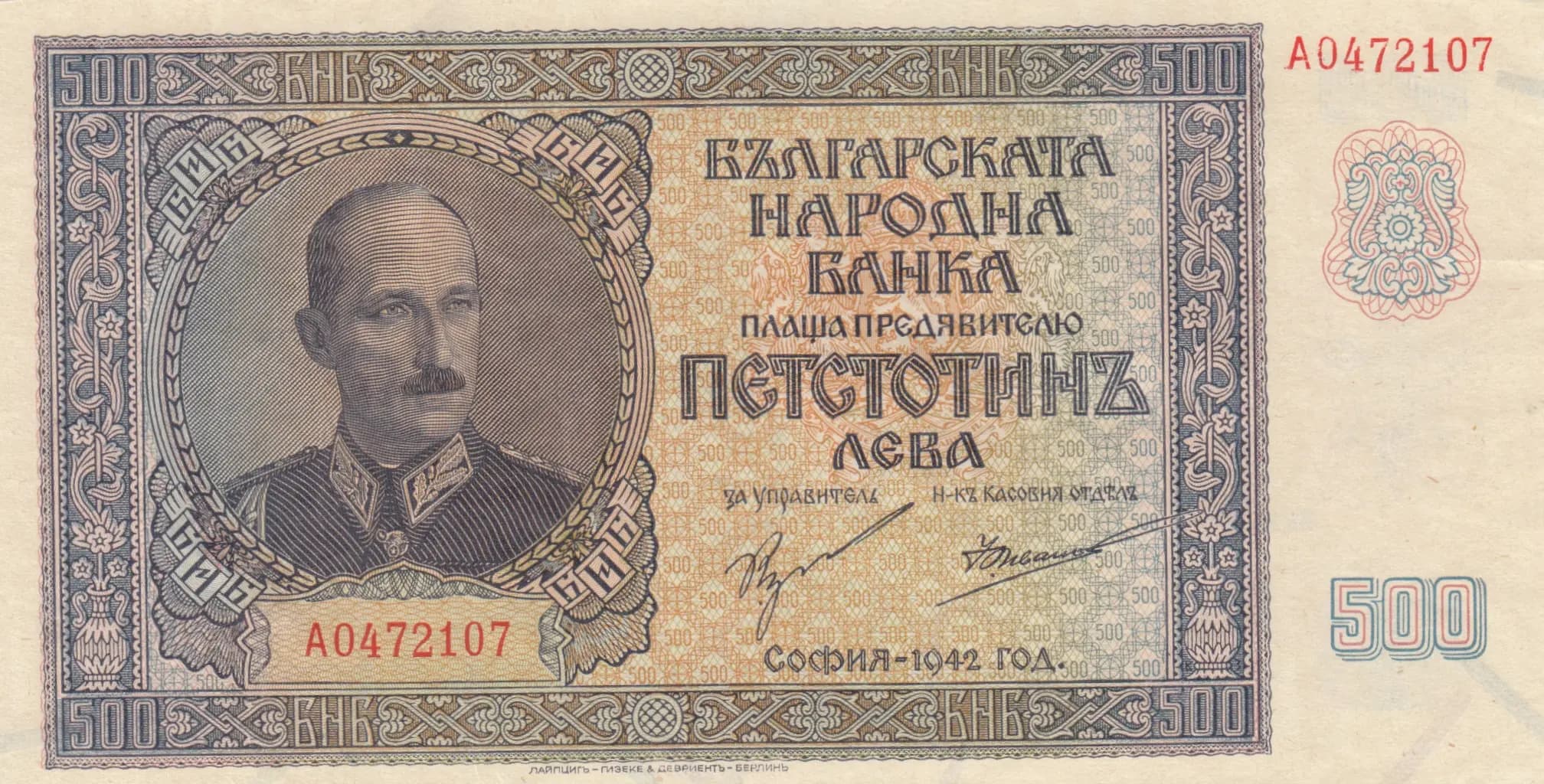
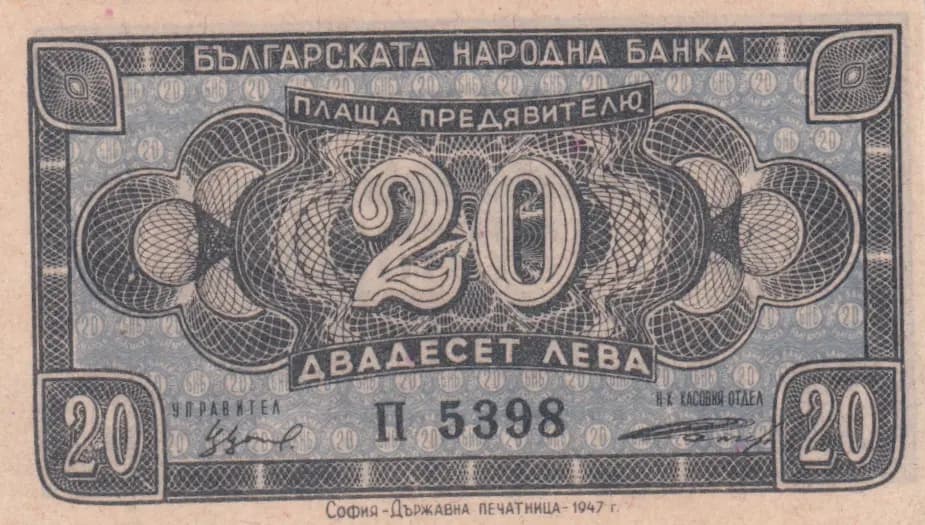
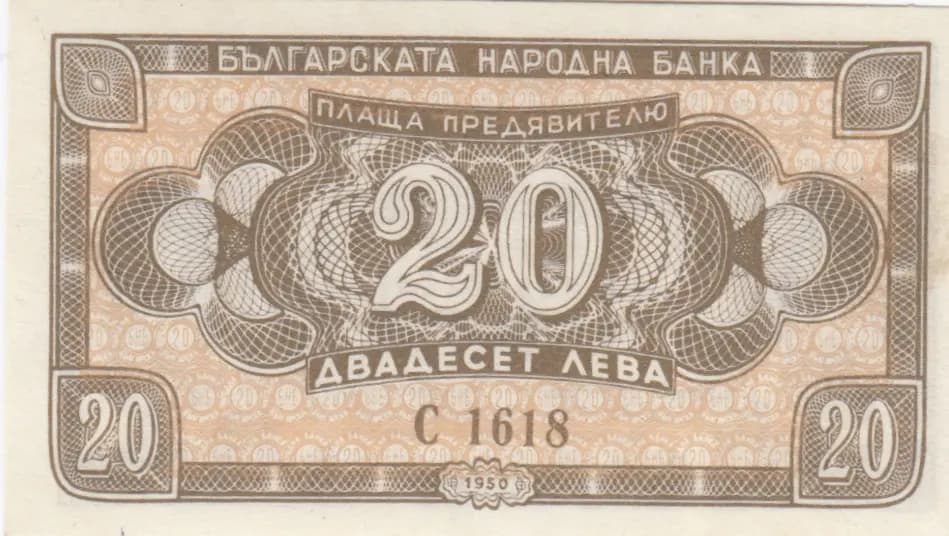
500 leva 1948
Market Prices
28 salesAbout This Note
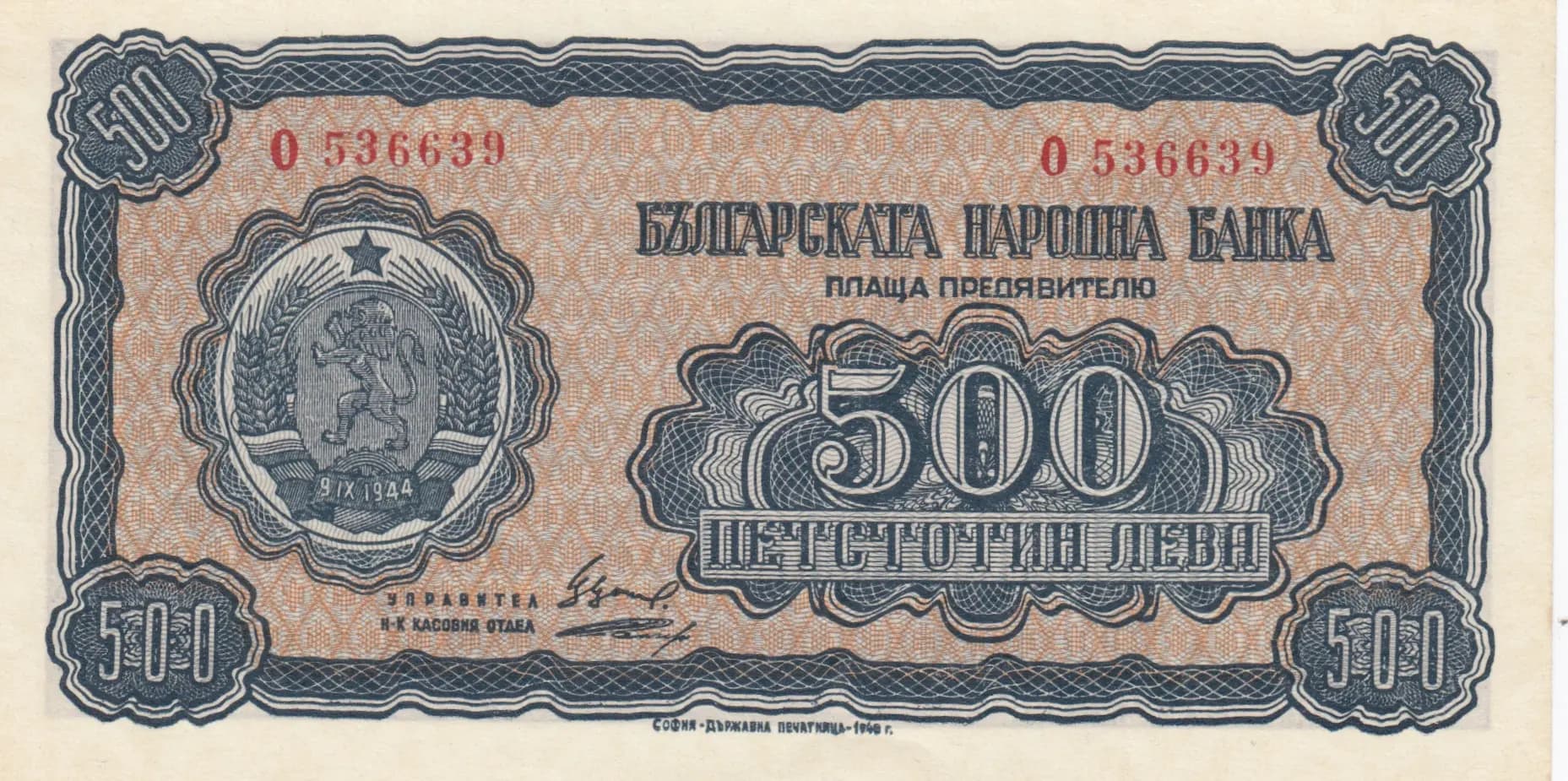
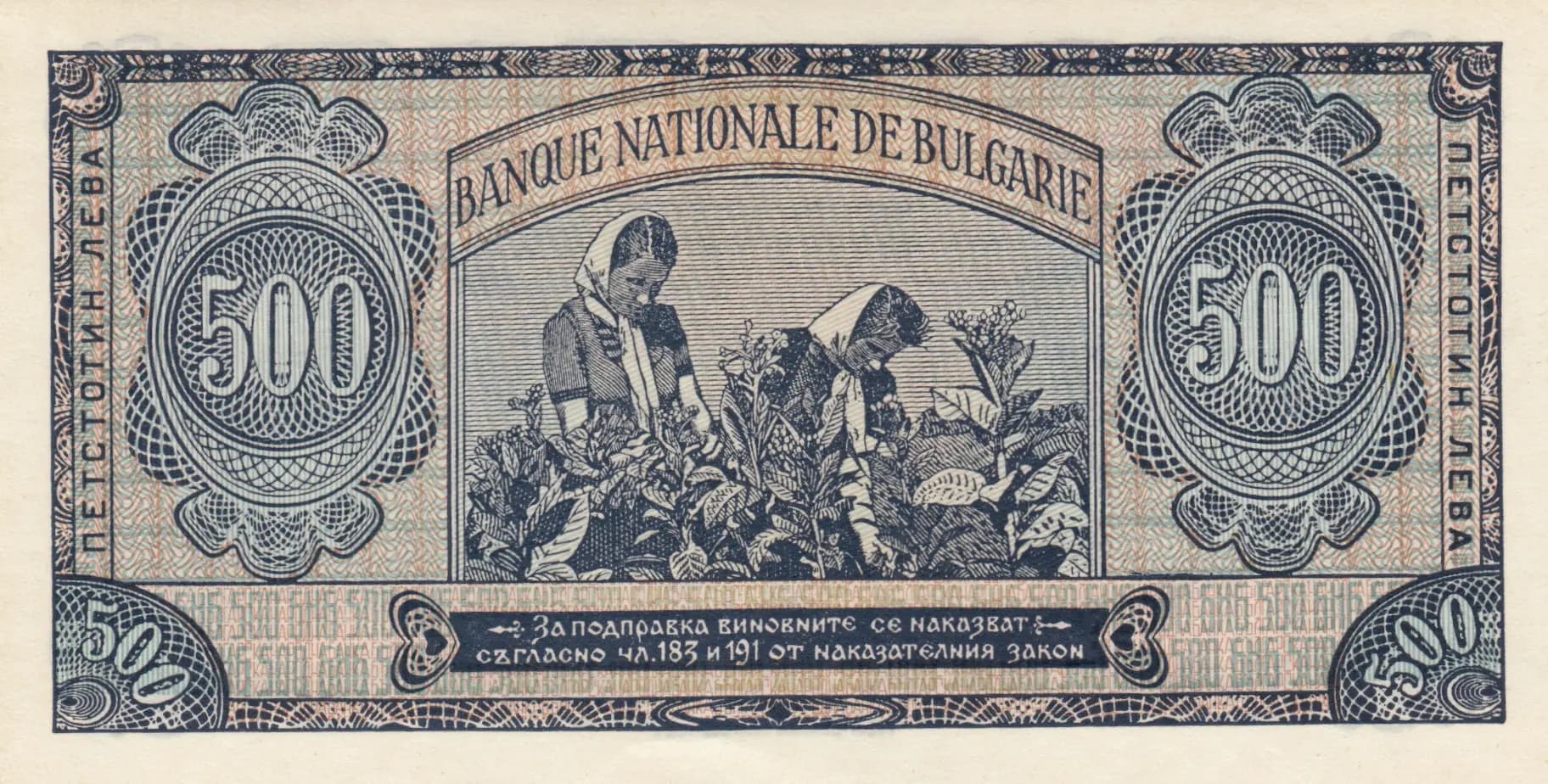
This is an exceptional example of Bulgaria's 500 Leva banknote from 1948 (Pick P-77), presented in uncirculated condition with pristine paper quality and full original color vibrancy. The note features a striking design combining heraldic symbolism on the obverse with a detailed agricultural harvest scene on the reverse, reflecting Bulgaria's post-war economic focus. The combination of fine engraving technique, classical ornamental patterns, and historical significance makes this an attractive addition to any Eastern European currency collection.
Common. While the note trades infrequently on the secondary market, eBay auction data spanning 2014-2025 shows consistent sales volumes with prices typically ranging from $3-12 for UNC examples, rising to $20-35 for graded specimens in premium conditions (PMG 66-67). The 1948 issue appears to have had a substantial print run sufficient to maintain ready availability in the collector market, and no print run limitations or recall information are documented. Notes selling regularly below $50 USD in uncirculated condition are standard classified as common in the numismatic market.
Issued in 1948 by the Bulgarian National Bank during the early communist period following Bulgaria's September 9, 1944 liberation (commemorated on the obverse), this note reflects the regime's emphasis on agricultural productivity and national identity. The reverse's depiction of tobacco harvesting—a major Bulgarian export crop—illustrates the state's focus on economic reconstruction through agricultural labor, while the heraldic lion on the obverse represents continuity of Bulgarian national symbolism despite political transformation.
The obverse features a central circular medallion containing the heraldic lion of Bulgaria within a wreath, crowned with a five-pointed star and flanked by wheat/grain sprays symbolizing agricultural prosperity. The denomination '500' appears prominently in all four corners within ornamental oval frames. The reverse depicts a detailed agricultural scene showing two figures in traditional 19th-century Bulgarian dress engaged in tobacco harvesting amid tall plants, executed in fine engraving with careful cross-hatching for dimensional effect. Both sides employ classical ornamental borders with interlocking geometric and curved motifs characteristic of mid-20th century European banknote design. The color scheme of dark blue on beige/tan creates strong contrast while maintaining the formal dignity appropriate to the denomination.
FRONT: 'БЪЛГАРСКАТА НАРОДНА БАНКА' (Bulgarian National Bank) / 'ПЛАЩА ПРЕДЯВИТЕЛЮ' (Pays to Bearer) / '500' and 'ПЕТСТОТИН ЛЕВА' (Five Hundred Leva) / '9.IX.1944' (September 9, 1944 - commemoration date) / 'УПРАВИТЕЛ' (Governor/Director) / 'И.К.КАСОВИЯ ОТДЕЛ' (Cash Department) / 'СОФИЯ ДЪРЖАВНА ПЕЧАТНИЦА 1946 г.' (Sofia State Printing House 1946). BACK: 'BANQUE NATIONALE DE BULGARIE' (National Bank of Bulgaria - in French) / '500' and 'ПЕТСТОТИН ЛЕВА' (Five Hundred Leva) / 'Заповрвка винозните се показват с наказване съгласно чл.183 и 191 от наказателния закон' (Counterfeiting will be prosecuted in accordance with articles 183 and 191 of the penal code).
Intaglio engraving (line engraving), produced by Drzhavna Petchatnitsa (State Printing House) in Sofia. The visual analysis reveals the characteristic hallmarks of intaglio printing: fine line engraving throughout the design, complex geometric and floral patterns with multiple ornamental borders, detailed cross-hatching for shading in the harvest scene, and precise reproduction of text. The security features include intricate background patterns and repeated design elements typical of mid-20th century Bulgarian state currency production.
The PMG Population Report indicates one catalogued variant (P-77a) for this Pick number. The observed note carries serial number 0 536639, printed in red/orange coloring. The printing date notation on the reverse reads '1946 г.' (1946), though the official issue date is catalogued as 1948—this represents the printing press date rather than release date, a common practice for Bulgarian banknotes of this era. No significant overprints, signature variants, or other distinguishing features indicating major varieties are visible in this specimen.