100 leva 1951
Market Prices
26 salesAbout This Note
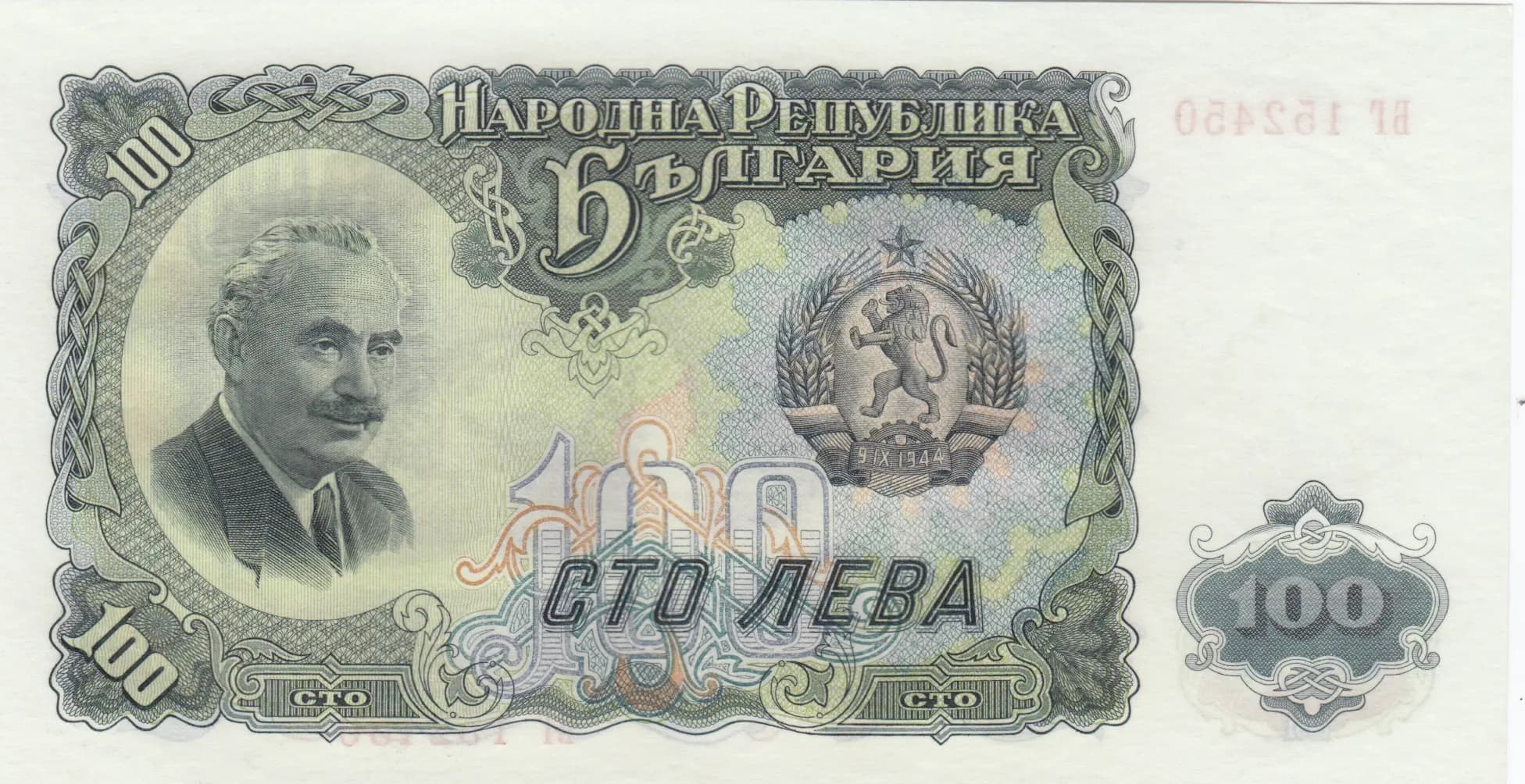
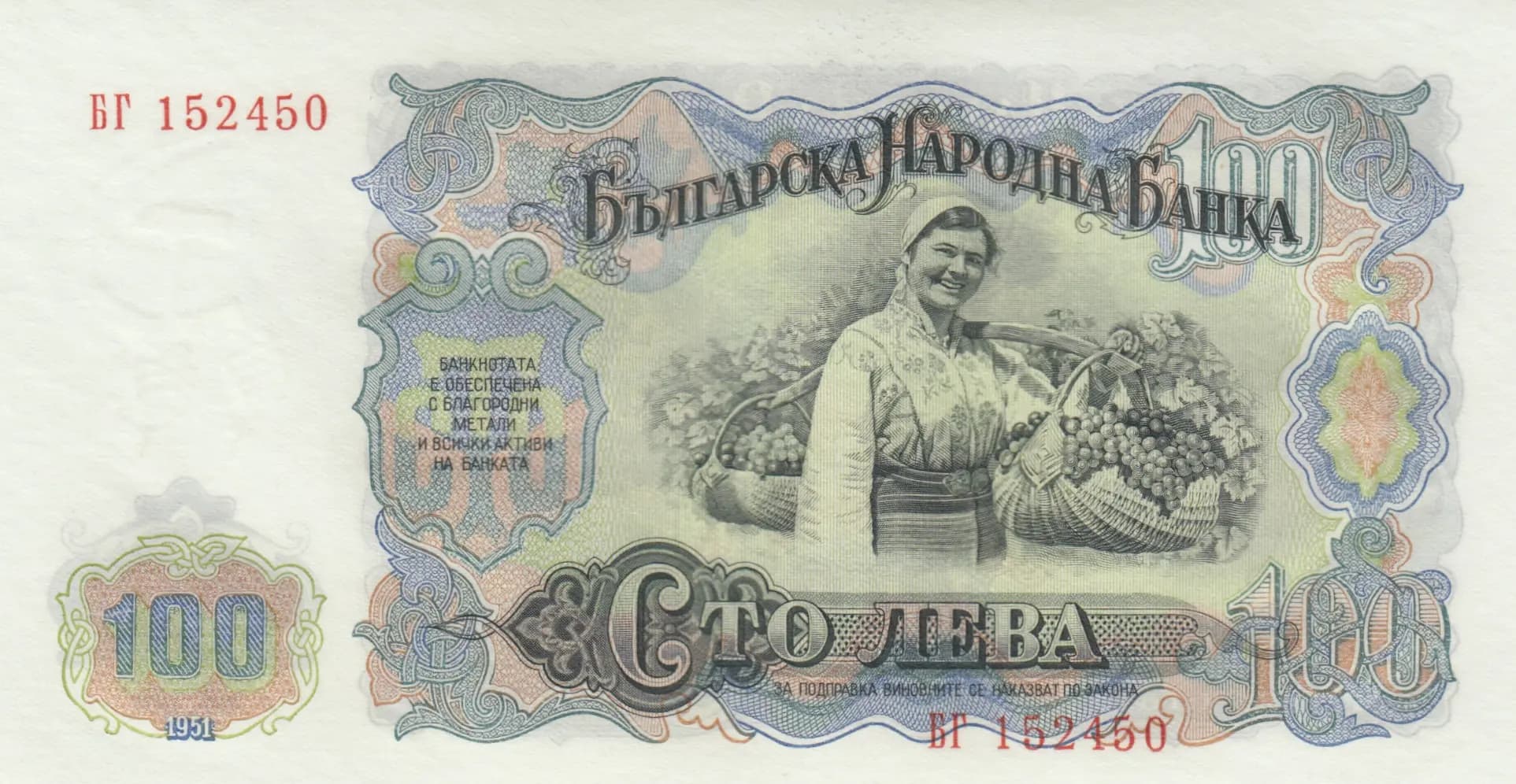
This is an uncirculated 1951 Bulgarian 100 leva note (Pick P-86) featuring excellent preservation with crisp, clear printing throughout. The obverse depicts Georgi Dimitrov in formal attire alongside the Bulgarian People's Republic coat of arms dated 9 September 1944, while the reverse showcases a traditional Bulgarian woman in folk costume harvesting grapes—symbolizing the nation's agricultural heritage. The note exhibits no visible wear, creasing, or damage, making it a pristine example of post-WWII Bulgarian currency design.
Common. The eBay price tracking data shows consistent sales from 2013 to 2025, with UNC examples typically realizing between $1-$5.25, and professionally graded examples (PMG 65-67) averaging $12-$30. The 2016 catalog value of $1.50 for UNC further confirms this is a readily available note in the collector market. While not worthless, the low and stable pricing indicates substantial surviving populations and collector interest driven primarily by historical significance rather than scarcity. This represents a standard regular-issue banknote from a major communist-era issuer with no indicators of limited print run or recall.
This banknote was issued in 1951 by the Bulgarian National Bank during the early Cold War period, following the communist takeover of Bulgaria in 1944. The obverse portrait of Georgi Dimitrov—Bulgaria's communist leader—and the heraldic lion within wheat wreaths reflect the Soviet-aligned regime's iconography. The reverse's grape harvest scene emphasizes agrarian productivity and national resources, a common theme in Eastern Bloc currency design to promote collectivist economic values and agricultural contributions to the state.
The obverse features a three-quarter profile portrait of Georgi Dimitrov (identified by historical context as Bulgaria's communist leader) facing left in formal attire with distinctive mustache and suit jacket. The right side displays the Bulgarian People's Republic coat of arms: a lion rampant (standing on hind legs) enclosed within wheat wreaths symbolizing agricultural wealth, surmounted by a five-pointed communist star, with the date '9.IX.1944' commemorating the Soviet-backed coup. Celtic-style interlacing patterns frame the obverse in ornate borders. The reverse depicts a smiling woman dressed in traditional Bulgarian folk costume with embroidered details, holding abundant bunches of grapes in both hands against a vineyard background. The design emphasizes national agricultural pride and peasant labor under communism. Decorative floral and geometric borders with ornamental corner frames enhance both sides. The denomination appears prominently in multiple locations in large numerals and Cyrillic text.
FRONT SIDE: 'НАРОДНА REPÚBLICA БЪЛГАРІЯ' (People's Republic of Bulgaria) | '100' and 'СТО ЛЕВА' (100 Leva) | '9.IX.1944' (9 September 1944 - date of communist liberation). BACK SIDE: 'БЪЛГАРСКА НАРОДНА БАНКА' (Bulgarian National Bank) | '100' and 'СТО ЛЕВА' (100 Leva) | 'БАНКНОТАТА Е ОБЕЗПЕЧЕНА С БЛАГОРОДНИ МЕТАЛИ И ВСИЧКИ ДРУГИ ЦЕННОСТИ НА БАНКАТА' (The banknote is secured with precious metals and all other values of the bank) | Serial number 'БГ 152450' (repeated) | '1951' (issue year)
Intaglio engraving, the standard security printing method for banknotes of this era. The fine detail, crisp line work, intricate border patterns, and deep impression visible in the images are characteristic of intaglio production. The note was printed by Goznak (the Soviet state printing house), as identified in PMG population records for variant P-86a, reflecting Bulgaria's reliance on Soviet printing infrastructure during this period.
This note is identified as Pick P-86, with one known variant (P-86a) printed by Goznak. The visible serial number 'БГ 152450' on this example is consistent with standard Bulgarian serial numbering of the period. No overprints, date variations, or signature differences are evident from the visual analysis. The 1951 issue date and Goznak printing are definitive identifiers for this variety.