2 dollars 1965
Market Prices
12 salesAbout This Note
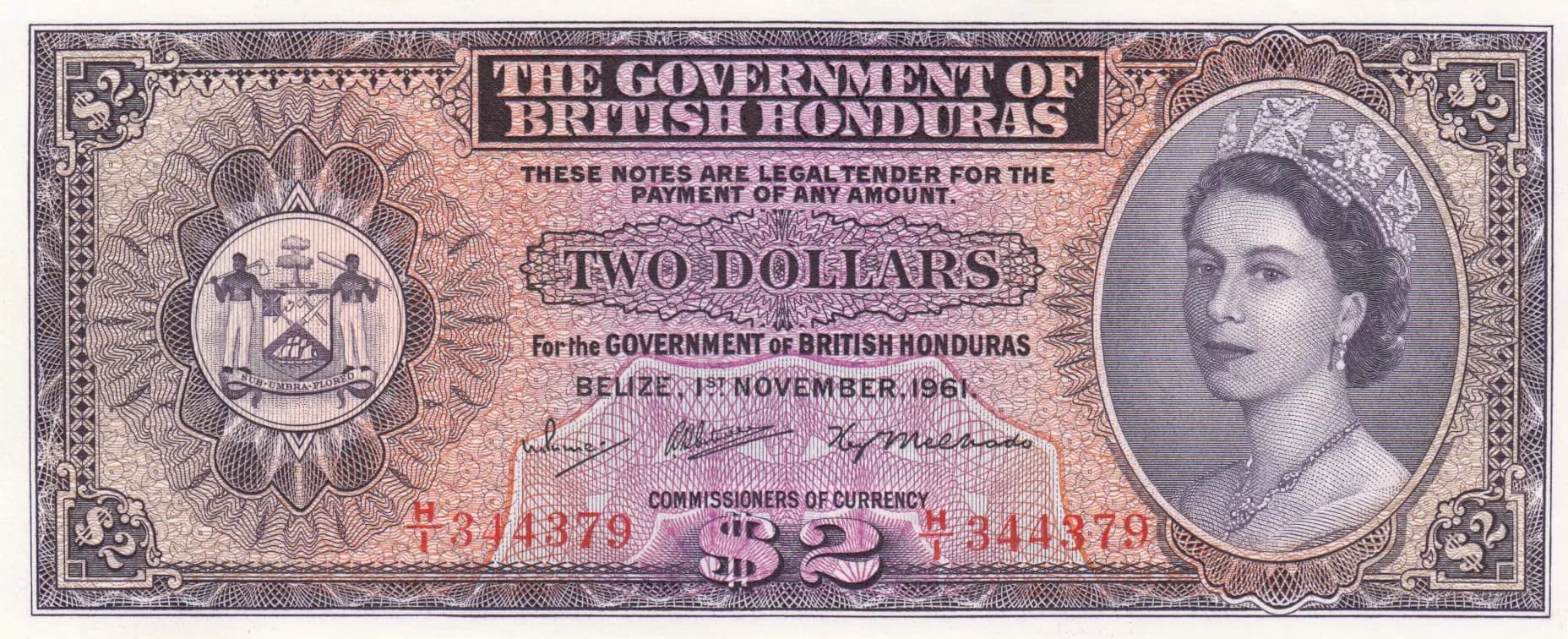
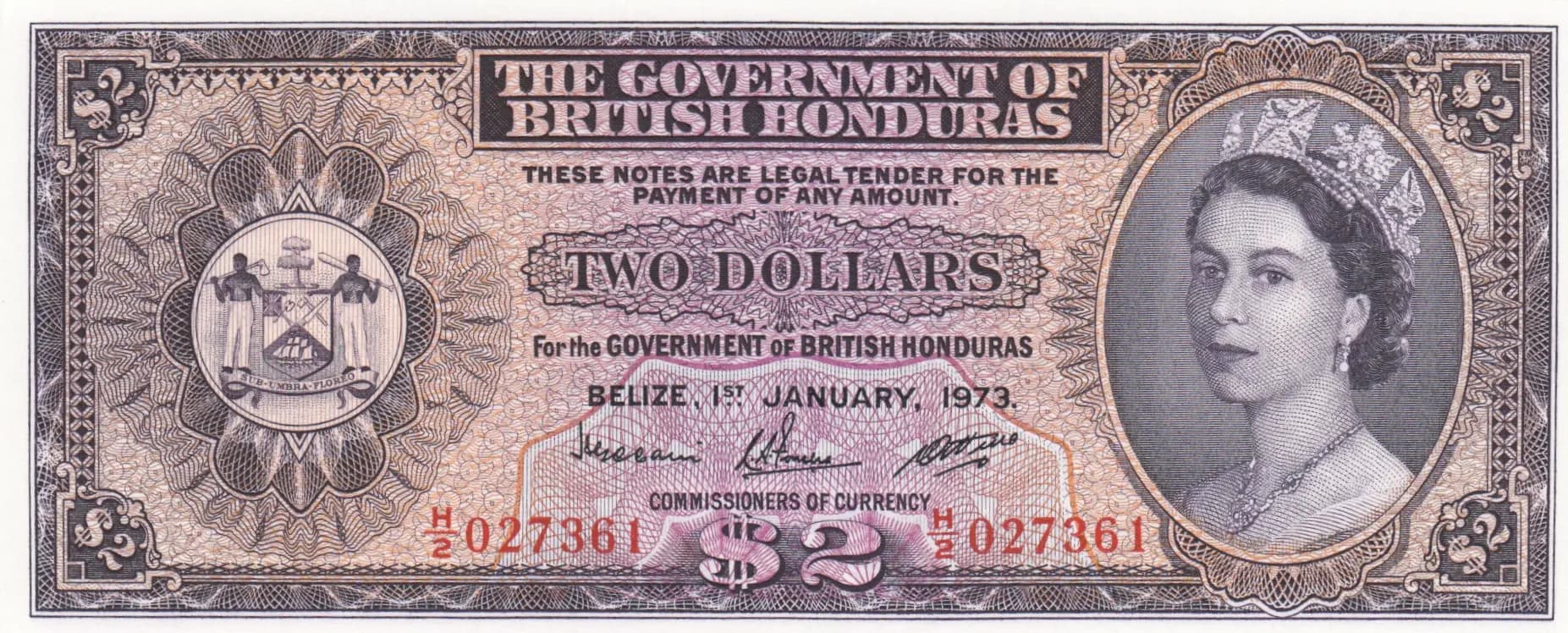
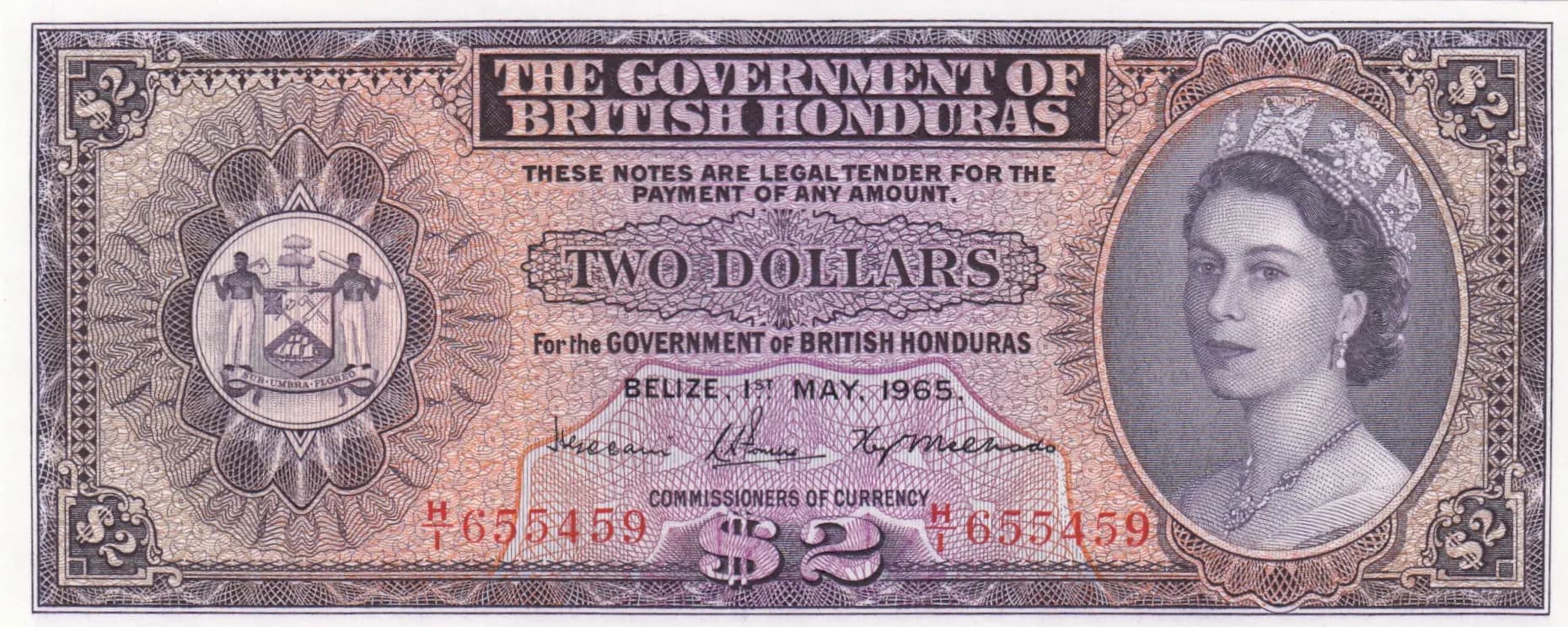
This is a British Honduras 2 Dollars note from 1965, issued by the Government of British Honduras on May 1st, 1965, graded in Uncirculated condition. The note features a striking portrait of Queen Elizabeth II on the obverse and ornate decorative borders with elaborate guilloche patterns throughout. The exceptional clarity of the printing, sharp color definition, and complete absence of wear make this an excellent example of this colonial-era Commonwealth banknote, with eBay market data indicating UNC specimens consistently commanding prices in the $250-$335 range.
Common. While this note is from a colonial territory with limited historical significance and relatively modest circulation, eBay market data shows consistent supply at moderate price levels. UNC examples regularly sell in the $250-$335 range with substantial bidding activity (6-39 bids per sale), indicating healthy collector demand but sufficient supply to keep prices stable and predictable. The note is not from a short print run and was not recalled; it represents a standard regular issue from the 1960-1965 period.
This banknote was issued during the final years of British Honduras as a British colony, just three years before the territory would adopt the name 'Belize' in 1968 and eventually gain independence in 1981. The inclusion of Queen Elizabeth II's portrait reflects the nation's Commonwealth status and colonial relationship with Britain during this period. The Government of British Honduras coat of arms depicted on the obverse, featuring a sailing vessel and two flanking figures, symbolizes the territory's maritime heritage and colonial governance structure.
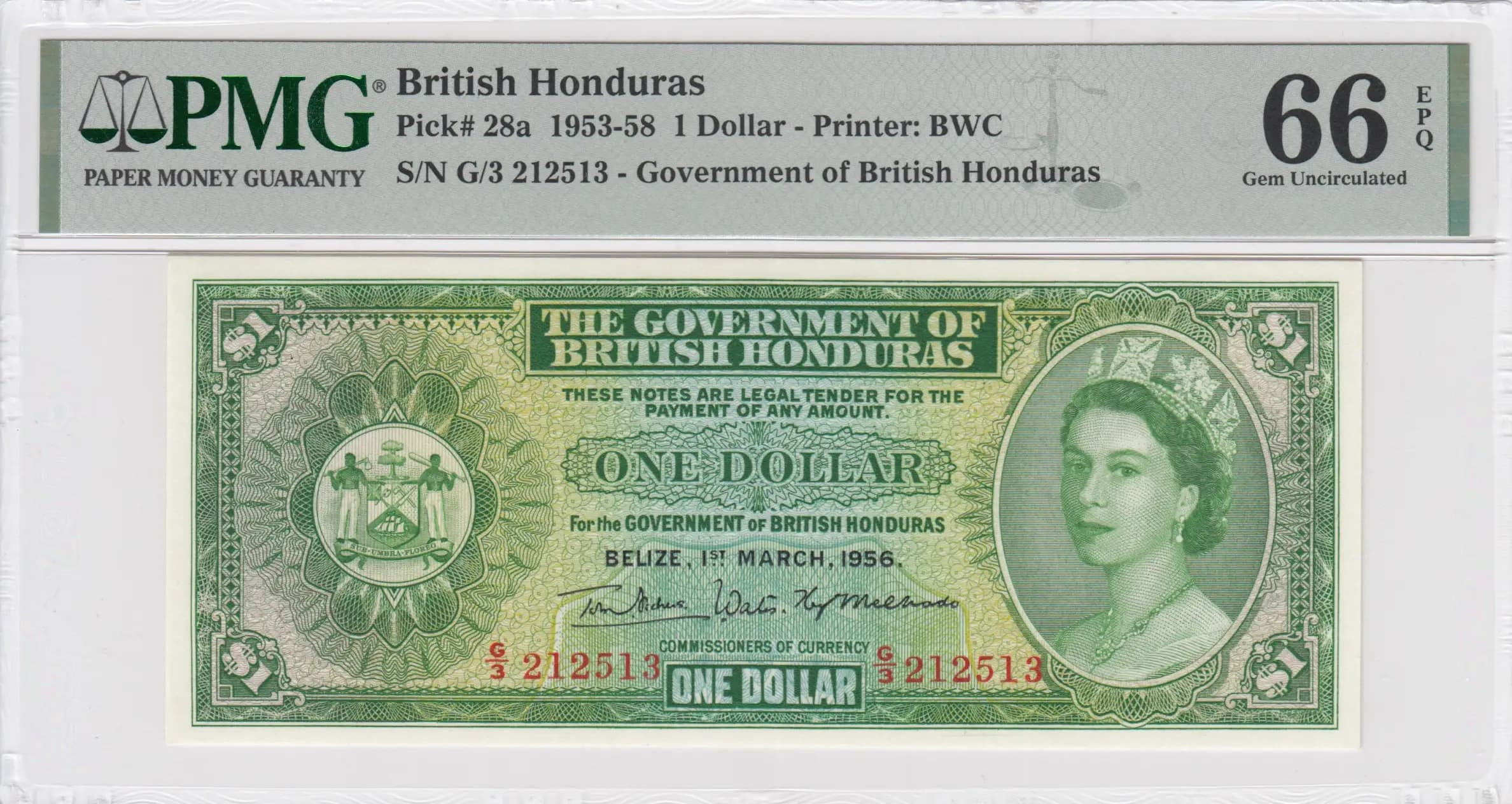
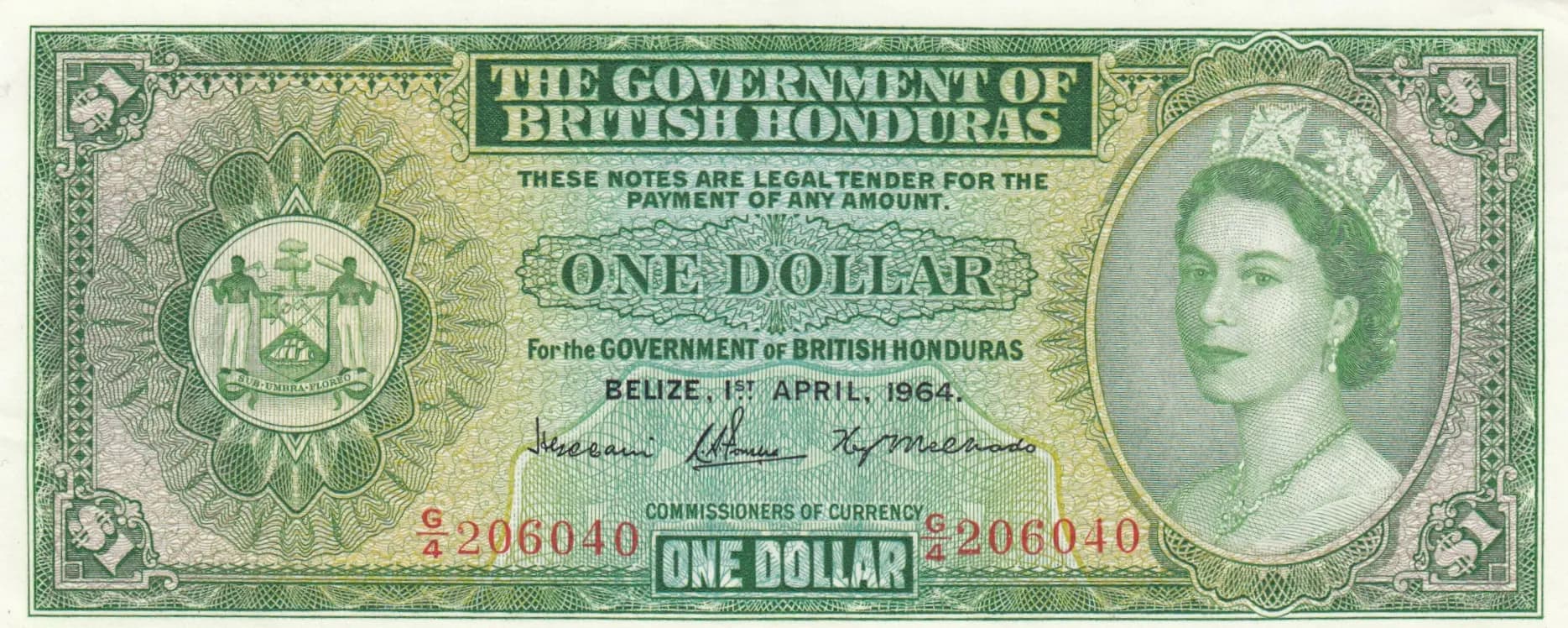
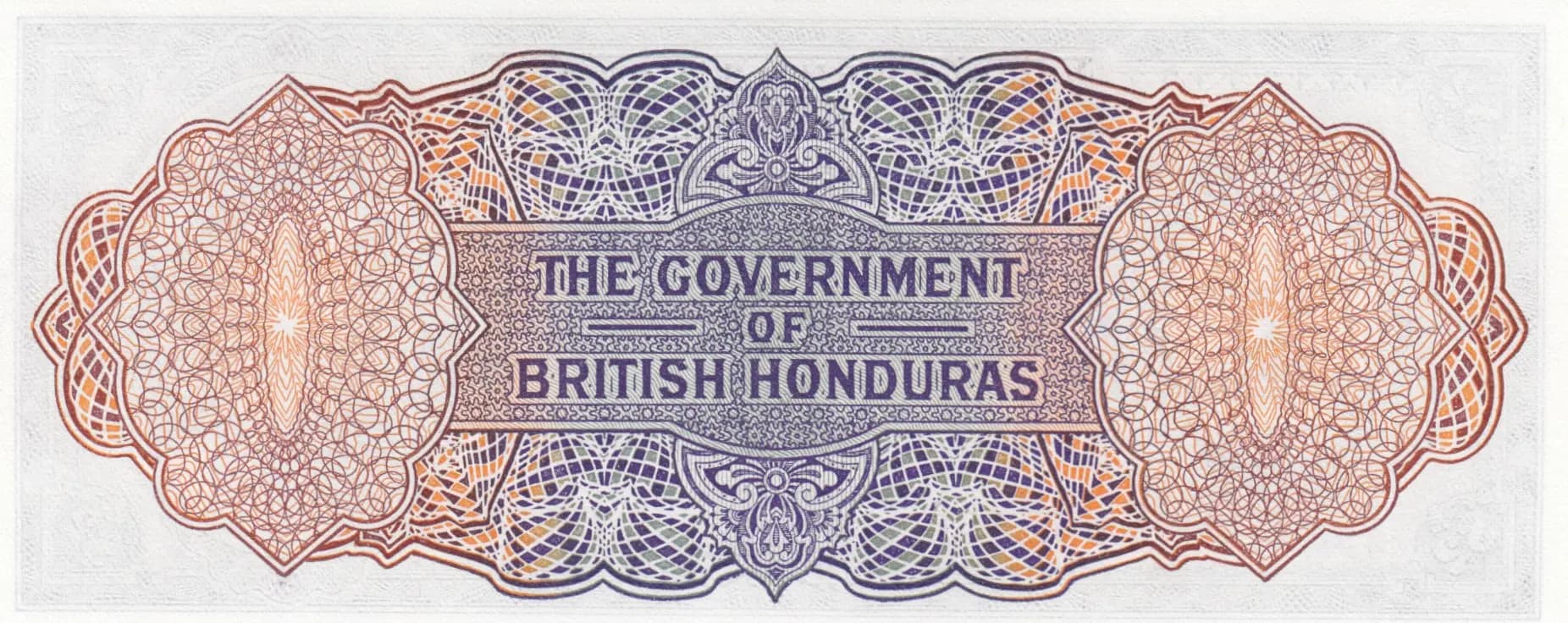
The obverse features a left-facing profile portrait of Queen Elizabeth II wearing formal regalia with a tiara, positioned on the right side of the note. On the left side is the Government of British Honduras coat of arms within a circular seal, depicting two figures flanking a shield with a sailing vessel, symbolizing maritime heritage and governmental authority. The entire note is surrounded by intricate geometric and floral-inspired guilloche patterns serving as security features. The reverse displays an elaborate symmetrical design composition centered on a banner containing the Government of British Honduras text, with ornate decorative borders and fine-line mesh patterns in multiple colors (orange, brown, blue, gray). The color scheme combines brown, tan, gray, purple, and black on the obverse with orange, brown, and blue tones on the reverse.
FRONT SIDE: 'THE GOVERNMENT OF BRITISH HONDURAS' (main issuing authority); 'THESE NOTES ARE LEGAL TENDER FOR THE PAYMENT OF ANY AMOUNT' (legal tender declaration); 'TWO DOLLARS' (denomination); 'For the GOVERNMENT OF BRITISH HONDURAS' (authorization line); 'BELIZE, 1ST MAY, 1965' (place and date of issue); 'COMMISSIONERS OF CURRENCY' (issuing body); 'H 6954459' (serial number, printed twice). BACK SIDE: 'THE GOVERNMENT OF BRITISH HONDURAS' (main issuing authority repeated on reverse). All inscriptions are in English, the language of colonial administration.
This note was printed using advanced multi-color intaglio printing, evident from the fine detail work, sharp lines, and intricate guilloche patterns visible throughout both sides. The extensive use of layered security patterns, fine mesh backgrounds, and complex geometric designs indicates professional security printing typical of Commonwealth banknotes of this era. The printer for P-29b variant is listed as BWC (Bradbury Wilkinson and Company), a renowned British security printer, though the visual characteristics are consistent with their high-quality intaglio production standards.
This note is catalogued as Pick 29b, with seven known variants in the PMG population report (P-29a, P-29as, P-29b, P-29c, P-29cs, P-29cts, P-29s). The P-29b variant is identified as being printed by BWC (Bradbury Wilkinson and Company). The observed serial number H 6954459 is consistent with the known serial ranges for this issue. The specific date of issue 'BELIZE, 1ST MAY, 1965' confirms this as part of the later printing period of the 1960-1965 circulation, with variants distinguished primarily by printer and minor design elements across the series.