1 cruzeiro 1970
Market Prices
5 salesAbout This Note
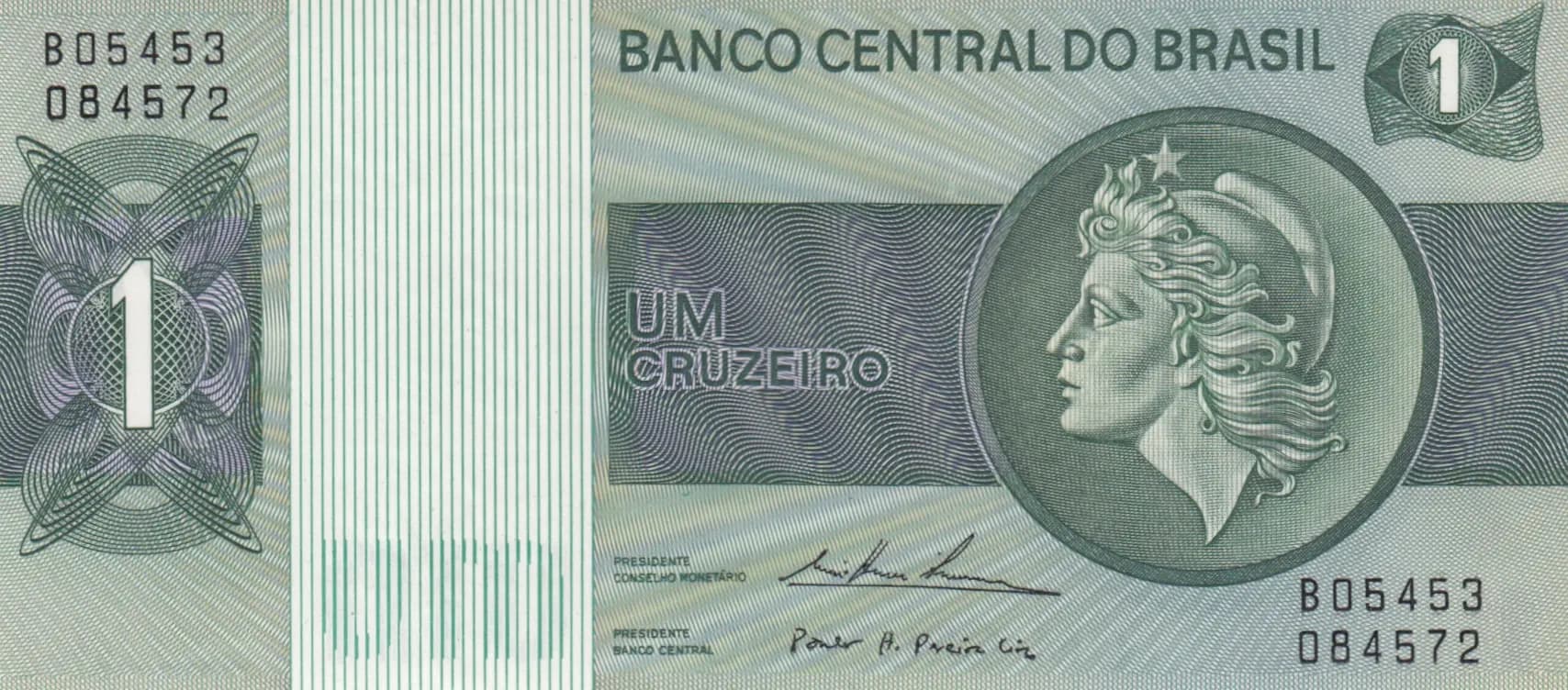
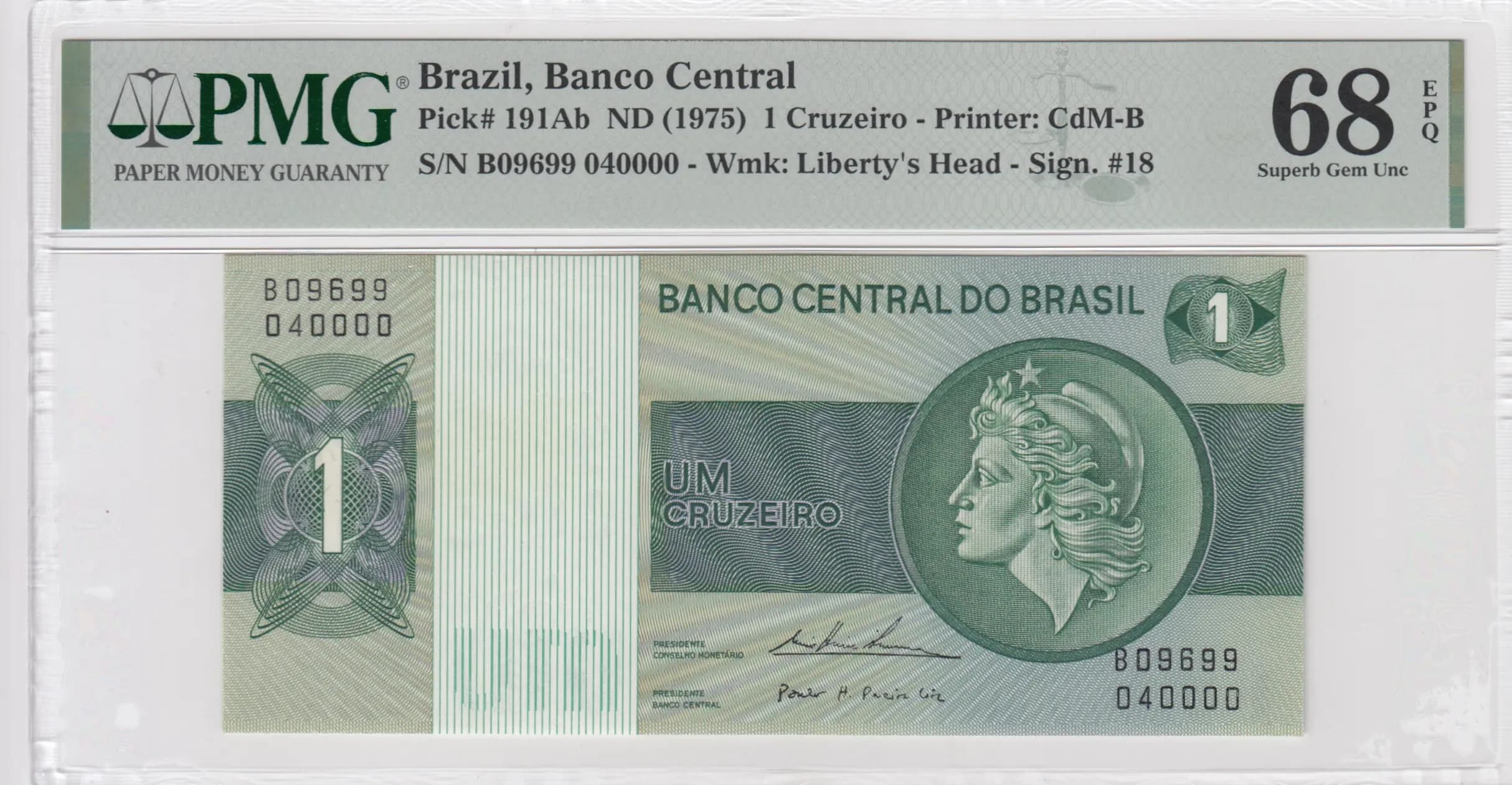
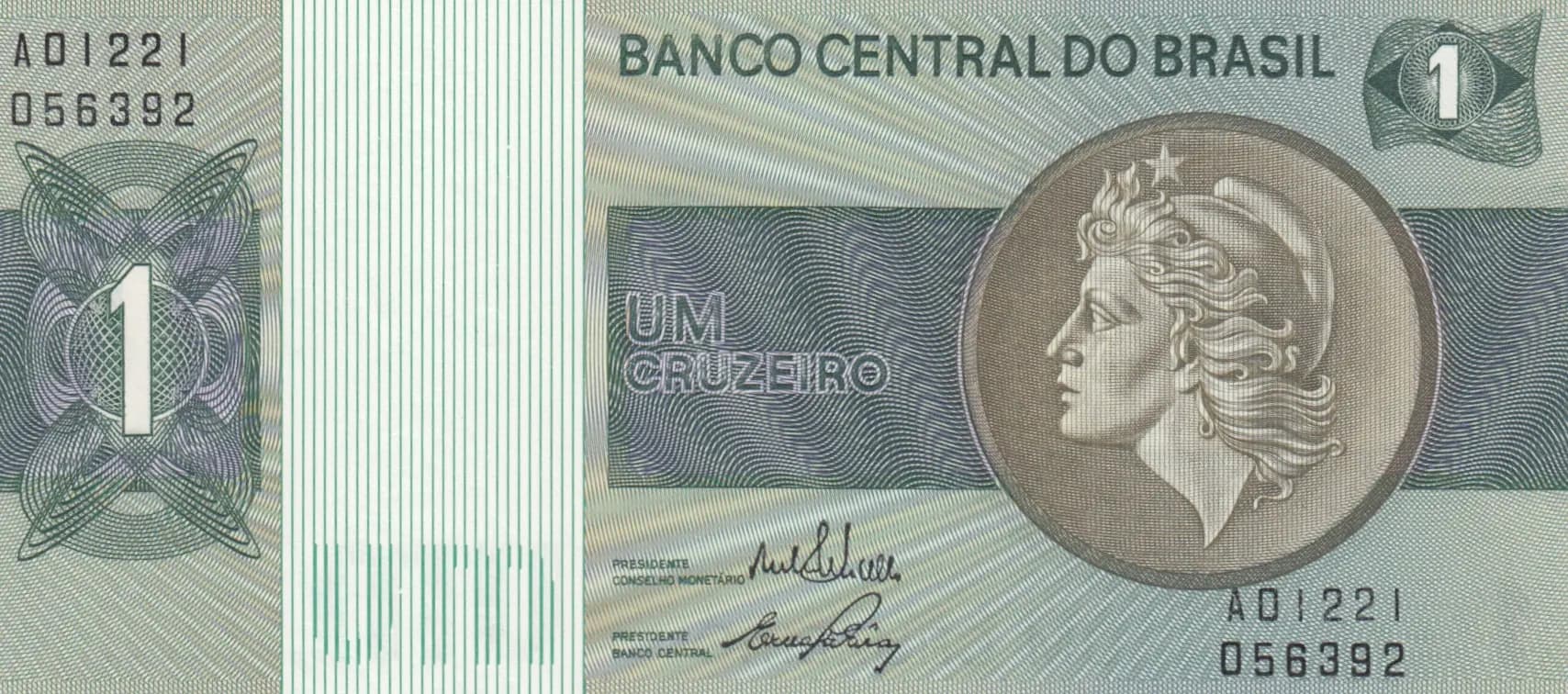
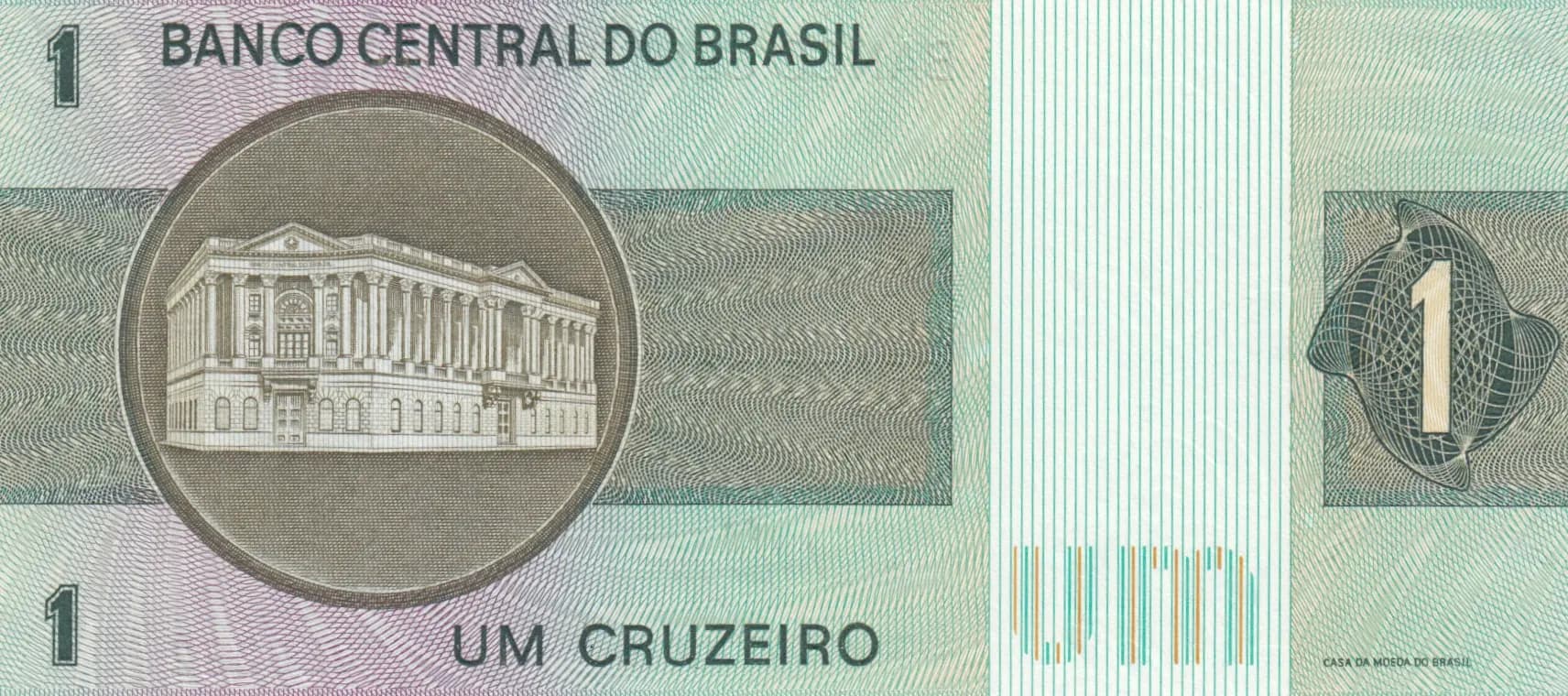
This 1970-1972 Brazilian 1 Cruzeiro note (Pick P-191) is presented in uncirculated condition with sharp, crisp printing throughout and no visible wear, creases, or damage. The note features elegant classical design elements on both sides, including a medallion portrait on the obverse and an architectural landmark on the reverse, rendered in green, gray, and beige tones with fine security line work. The excellent preservation and sharp engraving make this an attractive example of early 1970s Brazilian currency design.
Common. The note was issued in regular series from 1970-1972 with high print runs, as indicated by the series numbering (1-3781 range) and the prevalence of examples in the collector market. Recent eBay sales data shows multiple UNC examples selling for under $1-$10.50, with the 2019 catalog value for UNC specimens at approximately $1. This is consistent with common currency from a major central bank with no known print restrictions or recalls.
The 1 Cruzeiro note was issued by the Banco Central do Brasil during the early years of the cruzeiro currency, which replaced the old cruzado during Brazil's economic reorganization in the late 1960s-early 1970s. The note's design celebrates Brazilian institutional identity through its depiction of the Banco Central building (a symbol of monetary authority) and a classical portrait medallion representing the nation's values. This period reflects Brazil's modernization efforts under military rule, when the central bank sought to establish currency credibility through refined, technically advanced engraving and security features.
The obverse features a classical profile portrait in a circular medallion frame positioned on the right side, rendered in fine detail with curled/wavy hair, facing rightward. This portrait likely represents a figure symbolic of the Brazilian state or liberty. The left side displays the denomination '1' within an ornate circular geometric frame with intricate crosshatch patterns. The center contains vertical striped security patterns characteristic of intaglio engraving. The reverse depicts the neoclassical Banco Central do Brasil building (with columns and a domed roof) housed in a circular frame on the center-left, flanked by two large denomination numerals '1' in decorative circular medallions with globe-like geometric elements. Both sides employ fine interlocking ornamental borders typical of security printing from this era.
Front: 'BANCO CENTRAL DO BRASIL' (Central Bank of Brazil), 'UM CRUZEIRO' (One Cruzeiro), plus serial number components 'A01221' and '056392'. Back: 'BANCO CENTRAL DO BRASIL' (Central Bank of Brazil), 'UM CRUZEIRO' (One Cruzeiro), 'CASA DA MOEDA DO BRASIL' (Brazilian Mint/House of Coinage of Brazil), and denomination numerals '1' on both sides.
Intaglio (copperplate/steel plate engraving) as primary method, evidenced by the fine, sharp line work, detailed security patterns, and depth of impression characteristic of the Casa da Moeda do Brasil's production. The vertical line security patterns, ornate geometric interlocking designs, and precise portrait medallions all indicate professional security printing with multiple color registration (green, gray, and accent tones).
This example appears to correspond to Pick P-191Ac variant (printer: CdM-B, Casa da Moeda do Brasil). The serial number prefix 'A' and series number format are consistent with recorded variants. PMG has catalogued at least 2 variants for this base Pick number (P-191Ac and P-191s). Signature varieties are noted in reference sources but are not definitively identifiable from the provided images. The 5-digit series number format and serial number placement are characteristic of the early 1970s issue.