10 dollars 1978 specimen
Market Prices
9 salesAbout This Note
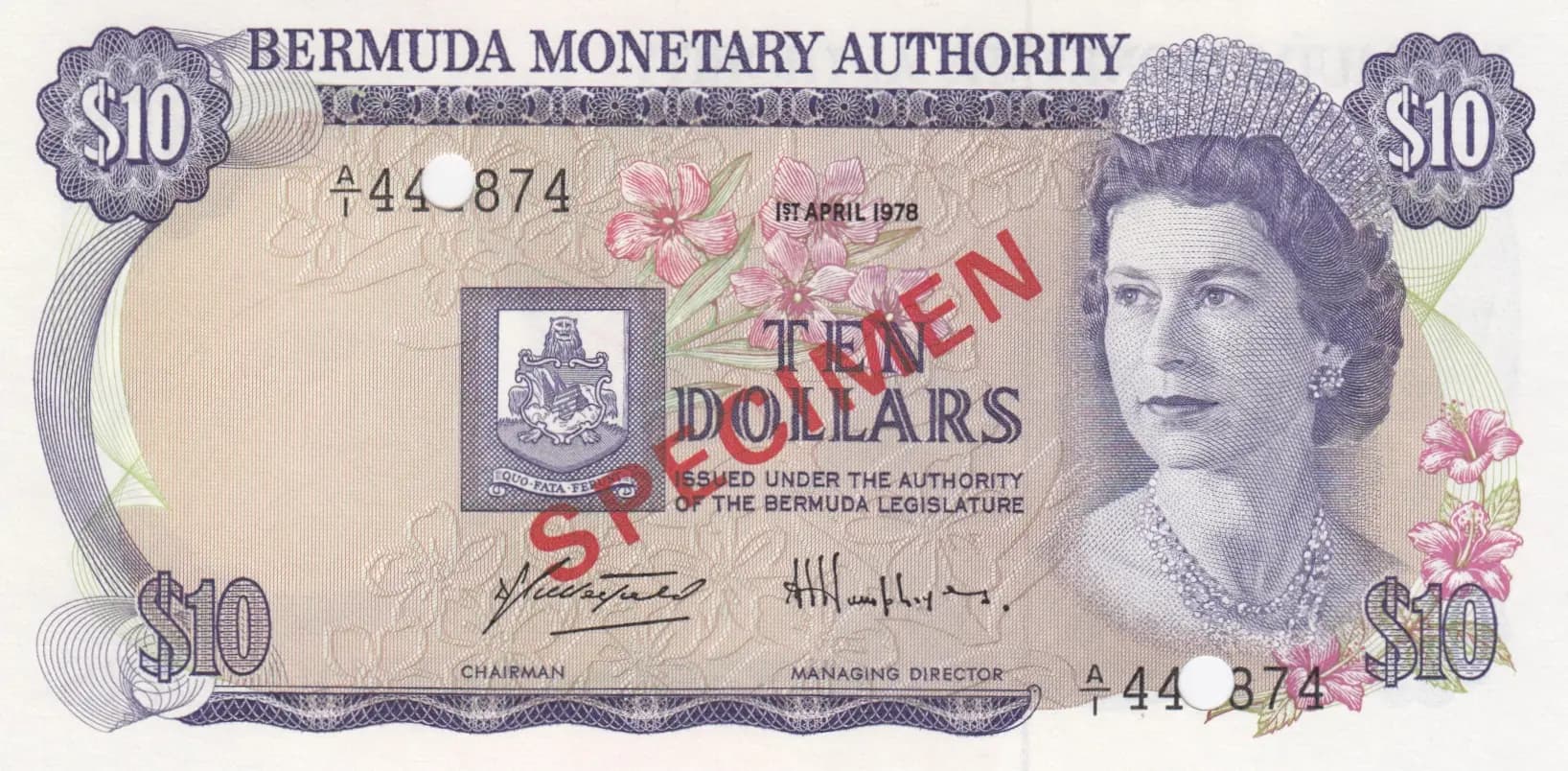
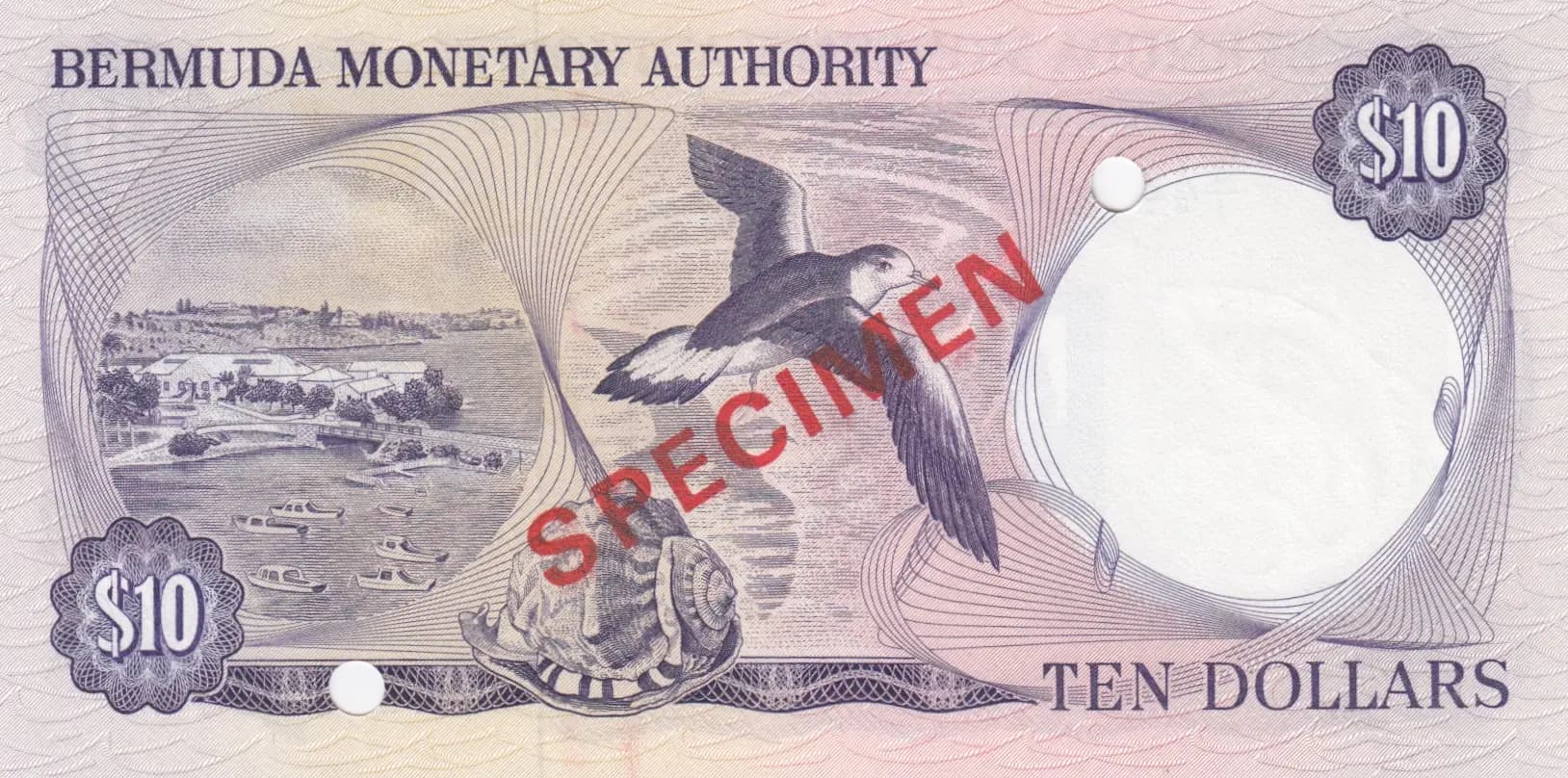
This is a pristine specimen example of the 1978 Bermuda Monetary Authority $10 banknote (Pick P-30as), featuring Queen Elizabeth II in formal portrait on the obverse and a striking Bermuda landscape with seabird on the reverse. The note exhibits exceptional condition with sharp printing, vibrant purple and beige tones, and displays the characteristic red 'SPECIMEN' overprint across both sides. Specimen notes are non-circulating presentation pieces and represent important reference examples for collectors of Commonwealth currency.
Common. This is a specimen note from a standard issue with substantial print runs. eBay market data shows UNC examples selling for approximately $170-$200, consistent with common specimen notes that command modest premiums over circulated examples but lack the extreme scarcity of error notes or very limited-run issues. Specimen overprints were distributed to collectors, banks, and government institutions, ensuring broader survival rates than circulated notes. The 1978 Bermuda $10 represents a foundational modern issue with no documented production limitations or recall.
This note was issued on April 1, 1978, during a period of modernization and currency reform for Bermuda. The design prominently features Queen Elizabeth II, reflecting Bermuda's status as a British Overseas Territory, while the reverse's emphasis on the Bermuda landscape—including waterfront architecture and indigenous seabird—celebrates the island's natural heritage and maritime culture. The Bermuda Monetary Authority's assumption of note issuance responsibilities in 1978 represented the island's increasing monetary independence within the Commonwealth framework.
The obverse features a right-facing three-quarter profile portrait of Queen Elizabeth II rendered in formal style, positioned on the right side of the note wearing pearls and formal regalia. The central-left area displays the heraldic Coat of Arms of Bermuda within an ornate shield design. The composition includes decorative corner rosettes and extensive guilloche patterning in purple and green against a tan/beige base, with pink floral elements (oleander or similar blooms) scattered on the right. The reverse showcases a detailed landscape vignette of Bermuda's waterfront on the left, depicting colonial-era architecture, boats, and coastal scenery. Centrally positioned is a long-tailed tropicbird (likely a white-tailed tropicbird, Phaethon lepturus) depicted in flight with wings spread. A prominent circular medallion or security circle appears on the right side. The watermark features a tuna fish design, visible as a light area in the paper. Fine line engraving techniques create the intricate background patterns throughout both sides.
FRONT: 'BERMUDA MONETARY AUTHORITY' (header identifying the issuing authority); '1ST APRIL 1978' (official issue date); '$10' and 'TEN DOLLARS' (denomination in numeral and word form); 'ISSUED UNDER THE AUTHORITY OF THE BERMUDA LEGISLATURE' (legal authorization statement); 'SPECIMEN' (overprint indicating non-circulating presentation note); 'CHAIRMAN' and 'MANAGING DIRECTOR' (signature line identifiers); Serial number 'A/44 874'. BACK: 'BERMUDA MONETARY AUTHORITY' (issuing authority); '$10' and 'TEN DOLLARS' (denomination repetition); 'SPECIMEN' (overprint). All inscriptions are in English.
Intaglio engraving (line engraving and rotogravure) combined with letterpress, typical of De La Rue currency production for Commonwealth territories during this period. The note exhibits multi-color printing with careful color separation, evident in the distinct purple, green, pink, and beige layering. Fine guilloche security patterns throughout indicate traditional currency engraving plates. The detailed landscape vignette and portrait suggest master engraving work characteristic of De La Rue's 1970s Commonwealth banknote production.
This note is catalogued as Pick P-30as, the specimen variant (indicated by the 's' suffix). The Pick catalog records three variants: P-30a (standard regular issue), P-30b (variant regular issue), and P-30s (specimen overprint). The observed serial number A/44 874 and red 'SPECIMEN' diagonal overprint confirm this as the specimen variety. No specific signature varieties or printing differences are noted in the visual analysis that would indicate subtypes within P-30s, suggesting this represents the standard specimen presentation of the 1978 issue.