10 taka 1978
Market Prices
43 salesAbout This Note
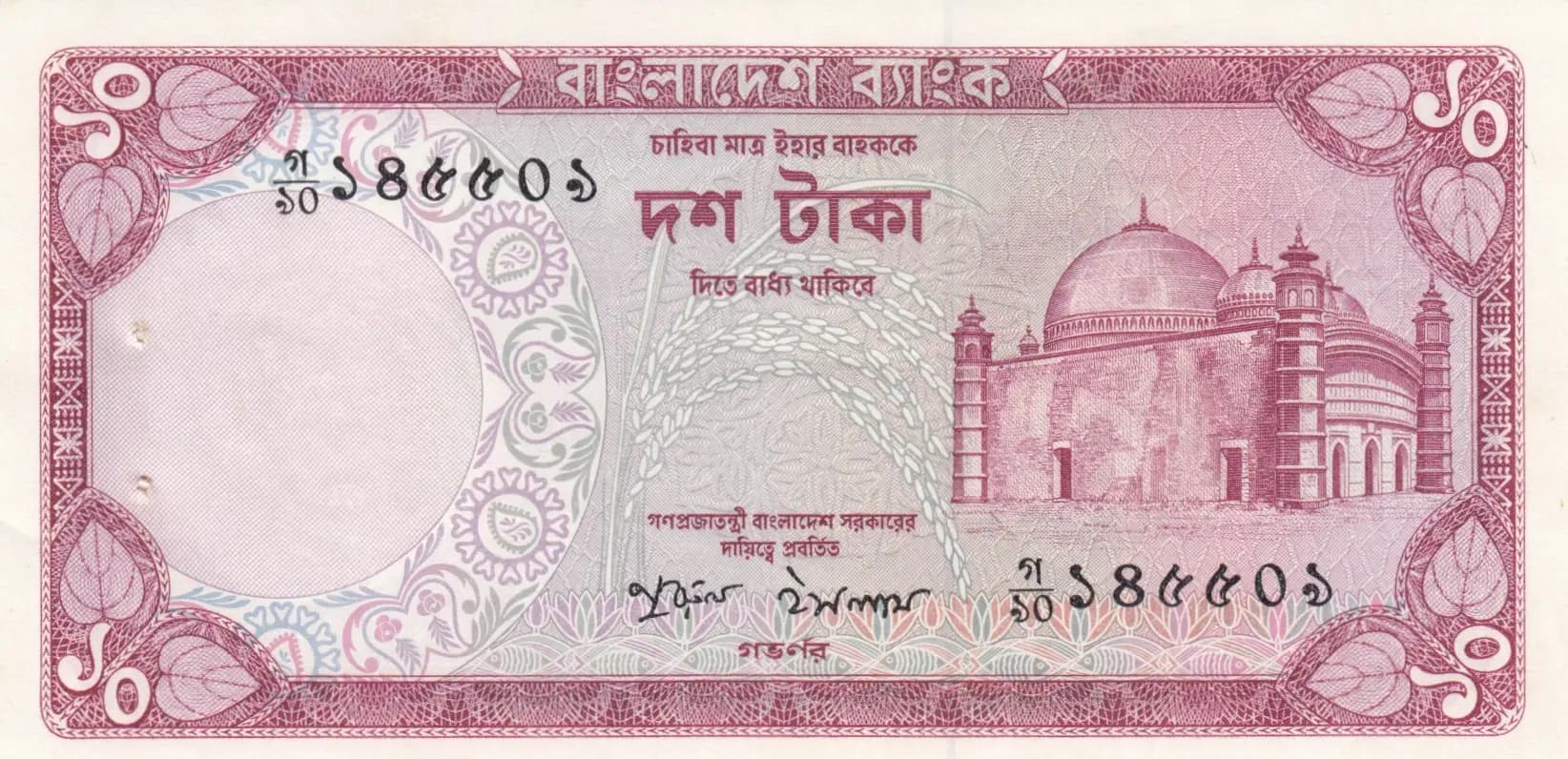
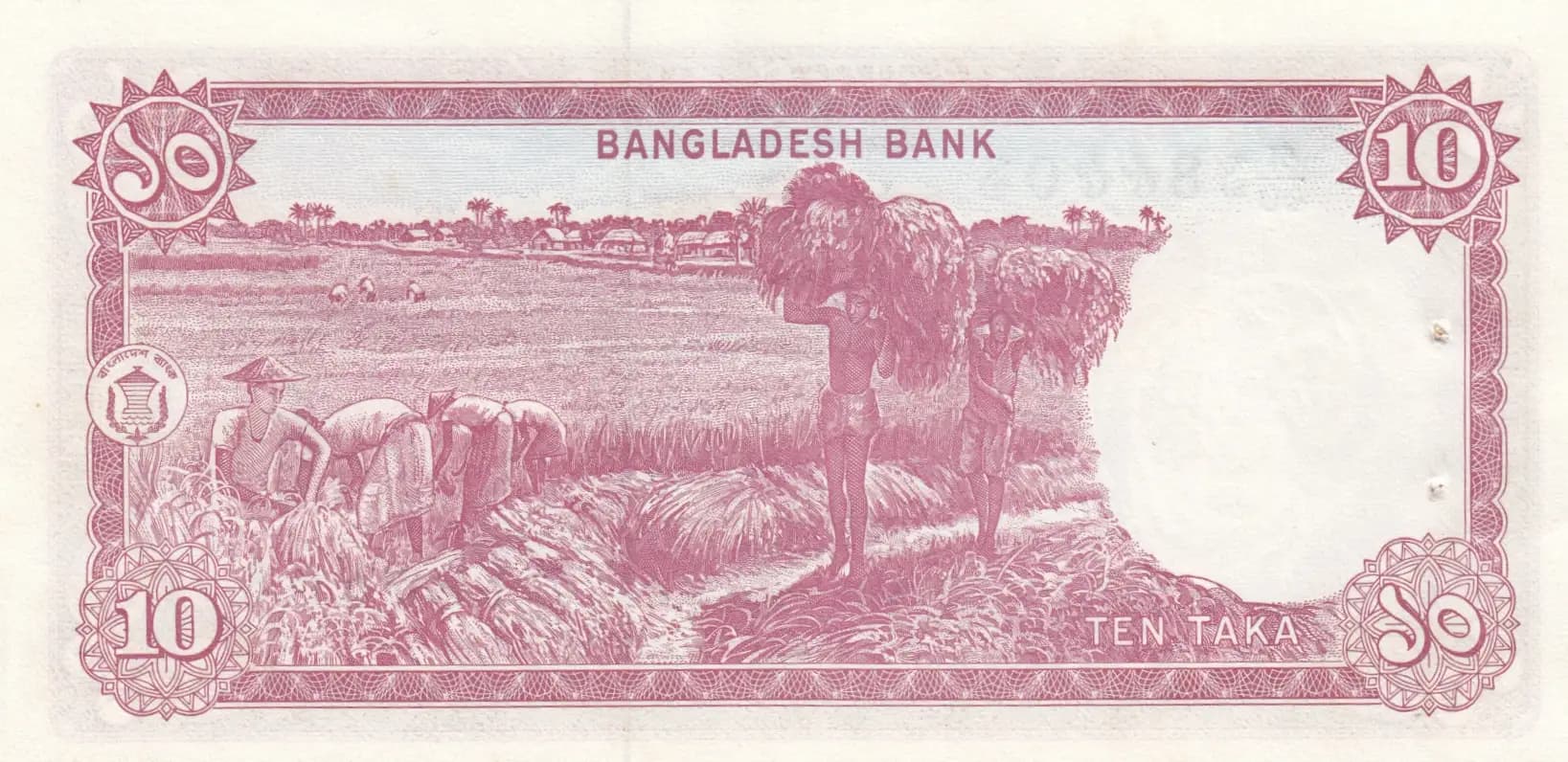
This is a UNC example of the Bangladesh Bank's 1978 10 Taka note (Pick P-21), featuring the iconic Atiya Jame Mosque in Tangali rendered in delicate pink and mauve tones on the obverse. The reverse displays an intricate agricultural scene depicting rice and jute harvesting with workers and rural settlement, exemplifying Bangladesh's agrarian heritage during the early post-independence period. Despite minor age-related creasing consistent with careful handling, the note retains exceptional clarity in its fine engraving and color saturation, making it an attractive example of this foundational issue.
Common. The eBay market data shows consistent and frequent transactions across multiple grades (UNC, AUNC, EF, VF, F) spanning over a decade, with UNC examples typically realizing $1.50–$6.51 and 2019 catalog value listed at $9 for UNC. The abundance of sales activity and moderate price points indicate this was a substantial print run with adequate circulation supply. This note does not exhibit characteristics of rarity.
Issued in 1978, just seven years after Bangladesh's independence in 1971, this 10 Taka note represents the Bangladesh Bank's early efforts to establish a national currency and identity. The obverse features the Atiya Jame Mosque in Tangali, a significant religious and cultural landmark symbolizing the nation's Islamic heritage, while the reverse's depiction of agricultural workers harvesting crops and jute reflects Bangladesh's economy rooted in agriculture and the textile industry during this formative period.
The obverse features a large ornamental circular medallion with intricate paisley and floral patterns in the center-left, anchored by the architectural rendering of the Atiya Jame Mosque with its characteristic domed structure and multiple minarets depicted in pink and mauve coloring on the right side. Decorative floral and leaf motifs occupy all four corners, while ornamental border patterns frame the entire note. The reverse presents a detailed engraved landscape scene showing the rural agricultural character of Bangladesh, with palm trees, jute plants under harvest, multiple workers engaged in crop collection, grazing cattle, and a distant settlement, all rendered in the same harmonious pink and mauve palette. Circular sun motifs with radiating lines accent the corners on both sides, serving both decorative and security functions. The note's color scheme of pink, mauve, grey, and white creates a cohesive and distinctive visual identity.
Front side: 'বাংলাদেশ ব্যাংক' (Bangladesh Bank), 'দশ টাকা' (Ten Taka), 'চাহিবা মাত্র ইসহার বাইকাকে' (On demand the issuer pays to bearer), 'দিন্দ বাষী থাকিফের' (Ten days after date), 'গণপ্রজাতন্ত্রী বাংলাদেশের সুরক্ষার' (For the protection of the People's Republic of Bangladesh), 'দামিদে প্রবর্তিত' (Issued), Serial number '৩০১৪৫৫০५' (3014550). Back side: 'BANGLADESH BANK' (Bangladesh Bank), 'TEN TAKA' (Ten Taka), '10' (denomination numeral).
Intaglio engraving (line engraving), characteristic of high-security banknote production. The intricate fine line work visible in both the ornamental designs and the detailed agricultural landscape, combined with the precise reproduction of architectural details and the clear engraved borders, is consistent with traditional intaglio methods used by major security printers for central bank currency. The Bangladesh Bank's early notes were typically produced by established international security printers, though specific printer attribution would require further research.
The observed serial number is 3014550 (printed in Bengali numerals). While multiple signatures and serial number prefixes may exist for this Pick number across its production run, the specific variety designation would require comparison with established numismatic references for the P-21. No overprints are visible on this example, suggesting it is from the regular issue rather than any special printing variant. PMG population records indicate at least one catalogued variant exists for this base Pick number.