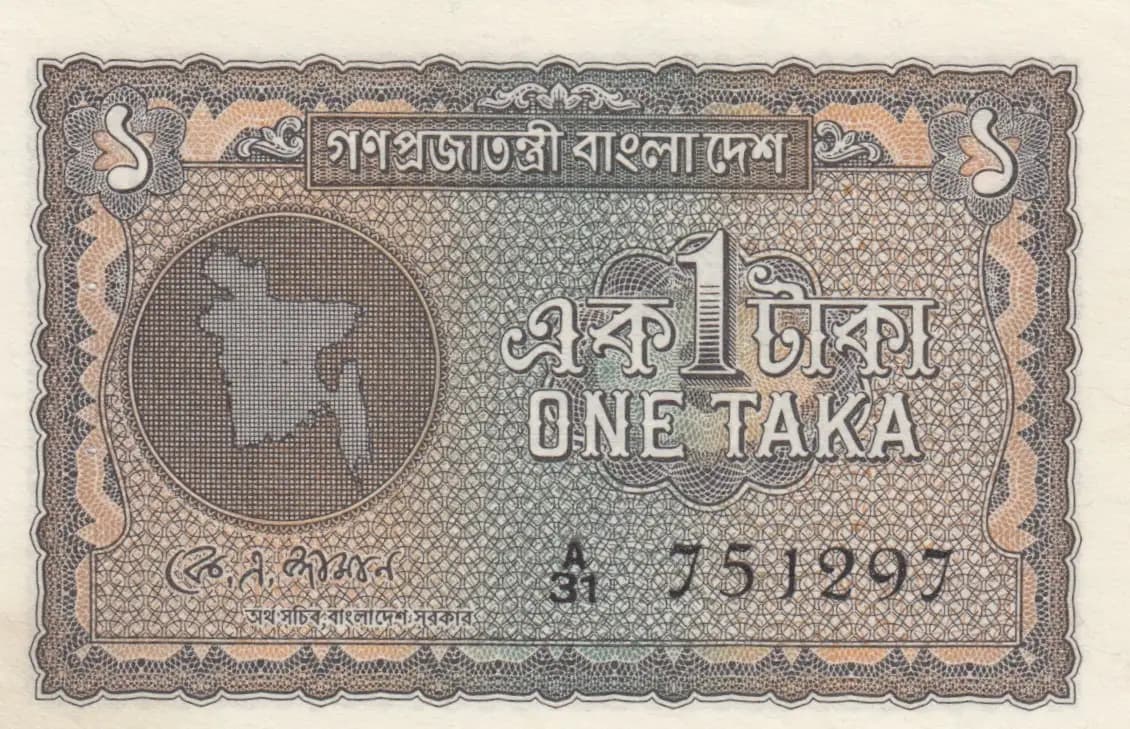
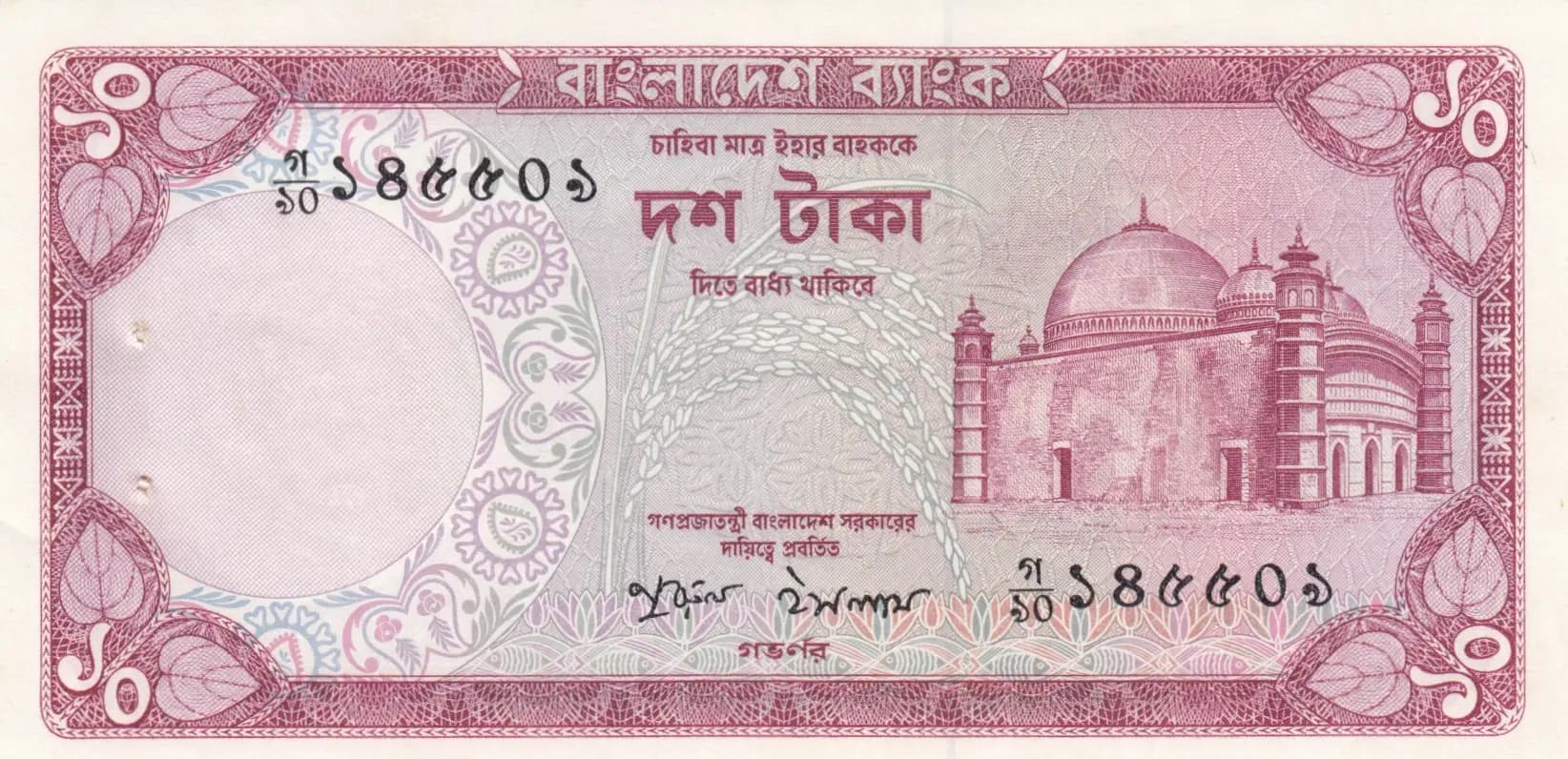
1 rupee 1971
Market Prices
9 salesAbout This Note
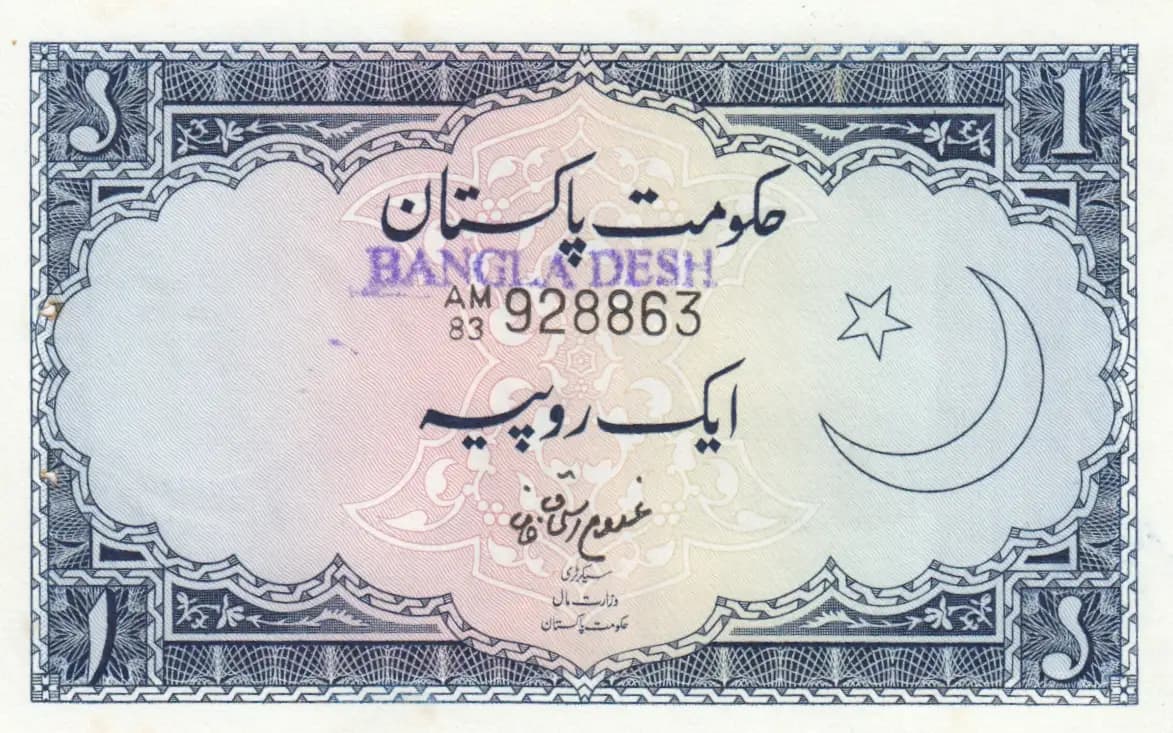
This is a historically significant 1 Rupee note from Bangladesh's independence period, featuring the rare overprinted variant of Pakistan's 1964 currency design. The note exhibits pristine uncirculated condition with sharp impressions, vibrant multi-color printing in blues, pinks, and mauves, and displays both Bengali and English inscriptions reflecting the transition to Bangladesh sovereignty. The purple "BANGLADESH" overprint on the original Pakistani design makes this a fascinating numismatic artifact of the 1971 independence movement.
Common. This is the first Pick number for Bangladesh and represents an important cataloged issue, but eBay market data shows consistent sales at modest prices ($6.50–$25.45 for UNC grades over a decade, with recent 2025 PMG 65 at $17.50), indicating steady supply and collector demand without scarcity premiums. The 2019 catalog value of $90 for UNC is significantly higher than realized market prices, suggesting these notes trade below catalog in the current market. The overprinted Pakistan notes were produced in sufficient quantity for local circulation and survive in reasonable numbers today.
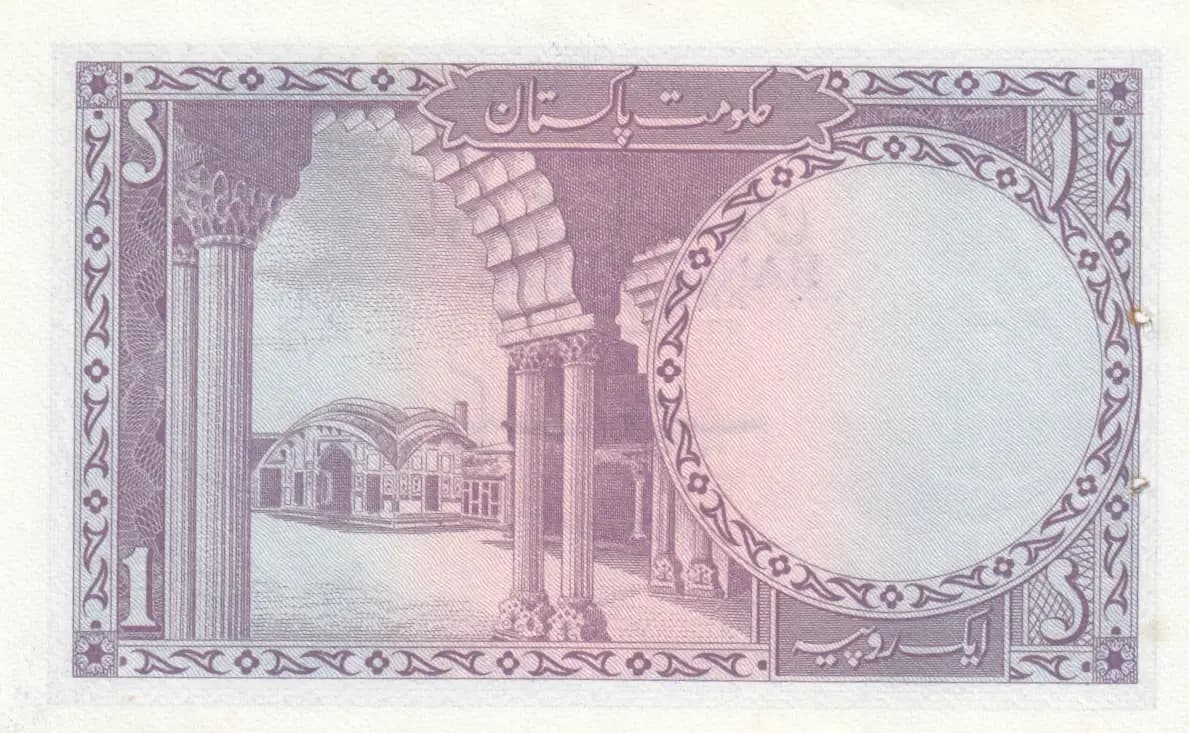
This note represents a critical moment in South Asian history—the creation of Bangladesh in 1971. The original design features Pakistan's national symbols (crescent moon and star), while the locally-applied "BANGLADESH" overprint in English reflects the new nation's immediate need for currency during independence. The architectural elements on the reverse, including classical columns and a domed structure, represent institutional continuity during the transitional period before the Bangladesh Bank could produce its own dedicated currency designs.
The obverse features an ornate pale pink and cream central medallion framed by elaborate cloud-like scalloped borders and symmetrical corner ornamentations in dark navy blue. The Pakistani national emblem is represented by a prominent five-pointed star and crescent moon positioned on the right of the central design, signifying sovereignty. The reverse displays classical architectural imagery with fluted columns bearing decorative capitals on the left, a domed institutional building in the center background (likely representing a government or civic structure), and a large empty circular decorative frame on the right—characteristic of South Asian currency designs of the era. Fine guilloche patterns and geometric floral borders frame the entire composition in mauve and pale pink tones.
Front side: বাংলাদেশ (Bangladesh in Bengali), BANGLADESH (English), একটি টাকা (One Rupee in Bengali), AM00928863 (Serial Number), 33 (Reference number). Back side: পাকিস্তান (Pakistan in Bengali—historical text from original design), ধারস্থান (Bengali text at top—institutional or location designation), 1 (Denomination numeral).
Intaglio engraving (recess printing) combined with multicolor offset lithography, evidenced by the fine line work, detailed guilloche patterns, and sharp impression quality visible throughout. The precision of the ornamental borders and security features indicates production by a specialized security printer; notes from this period were likely produced by Thomas De La Rue or a similar high-security facility. The overprint was applied as a secondary operation using a rubber stamp or hand-applied method, as documented for Bangladesh's emergency currency measures in 1971.
This is Pick P-1, the 1 Rupee denomination, identified by the serial number prefix AM and the specific overprint configuration. Four different overprint types are documented for this issue according to research authorities. The visual analysis shows the English-language "BANGLADESH" overprint on an original Pakistan design (ND 1964 base note), which is the standard variety. Serial number AM00928863 with the "33" designation suggests a specific print batch. PMG population reports indicate P-1 is the base cataloged number with 15 documented variants across the Bangladesh series, though specific overprint varieties within P-1 itself may be further subdivided by specialized collectors.