10 shillings= 1/2 pounds 1939
Market Prices
50 salesAbout This Note
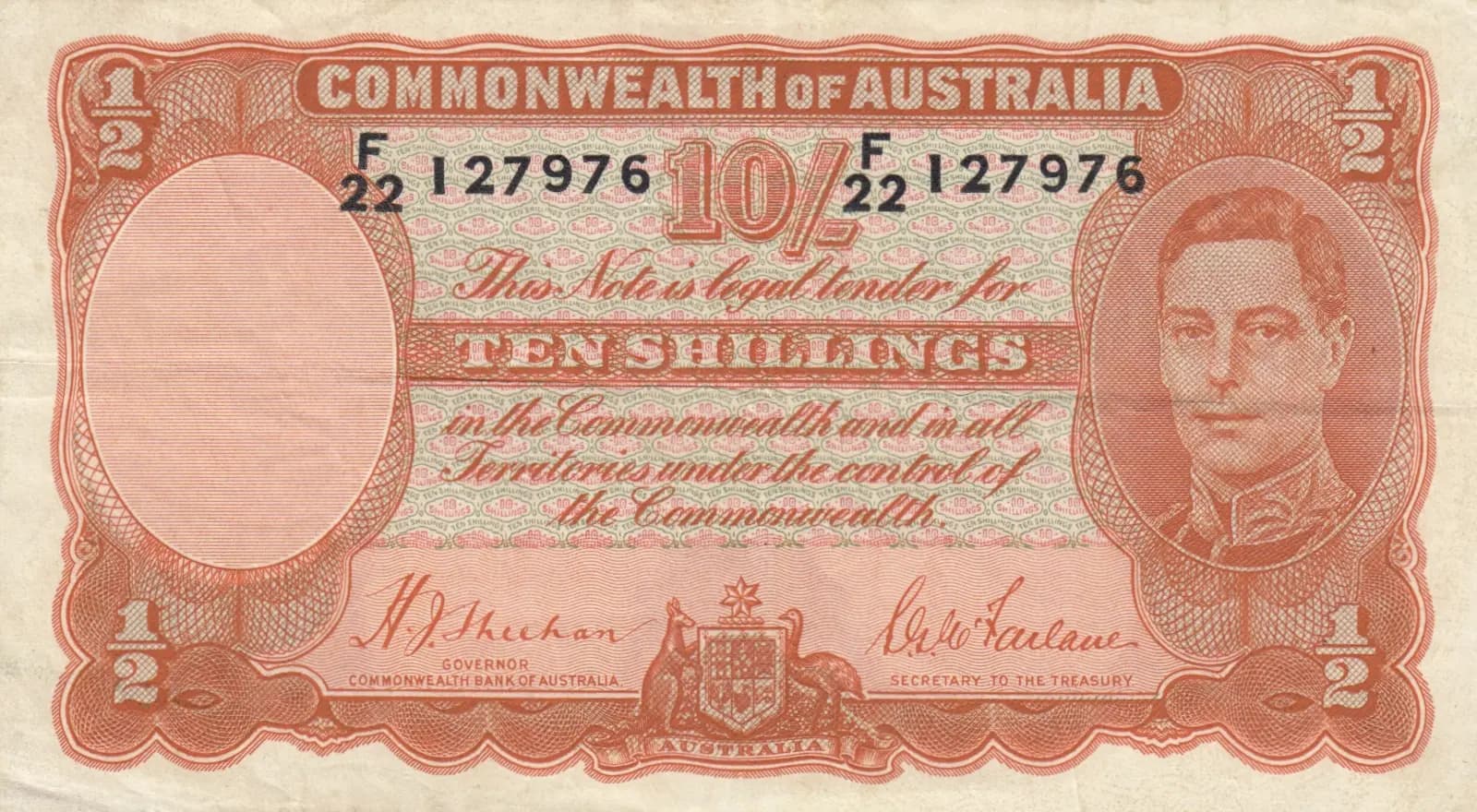
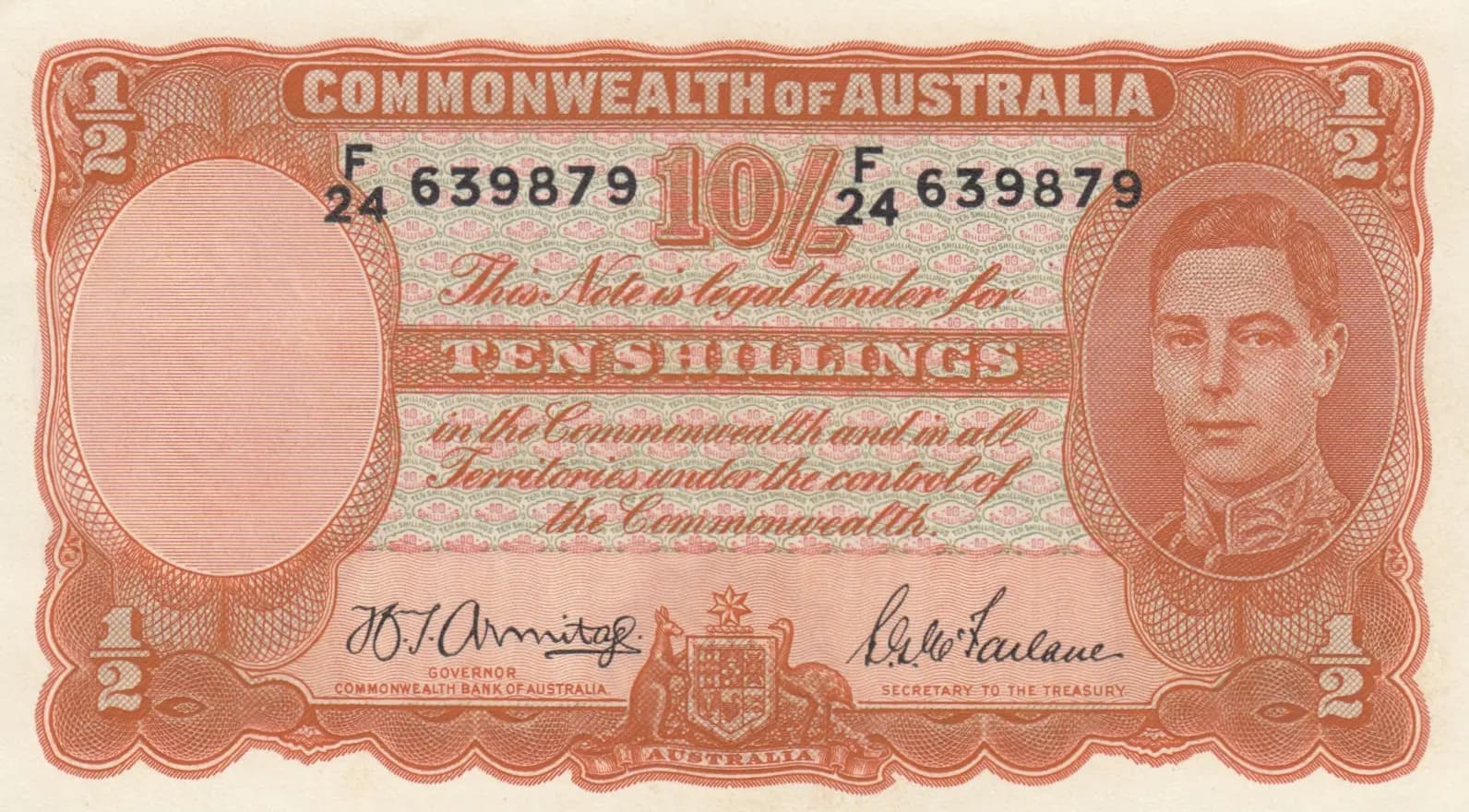
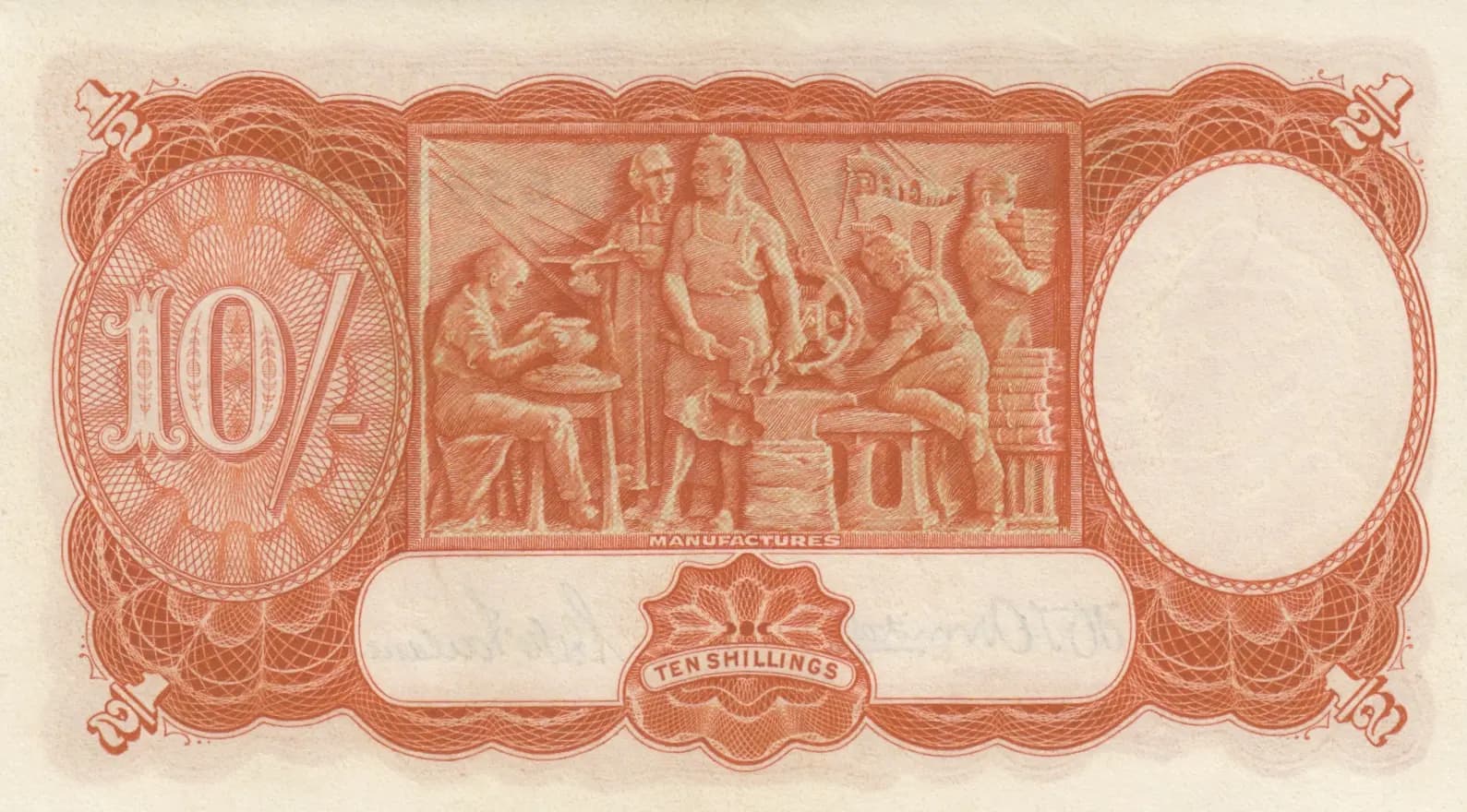
This is an uncirculated example of the Commonwealth Bank of Australia's 10 shillings note (P-25b) from the 1939-1952 series, displaying the characteristic reddish-brown color scheme and crisp, sharp printing typical of high-grade specimens. The note features King George VI in formal profile on the obverse and an allegorical scene of manufacturers at work on the reverse, with both sides showing excellent preservation with no visible wear, creases, or damage. As an UNC-graded note with strong visual appeal and historical significance as pre-decimalization Australian currency, this represents a desirable example for collectors of Commonwealth banking history.
Common. Despite being catalogued as P-25b (indicating one of four variants in this series), the 10 shillings note from the 1939-1952 issue period was produced in substantial quantities as a regular circulation denomination. eBay market data shows consistent sales activity across multiple condition grades, with most examples trading between $5-$40 USD even in VF-EF conditions, and UNC examples typically realizing $80-$150. The 2016 catalogue value of $1500 for UNC appears aspirational; actual market sales data does not support extreme rarity. Notes of this type remain readily available to collectors, particularly in lower to mid-grade conditions.
Issued during the reign of King George VI (1939-1952), this 10 shillings note reflects Australia's continued use of sterling currency and its alignment with British monetary standards prior to decimalization in 1966. The reverse's depiction of 'Manufactures' with industrial workers symbolizes Australia's post-Depression economic recovery and growing manufacturing capacity during and after World War II. The note's legal tender declaration across the Commonwealth and its territories emphasizes Australia's constitutional monetary authority during this transitional period of the nation's development.
The obverse features a formal engraved portrait of King George VI positioned on the right side in traditional heraldic style, facing forward as the monarch. The note employs a symmetrical design with decorative corner ornaments bearing denomination markers ('2' on front, '20' on back in each corner), reflecting the classical aesthetic of Commonwealth banknote design. The reverse presents an allegorical scene titled 'Manufactures' depicting multiple figures engaged in industrial and artisanal work within an interior workshop setting, symbolizing national productivity. The Commonwealth of Australia coat of arms/seal appears prominently, and both sides feature ornate borders with fine-line engraving patterns and intricate guilloche work typical of security printing of the era. The color scheme of reddish-brown/orange-red on cream background provides strong contrast and visual distinction.
FRONT SIDE: 'Commonwealth of Australia' (header); 'This Note is legal tender for Ten Shillings in the Commonwealth and in all Territories under the control of the Commonwealth' (legal tender clause); 'Commonwealth Bank of Australia' (issuing authority); 'Governor' and 'Secretary to the Treasury' (official titles); Signatures of J.S. Armitage (Governor) and Treasury Secretary; Serial number 'F 24 639879'; Denomination markers '10/-' and '2' in corners. BACK SIDE: 'Manufactures' (theme/description); 'Ten Shillings' (denomination text); '10/-' (large denomination circles); Serial continuation and '20' denomination markers.
Intaglio engraving (line engraving) on steel plates, characteristic of Commonwealth Bank notes from this period. The fine-line background patterns, intricate border work, and detailed portraiture are hallmarks of high-security intaglio production. The visual sharpness and depth of impression observed in this UNC specimen are consistent with early printings from original plates. The note was likely produced by the Bank Note Company or similar security printer contracted to the Commonwealth Bank, employing traditional multi-plate color separation techniques typical of pre-1950s banknote production.
This note is catalogued as Pick 25b, with three known related varieties (P-25a, P-25c, P-25d) distinguished by watermark variations or signature changes within the 1939-1952 issue period. The observed specimen shows watermark of Captain Cook (as noted in reference data), which is consistent with the P-25b designation. The signature of J.S. Armitage as Governor helps identify the specific issue period within the broader 1939-1952 range. Serial number F 24 639879 indicates this is from a mid-to-later production batch. Collectors should note that P-25 variants are differentiated primarily by signature combinations and exact date ranges rather than major design changes, making attribution important but not always obvious to the casual observer.