1 pound 1938
Market Prices
16 salesAbout This Note
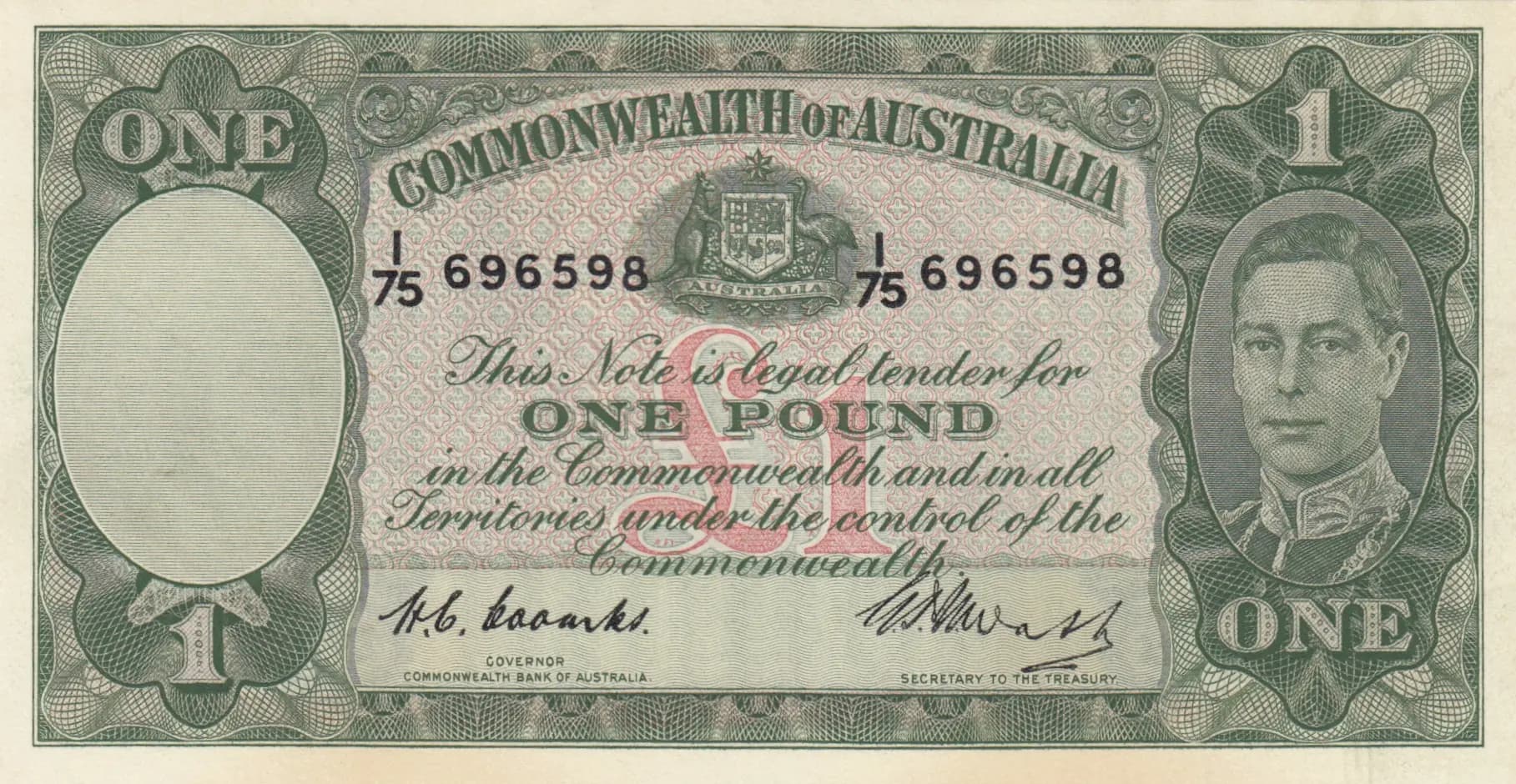
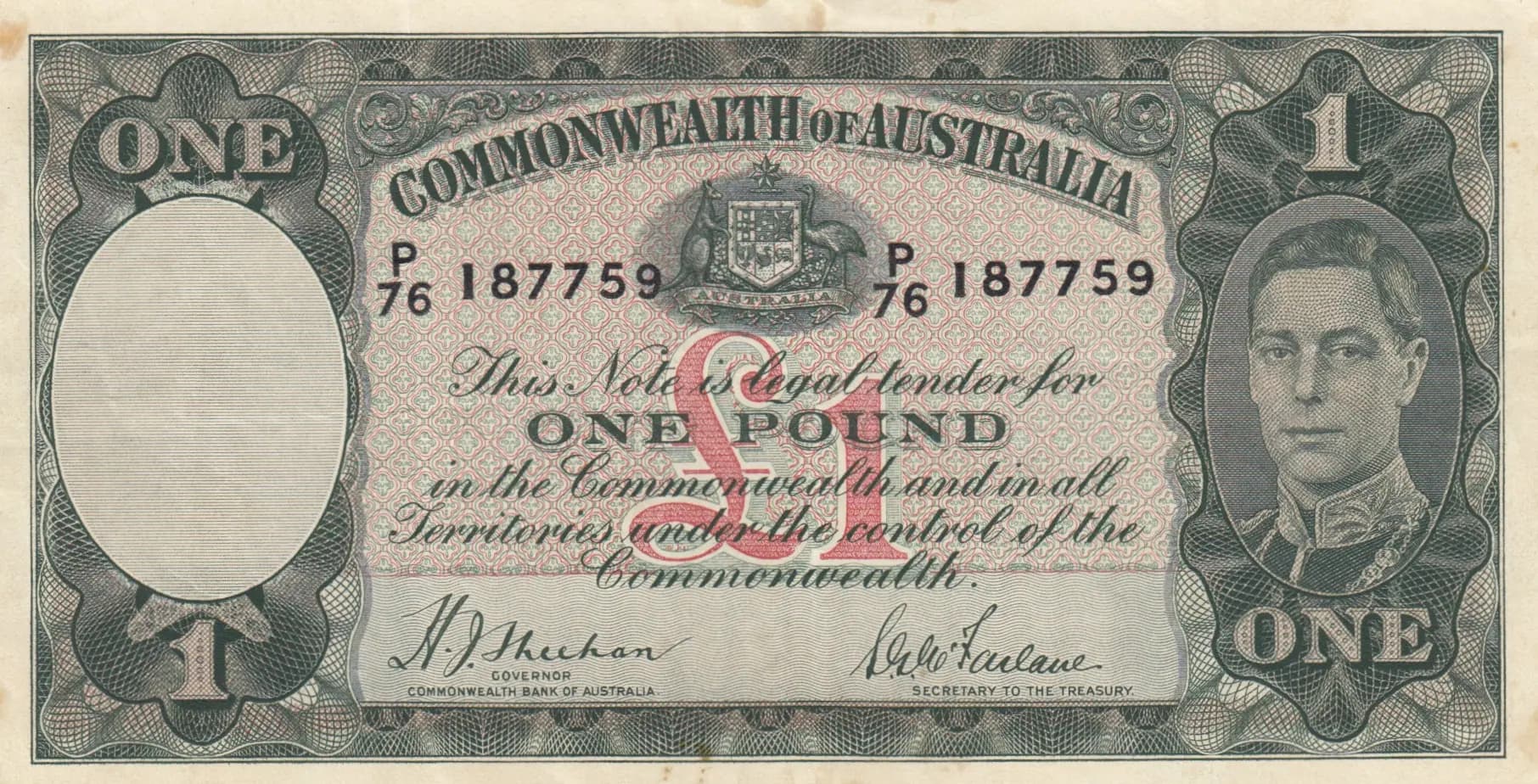
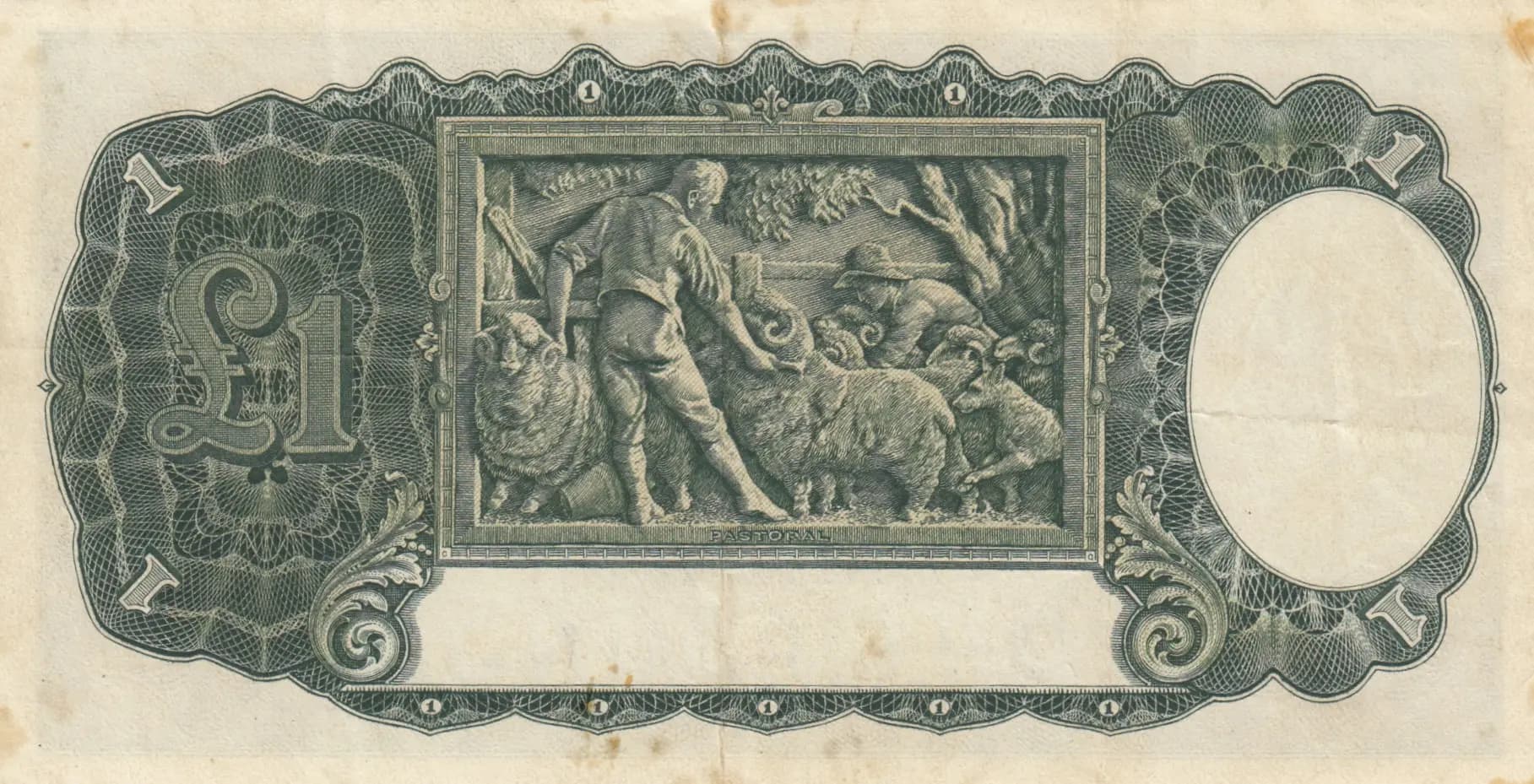
This is a Commonwealth Bank of Australia One Pound note from 1938, graded VF, featuring a portrait of King George VI on the obverse and a classical pastoral scene with shepherds and sheep on the reverse. The note displays characteristic aging with foxing around the margins and visible creasing, consistent with circulation and age, yet retains clear printing detail and good overall eye appeal typical of Very Fine specimens from this era.
Common. While this 1938 One Pound note from the 1938-1952 issue period is no longer in active circulation and commands collector interest, it is not rare. The eBay sales data shows consistent market activity with VF specimens regularly selling in the $25-$50 range over the past 15 years, with numerous transactions at lower prices. The 2016 catalog value of $200 for VF reflects collector pricing rather than scarcity. The long issuing period (1938-1952) and the Commonwealth Bank's extensive production runs mean examples remain available to collectors in moderate grades.
Issued during the reign of King George VI (1936-1952), this note represents the Commonwealth Bank of Australia's regular currency issue of the late 1930s. The pastoral imagery on the reverse—depicting shepherds with sheep—reflects Australia's historical economic reliance on wool production and pastoral industries, while the Captain Cook watermark honors the nation's colonial heritage and the explorer's significance to Australian identity.
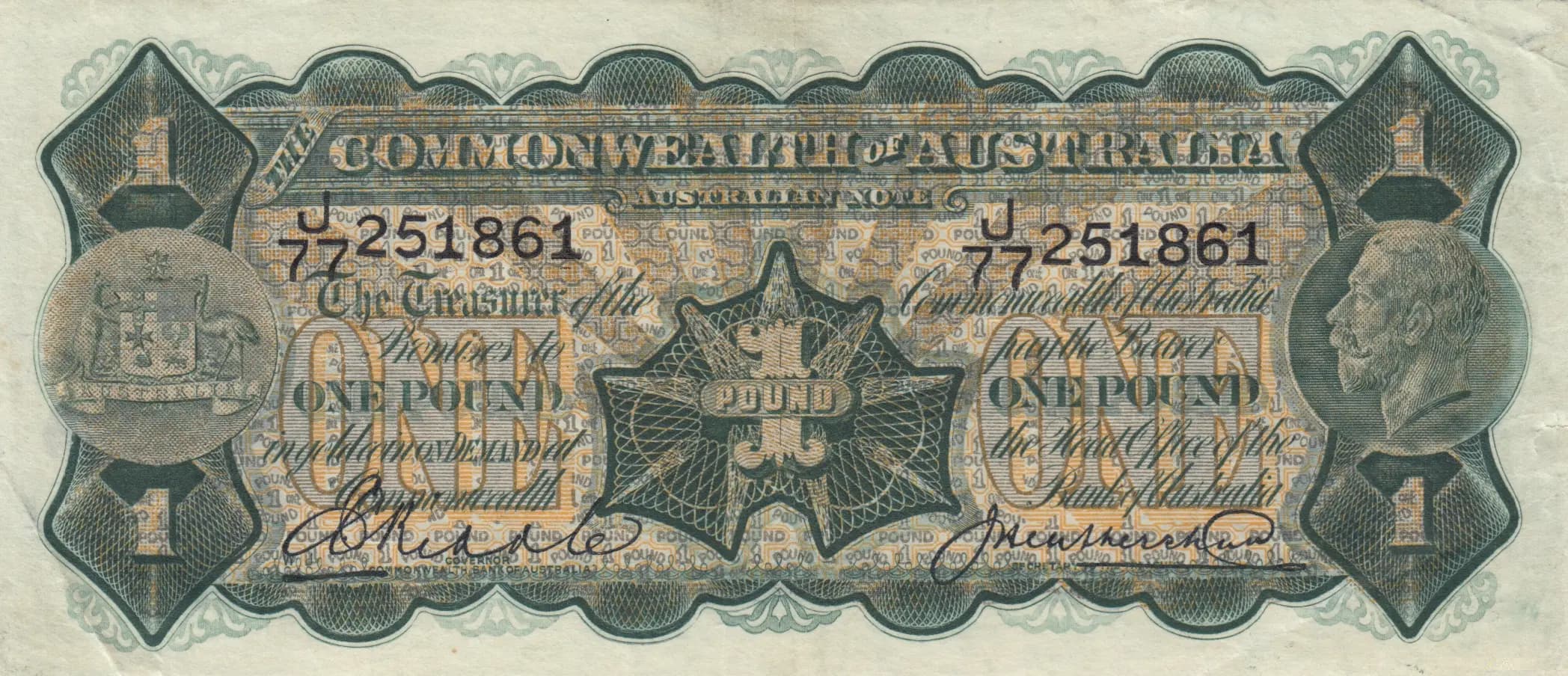
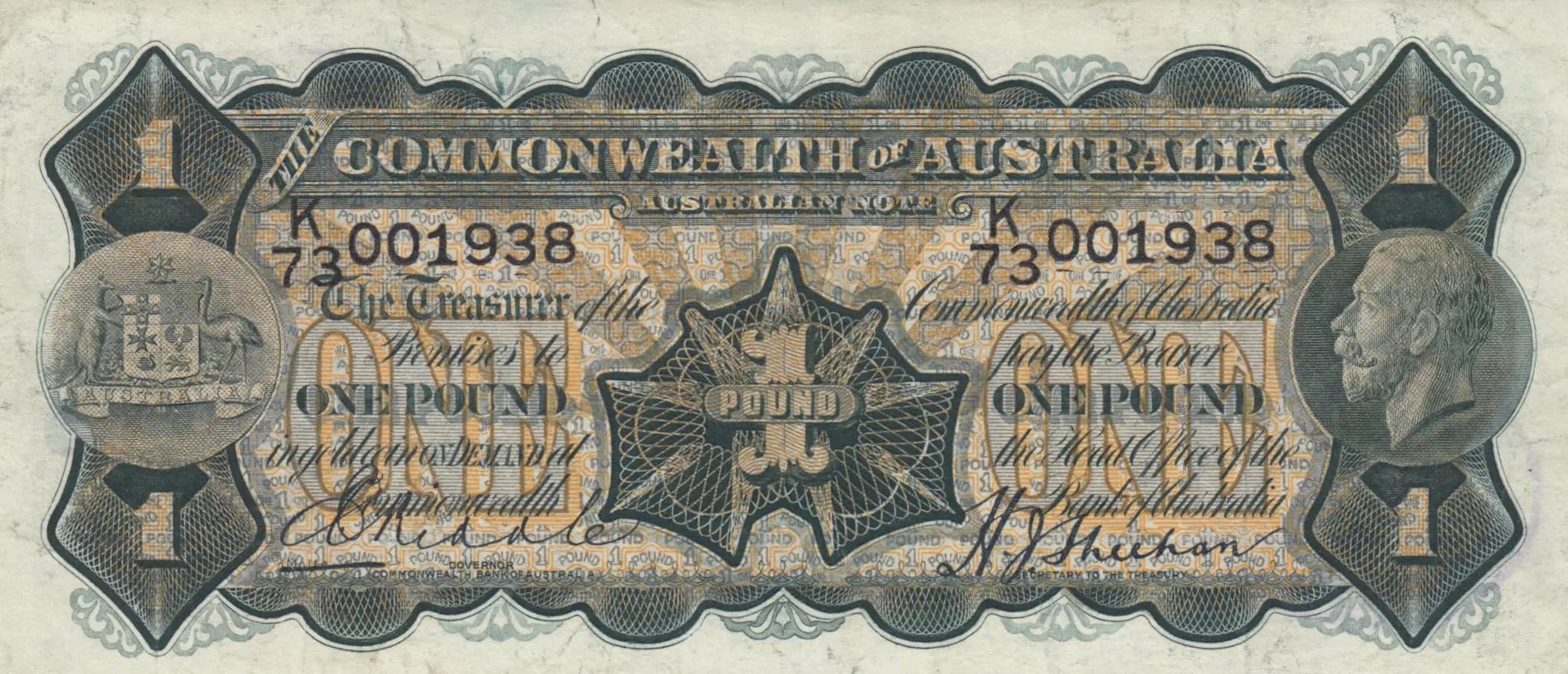
The obverse features a formal right-facing portrait of King George VI in the position of honor on the right side, accompanied by the Commonwealth coat of arms centered below the denomination text. The design employs ornate decorative borders with intricate geometric patterns, rosette designs in corners, and fine cross-hatching throughout. The reverse presents an engraved classical scene titled 'Pastoral' depicting multiple human figures (shepherds) with sheep in a landscape setting, surrounded by ornamental scrollwork and floral border motifs. Both sides utilize fine-line engraving technique with extensive guilloche patterning for security purposes. The dominant color scheme is dark green on a multicolor underprint with pink/red and cream tones, consistent with the catalog reference.
Front side: 'ONE POUND' (denomination), 'COMMONWEALTH OF AUSTRALIA' (issuing authority), 'This Note is Legal tender for ONE POUND in the Commonwealth and in all Territories under the control of the Commonwealth' (legal tender declaration), 'COMMONWEALTH BANK OF AUSTRALIA' (issuer name), 'GOVERNOR' and 'SECRETARY TO THE TREASURY' (signatory titles), with signatures of H Shukan and R D Falvane, plus serial number 'P76 187759 P76'. Back side: 'PASTORAL' (design theme descriptor) and denomination '1'.
Intaglio engraving (recess printing), standard for Australian banknotes of this period. The fine line cross-hatching, detailed guilloche patterns, and scenic engraving observed are characteristic of intaglio work. The printer for Commonwealth Bank of Australia notes during this era was typically the Reserve Bank's printing facilities or contracted security printers, employing traditional engraved plates to produce the multiple color separations visible in the multicolor underprint.
This specimen is cataloged as Pick P-26a, the base variety with Captain Cook watermark (green). The PMG population report indicates four recognized varieties (P-26a through P-26d) exist for this One Pound denomination, all sharing the Cook watermark but differing in other characteristics (likely signature combinations or subtle design features). The serial number prefix 'P76' and signatures of H Shukan and R D Falvane should be compared against known signature varieties to determine the precise sub-variety, though the P-26a designation as provided indicates this is the standard cataloged version.