1 pound 1938
Market Prices
6 salesAbout This Note
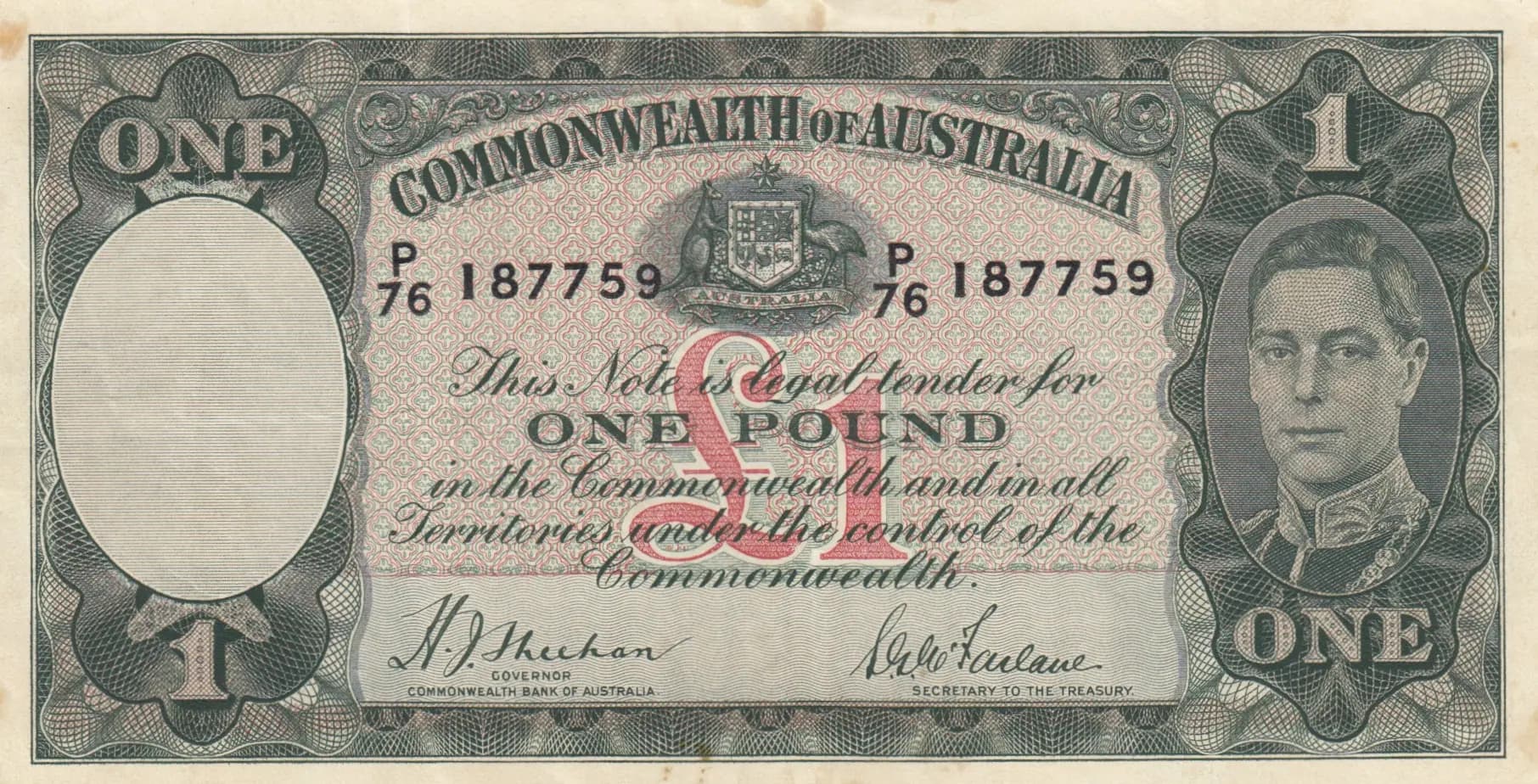
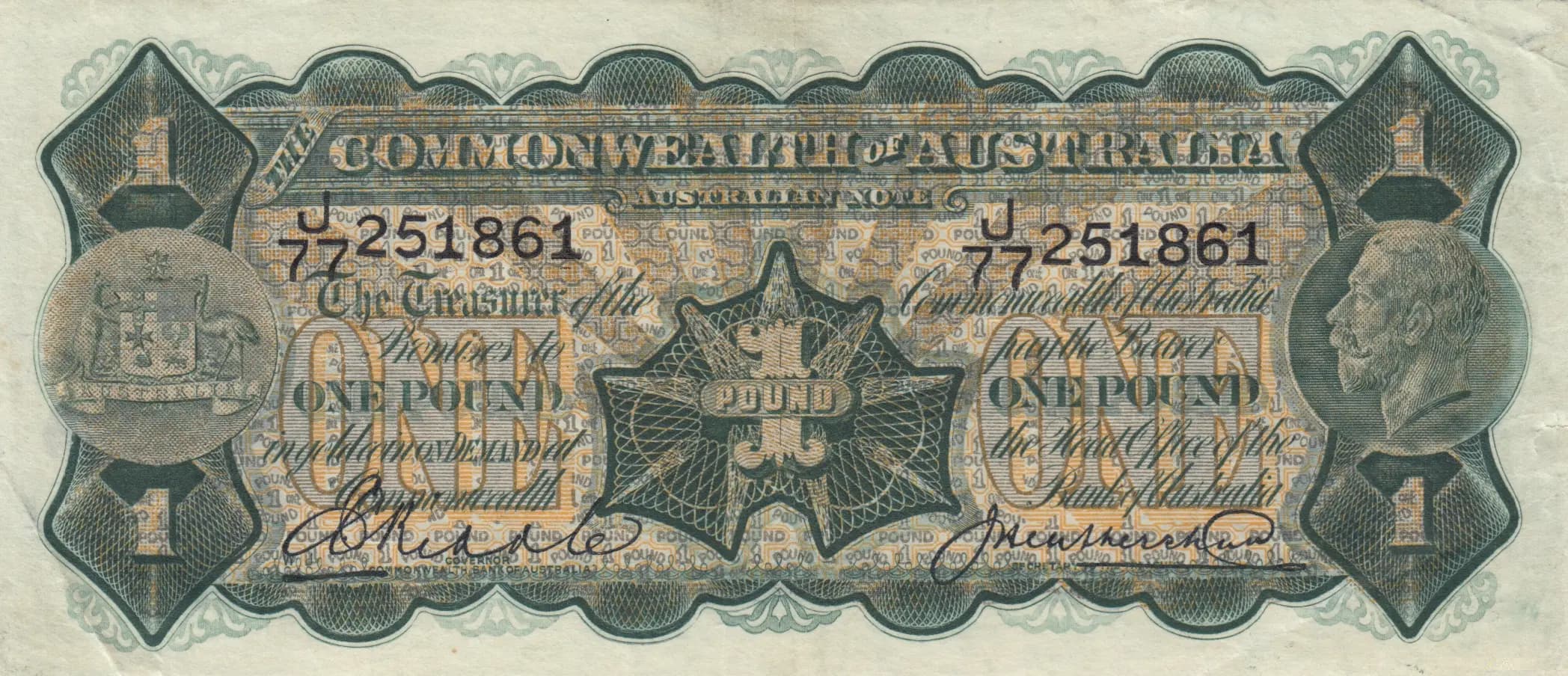
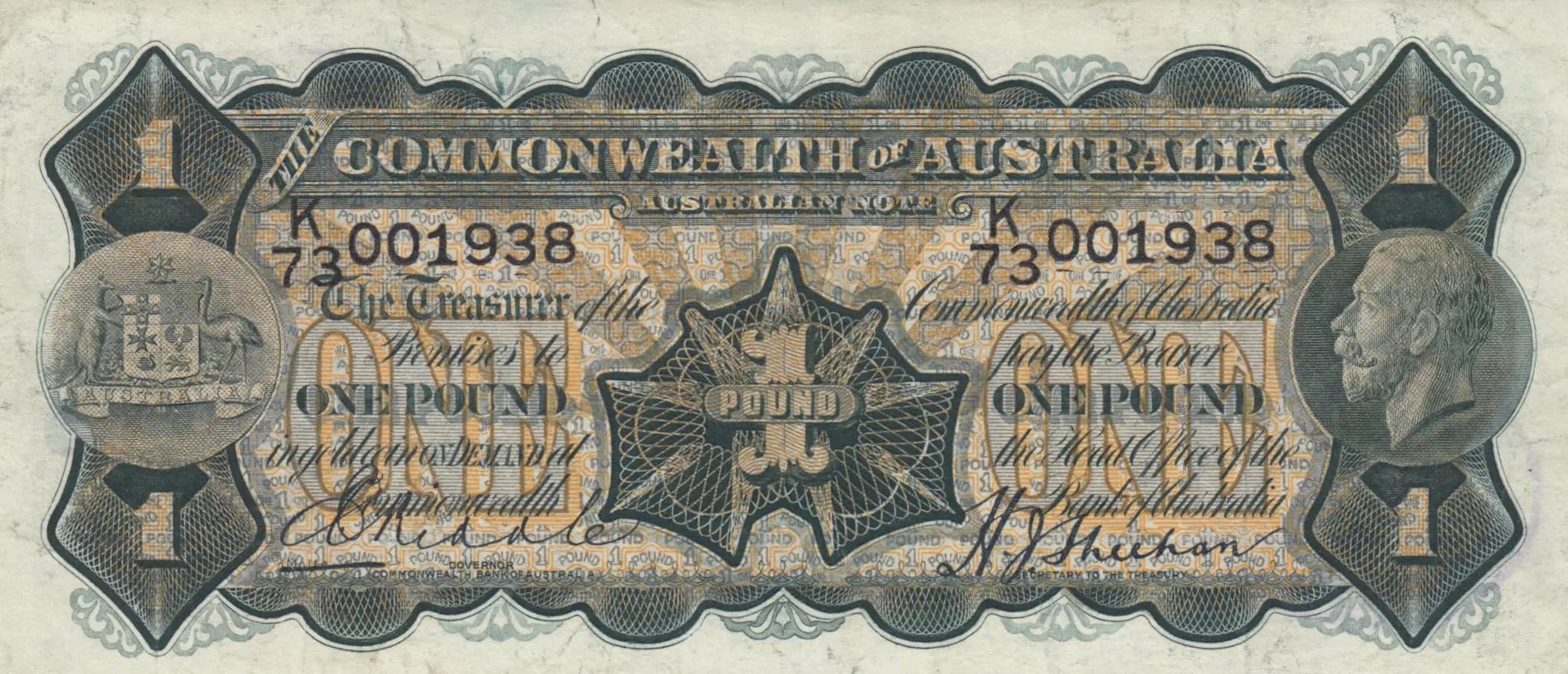
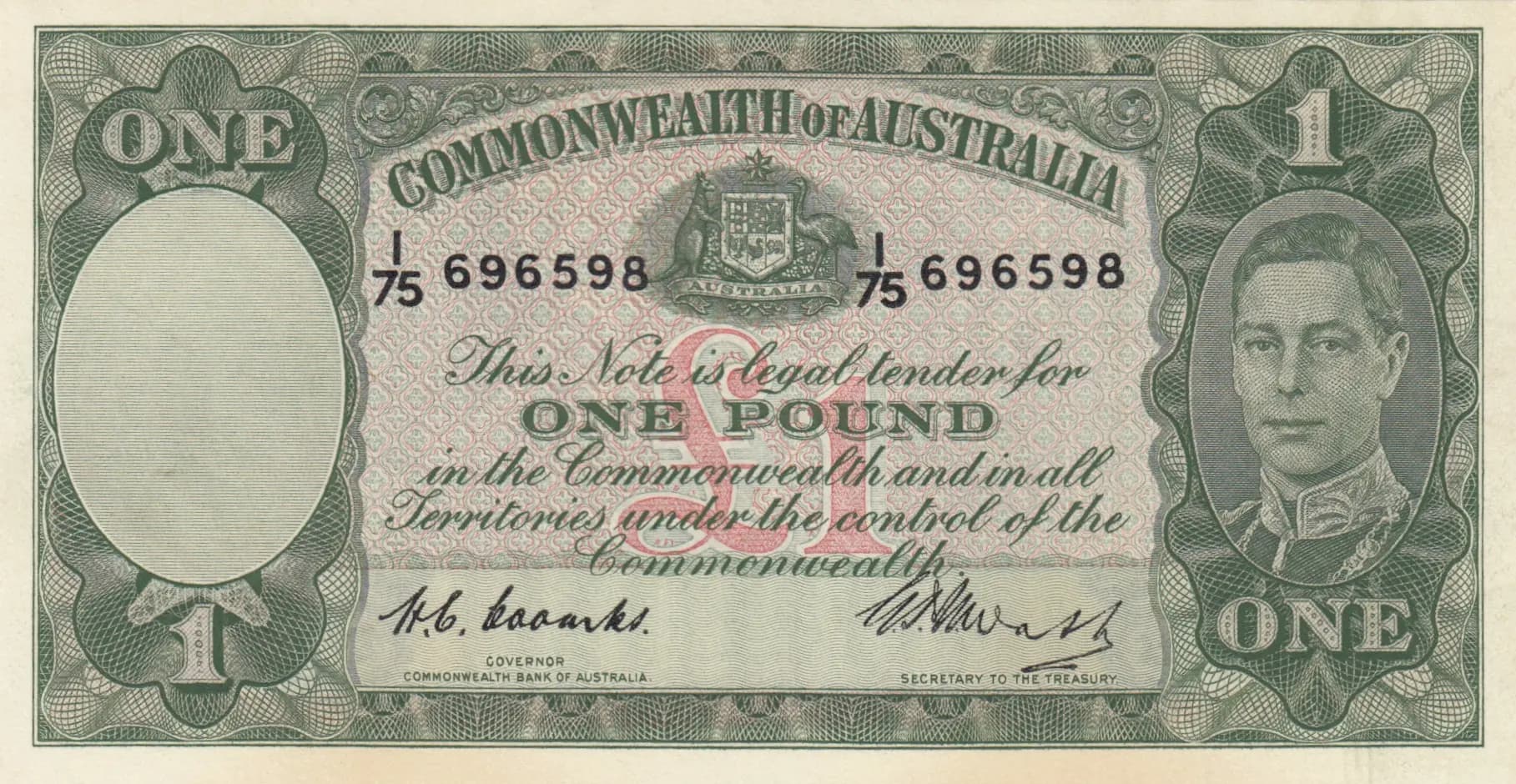
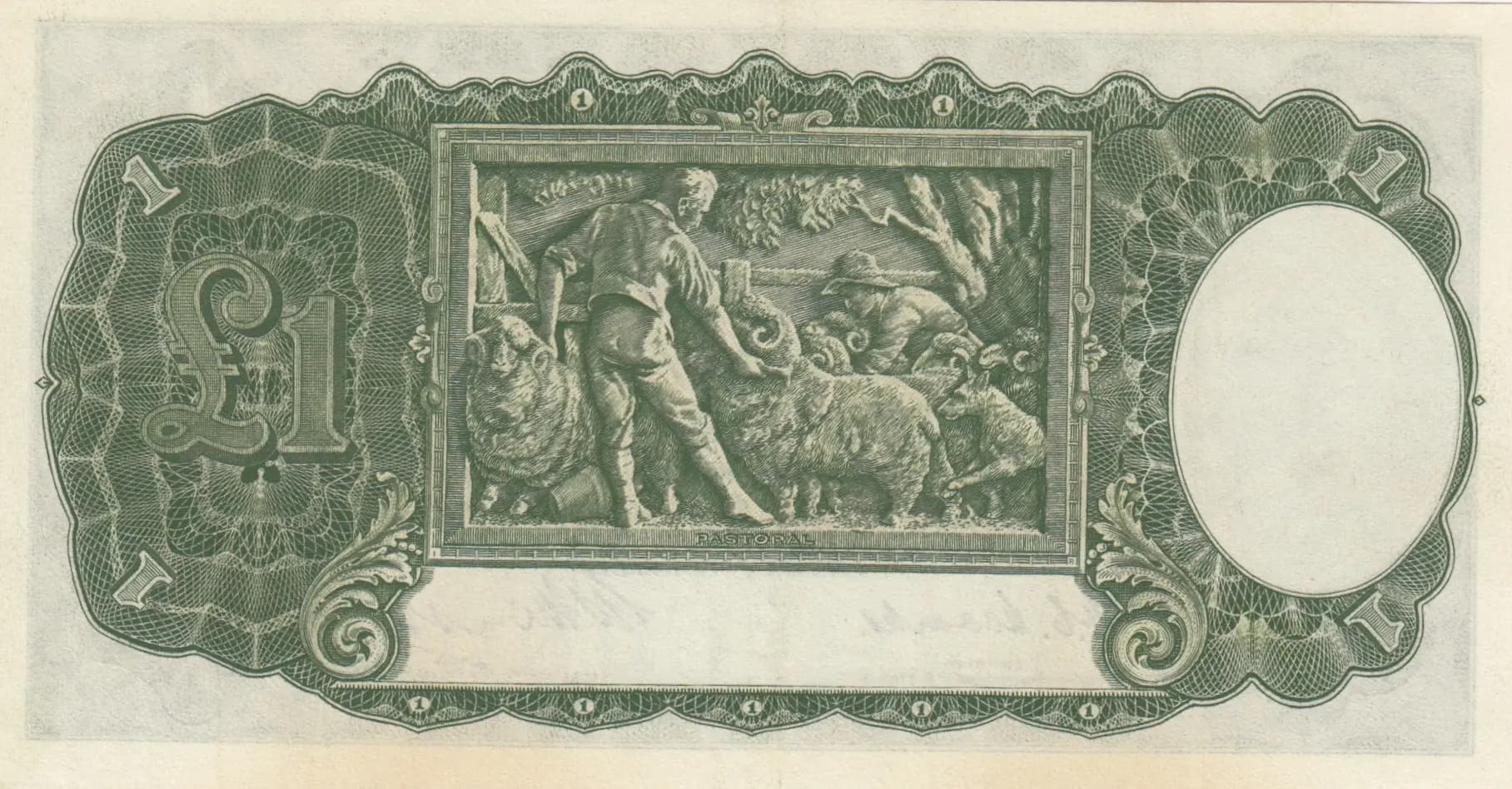
This is a Commonwealth Bank of Australia One Pound note from the 1938-1952 series, presented in pristine uncirculated condition. The note features King George VI in formal portrait on the right side of the obverse, complemented by an elaborate pastoral scene on the reverse depicting shepherds and sheep in a classical engraved style. The exceptional condition, crisp impressions, and intact decorative borders make this an attractive example of pre-decimal Australian currency.
Common. The 1938-1952 series (Pick-26 variants) maintained consistent circulation throughout this extended 14-year period and represents one of the longest-running Australian pound note designs. Market data shows examples regularly selling on eBay in the $45-$110 range for circulated examples, with UNC examples catalogued at $850 (2016), indicating steady but not exceptional demand. The note was not subject to early recall and had substantial print runs across multiple signature varieties (Boone being one signature variant). No scarcity indicators are present for this Pick-26c designation.
Issued during the reign of King George VI (1936-1952), this banknote reflects Australia's continued monetary ties to the British Commonwealth in the post-WWII era. The prominent pastoral imagery on the reverse—showing shepherds with sheep and classical figures—symbolizes Australia's significant wool and agricultural heritage, which was central to the nation's economy during this period. The note's design emphasizes both British imperial connection through the monarch's portrait and Australian national identity through distinctly antipodean pastoral iconography.
The obverse features King George VI in formal attire positioned within a decorative frame on the right side, rendered in the classical engraved style typical of Commonwealth currency of the era. The central design incorporates the Commonwealth coat of arms with shield and heraldic supporters at the apex. The note employs an intricate geometric and floral pattern background in the central pink/rose section, flanked by ornate green borders with elaborate decorative scrollwork. The reverse displays an allegorical 'Pastoral' scene in classical engraved style, depicting multiple human figures (including shepherds and cherubs) tending sheep in a countryside landscape with rolling hills and trees, emphasizing Australia's wool and agricultural significance. Blank oval security spaces appear symmetrically positioned on both sides of both obverse and reverse.
Front: 'ONE' (denomination marker, top left and bottom right); 'COMMONWEALTH OF AUSTRALIA' (issuing nation); '75 696598' (serial number); 'This Note is legal tender for ONE POUND in the Commonwealth and in all Territories under the control of the Commonwealth' (legal tender declaration); 'H.C. Boone' and 'GOVERNOR' (signature and title of issuing authority); 'COMMONWEALTH BANK OF AUSTRALIA' (issuing institution); 'SECRETARY TO THE TREASURY' (official capacity). Back: 'PASTORAL' (scene title); '1' (denomination numeral).
Intaglio engraving (steel engraving), the standard security printing method for Commonwealth banknotes of this era. The fine line work, intricate pattern detail, and sharp impressions visible throughout the design are characteristic of high-security intaglio production. This series was produced by the Note Printing Branch of the Reserve Bank of Australia, utilizing traditional engraved steel plates for both primary design and security features.
This note is identified as Pick-26c, one of four catalogued variants (P-26a through P-26d) distinguished by signature combinations and issuing dates within the broader 1938-1952 series. The visual analysis confirms the H.C. Boone signature as Governor, placing this within the Boone signature variety. The watermark is confirmed as Captain Cook (black), consistent with the period. Serial number 75 696598 is visible on the obverse. All four Pick-26 variants share identical designs but differ in signature authority representatives and dates of issue, with P-26c representing one of the intermediate signature variants in this multi-decade production run.