50 francs 1944
Market Prices
20 salesAbout This Note
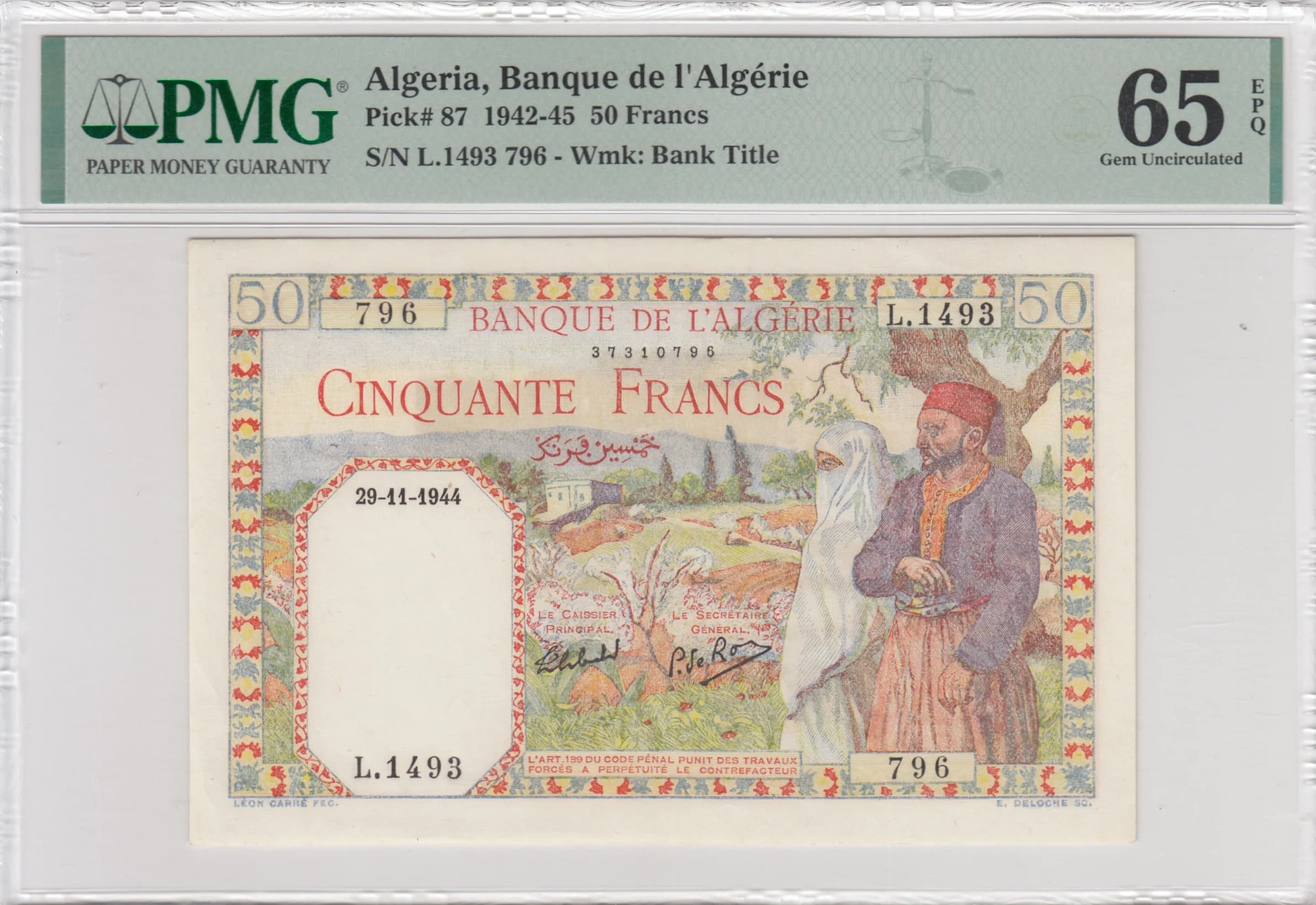
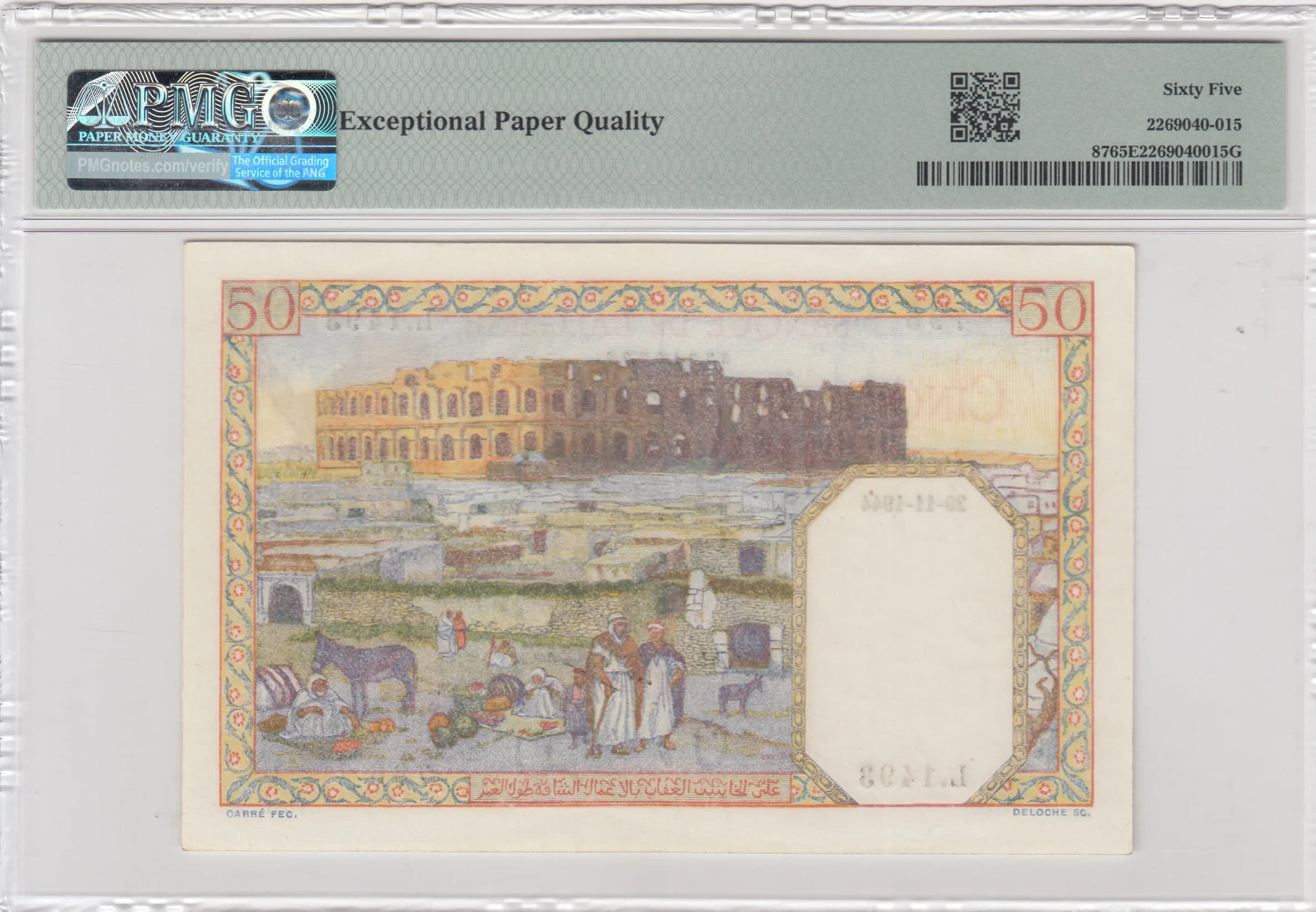
This is an exceptionally well-preserved example of Algeria's 50 Francs note from 1944, graded PMG 65 EPQ (Gem Uncirculated). The note displays vibrant multicolor printing with an ornate Art Deco-influenced border in red, yellow, and blue geometric patterns. The obverse features two figures in traditional North African dress in a landscape setting, while the reverse depicts the ancient Roman ruins of El-Djem amphitheater in Tunisia with a marketplace scene below—imagery that reflects Algeria's cultural heritage and colonial-era artistic sensibilities.
Common. Market data demonstrates consistent availability of this Pick-87 note across multiple condition grades, with numerous PMG-graded examples having sold at auction over the past several years. Even in the higher PMG 65-66 range, specimens regularly appear on the market. The eBay price history shows PMG 65 examples selling in the $270 range (2020), with most graded examples in the $200-400 range, consistent with a moderately popular but readily available colonial-era note. The 1942-1945 issue period and routine production for circulation indicate substantial print quantities.
This banknote was issued during the final year of World War II by the Banque de l'Algérie, representing French colonial monetary authority in North Africa. The choice to feature El-Djem's Roman amphitheater on the reverse symbolizes the region's classical heritage, while the traditional North African figures on the obverse reflect the local population and cultural identity. The note's November 1944 date places it in the period following the Allied invasion of North Africa and the establishment of Free French authority in the region.
The obverse presents a romanticized colonial-era scene depicting a veiled Algerian woman in white drapery on the left and a man wearing a red fez and purple jacket on the right, posed in a landscape with trees and distant architecture—a typical Orientalist representation of the period. The reverse features the monumental Roman amphitheater at El-Djem (ancient Thysdrus) in Tunisia, one of the finest surviving Roman structures in North Africa, depicted with its characteristic multiple arched tiers rising above a pastoral settlement scene with figures engaged in commercial or daily activities. Both sides are framed by an elaborate ornate border incorporating red stars, yellow geometric arabesques, and blue accents in Islamic and Art Deco design vocabulary. The denomination '50' appears in the corners, and security elements include the ornate border design and watermark area marked 'BANQUE DE L'ALGÉRIE'.
FRONT: 'Banque de l'Algérie' (Bank of Algeria), 'Cinquante Francs' (Fifty Francs), 'L.1493' (Legal designation), '37310796' (Serial number), '29-11-1944' (Issue date: November 29, 1944), 'Caissier Principal' (Principal Cashier), 'Le Secrétaire Général' (The General Secretary), '50' (Denomination), 'L'Art.189 du Code Pénal punit des travaux forcés à perpétuité le contrefacteur' (Article 189 of the Penal Code punishes counterfeiting with forced labor for life), 'Léon Carré F.' (Artist credit). BACK: '50' (Denomination), Arabic script in border (not fully legible), 'Carré Fec.' (Carré fecit—artist signature), 'Deloche Sc.' (Deloche sculpsit—engraver signature).
The note exhibits characteristics of intaglio engraving combined with multicolor lithography typical of French security printers of the era. The fine detailed work, particularly visible in the engraved portraits, architectural ruins, and ornate border, indicates professional Bank Note Company production standards. The complex multicolor registration and the crispness of the design suggest work by a major European security printer, likely the Banque de France's contracted facilities, with engraving credits to Léon Carré (artist) and Deloche (engraver).
The specific example observed is dated 29-11-1944 with serial number L.1493 37310796. This represents the standard obverse/reverse pairing (P-87) as distinguished from the P-87s specimen variety. The note displays the characteristic 1944 dating within the broader 1942-1945 circulation period. No unusual overprints, signatures variations, or typographic anomalies are evident from the visual analysis. Serial number prefixes beginning with 'L' are standard for this issue.