10 dinars 1964
Market Prices
21 salesAbout This Note
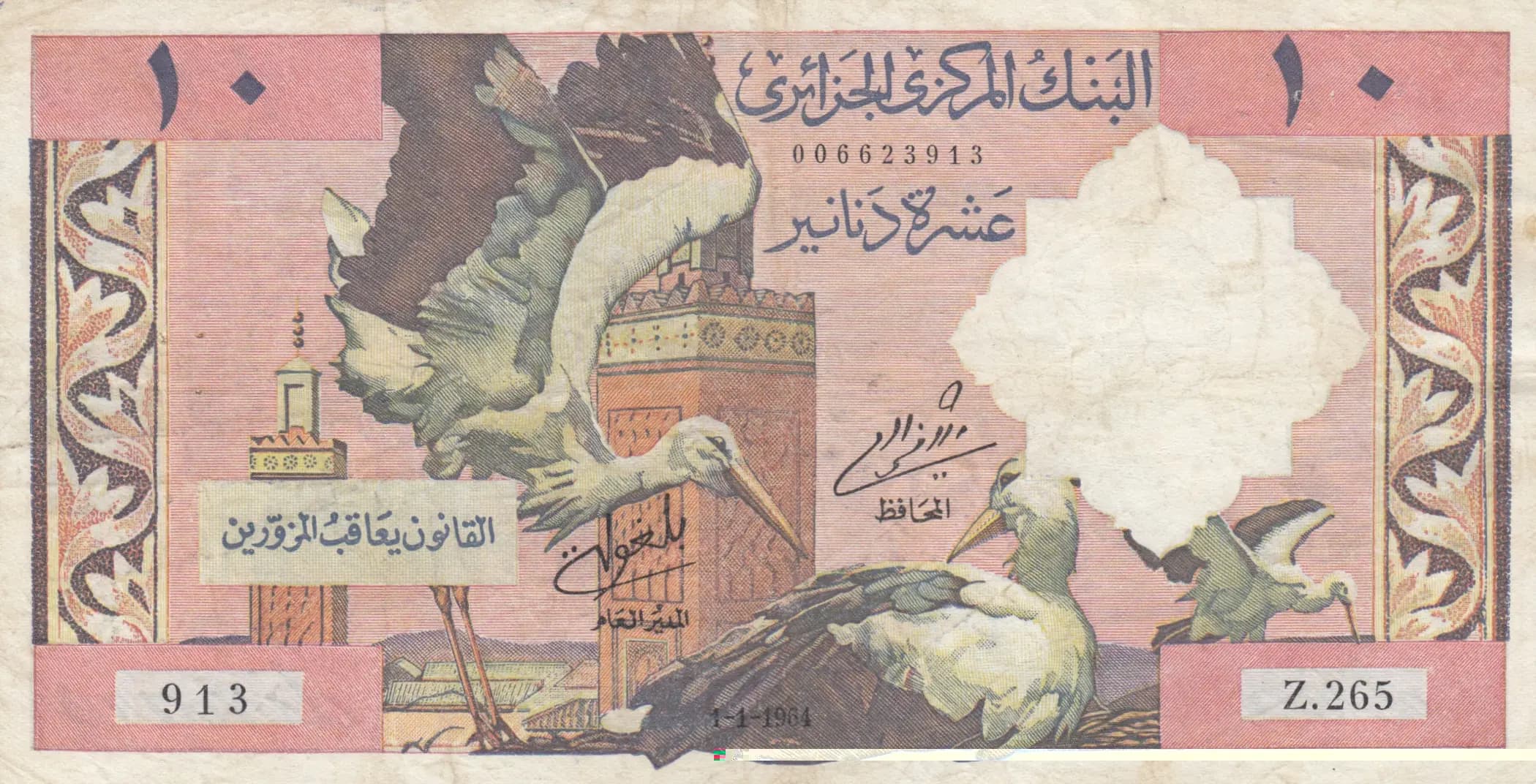
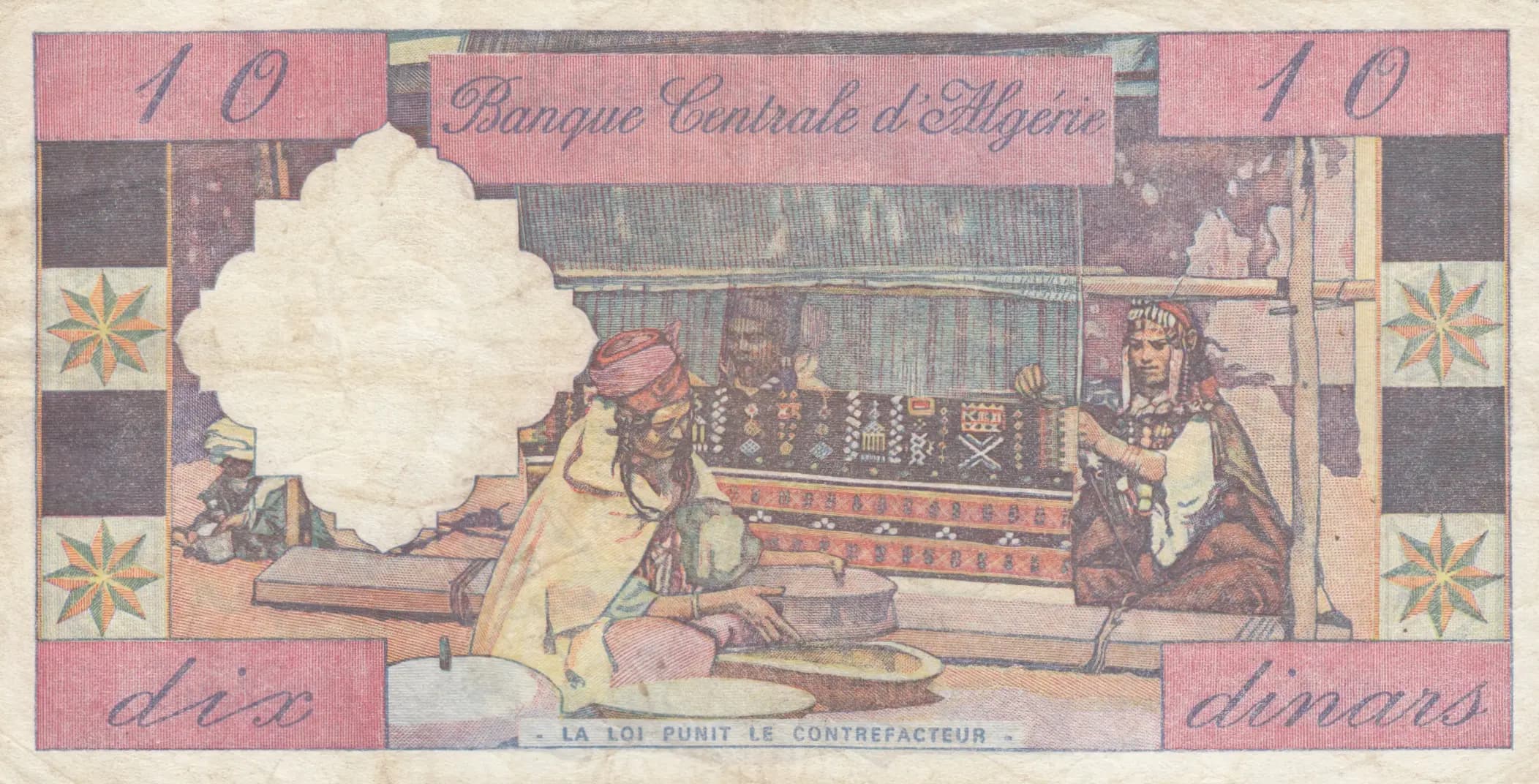
This is an Algeria 10 Dinars banknote from 1964 (Pick P-123a) in Very Fine condition, issued by the Banque Centrale d'Algérie during the early post-independence period. The note features distinctive imagery on both sides—eagles and a fortress on the obverse, and a marketplace trading scene on the reverse—with prominent watermarking. Despite moderate circulation wear visible on the note, it remains an important early issue from Algeria's formative years as an independent nation.
Common. The eBay transaction history shows consistent sales of VF-graded examples ranging from approximately $10-$42 over more than a decade, with an average VF price around $20-25. The 2019 catalogue value of $40 for VF and the multiple sales records indicate this is a widely available note in the collector market. This was a regular issue of the Banque Centrale d'Algérie with presumably substantial print runs, and it remains readily obtainable in circulated grades.
Issued in 1964, just two years after Algeria gained independence from France, this banknote reflects the new nation's identity through its imagery. The fortress depicted on the obverse likely represents a significant historical fortification, while the trading scene on the reverse emphasizes Algeria's commercial heritage and cultural traditions in the Maghreb region. The bilingual presentation (Arabic and French inscriptions) demonstrates the transitional period as Algeria established its own monetary identity while retaining French linguistic influence.
The obverse features two eagles in flight with detailed feather work, symbolizing national strength and sovereignty, positioned above and below a central fortified structure with crenellated walls—likely representing a historically significant Algerian fortress. Ornamental arabesque border patterns frame the composition on the left and right edges, reflecting Islamic artistic traditions. The reverse depicts a vibrant marketplace or caravanserai scene with multiple figures in traditional North African dress engaged in commerce and trade, including a central figure wearing a laurel crown suggesting authority or historical significance. Four-pointed star patterns decorate the corners. The color palette of pink, rose, purple, brown, and earth tones gives the note a warm, distinctly North African aesthetic. A watermark featuring Emir Abd el-Kader (the 19th-century Algerian resistance leader) is visible as a pale cloud-shaped area in the center of both sides.
Front side: 'البنك المركزي الجزائري' (Central Bank of Algeria), 'عشرة دنانير' (Ten Dinars), administrative/legal text, serial number 00662391 3, reference markings Z.265 and 913. Back side: 'Banque Centrale d'Algerie' (Central Bank of Algeria - French), 'dix dinars' (ten dinars - French), 'LA LOI PUNIT LE CONTREFACTEUR' (The law punishes the counterfeiter - French counterfeiting warning).
Intaglio (engraved) printing, standard for banknotes of this era. The fine detail work visible in the eagles' feathers, fortress architecture, and market scene figures, along with the multi-color printing in rose, purple, and brown tones, indicates professional security printing. The watermark integration suggests production by a European security printer, likely BDF (Banque de France security printing division) or similar facility, as was common for newly independent African nations' early currency issues in the 1960s.
This note is catalogued as Pick P-123a, identified by the watermark of Emir Abd el-Kader and the French-style block numbering system. According to PMG records, there are four catalogued variants of the base Pick number: P-123a, P-123as, P-123b, and P-123s (with the latter showing BDF printer attribution). The visual analysis confirms the watermark as Emir Abdelkader, consistent with P-123a classification. The serial number '00662391 3' and reference code 'Z.265' are visible on the obverse, which may help identify the specific print block within this variety.