1 rial 1973
About This Note
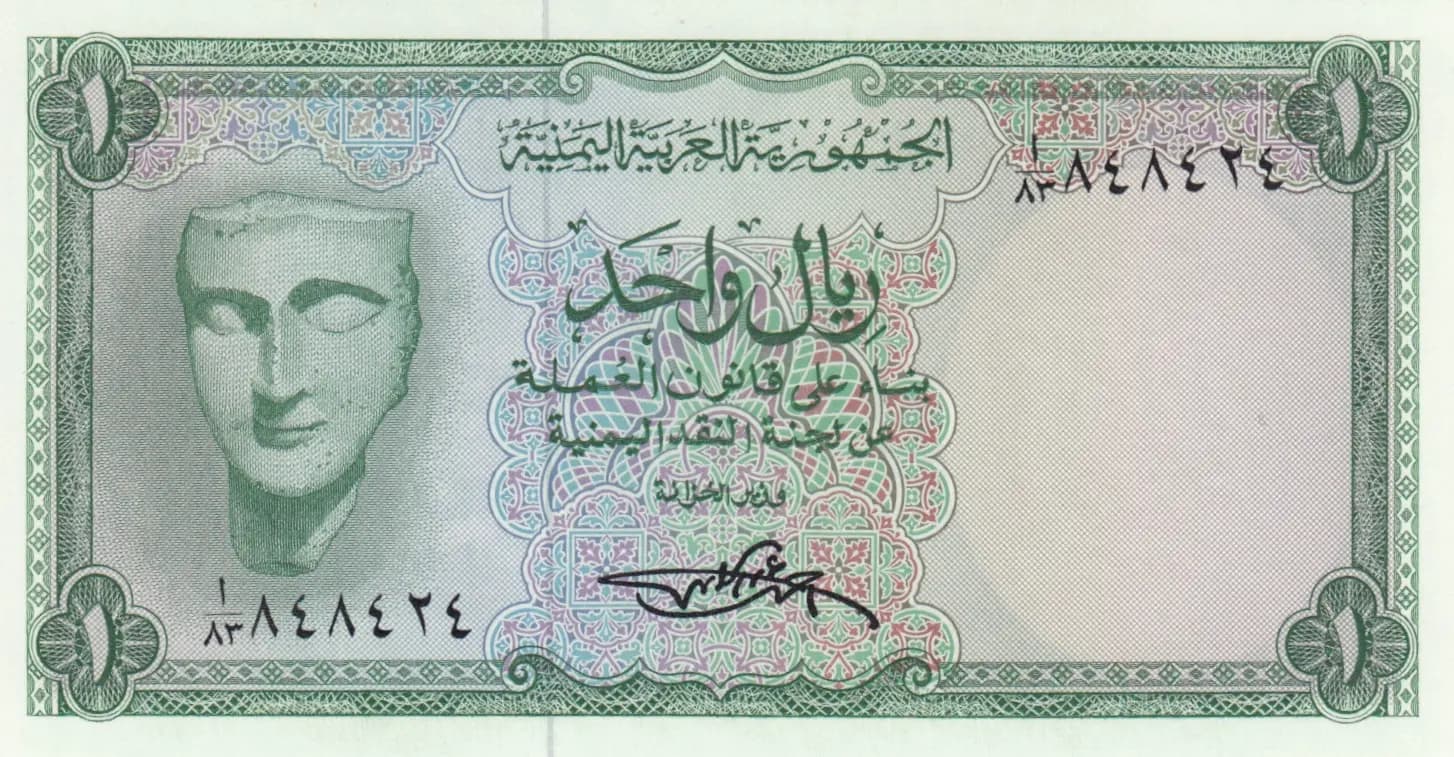
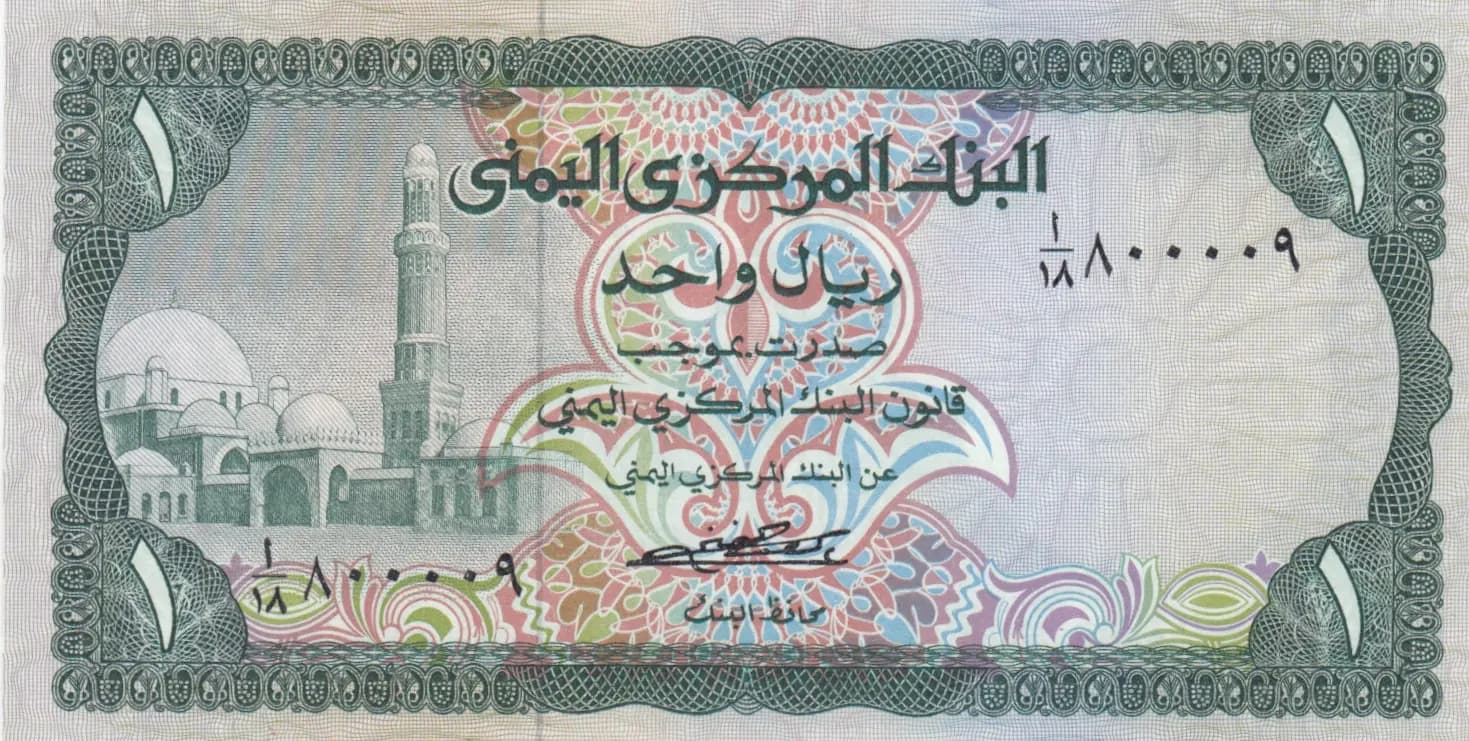
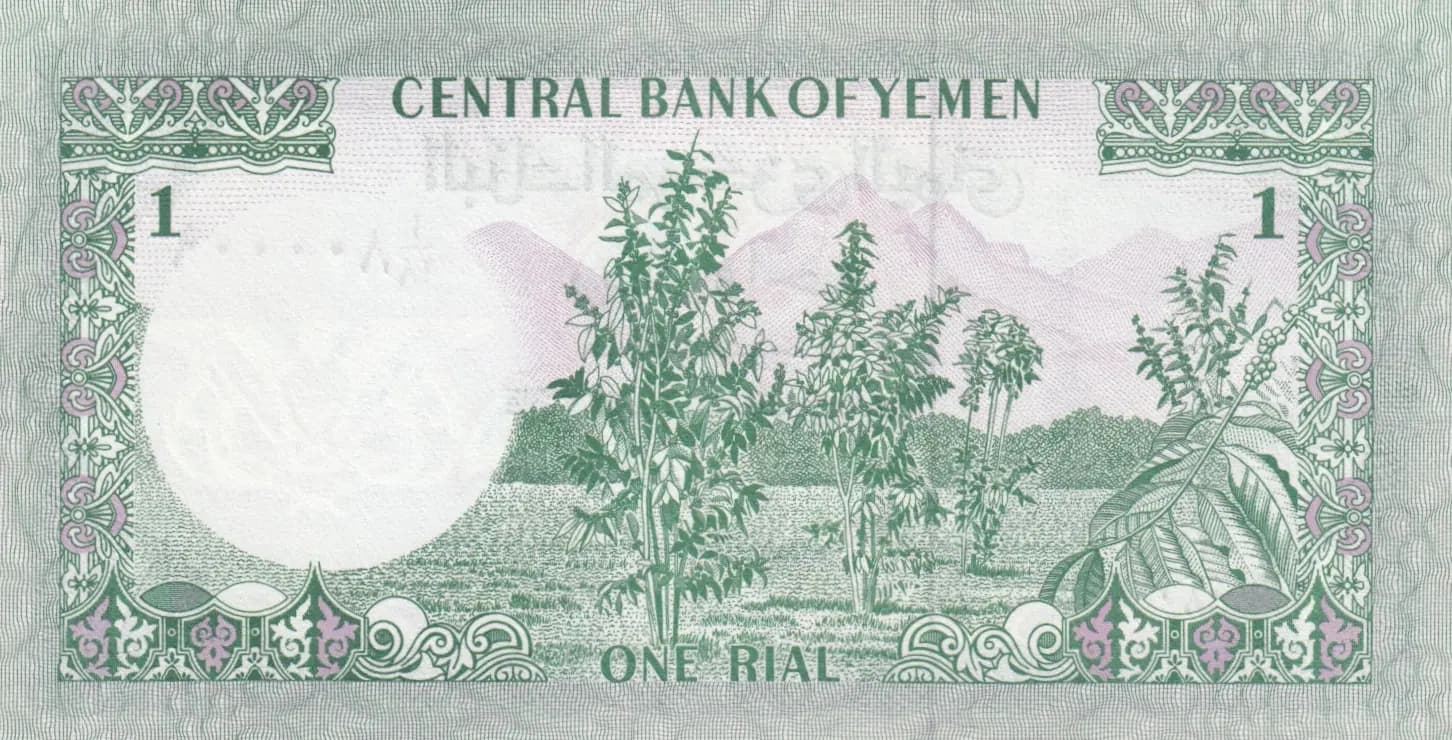
A visually striking 1 Rial note from the Yemen Arab Republic (1973, Pick P-11a) in uncirculated condition, featuring exceptional Islamic geometric and arabesque design work throughout. The obverse showcases the Al-Bakiriyah mosque with its characteristic minaret rendered in green engraving, complemented by intricate ornamental calligraphy and multi-color pastel decorative borders. The reverse depicts a detailed agricultural landscape with Khat bushes and mountainous terrain, maintaining the same high-quality engraving and color palette, making this an excellent example of early Yemen Arab Republic currency design.
Common. The 1 Rial from the Yemen Arab Republic (1973, P-11a) represents a standard circulation issue from the early period of the Central Bank. While the Yemen Arab Republic had a finite lifespan (unified with South Yemen in 1990), these notes were produced in quantities sufficient for regular commerce and remain readily available on the numismatic market. The uncirculated condition noted here adds appeal but does not elevate the inherent rarity of this Pick number, which was a regular denomination issued during a stable period of the republic's currency circulation.
This note was issued during the early consolidation period of the Yemen Arab Republic, established in 1962 following the North Yemeni Civil War. The choice to feature the Al-Bakiriyah mosque in San'a, one of Yemen's most important Islamic architectural landmarks, reflects the nation's emphasis on cultural and religious identity in its newly independent currency. The agricultural imagery on the reverse, specifically depicting Khat bushes, references Yemen's significant agricultural economy and the historical importance of this cash crop to the region's commerce and culture.
The obverse features the Al-Bakiriyah mosque (also known as al-Qadi mosque) located in the Old City of San'a, rendered in green engraving on the left side with its distinctive tall minaret. The entire note is surrounded by ornate Islamic geometric borders in green and pink, featuring repeating arabesque patterns typical of Yemeni Islamic design traditions. Central ornamental elements employ pink, blue, green, and pastel tones in geometric Islamic motifs. The reverse presents a naturalistic landscape scene dominated by Khat bushes (Catha edulis) in various growth stages, with mountains depicted in the background. Both sides employ decorative floral and geometric borders that unify the design. Arabic inscriptions appear on the obverse, with English text on the reverse, reflecting the bilingual approach common to many Arab nation currencies of this era.
FRONT: 'البنك المركزي اليمني' (Central Bank of Yemen) - issuing authority; 'واحد ريال' (One Rial) - denomination. Serial number visible in upper right corner. BACK: 'CENTRAL BANK OF YEMEN' (English text, upper portion); 'ONE RIAL' (English denomination marking); '1' (numeral denomination). Note: Some Arabic inscriptions in the visual analysis description appear to be misidentified or unclear in translation; primary denominations and issuer identification are confirmed.
Multi-color intaglio (engraved) printing, characteristic of high-security banknote production. The fine linework visible in both the geometric patterns and the landscape vegetation, combined with the color gradations and detailed border work, indicates traditional engraving plates with subsequent color printing. The security features include intricate engraving patterns throughout, fine line borders, and multi-color registration. The precise watermark area visible on the reverse suggests production by a specialized security printer, though the specific printer for this Yemen Arab Republic issue is not definitively attributed in standard references.
This note is cataloged as P-11a, indicating the primary variety of the 1 Rial issue from 1973. The visual analysis notes a 'blurred underprint design over watermark area,' which aligns with the P-11a designation as distinguished from later issues such as P-16b, which featured clearer underprint design and different signature varieties. The serial number visible in the obverse (beginning with 9) suggests standard serial numbering practices. No overprints or exceptional variety markers are apparent in this example; it represents the standard P-11a printing.