1000 francs 1965
“Ivory Coast”
About This Note
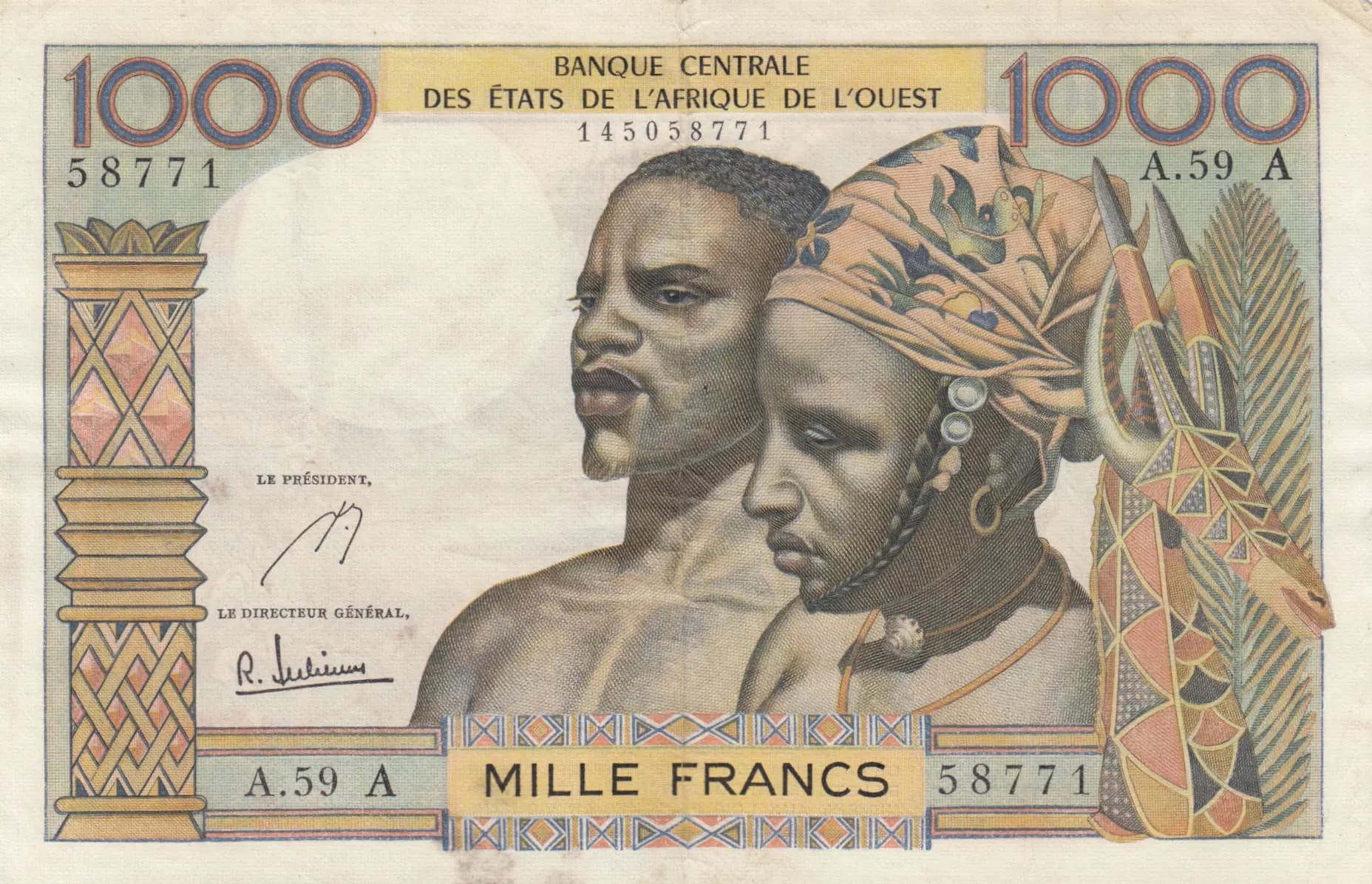
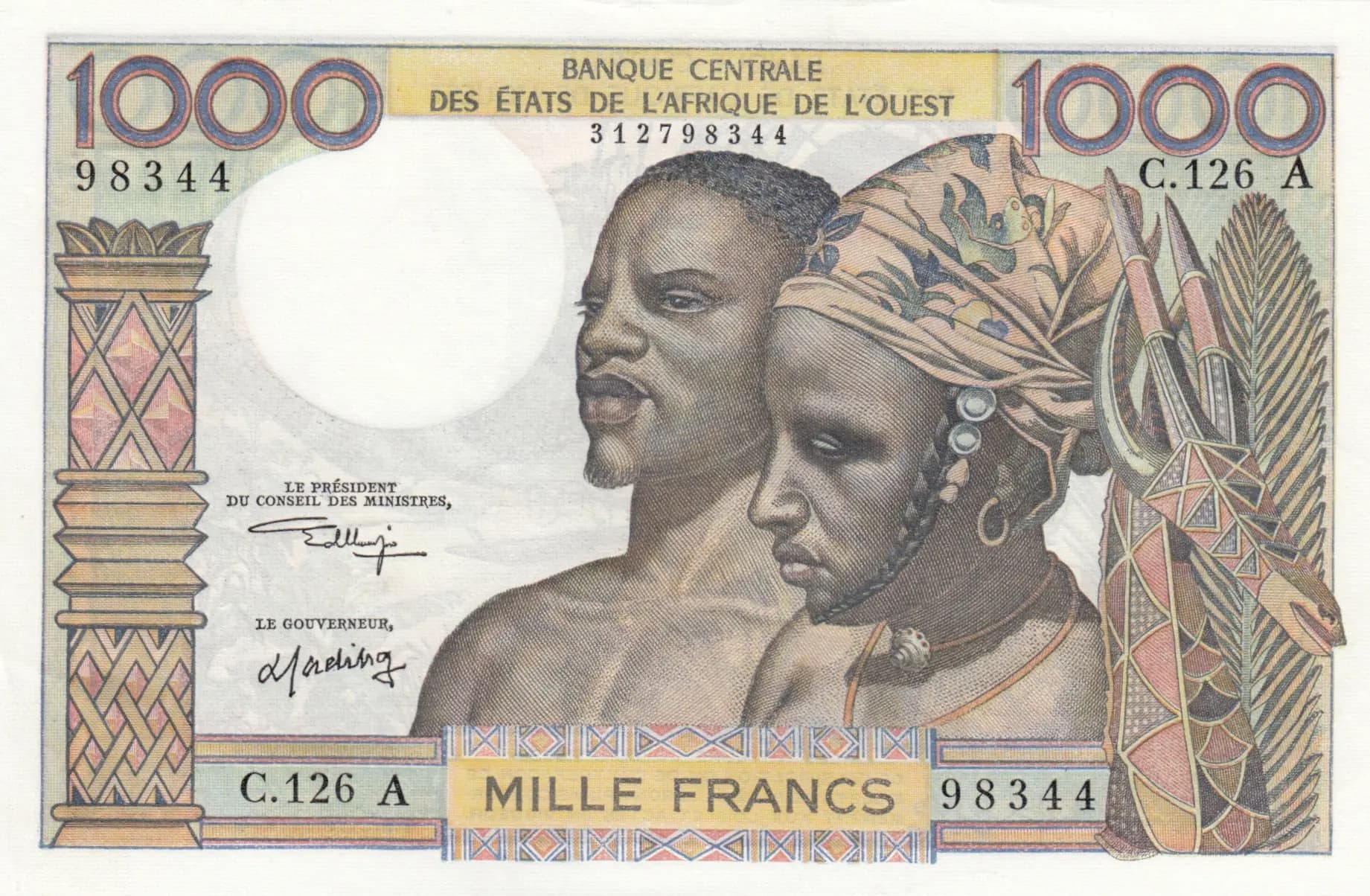
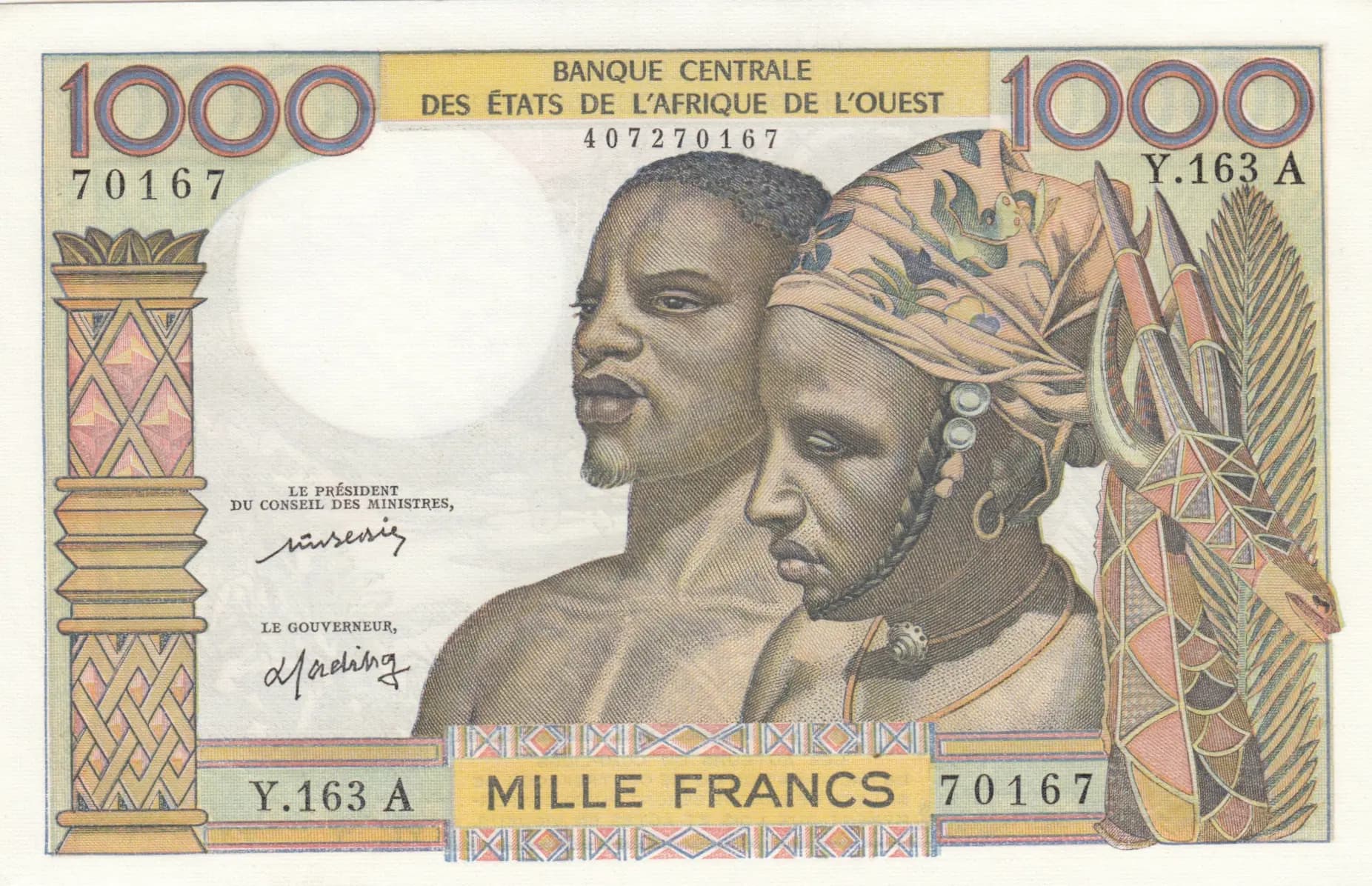
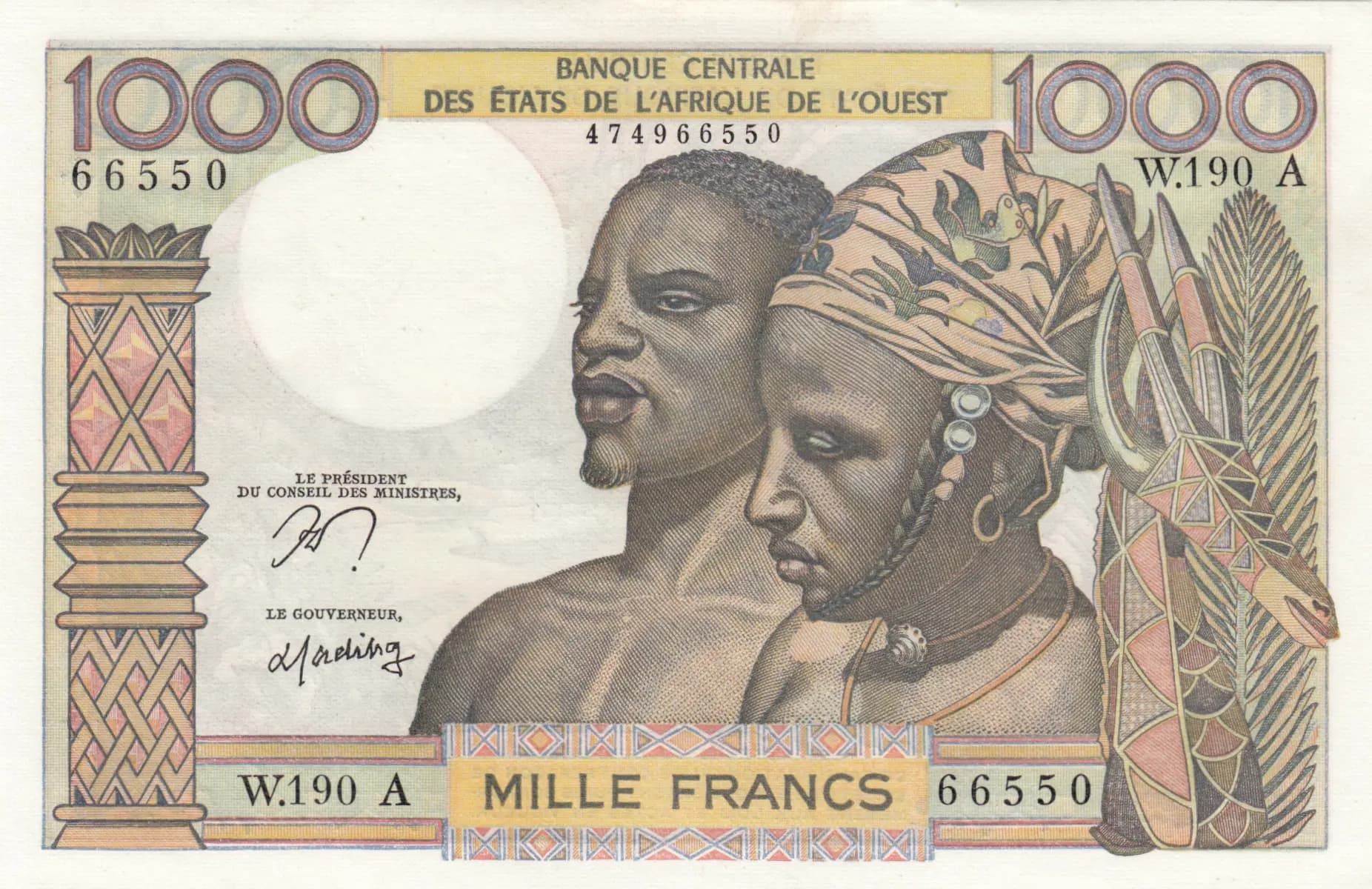
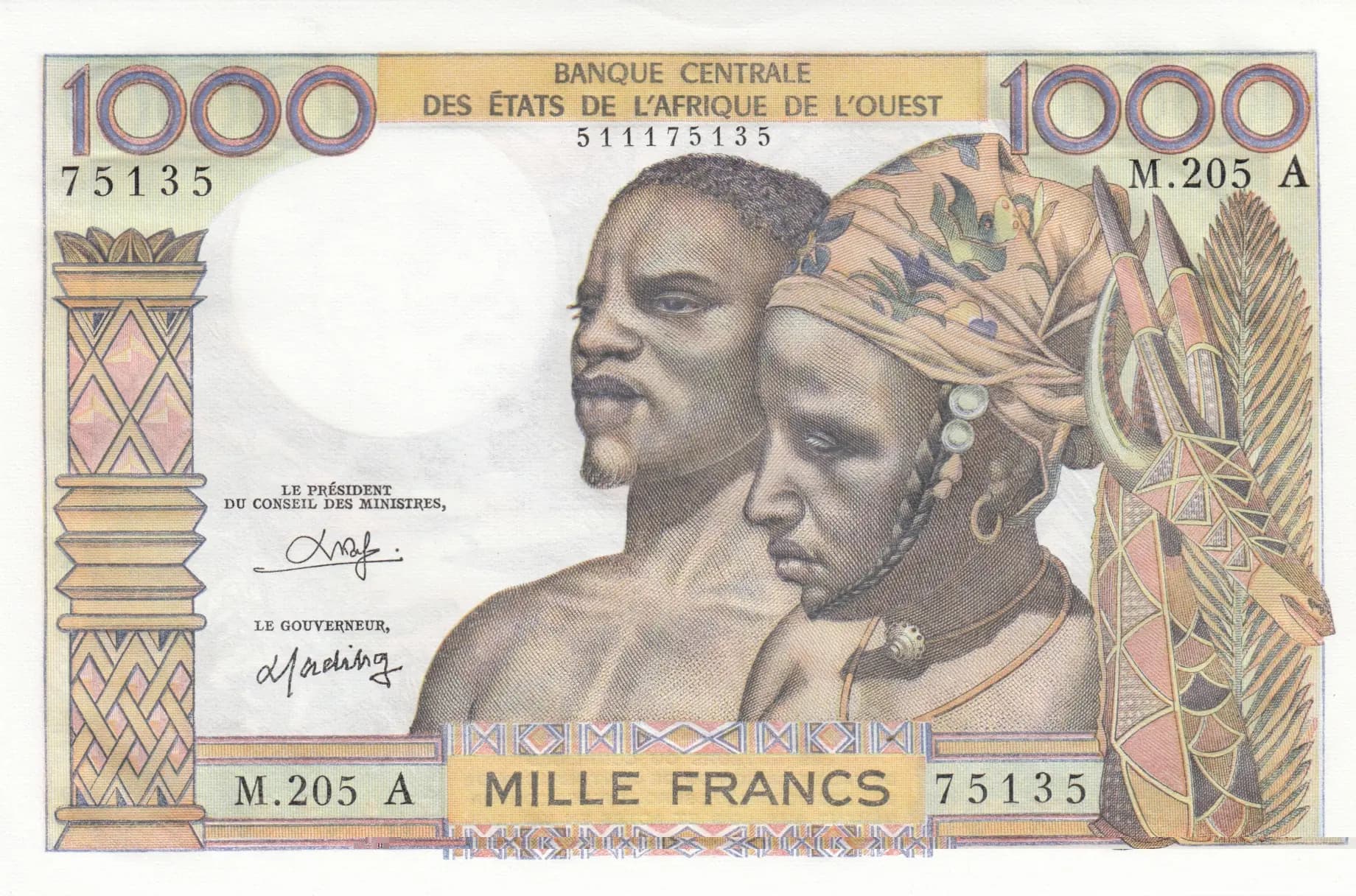
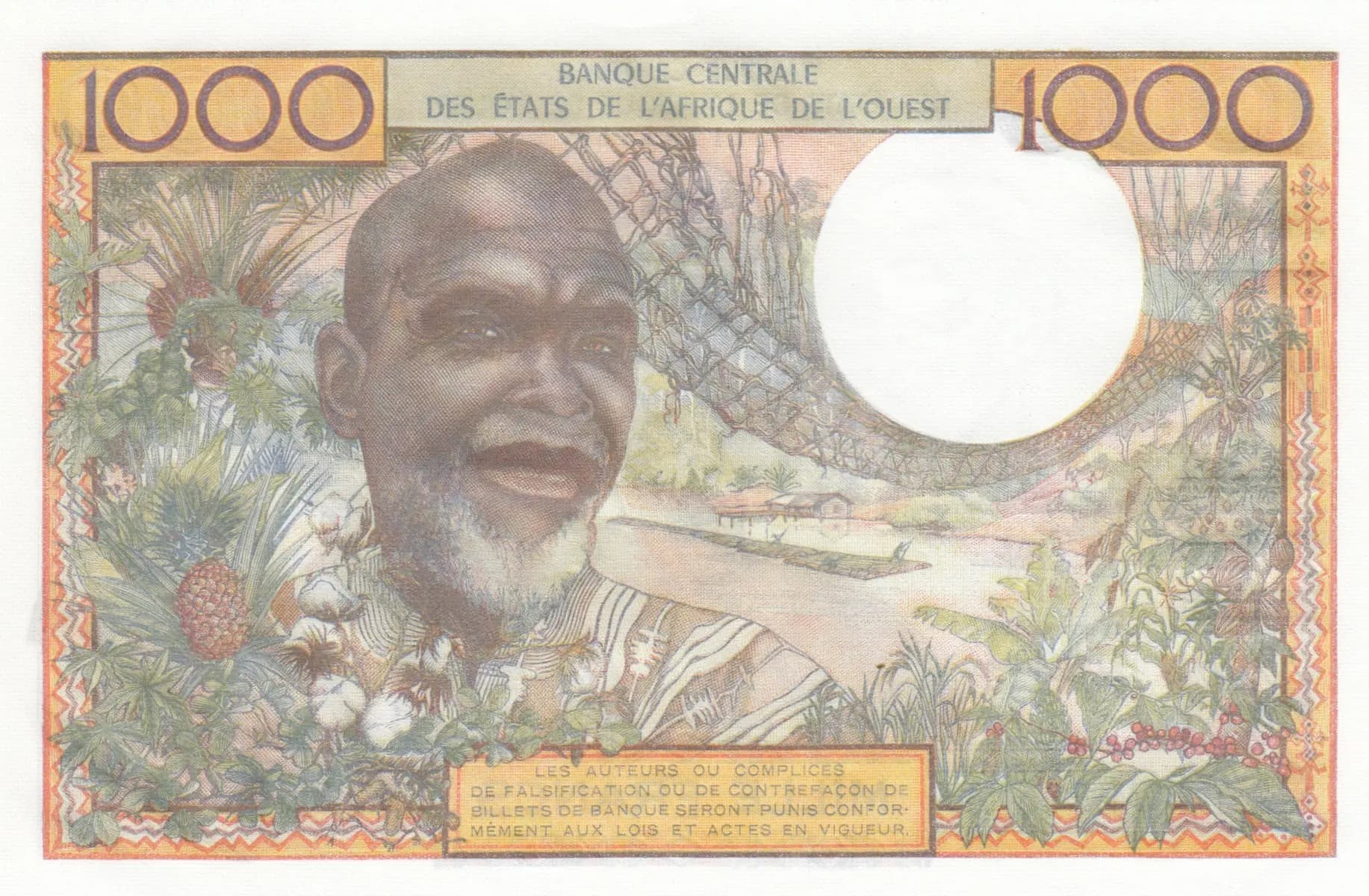
This is an exceptional uncirculated example of the 1965 West African States 1000 francs note (Pick P-103An), featuring beautifully preserved intaglio engraving with vibrant period colors of beige, brown, purple, and orange. The note displays two dignified portrait busts on the obverse—a male figure in profile and a female figure in traditional West African dress—while the reverse showcases an integrated landscape scene depicting economic activities including cotton plants, pineapples, and river commerce, all rendered with fine engraving detail. The pristine condition with crisp paper stock and sharp impression throughout makes this an excellent representative example of early West African monetary design.
Common. The 1000 francs denomination from the 1965 issue of West African States notes was a standard circulation denomination with substantial print runs. No historical evidence suggests limited mintage, short-lived issuance, or official recalls for this Pick number. Uncirculated examples remain available in the collector market at moderate valuations typical of common mid-20th century African currency. The abundance of serial number variants and the straightforward nature of the design indicate this was a widely produced note intended for general circulation.
This note was issued during the formative years of the Banque Centrale des États de l'Afrique de l'Ouest, which served the newly independent West African nations following decolonization. The reverse design deliberately celebrates the region's economic foundations—cotton cultivation, pineapple production, and river-based commerce—reflecting the post-independence focus on agricultural and natural resource wealth. The dual portraits and French inscriptions represent the institutional authority and Franco-African monetary cooperation that characterized the CFA franc system during the 1960s transition period.
The obverse presents a formal dual-portrait composition: on the left, a male bust rendered in left-facing profile with classical styling, accompanied by a geometric decorative rectangular pattern; on the right, a female bust facing forward wearing traditional West African attire including a wrapped headscarf and pearl earrings, with an ornate palm frond design occupying the right margin. The reverse integrates a male portrait bust within a comprehensive landscape tableau depicting the economic life of West Africa: cotton plants and pineapple cultivation in the foreground, a river scene with commercial boat traffic and colonial-era structures in the background, all framed by decorative geometric borders in orange and red tones. The design exemplifies the educational iconography favored by African central banks of the period, using currency as a medium to celebrate national identity and economic resources. The watermark areas (visible as white ovals) and multiple serial number placements reflect standard security practices of mid-20th century banknote production.
FRONT SIDE: 'BANQUE CENTRALE DES ÉTATS DE L'AFRIQUE DE L'OUEST' (Central Bank of the States of West Africa) / '1000' (denomination) / 'MILLE FRANCS' (One Thousand Francs) / 'LE PRÉSIDENT DU CONSEIL DES MINISTRES,' (The President of the Council of Ministers,) / 'LE GOUVERNEUR,' (The Governor,) / 'M.205 A' (Designation code) / Serial number: '5111751135' with segments '75135'. BACK SIDE: 'BANQUE CENTRALE DES ÉTATS DE L'AFRIQUE DE L'OUEST' (Central Bank of the States of West Africa) / '1000' (denomination) / 'LES AUTEURS OU COMPLICES DE FALSIFICATION OU DE CONTREFAÇON DE BILLETS DE BANQUE SERONT PUNIS CONFORMÉMENT AUX LOIS ET ACTES EN VIGUEUR.' (The authors or accomplices of falsification or counterfeiting of banknotes will be punished in accordance with laws and acts in force.)
This note was produced using intaglio engraving (line engraving), the premium security printing method standard for central bank currency of this era. The fine detail work visible throughout—particularly in the facial features of both portraits, the intricate landscape rendering on the reverse, the geometric border patterns, and the ornamental designs—is characteristic of skilled intaglio work. The crisp impression and well-defined line work on this uncirculated example demonstrate the quality of the original dies. The Banque Centrale des États de l'Afrique de l'Ouest utilized European security printers for their 1960s-era notes, consistent with the technical standards evident in this specimen.
This specimen is catalogued as Pick P-103An, identified by the designation code 'M.205 A' visible on the obverse. The PMG population data indicates three documented variants for this base Pick number (P-103Ab, P-103Ac, P-103As), all sharing Code Letter 'A' but representing different signature combinations or printer states. The serial number '5111751135' with segments '75135' and the specific signature configuration on this example should be cross-referenced against PMG census records to determine the precise signature variant represented. The 'A' code letter designation is significant as it identifies the governmental authority and issuer state variant within the multi-national BCEAO system.