500 dong 1972
About This Note
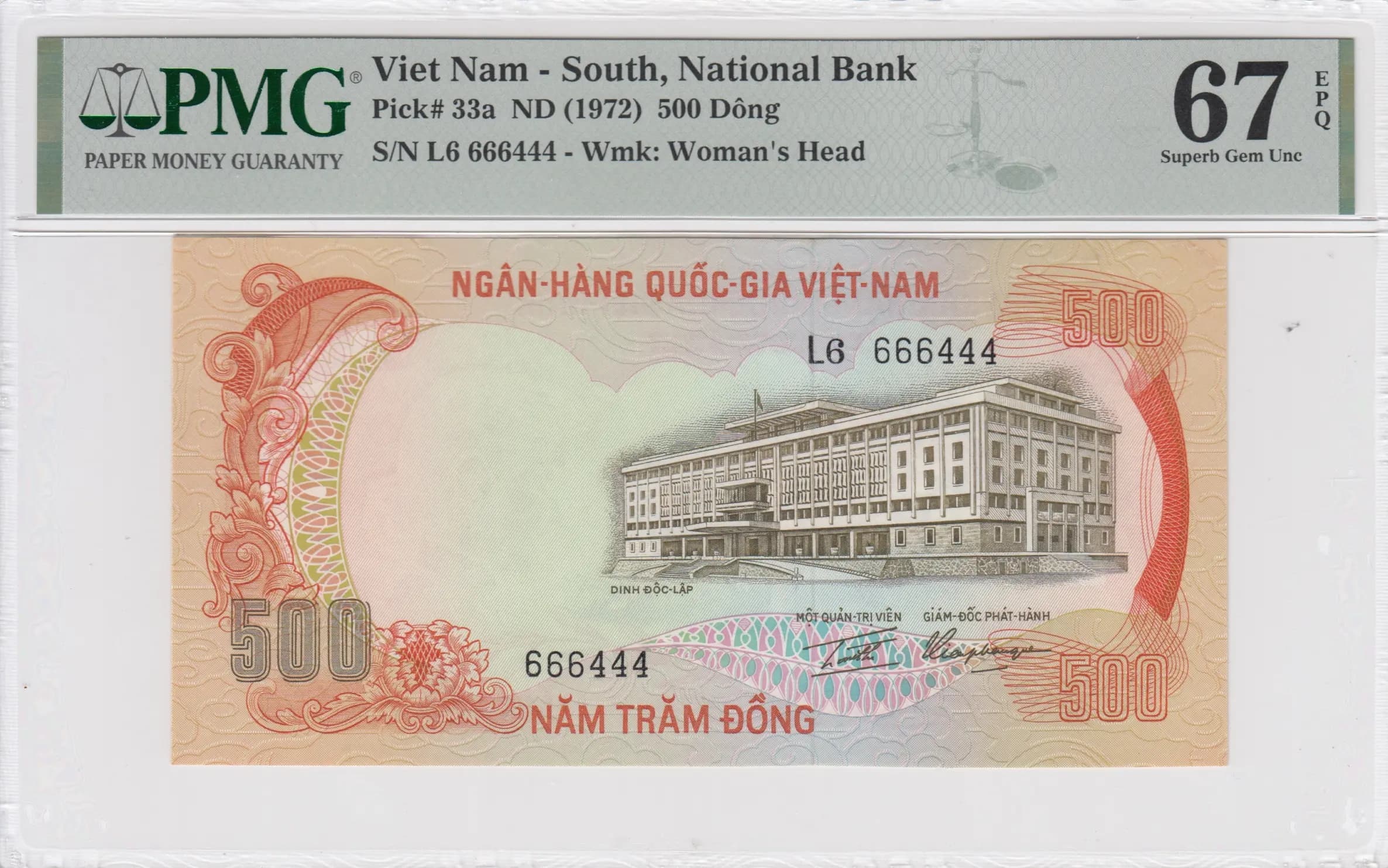
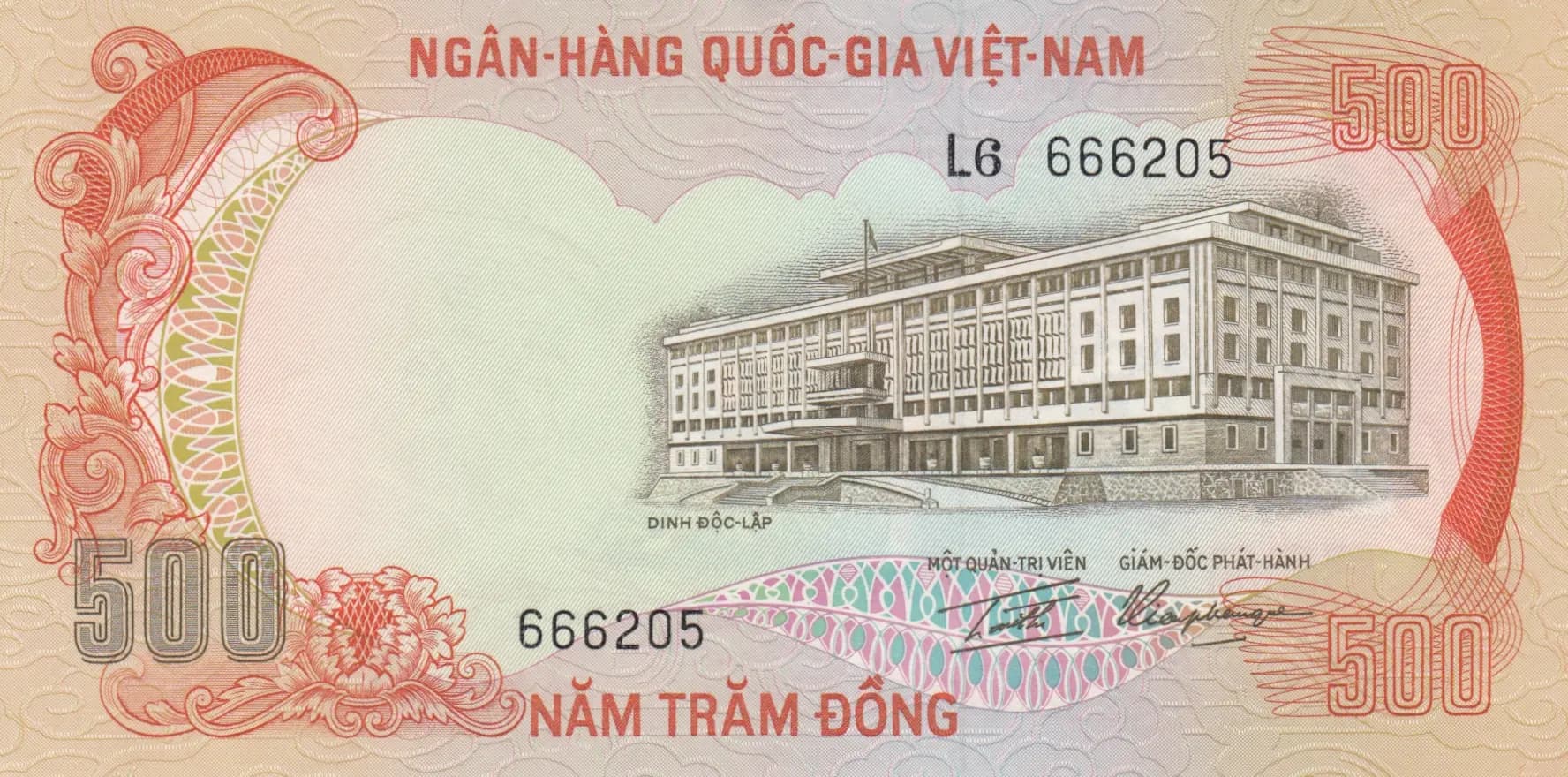
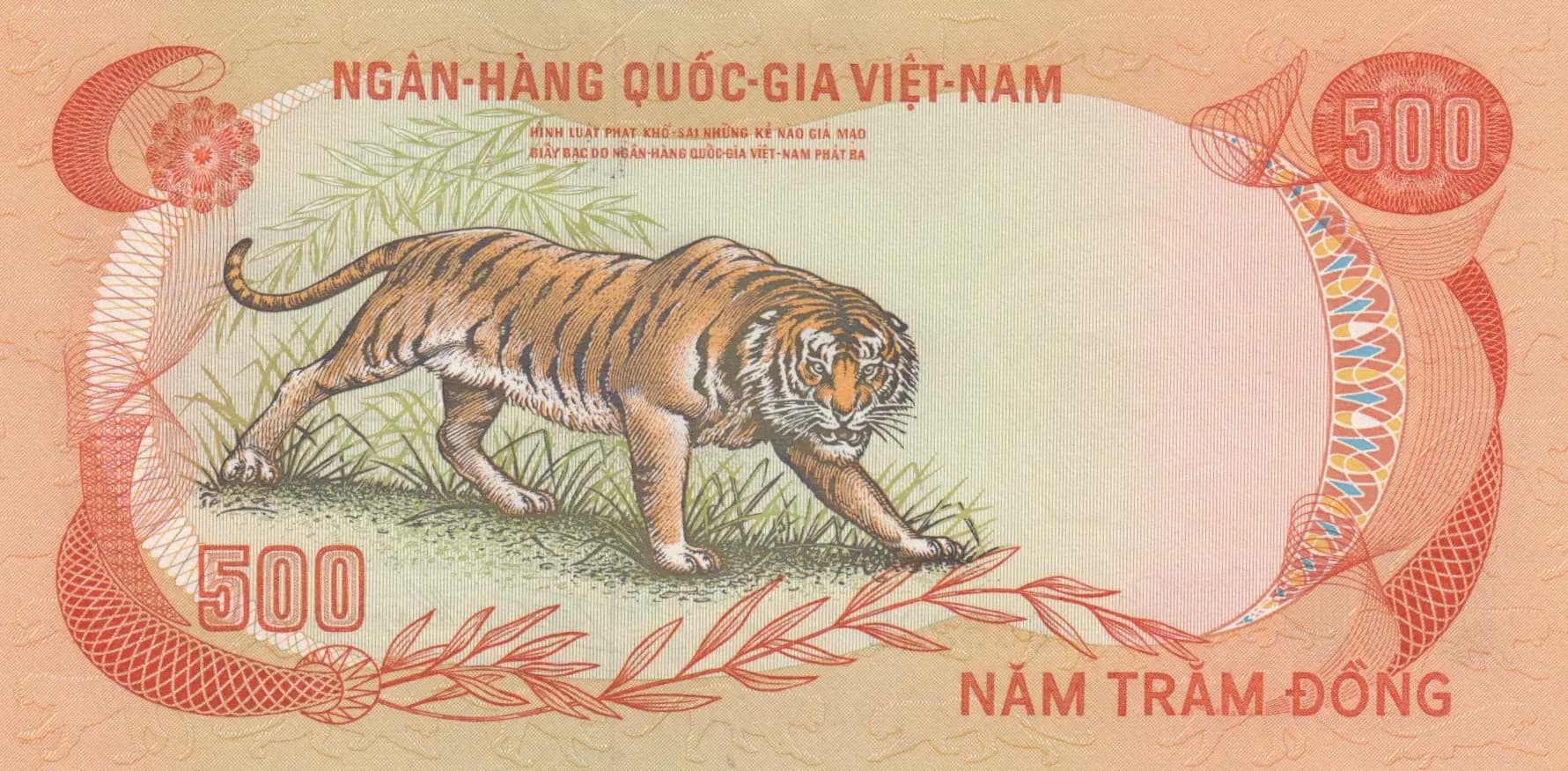
This is an uncirculated 500 Dong banknote from South Vietnam issued in 1972 by the National Bank of Vietnam (Pick P-33). The note features exceptional condition with vibrant red/orange and beige tones, displaying an institutional building on the obverse and a striking tiger illustration on the reverse, both rendered with fine engraved detail work. The crisp printing, intact security features including a colored security strip and intricate guilloche patterns, and absence of any wear or damage make this an excellent example of mid-period South Vietnamese currency.
Common. The 500 Dong denomination from 1972 (P-33) is a standard issue from South Vietnam's final years and was produced in quantities sufficient to support circulation. While South Vietnamese currency has increased in collector interest since reunification, the 500 Dong note itself remains common in the numismatic market. Uncirculated examples command modest premiums over circulated notes, but this denomination does not exhibit the scarcity characteristics of rare overprints, low print run issues, or recalled series. The note's accessibility and regular availability in collector channels place it firmly in the common category.
This 1972 issuance represents South Vietnam's monetary authority during the final years before the country's reunification in 1975. The National Bank of Vietnam issued this denomination to support economic activity in the Republic of Vietnam during the waning years of the American-backed regime. The note's design, featuring government/institutional architecture and national wildlife imagery (the tiger), reflects the state's symbols and modernization efforts during this turbulent period of Vietnamese history.
The obverse features a symmetrical multi-story government or institutional building with classical architectural elements, including arranged rows of windows, a columned ground level, and a flat roof with central ornamentation. The design is framed by ornamental spiral flourishes and botanical leaf patterns in red/orange borders on both sides. The reverse displays a naturalistic engraved illustration of a tiger in profile facing left, depicted in a walking or stalking position amid bamboo and reed vegetation with green foliage. Both sides incorporate the denomination '500' in large numerals at top right and bottom left, with 'NĂM TRĂM ĐỒNG' (Five Hundred Dong) spelled out. The design employs red/orange and beige/cream as dominant colors with black line work and gold accents, creating a visually balanced and decorative appearance consistent with South Vietnamese currency standards of the era.
Front Side: 'NGÂN-HÀNG QUỐC-GIA VIỆT-NAM' (National Bank of Vietnam); '500' and 'NĂM TRĂM ĐỒNG' (Five Hundred Dong); 'ĐỊNH ĐỘC-LẬP' (Independence); 'MỘT QUẢN-TRỊ VIÊN' (One Administrator); 'GIÁM-ĐỘC PHÁT-HÀNH' (Director of Issuance); Serial number 'L6 666205'. Back Side: 'NGÂN-HÀNG QUỐC-GIA VIỆT-NAM' (National Bank of Vietnam); '500' and 'NĂM TRĂM ĐỒNG' (Five Hundred Dong); Legal text regarding counterfeiting provisions: 'HÌNH LUẬT PHÁT-KHÓ-SÀI NHỮNG KẺ NÀO GIẢ MAO BIẾU BẠC ĐỘ NGÂN-HÀNG QUỐC-GIA VIỆT-NAM PHÁT RA' (Legal provisions regarding counterfeiting and forgery of currency issued by the National Bank of Vietnam).
This note was produced using traditional intaglio (engraved) printing, evident from the fine line work, intricate guilloche background patterns, and detailed engraving visible in both the building architecture and tiger illustration. The multi-color printing technique achieves the red, beige, green, and black tones through sequential color registration. A colored security strip with geometric interlocking patterns is incorporated into the front design. The precision of the decorative elements and security features indicates production by a skilled security printer, likely the government's printing facility or an established international security printer contracted by the National Bank of Vietnam during this period.
The observed specimen carries serial number L6 666205, indicating the 'L6' series prefix typical of 1972 issuances. No overprints, error marks, or unusual printing characteristics are evident from the visual analysis. The signature block positions and denominations align with standard P-33 specifications. While varieties may exist related to signature combinations or minor printing register shifts, the visual evidence does not indicate this note represents a notable or scarce variety within the P-33 designation.