1 dong 1955
About This Note
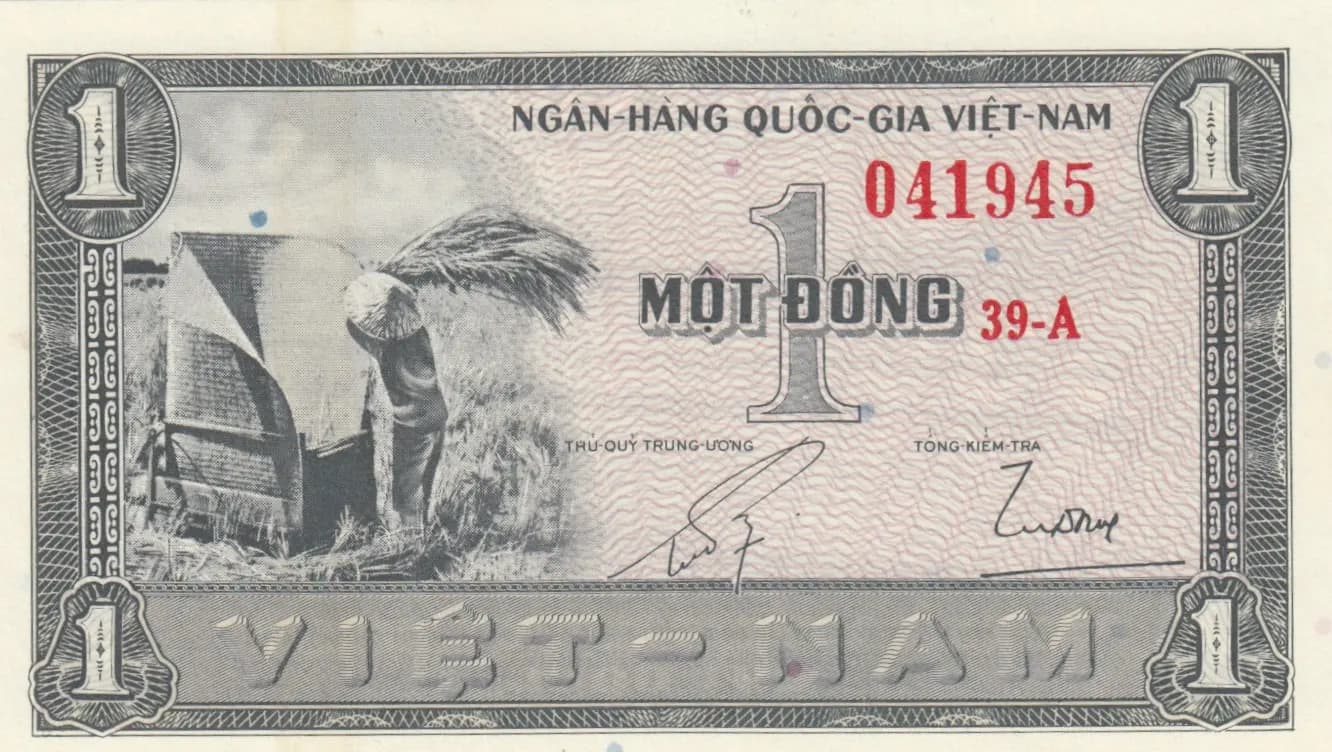
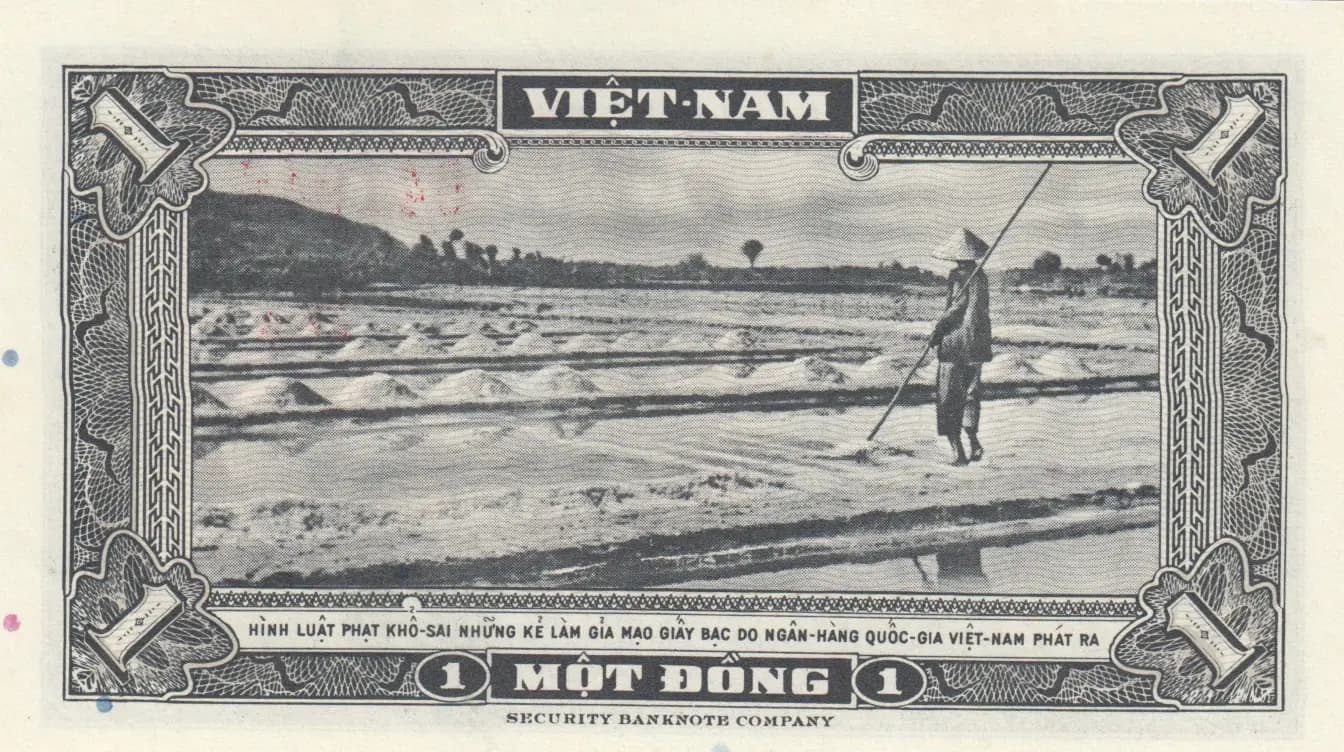
This 1 Dong note from 1955, issued by the National Bank of Vietnam, presents a classically designed early Vietnamese banknote featuring a portrait of a Vietnamese man in traditional conical hat on the obverse and an agricultural laborer in rice paddies on the reverse. The note exhibits age-consistent patina with foxing and minor staining throughout, consistent with genuine circulation from the 1950s era, and displays the fine engraving work characteristic of Security Banknote Company's production.
Common. The 1955 1 Dong Vietnamese note (Pick P-11) represents standard circulation currency from the early post-colonial period and was produced in quantities sufficient to meet ordinary monetary demands. No evidence of limited print runs, recalls, or scarcity in the numismatic market suggests this denomination and year combination remains readily available to collectors, particularly in circulated grades.
Issued during the early years of the Democratic Republic of Vietnam (North) and the Republic of Vietnam (South), this 1955 banknote reflects the post-colonial nation's efforts to establish independent monetary sovereignty following French Indochina's dissolution. The agricultural imagery on the reverse—depicting a farmer with implement in flooded rice paddies against a backdrop of mountains—symbolizes the agrarian foundation of Vietnamese society and the nation's focus on rural production during this reconstructive period.
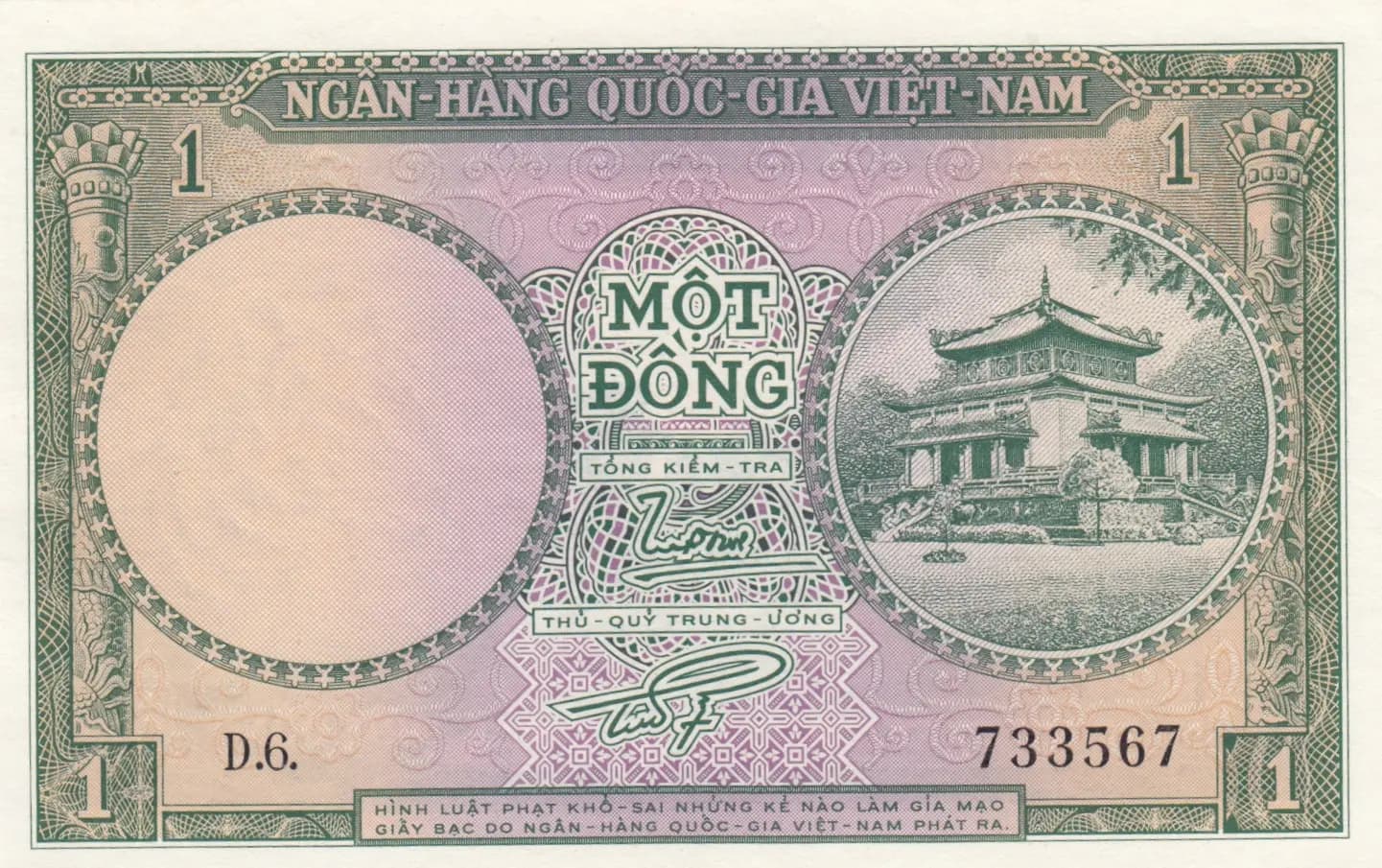
The obverse features a left-facing profile portrait of an unidentified Vietnamese gentleman wearing traditional dress including a conical hat (nón lá), rendered in classical engraving style. The denomination '1' is prominently displayed in the center with 'MỘT ĐỒNG' in Vietnamese script below, flanked by decorative ovals containing numeral '1' at all four corners. The reverse depicts a rice farmer standing in flooded paddies, holding what appears to be a harvesting or cultivation tool, with mountainous terrain and vegetation visible in the background—an allegorical representation of Vietnamese agricultural labor and national productivity. The design employs monochromatic black and gray engraving with ornamental border patterns and decorative cartouches typical of mid-20th century banknote aesthetics.
Front side: 'NGÂN-HÀNG QUỐC-GIA VIỆT-NAM' (National Bank of Vietnam); 'MỘT ĐỒNG' (One Dong); '1' (Denomination); '041945' (Serial number); '39-A' (Reference/catalog designation); 'THƯ-QUỲ TRUNG-ƯƠNG' (Central Treasury); 'TỔNG-KIỂM-TRA' (Inspector General). Back side: 'VIỆT-NAM' (Vietnam); '1 MỘT ĐỒNG' (1 One Dong); 'HÌNH LUẬT PHÁT KHỎ-SAI NHỮNG KẺ LÀM GIẢ MAO GIẤY BẠC DO NGÂN-HÀNG QUỐC-GIA VIỆT-NAM PHÁT RA' (Law regarding counterfeiting of banknotes issued by the National Bank of Vietnam); 'SECURITY BANKNOTE COMPANY' (Printer attribution).
Intaglio engraving (recess printing), as evidenced by the fine line work, detailed shading, and crisp detail visible throughout the design elements. The Security Banknote Company credit on the reverse confirms this note was produced by a specialist banknote security printer using traditional engraving techniques prevalent in the 1950s. The precision of the border patterns and portrait rendering is consistent with high-quality intaglio production standards of the era.
The observed serial number '041945' with red printing is consistent with the standard series for this issue. The reference marking '39-A' visible on the obverse may indicate a specific printing plate variety. No additional overprints or significant varieties are apparent from the visual analysis of this specimen. Collectors should note potential variations in serial number prefixes, printing dates, and signature combinations across the full issued quantity, though such variations would require examination of multiple examples to document comprehensively.